
Dark Brown Open Bookcase
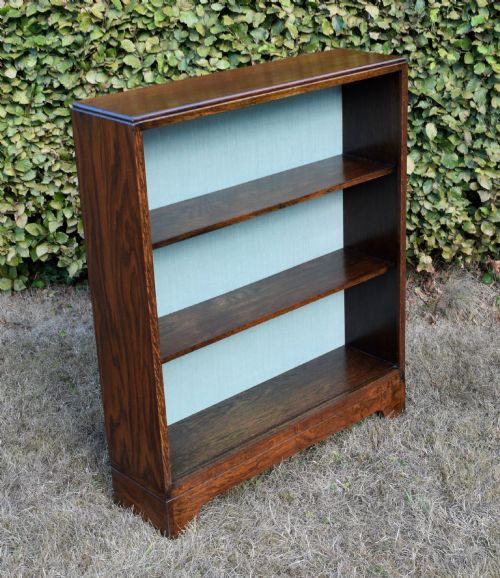
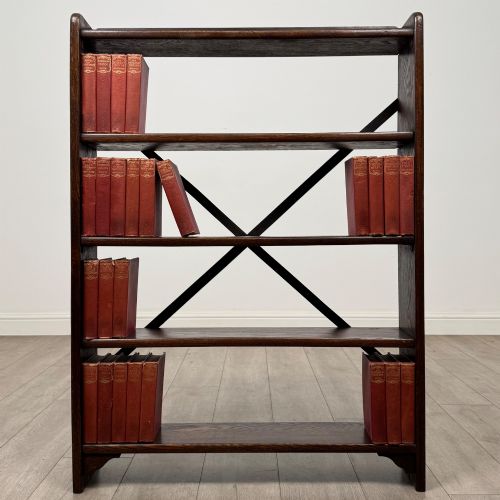
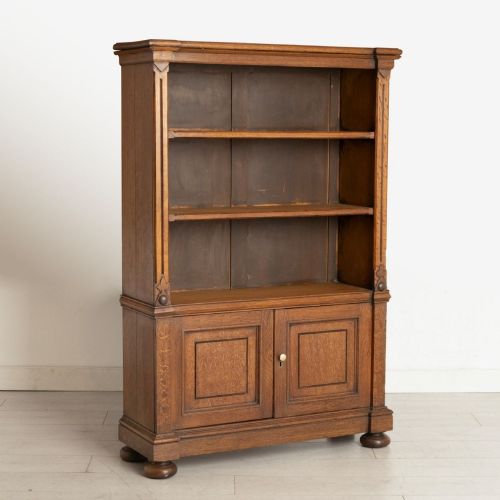
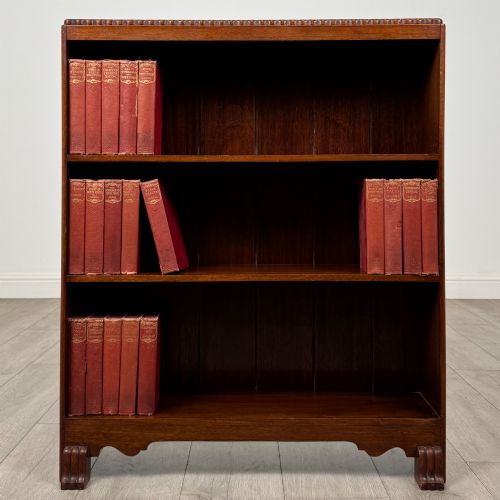
A dark brown open bookcase offers accessible shelving for libraries, combining rich timber tones with practical everyday storage.
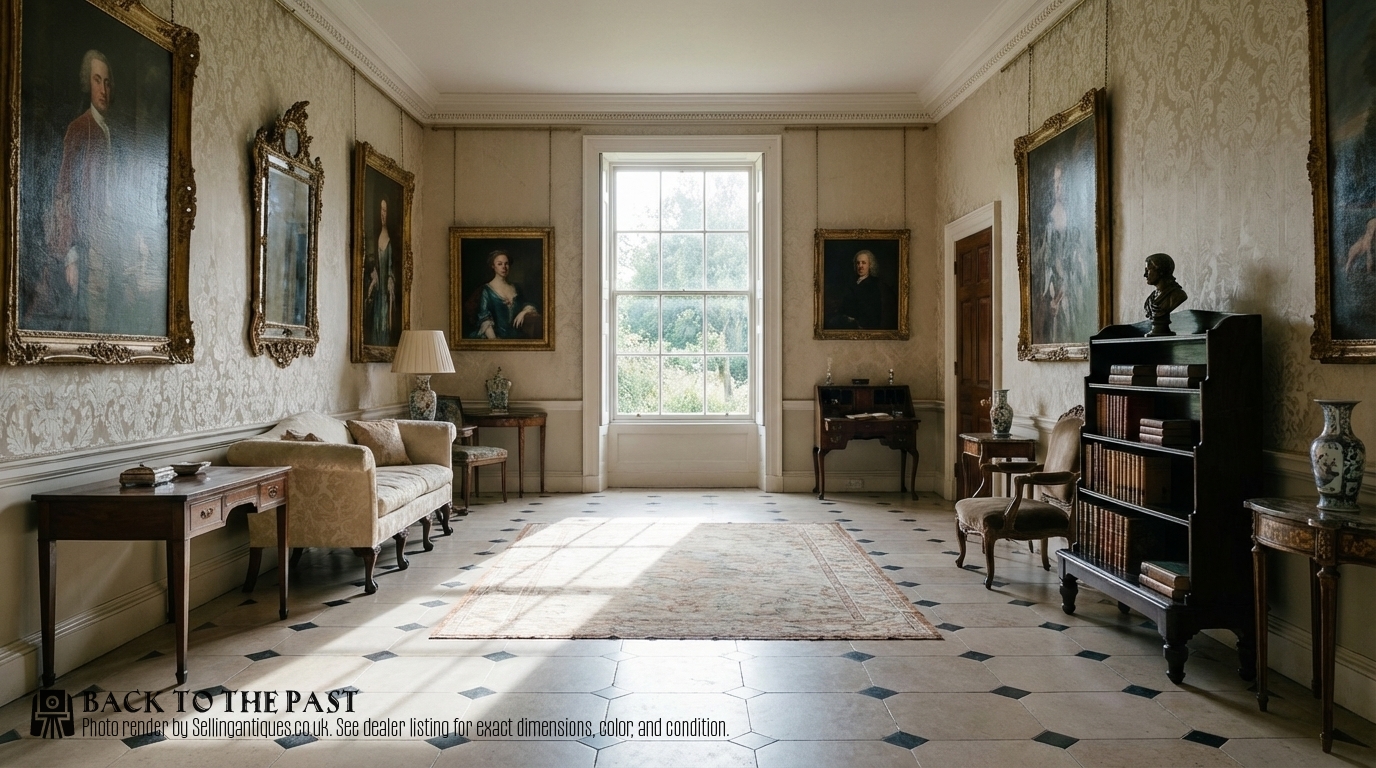
Dark Brown Open Bookcase
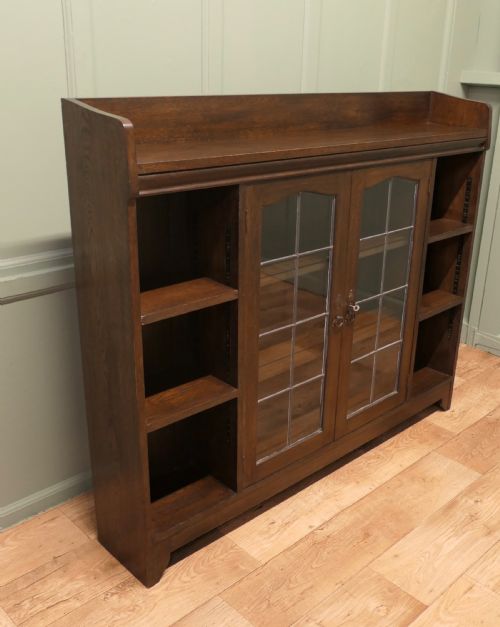
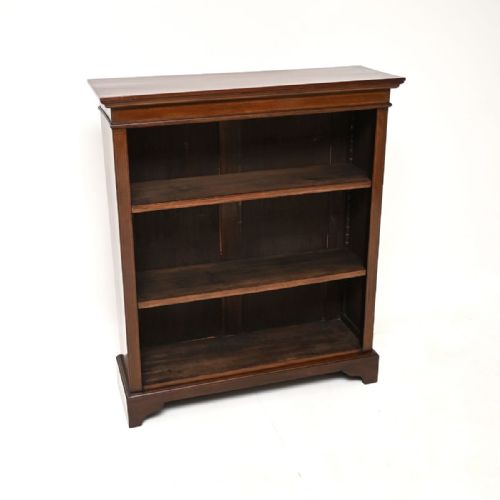
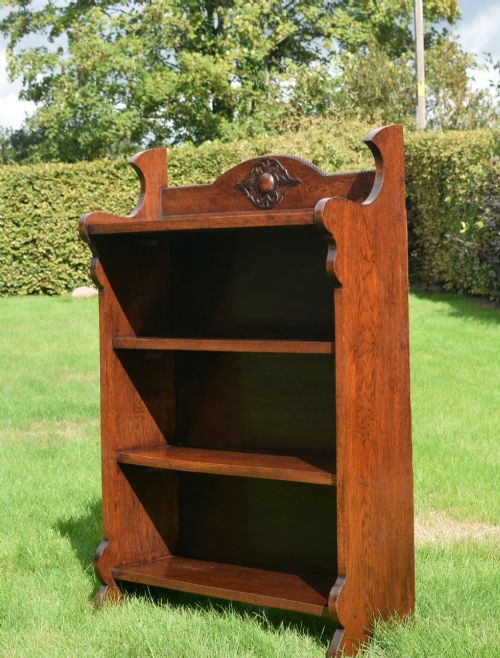
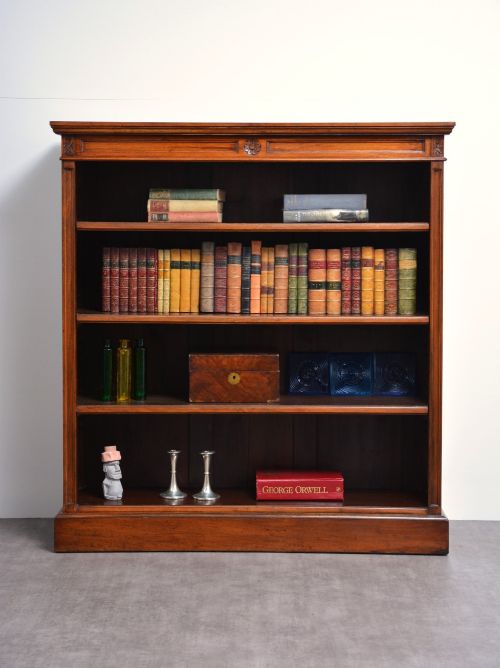
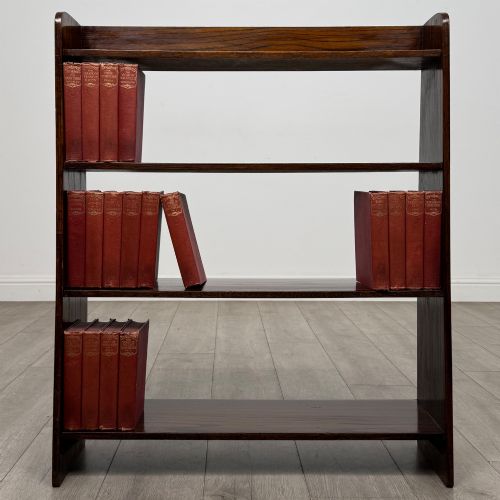
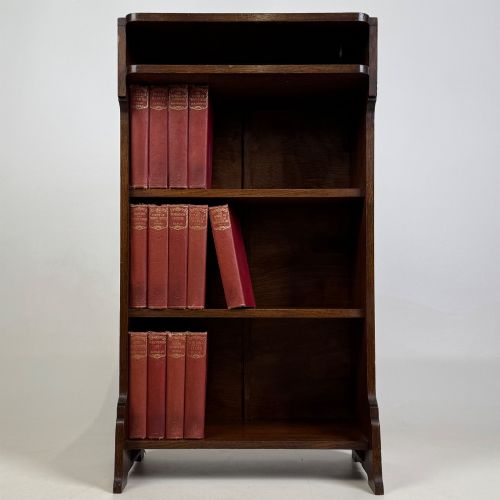
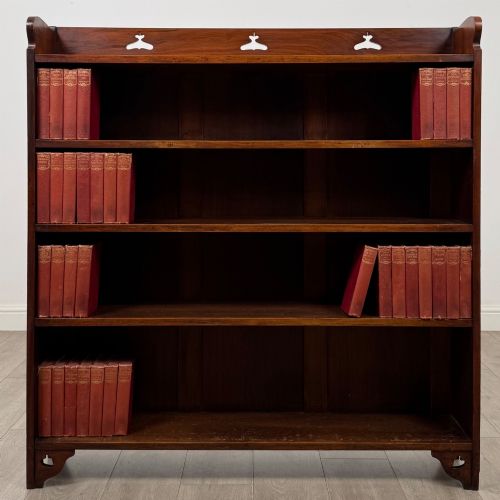
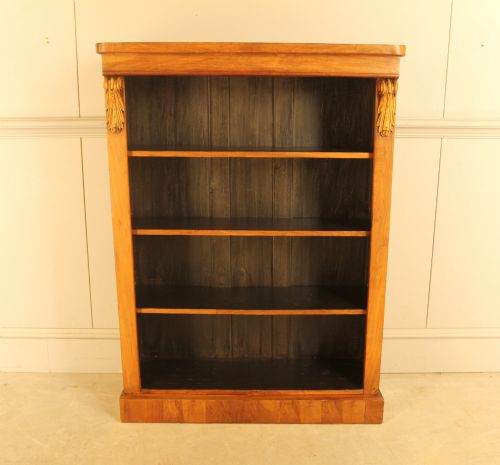
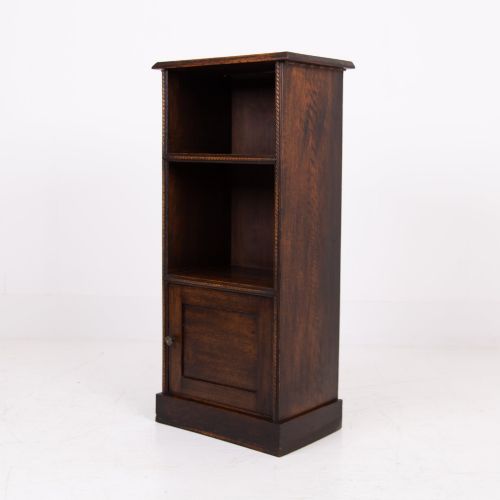
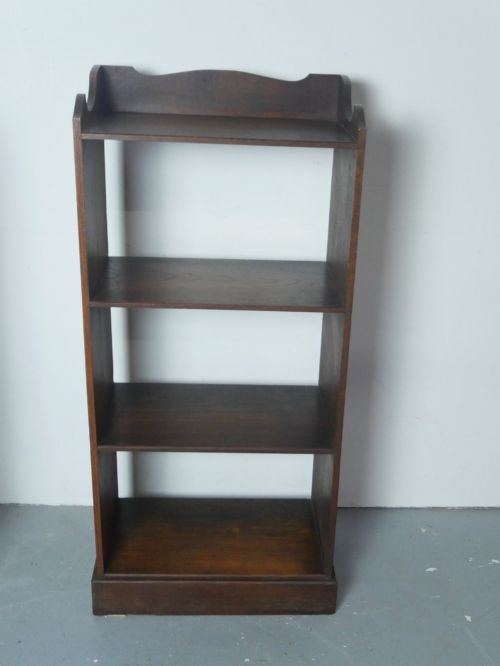
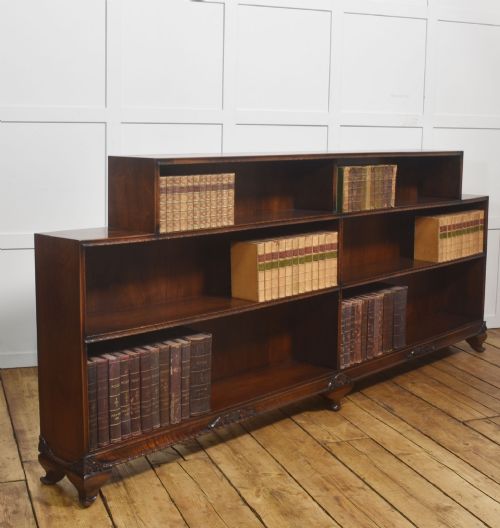
A dark brown open bookcase provides accessible shelving for everyday collections, appearing frequently in oak, mahogany, and walnut across Victorian, Edwardian, and later twentieth-century periods. These pieces range from small table units to large library furniture, often featuring adjustable shelves for practical utility.
Victorian and Edwardian iterations dominate current selections, alongside Arts and Crafts, Art Deco, and industrial examples. Buyers encounter everything from compact oak shelves to tall walnut structures and breakfront library designs.
Construction and materials
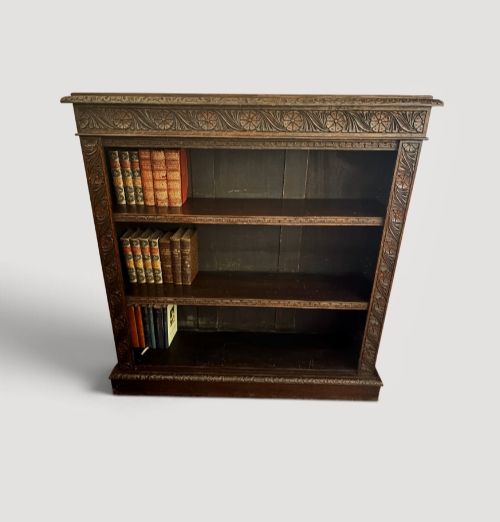
Carpenters utilised solid timbers such as oak, mahogany, walnut, and pine, frequently applying flame mahogany veneer or rosewood veneer to visible surfaces. Carved details, brass fittings, and iron elements appear across various styles, including Gothic Revival and Jacobean Revival influences.
Adjustable shelf mechanisms allow functional adaptation, while beaded edges and leather tops provide subtle decorative finishes. Construction methods reflect the period of origin, from nineteenth-century hand joinery to early twentieth-century workshop production.
Styles represented across the inventory include Victorian, Edwardian, Arts and Crafts, Art Deco, and industrial designs.
Assessing craftsmanship and proportion
Quality rests upon the selection of timber and the precision of the joinery, distinguishing sturdy solid wood construction from simpler veneered alternatives. Superior examples demonstrate thoughtful proportions, balanced carving, and refined architectural details.
The sophistication of the timber grain, particularly in walnut and flame mahogany, elevates a piece visually. Interior adaptability, such as smoothly functioning adjustable shelving, further separates standard utilitarian items from finer cabinetwork.
The Dark Brown Open Bookcase Glossary
- Open bookcase
- A piece of furniture designed for storing books without front doors, allowing direct visibility of the contents. These items range from small low shelves to tall library fixtures.
- Adjustable shelves
- Shelves that can be moved to different heights using internal racks, pegs, or sliding mechanisms. This feature accommodates books of varying sizes.
- Breakfront
- A cabinet or bookcase design where the central section projects forward from the flanking wings. This creates architectural depth and visual weight.
- Veneer
- A thin layer of figured wood applied over a secondary timber base to create a decorative surface. Common examples include flame mahogany and rosewood.
- Gothic Revival
- A nineteenth-century architectural and decorative style incorporating pointed arches, tracery, and heavy carving. It appears on several Victorian oak bookcases.
Dark Brown Open Bookcase: Frequently Asked Questions
How do I style an open bookcase?
Arrange books vertically and horizontally alongside decorative objects to create visual balance on the shelves. Mixing hardback spines with small framed items softens the architectural lines of the timber.
Ensure adequate clearance around the piece so the dark brown wood tones complement existing room layouts without overwhelming smaller spaces.
Are the shelves usually adjustable?
Many period examples include adjustable shelving systems that allow you to customise vertical spacing for different book sizes. Wooden supports or metal pins hold these shelves securely within the interior walls.
Checking the mechanism inside reveals whether the shelves were built to move or fixed permanently in place by the maker.
What woods were commonly used?
Cabinetmakers relied heavily on oak, mahogany, and walnut for these bookcases, often selecting solid planks or applying decorative veneers. Pine frequently served as a secondary wood for internal backs and linings.
These dense hardwoods produced the deep brown tones characteristic of Victorian, Edwardian, and later twentieth-century domestic furniture.
How do I identify the period?
Stylistic clues such as carved oak foliage point towards Victorian Gothic Revival, while cleaner geometric lines suggest Art Deco or Arts and Crafts influence. Construction techniques and hardware styles further help narrow down the decade of manufacture.
Reference labels or general design traits connect individual pieces to nineteenth-century workshops or early twentieth-century production methods.