



Dark Brown Oak Armchairs
Dark brown oak armchairs offer a sturdy anchor for any room, bringing centuries of honest joinery and rich timber grain into daily use.
Dark Brown Oak Armchairs
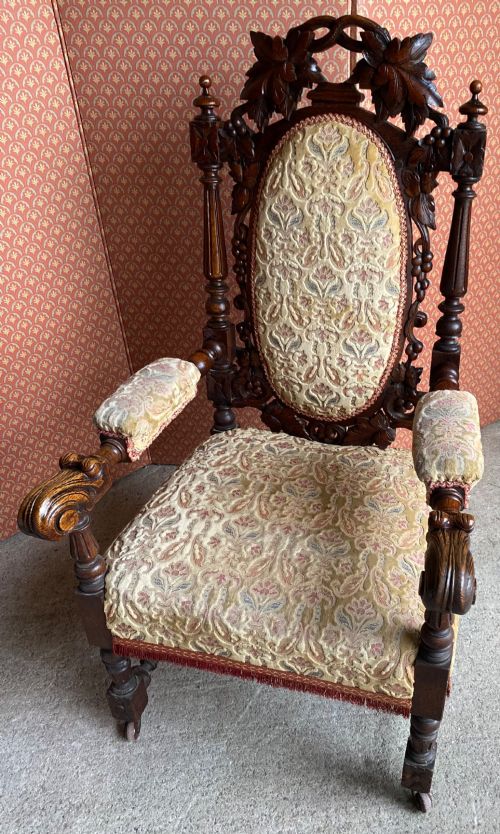
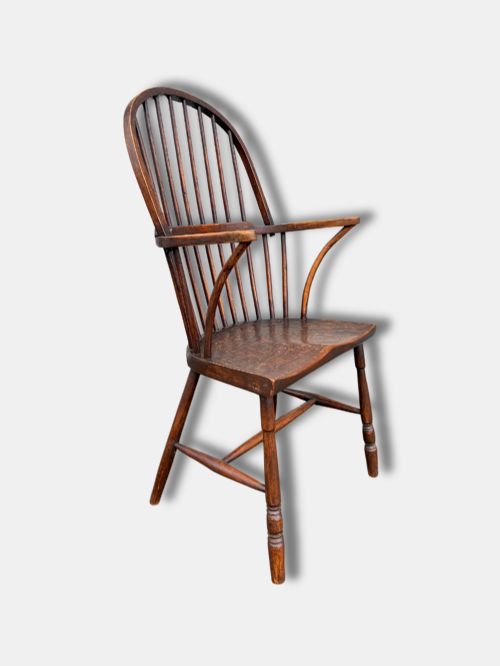
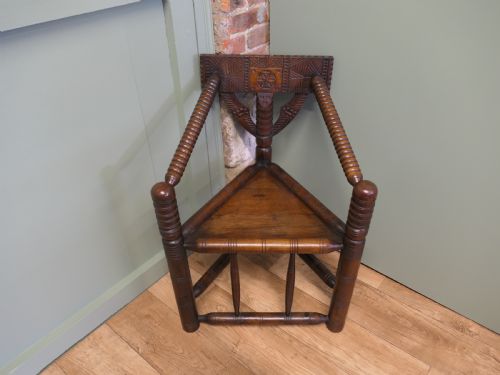
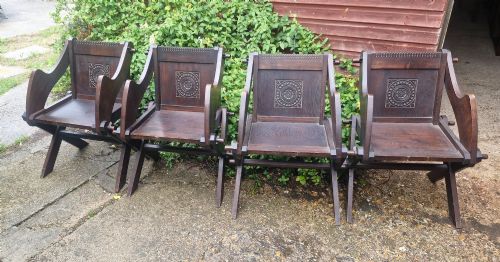
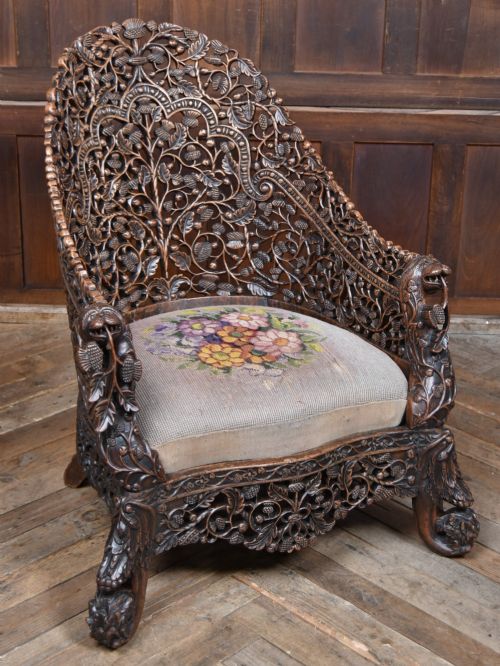
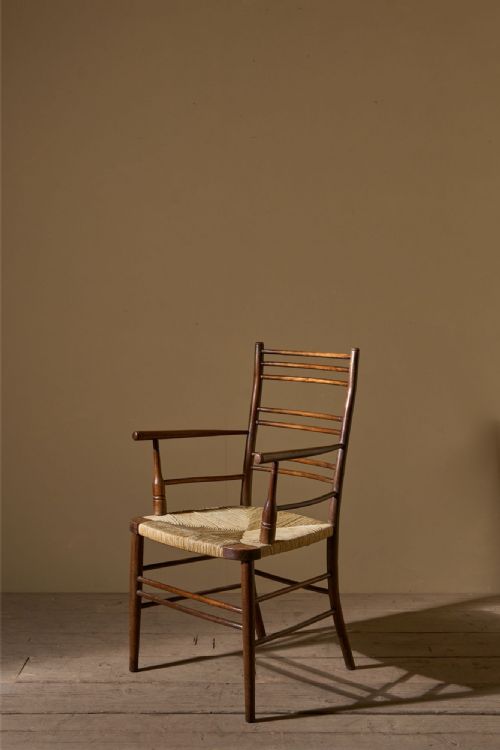
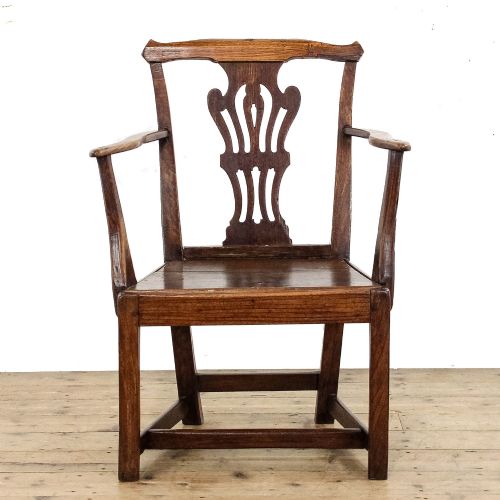
Dark brown oak armchairs encompass a wide variety of seating forms spanning several centuries of British and regional craftsmanship. Buyers seeking this phrase encounter sturdy wainscot chairs, country Windsors, ladder backs, and low-slung lambing chairs designed for domestic comfort.
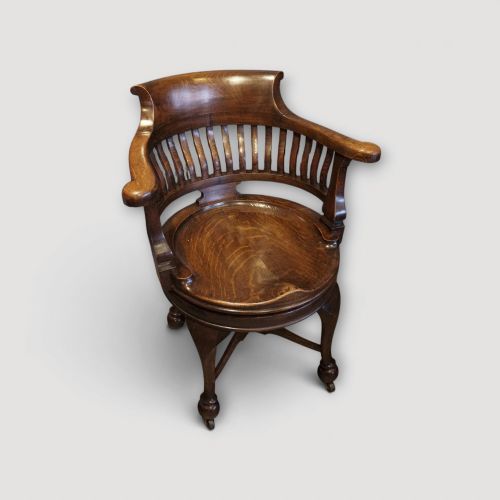
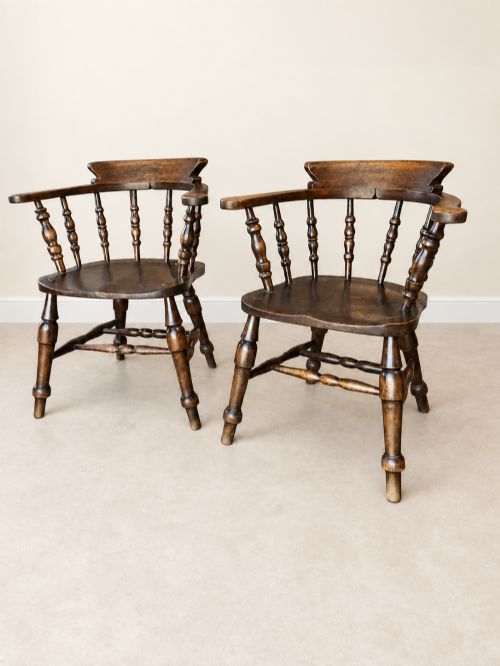
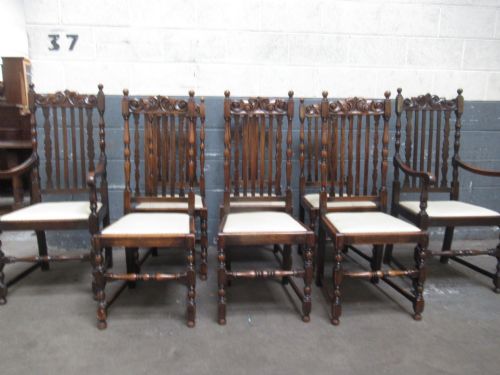
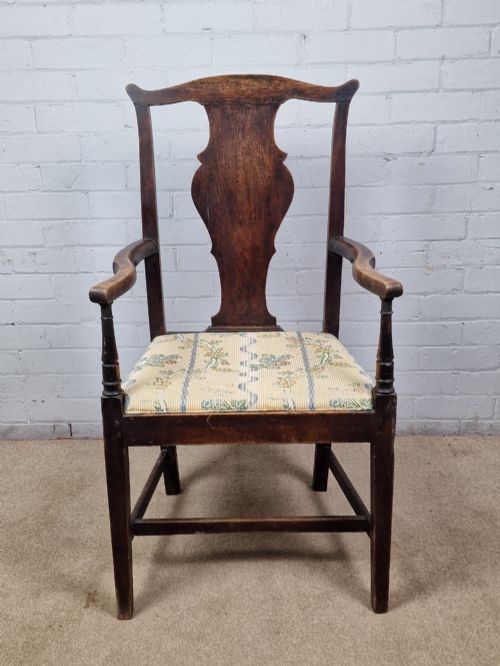
The selections on this page range from heavy 17th-century panel-backed examples to lighter Edwardian smokers' bows and Arts and Crafts creations. Regional variations include Scottish Windsors, Lancashire wainscot forms, and Yorkshire farmhouse rocking chairs built for longevity.
Many pieces show the deep, natural patina acquired through generations of polishing and handling. The wood tones lean towards dark brown, often revealing the distinct medullary rays characteristic of quarter-sawn oak.
Materials and construction
Makers relied primarily on native oak for the structural frames, often supplementing the build with elm, ash, or beech for turned spindles and bending parts. Rush, leather, fabric, and brass details appear across different forms to provide seating pads, upholstery, or decorative tacking.
Joinery methods depended heavily on the period, utilising mortise and tenon joints pegged with wood in early wainscot examples, and steam bending techniques for the curved backs of later Windsor chairs.
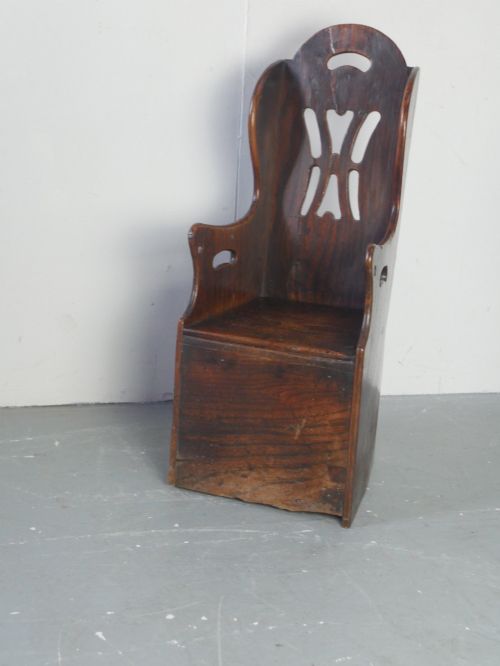
Several examples include built-in under-seat drawers once used to store pipes, matches, or small sewing kits.
Quality differences
The distinction between standard domestic seating and superior examples rests in the crispness of hand-carved details, the integrity of the original joints, and the survival of untouched surface finishes. Early panel-backed and wainscot pieces gain distinction from deep relief carving and substantial timber thickness.
Later vernacular pieces achieve merit through harmonious proportions, well-turned spindles, and minimal structural alterations over time.
The Dark Brown Oak Armchairs Glossary
- Wainscot chair
- A heavy, stiff-backed wooden armchair prevalent in the 17th century, constructed with panelled backs and solid armrests.
- Windsor chair
- A chair built with a solid wooden seat into which the legs and back spindles are bored directly, often featuring a bentwood bow.
- Smoker's bow
- A low-backed Windsor-style armchair with a continuous curved armrail, commonly found in 19th-century country houses and offices.
- Lambing chair
- An enclosed wooden armchair designed with solid sides to block drafts, frequently incorporating a small under-seat drawer.
- Medullary rays
- The ribbon-like flecks visible in quarter-sawn oak that indicate the natural grain structure of the timber.
Dark Brown Oak Armchairs: Frequently Asked Questions
How do I date an oak armchair?
Dating relies on examining the construction methods, tool marks, and design motifs present in the frame. Early pieces from the seventeenth century utilise pegged mortise and tenon joints with hand-split panels.
Later Victorian and Edwardian revivals often show machine-sawn timber and standardised turning that distinguish them from genuine antique work.
Are oak armchairs comfortable for daily use?
Many styles, such as Windsor chairs and smokers' bows, feature ergonomically shaped wooden seats designed for extended sitting. Adding loose squab cushions can improve comfort without altering the historic frame.
Heavier wainscot chairs offer a more upright posture suited to desks or formal dining.
How should I clean a dark oak finish?
Maintenance requires only a soft cloth and occasional applications of traditional beeswax to nourish the dry wood fibres. Avoid modern silicone-based polishes that build up a hazy residue over the historic patina.
Keep the timber away from direct heat sources to prevent the oak from splitting.
What is the difference between a wainscot and a panel-backed chair?
A wainscot chair is a specific, heavy form of panel-backed seating originating in the Tudor and Stuart periods. The term panel-backed can also describe later vernacular or revival chairs that mimic the earlier boxy construction.
True wainscot examples display substantial corner posts and architectural mouldings.