




Dark Brown Mahogany Clock
A dark brown mahogany clock brings deep wood tones and precise mechanics together, offering both practical timekeeping and a commanding presence in a room.
Dark Brown Mahogany Clock
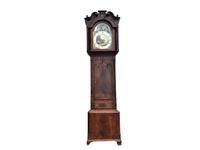
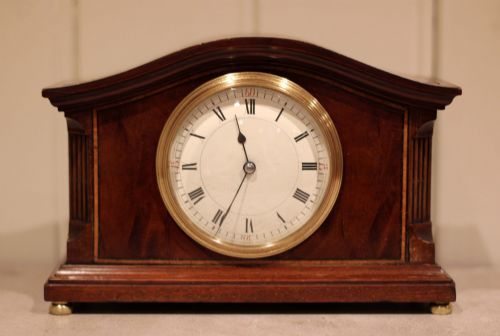
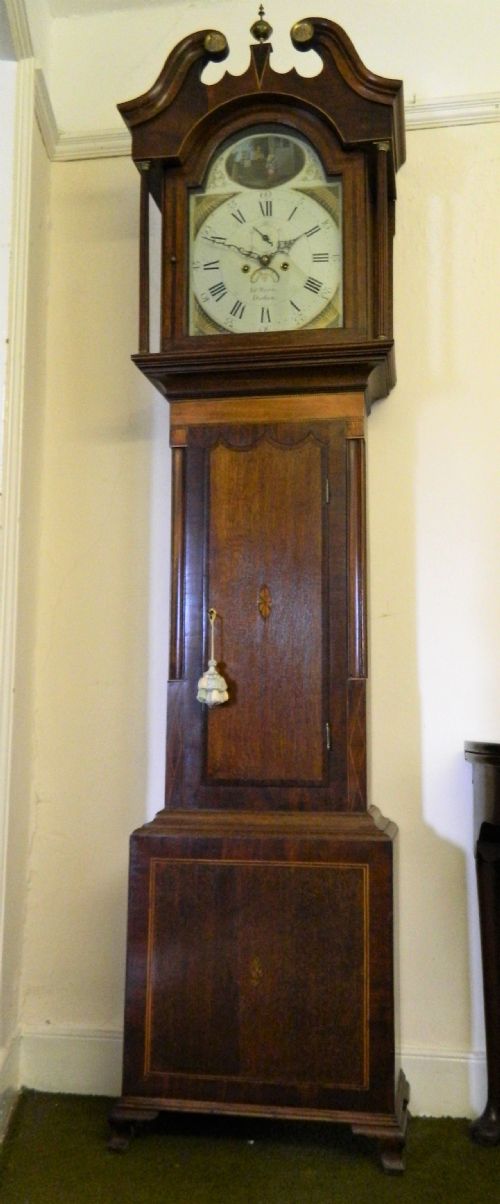
A dark brown mahogany clock encompasses standing floor models and smaller shelf designs that share a rich timber exterior. These pieces span periods from the Georgian era through to Edwardian times, reflecting shifts in domestic interior design.
The longcase or grandfather clock dominates the taller forms, often featuring eight-day movements and painted or brass dials. Mantel clocks and wall-mounted timepieces provide more compact alternatives for domestic spaces.
Makers working in London, Birmingham, Paisley, and provincial towns signed many of these pieces, recording regional variations in dial painting and case construction. The materials combine deep-grained timber with glass viewing panels and metal dial faces.
Materials and construction methods
Mahogany forms the primary case structure across these pieces, supplying a stable timber that accepts dark polishing and deep carving. Oak appears in structural carcases, while brass and silvered metal furnish the dial plates and bezels.
Movements rely on iron, brass wheels, and heavy weights or spring-driven fusee mechanisms to regulate the time. Glass protects the delicate painted iron or brass dials from dust and damage in daily use.
The listings demonstrate a wide range of periods, stretching from the seventeenth century through Georgian and Victorian eras to Edwardian times.
Assessing quality in construction and movement
The refinement of the mahogany case separates standard production from finer workshop output, evident in the depth of timber figure and the crispness of mouldings. Dial execution plays a major role, with hand-painted moon rollers and engraved brass markers indicating superior craftsmanship.
Mechanical complexity distinguishes the movements, ranging from simple timepieces to eight-day striking mechanisms, chiming trains, and moon phases. The reputation of the maker inscribed on the dial further influences the standing of the piece.
Bush of London·Matt Wylie Paisley·Edward White Birmingham·Brockbanks of London·John Wilson·Geo Tarratt of Leicester·John Wyat Altringham·Negretti and Zambra
The Dark Brown Mahogany Clock Glossary
- Longcase clock
- A tall pendulum clock housed in a wooden case designed to stand directly on the floor. These towers protect the hanging weights and pendulum from air currents.
- Fusee mechanism
- A conical pulley used in spring-driven clocks to maintain even power as the mainspring unwinds. This device ensures consistent timekeeping across the winding cycle.
- Bracket clock
- A portable table or mantel clock originally designed to sit upon a wall bracket. They frequently feature carrying handles and glazed side panels.
- Moon roller
- A revolving dial mechanism that tracks the phases of the lunar cycle behind a shaped aperture. Makers often paired this feature with painted arch dials.
- Silvered metal
- A brass dial plate treated with a silver solution to create a matte white metallic finish. Engraved numerals and signatures stand out clearly against this surface.
Dark Brown Mahogany Clock: Frequently Asked Questions
How do I wind an eight-day mahogany longcase clock?
Insert the winding key into the holes on the dial face and turn it slowly until the weight rises to its top position. Take care not to over-wind the mechanism, stopping as soon as resistance increases.
Ensure the pendulum hangs freely before setting the minute hand to the correct time. Move the minute hand only in a clockwise direction to avoid damaging the internal gear train.
Where should I place a heavy mahogany grandfather clock?
Position the clock against a solid interior wall where temperature and humidity remain relatively stable. Exterior walls subject the timber case and internal movement to seasonal dampness and drafts.
Set the base firmly on level flooring to ensure the pendulum swings with an even beat. Securing the upper case to the wall with a discreet bracket prevents accidental tipping in busy hallways.
How do I distinguish a Georgian clock from a Victorian one?
Examine the proportions of the mahogany case and the stylistic details of the hood and dial. Georgian examples often display restrained classical proportions, arched brass dials, and fine cabinetwork.
Victorian pieces frequently feature heavier proportions, bolder mouldings, and painted iron dials with floral spandrels or mechanical moon rollers. Regional cabinetmakers continued using traditional forms well into the nineteenth century, blending stylistic markers.
What is a fusee mechanism in a mantel clock?
A fusee is a conical pulley connected to the mainspring by a fine steel chain or cord. As the spring loses tension, the chain moves to a wider part of the cone to maintain uniform torque.
This clever mechanical device compensates for the dropping power output of the spring. It allows portable clocks to maintain steady accuracy throughout the running period between windings.