

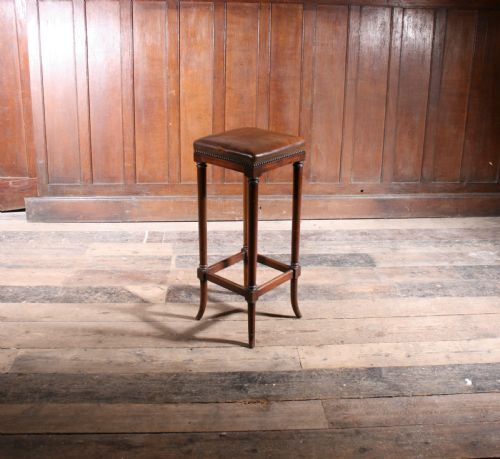


Dark Brown Leather Stool
A dark brown leather stool brings rich texture and solid timber frames into a room, offering both a seat and a tactile surface.
Dark Brown Leather Stool
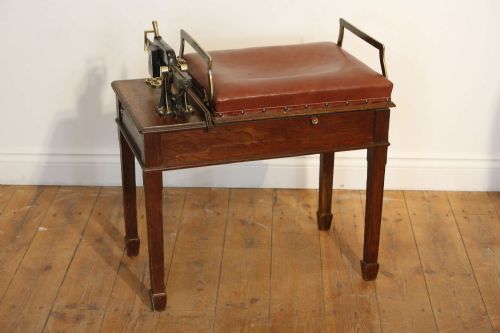
A dark brown leather stool spans forms from piano seats and low footstools to large centre ottomans and novelty elephant footstools. These pieces draw on periods ranging from the Georgian and Regency eras through the Victorian age, the Edwardian period, and into the 1930s.
The selection ranges from tall bar-style antiques to low domestic footstools and substantial country house seating. Each example relies on traditional cabinet woods like mahogany, oak, and walnut to support the dark leather top.
How they were made
Makers constructed the primary frames of a dark brown leather stool using solid hardwoods such as mahogany, oak, and walnut, frequently incorporating brass details or turned woodwork. Joinery methods varied from pegged mortise and tenon joints in Arts and Crafts pieces to traditional cabinet framing in Georgian and Regency examples.
Upholsterers stretched dark leather over internal padding, securing the hides with traditional tacks and sometimes incorporating deep buttoning. Specialised forms, such as novelty elephant stools, involved taxidermy elements paired with fitted leather saddles and brass accents.
Dark Brown Leather Stool Retail Price Guide 2026
Typical asking prices for dark brown leather stool among the pieces listed under this phrase on Sellingantiques today, from the lower quarter to the upper quarter. They describe what is for sale here now, not the wider market.
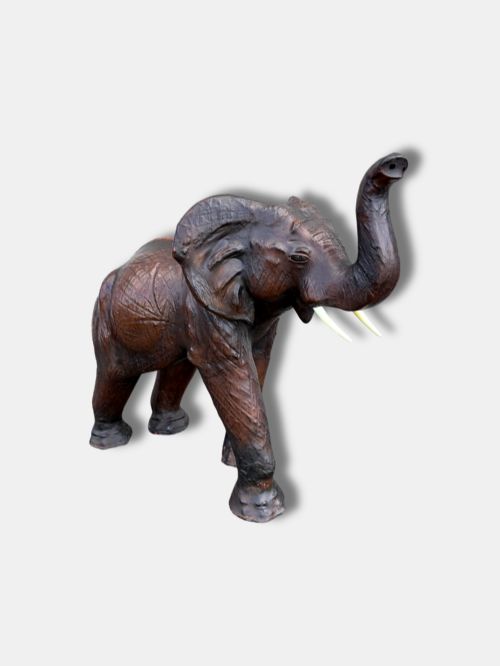
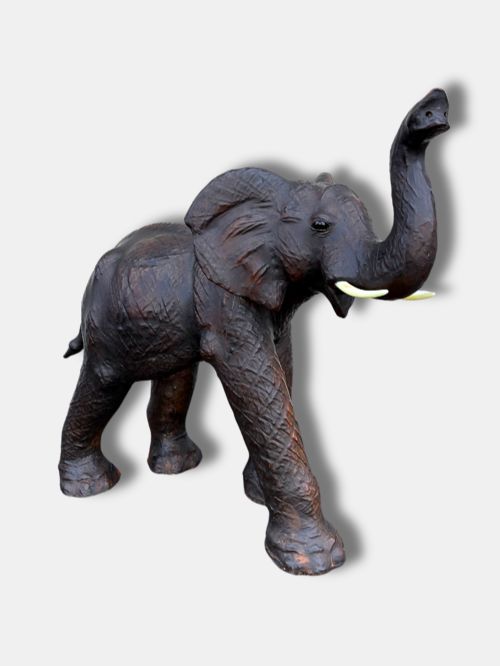
Elephants occasionally double as furniture, provided they are stuffed, leather-clad, and stamped by Liberty around 1930.
What varies in quality
Quality in a dark brown leather stool rests upon the crispness of the timber carving and the structural integrity of the frame. Pieces featuring finer cabinet woods like figured walnut or select mahogany demonstrate superior workshop standards compared to simpler utilitarian variants.
The depth of the leather's natural patination and the precision of traditional upholstery work set finer examples apart. Maker attribution, such as pieces originating from Arthur Simpson of Kendal or retailed through Liberty, elevates the standing of the work.
Arthur Simpson Of Kendal·Liberty
The Dark Brown Leather Stool Glossary
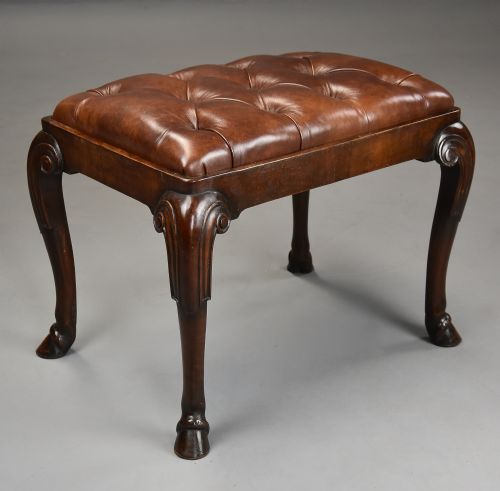
- Cabriole leg
- A furniture leg that curves outward at the knee and tapers inward to an ankle, common in Queen Anne revival pieces. This design mimics the shape of an animal's curving leg.
- Buttoned leather
- Upholstery pulled deep into the padding and secured with pleats, creating a tufted surface. It provides both structural tension and a distinct patterned texture.
- Arts and Crafts
- A design movement prioritising handcraftsmanship and simple construction over mass production. Pieces from this period often display exposed timber joinery and honest materials.
- Moorish Revival
- An architectural and decorative style incorporating geometric patterns and exotic ornamentation. In seating, this translates to intricate latticework and patterned woodwork.
Dark Brown Leather Stool: Frequently Asked Questions
What periods do these stools come from?
The listings encompass items spanning the Georgian and Regency eras, the 19th century, the Edwardian period, and around 1930. Each era brings distinct timber choices and stylistic details to the frame.
Cabinet woods and upholstery methods shifted across these decades, moving from formal revival styles toward Arts and Crafts simplicity and novelty forms.
How were leather elephant stools used?
Novelty elephant footstools served as functional seating or resting places in grand 19th-century and early 20th-century interiors. They combined taxidermy elements with robust leather saddles.
These substantial pieces acted as conversation items in country houses and studies, reflecting the colonial tastes of the period.
How do I care for antique leather?
Antique leather benefits from gentle cleaning and occasional conditioning to maintain its flexibility and deep brown tone. Keeping the material away from direct heat sources prevents the hide from drying out.
Allowing the natural patination to develop preserves the historical character of the piece without stripping away its age.
Where do revolving piano stools work best?
Revolving piano stools function effectively as adjustable seating at desks or as flexible low seats in a living space. Their mechanical height adjustment provides practical utility alongside traditional woodwork.
Placing them where their rotating mechanism can be appreciated highlights the functional engineering of the Regency and Victorian periods.