


Dark Brown Casket Box
These dark brown casket box pieces range from Georgian mahogany to Victorian rosewood and carved Black Forest timber.
Dark Brown Casket Box
When you search for a dark brown casket box, you encounter a wide variety of timber containers spanning the Georgian, Regency, and Victorian periods. The selection includes everything from jewellery boxes and stationery cabinets to humidors, games boxes, and decorative caskets.
You are most likely to meet rosewood, walnut, and mahogany pieces from the nineteenth century, often with brass mounts or inlaid decoration. Forms range from sarcophagus-shaped jewellery boxes to chip-carved Welsh oak and Anglo-Indian coromandel workboxes.
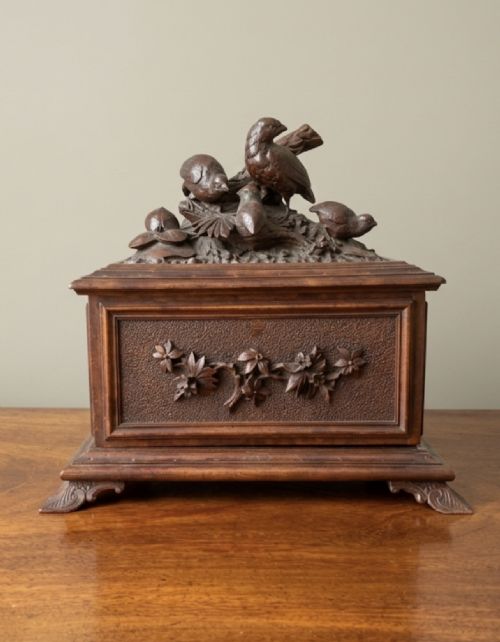
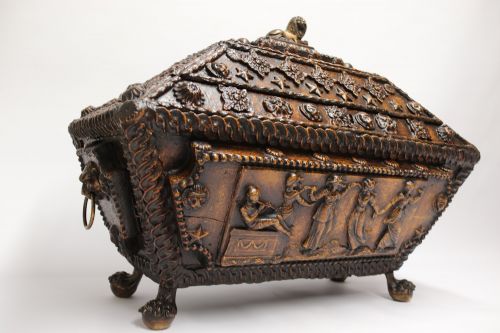
The assortment also encompasses specialised items like French table boxes, heavy cast metal coffers, and Black Forest carved wood pieces. Each serves as a tangible link to past domestic organisation and personal storage habits.
How they were made
Cabinetmakers utilised dense hardwoods such as mahogany, rosewood, walnut, and oak to construct these boxes, often shaping them into sarcophagus or coffer forms. Surfaces frequently receive hand-carved ornamentation, such as the chip carving seen on Welsh oak or the deep relief work of Black Forest pieces.
Decoration relied on applied metalwork, including rosette-shaped brass mounts, cast metal elements, and mother of pearl inlay. Leather binding, gesso decoration, and painted or gilt finishes further distinguish the exterior surfaces of these containers.
Listings feature woods such as oak, mahogany, walnut, rosewood, and coromandel, alongside brass, leather, and cast metal.
What varies in quality
The standard of timber selection and joinery marks the primary difference between ordinary containers and exceptional examples. Finer pieces demonstrate precision in the fitting of rosewood, coromandel, or mahogany, alongside the crisp execution of hand-carved details.
Hardware and interior appointments also dictate the grade of a box. Superior specimens incorporate specialised mechanisms like spring locking systems, alongside intact original linings, quality brass mounts, and intricate mother of pearl inlay.
The Dark Brown Casket Box Glossary
- Casket
- A small decorative box or chest used for holding jewels, valuables, or letters. These objects often feature hinged lids and secure locking mechanisms.
- Coromandel
- A dense, heavily figured timber imported from Asia, valued for its rich dark brown colour and striking grain. It appears frequently on high-end nineteenth-century workboxes.
- Gesso
- A plaster-based material applied to wood surfaces and built up into relief designs before being painted or gilded. It creates ornate decorative effects on early nineteenth-century pieces.
- Humidor
- A specialised box designed to store cigars at a constant humidity level. These containers often feature fitted wooden interiors and secure closures.
Dark Brown Casket Box: Frequently Asked Questions
What were these boxes used for?
These containers served specific domestic functions ranging from storing personal jewellery and writing stationery to housing games sets and cigars.
Owners kept them on dressing tables, desks, and living room surfaces to protect valuable or frequently used personal items.
How do I date a wooden box?
Dating relies on identifying the timber species, construction techniques, and decorative styles characteristic of periods like the Georgian, Regency, or Victorian eras.
Hardware styles, lock types, and internal fittings also provide reliable clues regarding the decade of manufacture.
Where should I place a casket box?
These boxes function well as decorative accents on sideboards, coffee tables, or desks where their rich wood grains can be appreciated.
They also provide practical tabletop storage for small items like keys, trinkets, or current stationery.
How do I identify Black Forest carvings?
Black Forest pieces feature distinctive hand-carved wooden decoration, often depicting natural scenes, foliage, or animals with deep relief.
This distinct style emerged in Switzerland and the Black Forest region of Germany during the nineteenth century.