



Czech Art Deco Perfume Bottle
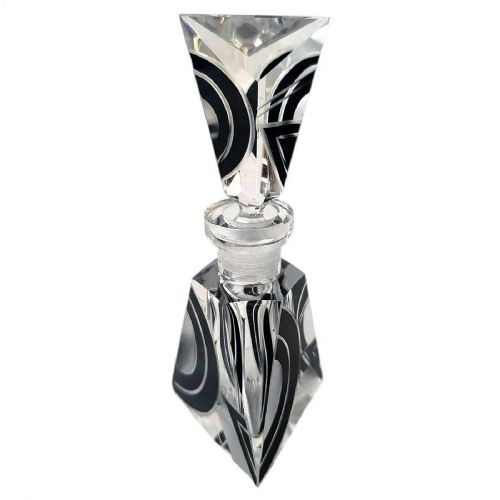
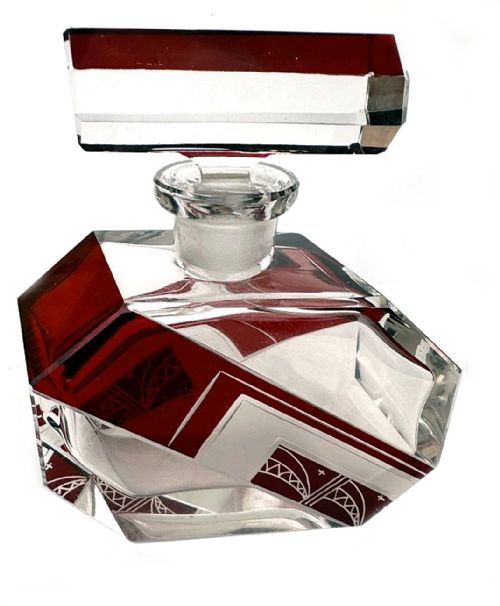
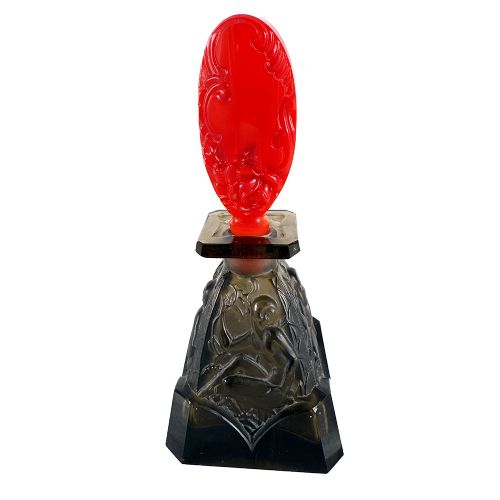
These czech art deco perfume bottle examples combine geometric cut glass and vibrant colour, offering a striking display of 1930s design.
Czech Art Deco Perfume Bottle
When you search for a czech art deco perfume bottle, you encounter striking vanity vessels originating from Bohemia and Czechoslovakia during the 1920s and 1930s. These pieces take the form of scent bottles, atomizers, and matching globe sets designed for dressing tables.
The objects seen here reflect the distinct geometric sensibilities of the Art Deco period. Most examples date from around 1930 and demonstrate the characteristic modernist aesthetic of the era.
How they were made
Makers utilised heavy glass and crystal, often shaped through moulding or intensive cutting techniques. These glass bodies were then combined with chrome, enamel, or gold leaf details to create high-contrast decorative surfaces.
Specialist workshops employed coloured glass, notably in shades of blue, alongside black enamel and silver elements. The integration of fabric and metal atomiser hardware completed the functional design of these vanity items.
The listings combine 1920 and 1930 periods with materials including crystal, chrome, gold leaf, and fabric.
What varies in quality
The distinction between standard production and exceptional work lies in the depth and precision of the glass cutting. Pieces featuring complex geometric facets and substantial crystal weight demonstrate superior craftsmanship.
Another factor is the complexity of applied decoration, such as intricate enamel work or the inclusion of precious metals like gold leaf. Well-preserved original mounts and matching atomiser hardware elevate the completeness of an individual bottle.
Karl Palda·Rudolf Hlousek·Hermanova
The Czech Art Deco Perfume Bottle Glossary
- Atomizer
- A perfume bottle fitted with a bulb and spray mechanism for diffusing liquid scent. These mechanisms often include fabric-covered squeeze bulbs.
- Crystal
- A high-clarity glass containing mineral additives that increase brilliance and weight. This material allows for sharper geometric facets during cutting.
- Enamel
- A glassy substance melted onto the surface of metal or glass for decoration. Black enamel is frequently utilised to create bold graphic contrast on Art Deco pieces.
- Geometric cut glass
- Glassware shaped with precise angular planes and linear patterns. This technique defines the visual vocabulary of 1930s dressing table accessories.
- Gold leaf
- Very thin sheets of beaten gold applied to surface details. This material adds metallic warmth alongside chrome and silver components.
Czech Art Deco Perfume Bottle: Frequently Asked Questions
How do I date a czech art deco perfume bottle?
Most authenticated pieces belong to the 1920s and 1930s production period. Stylistic indicators such as geometric cutting and specific maker attributions help establish this timeframe.
Examining the materials, including chrome mounts and coloured glass, further confirms the interwar manufacture of these vanity items.
Are these perfume bottles fragile?
The heavy crystal and moulded glass used in these pieces provide a sturdy construction. However, the sharp geometric corners and delicate applied elements require careful handling during placement.
Original metal atomiser hardware and enamel details also demand gentle maintenance to preserve their condition over time.
Did these bottles come in sets?
Certain workshops produced matching sets, such as globe perfume bottles accompanied by coordinating dressing table accessories. These paired groupings share identical glass colours and geometric cutting patterns.
Finding matched pairs or larger vanity sets remains a notable aspect of collecting interwar Bohemian glassware.