
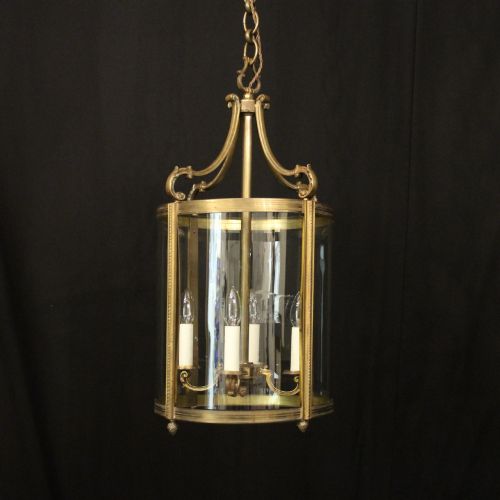
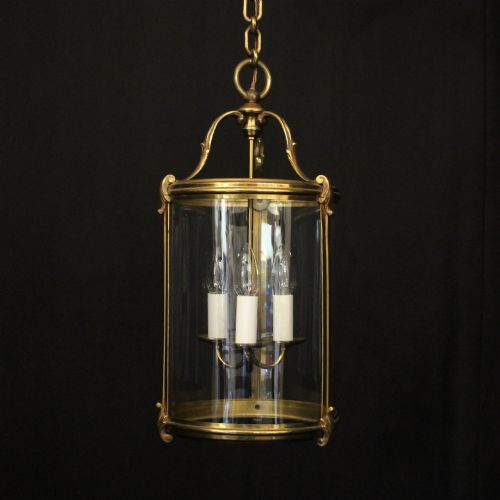
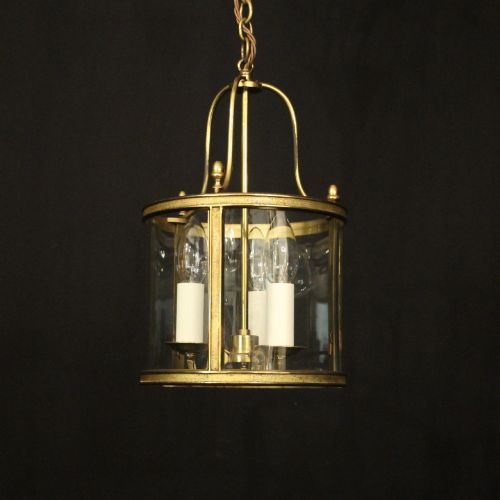
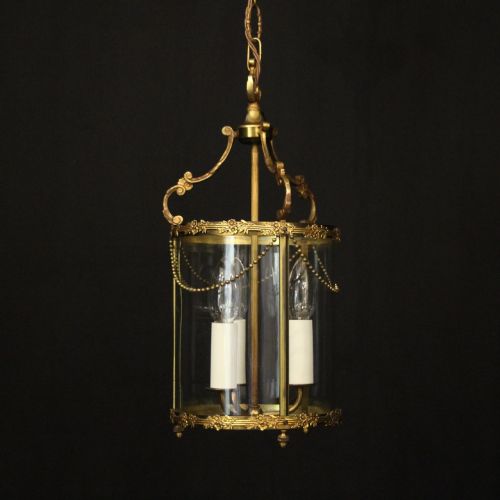
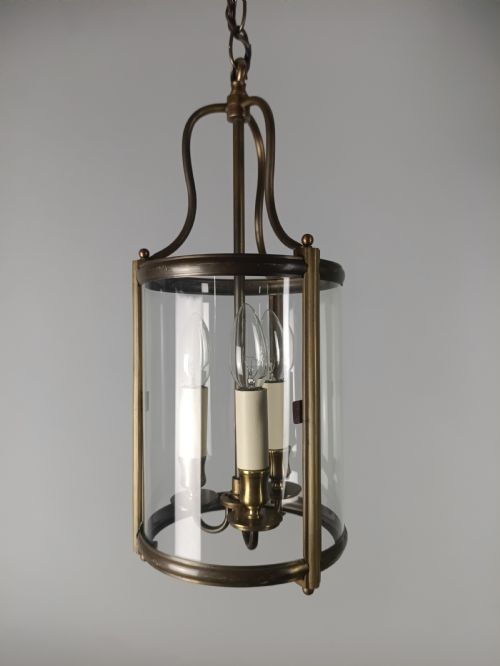
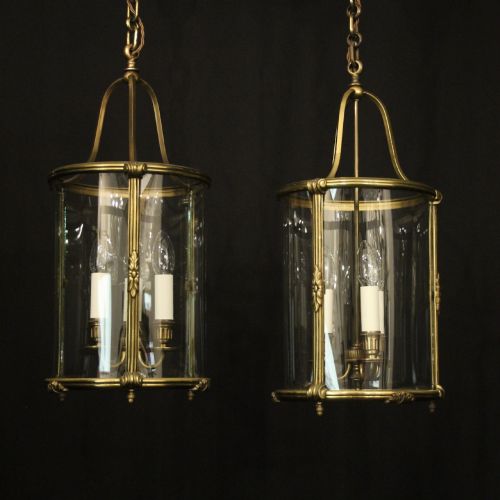
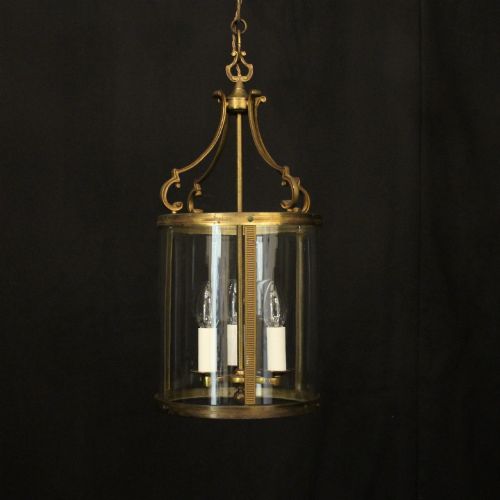
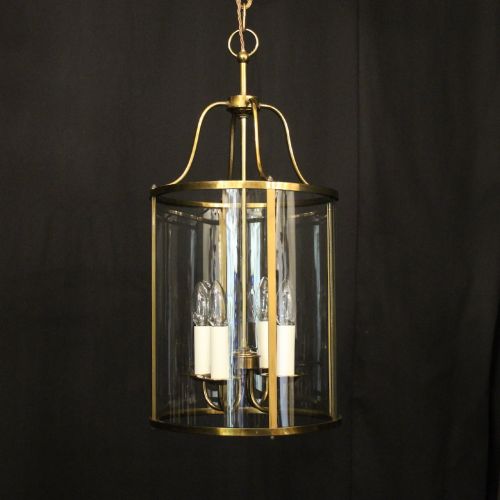
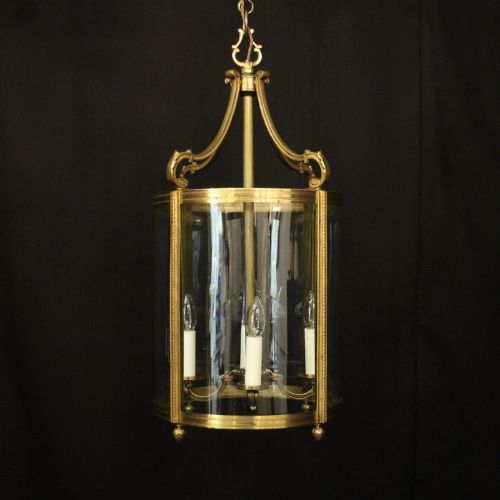


Cylindrical Hall Light
These cylindrical hall light fixtures bring immediate presence to an entrance, offering period glass and metalwork designed to illuminate a vestibule.
Cylindrical Hall Light
A cylindrical hall light provides functional overhead illumination for corridors and entranceways, drawing the eye upward with distinct vertical proportions. The pieces gathered here span from the 19th Century through the Edwardian period, 1900, 1920, and 1930.
Most examples originate from French workshops adhering to Classical, Neoclassical, Louis XV, Louis XVI, Empire, and Grand Regency design vocabularies. Alongside these French pieces sit English interpretations, frequently sharing the characteristic cylindrical or round glazed housing.
The dominant forms are hall lanterns, ceiling lights, pendant lights, and ceiling lanterns configured to hold single or multiple bulbs. Buyers encounter convex glass panels and open metal frameworks designed for central placement in traditional hallways.
Materials and Construction Methods
Makers constructed these fixtures using brass, gilt bronze, gilded brass, and standard bronze, often polishing or gilding the metal frames to catch the ambient light. These metallic structures provide the rigid skeleton necessary to support suspended glass panels.
Glass forms a critical component, appearing as curved or convex panes that soften the internal illumination while protecting the light source. Metal casting and joining techniques of the 19th and early 20th centuries ensure the durability of the hanging loops and frames.
Materials across these listings include plain and polished brass, standard bronze, and gilt or gilded bronze paired with glass.
Distinctions in Quality and Execution
Quality reveals itself in the crispness of the bronze casting and the depth of the gilding applied to the brass or bronze frames. Finer examples display meticulous attention to decorative mounts and balanced proportions across the cylindrical body.
The integrity of the glass panels - particularly convex formations - distinguishes superior lanterns from standard utility pieces. Heavier gauge metals and robust suspension mechanisms further elevate the structural caliber of individual light fixtures.
The Cylindrical Hall Light Glossary
- Convex
- Curved outward like the exterior of a sphere. This glass formation projects light more broadly across an entryway.
- Gilt Bronze
- Bronze metal coated with a thin layer of gold or gold-coloured leaf. It provides a rich, durable surface finish.
- Hall Lantern
- An enclosed hanging light fixture designed specifically for corridors and vestibules. These pieces combine structural metal frames with protective glass.
- French Empire
- A decorative style characterised by classical antiquity and grand symmetry. It frequently influences the ornamentation found on these hanging lights.
Cylindrical Hall Light: Frequently Asked Questions
Where should I hang a cylindrical hall light?
These fixtures suit entrance halls, corridors, and high-ceilinged vestibules where vertical space allows proper suspension. Their design directs illumination downward and outward into narrow architectural areas.
Ensure adequate clearance beneath the fixture so movement through the hallway remains unobstructed by the hanging drop.
How do I identify the period of a lantern?
Dating relies on material patination, casting techniques, and stylistic markers associated with Edwardian, 19th Century, or 1920 and 1930 production. French neoclassical and empire motifs point towards specific design revivals popular in those decades.
Examining the construction methods of the metal frame and glass fixings helps confirm the era of manufacture.
What is the difference between brass and gilt bronze?
Brass is an alloy of copper and zinc, offering a bright metallic tone when polished. Gilt bronze involves a bronze base treated with a gold surface application for enhanced lustre.
Gilt bronze generally appears on more ornate pieces influenced by French chateau and classical styles.
Can these lights handle multiple bulbs?
Many examples are designated as triple light or four light configurations within their descriptions. These multi-bulb setups provide greater illumination for larger entrance spaces.
Single light variations offer a more restrained glow suitable for compact hallways.