

Cylinder Front Writing Bureau
These cylinder front writing bureau designs combine concealed workspace with curved wooden lids, offering a practical solution for private correspondence.
Cylinder Front Writing Bureau
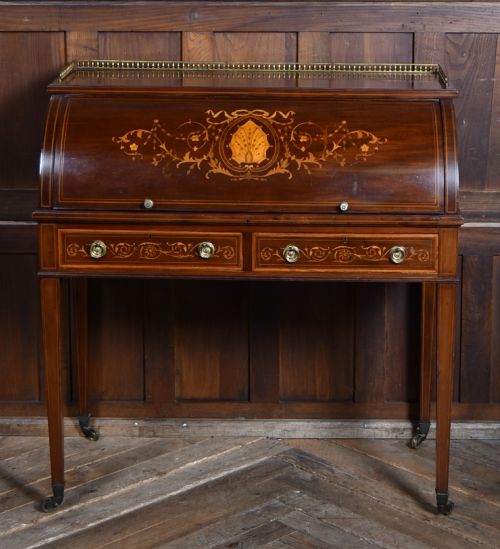
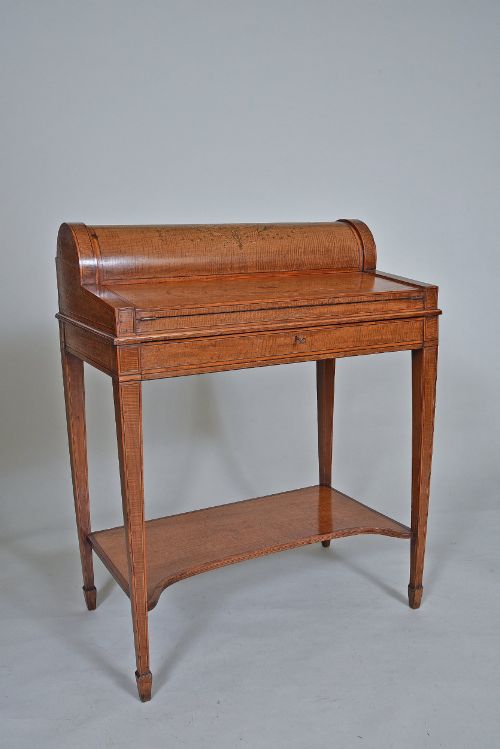
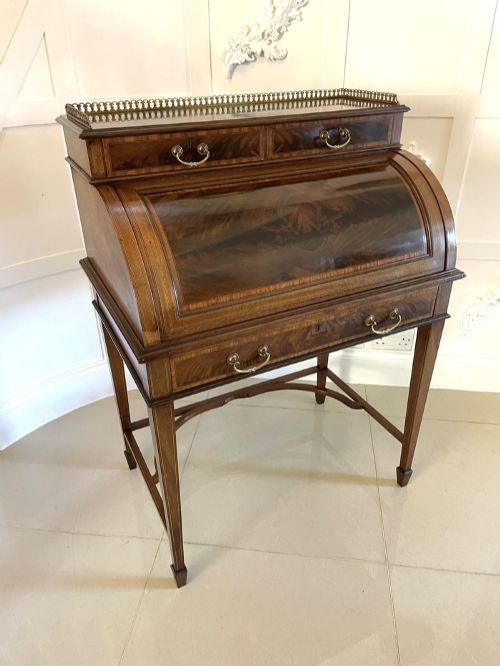
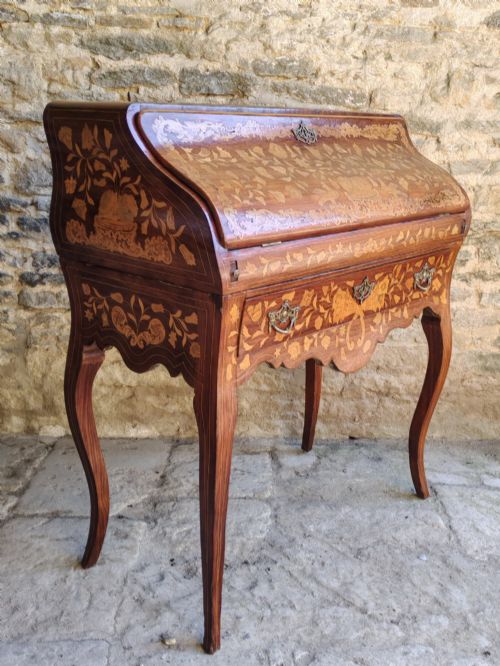
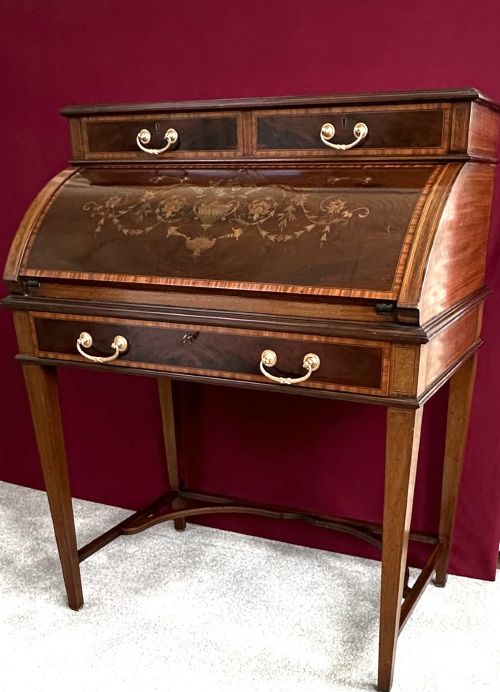
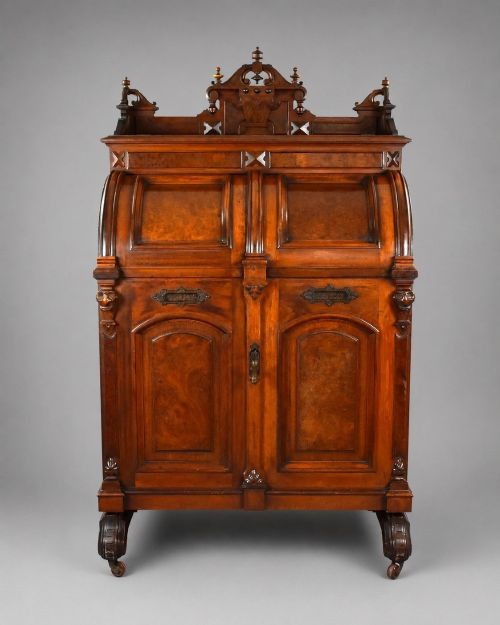
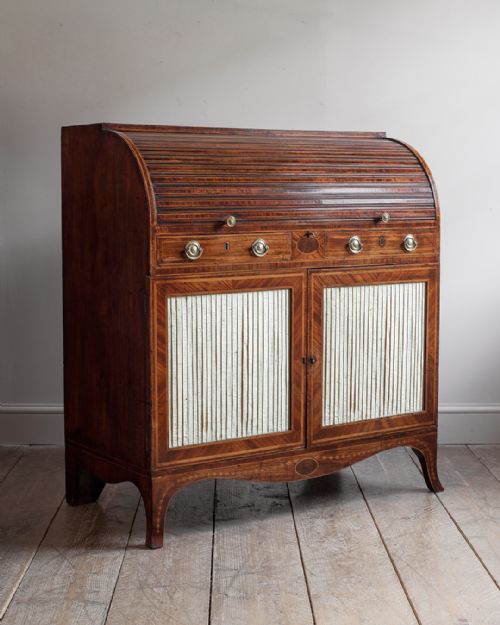
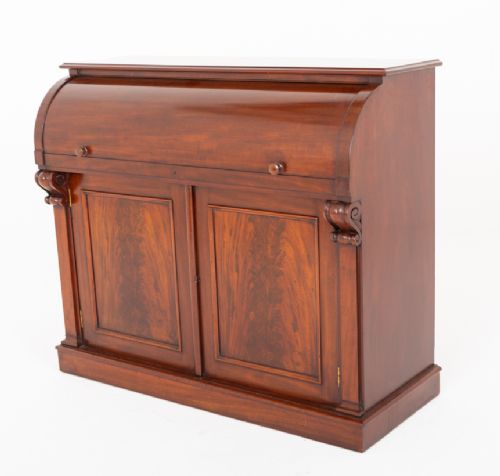
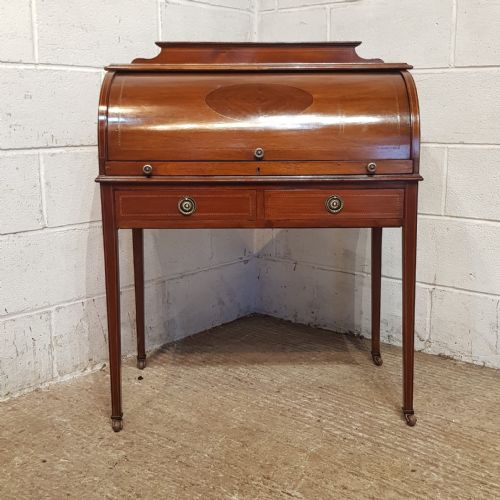
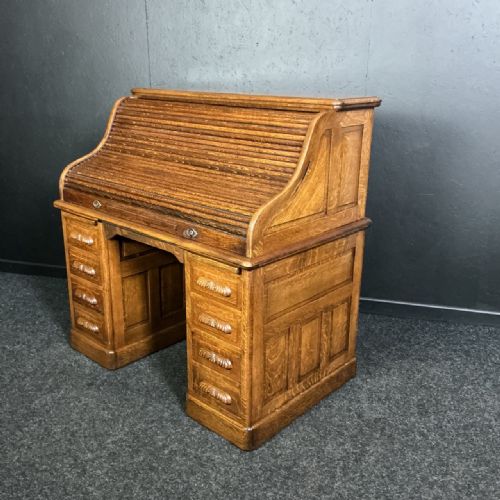
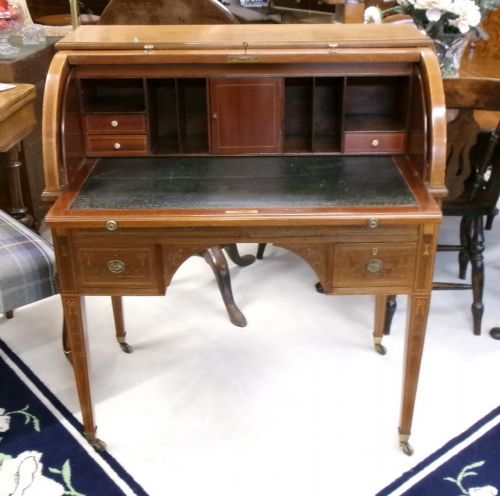
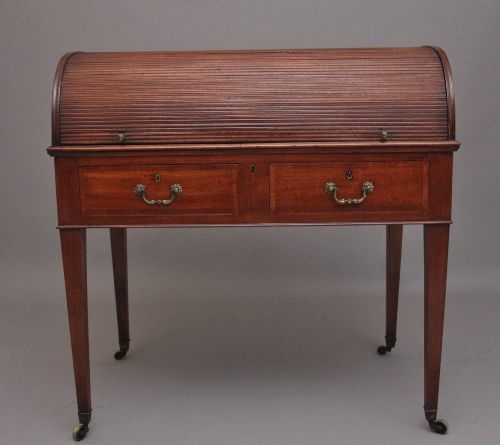
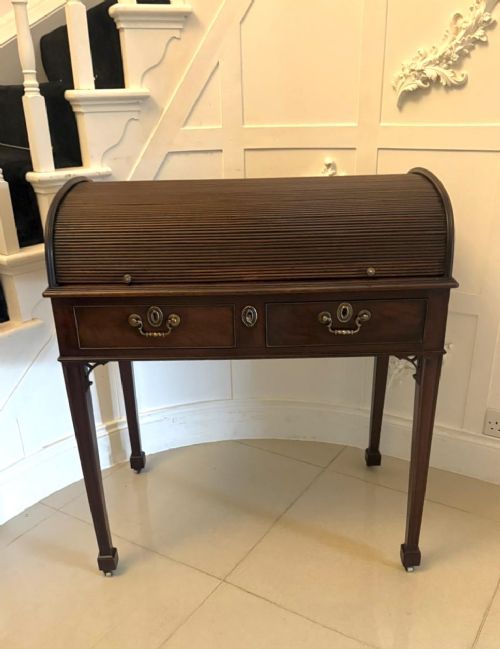
A cylinder front writing bureau provides a desk surface that conceals away beneath a curved shutter or rolling wooden screen. When you search for a cylinder front writing bureau, you encounter freestanding desks, larger bureau bookcases with upper shelving, and compact writing tables originating from Georgian, Victorian, and Edwardian periods.
The materials span rich timbers like mahogany, walnut, burr walnut, satinwood, and oak, frequently enhanced by decorative brass fittings or intricate marquetry. Examples range from simple domestic writing stations to impressive architectural pieces incorporating glazed bookcase sections above the writing cylinder.
Makers and workshops from London, France, and the Netherlands produced these forms using regional aesthetic traditions, leading to variations such as Dutch marquetry surfaces, Sheraton satinwood inlay, and William IV mahogany construction.
Assessing quality in writing bureaux
Quality rests upon the precision of the curved cylinder mechanism and the stability of the wood joints during daily operation. Smooth sliding action without binding separates superior cabinet work from basic construction.
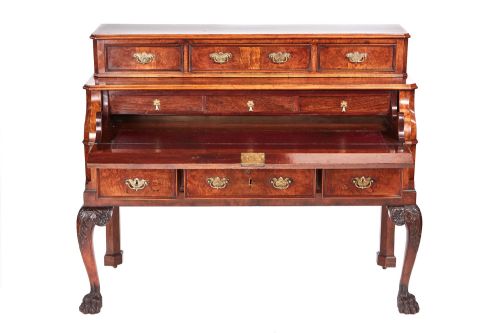
The refinement of the interior fittings, the depth of carving on elements like paw feet, and the complexity of marquetry or inlay mark the distinction between standard utilitarian desks and high-end cabinet pieces.
Cylinder Front Writing Bureau Retail Price Guide 2026
Typical asking prices for cylinder front writing bureau among the pieces listed under this phrase on Sellingantiques today, from the lower quarter to the upper quarter. They describe what is for sale here now, not the wider market.
Listings feature periods spanning the eighteenth, nineteenth, and early twentieth centuries, constructed in mahogany, walnut, satinwood, and oak.
Maple & Co London·Edwards & Roberts·Boston Chair Company
The Cylinder Front Writing Bureau Glossary
- Cylinder desk
- A writing desk featuring a rotating curved wooden cylinder that covers the writing surface and interior pigeonholes.
- Tambour
- A flexible shutter constructed from narrow strips of wood glued to canvas, allowing it to slide around a curved track.
- Marquetry
- Decorative veneer work forming pictorial patterns by fitting together small pieces of diverse coloured woods.
- Bureau bookcase
- A writing desk combined with an upper shelving unit enclosed by doors, often glazed for display purposes.
- Escutcheon
- A protective plate surrounding a keyhole, frequently cast in brass on period furniture.
Cylinder Front Writing Bureau: Frequently Asked Questions
How does a cylinder front desk work?
The curved wooden lid slides backward into the body of the desk on internal tracks, revealing a fitted interior with small drawers and pigeonholes. Pulling the writing slide forward often coordinates with the opening action.
This mechanism conceals paperwork instantly while maintaining a tidy appearance in a room without locking every compartment.
What is the difference between a cylinder desk and a roll top?
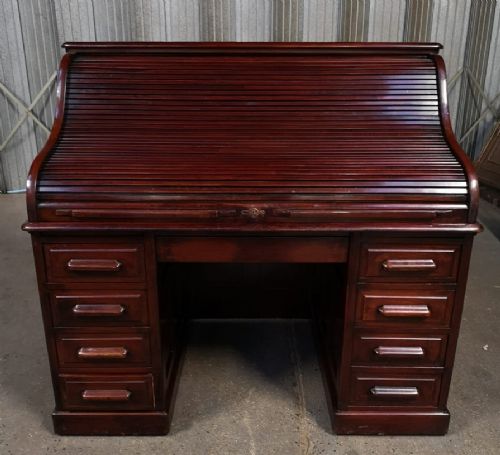
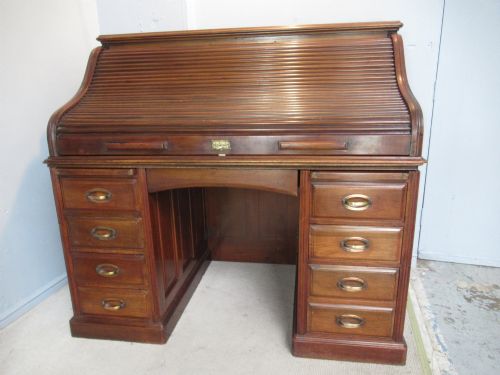
A cylinder desk uses a solid curved wooden panel or a smooth veneer surface that rotates smoothly on a fixed radius pivot. Roll top desks utilise tambour construction made from many narrow vertical slats joined together.
Cylinder fronts tend to present a cleaner, more formal architectural appearance, whereas tambour roll tops emphasise slatted flexibility.
Where were these desks placed in a period home?
Owners positioned these bureaux in libraries, studies, and drawing rooms as dedicated spaces for managing correspondence and household accounts. Freestanding models allowed placement in the centre of a room rather than strictly against a wall.
Their compact footprints made them suitable for private writing tasks in bedrooms as well as formal reception spaces.
How do I identify a Georgian bureau from a Victorian one?
Georgian and George III examples from around 1800 often feature restrained mahogany and satinwood veneers with delicate stringing and classical proportions. Victorian pieces from the mid to late nineteenth century frequently display heavier proportions, carved paw feet, and darker walnut or burr walnut timbers.
Edwardian versions around 1900 return to lighter satinwood finishes and Revival styles influenced by earlier Sheraton designs.