




Cutlery Cabinet Table
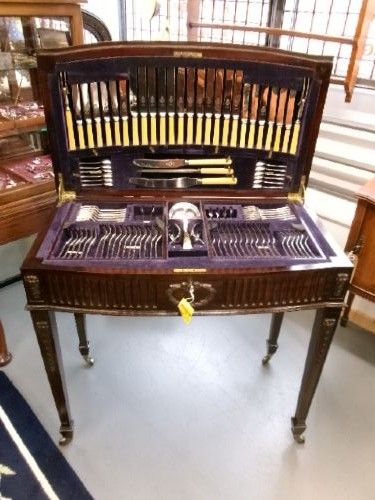
These cutlery cabinet table pieces are fitted containers and furniture designed to organise flatware, bringing traditional craftsmanship directly into the dining room.
Cutlery Cabinet Table
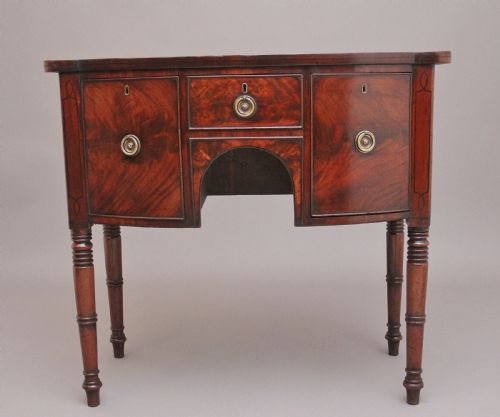
A cutlery cabinet table encompasses both dedicated canteens on stands and sideboards adapted for silver storage, spanning the Georgian, Victorian, and Edwardian eras. Buyers exploring this phrase will frequently encounter oak and mahogany chests, alongside fitted sideboards designed to house flatware securely.
The selection ranges from compact canteens set on legs to larger bow front sideboards and walnut-cased chests, reflecting centuries of dining traditions. Maker-signed pieces by firms such as Walker & Hall and Mappin & Webb appear alongside unmarked examples from the nineteenth and early twentieth centuries.
How they were made
Cabinetmakers utilised sturdy hardwoods such as mahogany and oak for the main carcases, frequently employing bow front designs and burr walnut veneers for visual depth. Brass fittings provide functional handles and locking mechanisms, while internal spaces rely on tailored arrangements.
Interiors are typically lined with felt or velvet to protect sterling silver and silver plate flatware from friction and tarnishing. Specialised compartments ensure every knife, fork, and spoon sits securely within its designated slot.
Cutlery Cabinet Table Retail Price Guide 2026
Typical asking prices for cutlery cabinet table among the pieces listed under this phrase on Sellingantiques today, from the lower quarter to the upper quarter. They describe what is for sale here now, not the wider market.
One unexpected archive entry shows a lacquered Chinese table cabinet adapted specifically for English cutlery.
What varies in quality
Quality rests upon the selection of timber, the precision of the cabinet joinery, and the integrity of the internal lining. Superior examples display carefully matched wood grain and robust structural framing that withstands the considerable weight of a full flatware service.
The distinction between standard production items and finer commissions often shows in the execution of brass hardware and the quality of the felt or velvet interior fitments. Maker attribution by established silversmiths also elevates the standing of an individual piece.
Walker & Hall·Mappin & Webb
The Cutlery Cabinet Table Glossary
- Canteen
- A fitted box, chest, or cabinet designed specifically to hold a set of cutlery. These containers often feature multiple interior tiers or drawers.
- Bow front
- A convex, curved cabinet front that swells outward in the centre, popular in Georgian and later mahogany furniture. This shaping requires expert joinery.
- Sterling silver
- Silver alloy containing 92.5 percent pure silver by mass, traditionally marked with hallmarks denoting assay office and date. It forms the primary metal for high-end flatware services.
- Silver plate
- A base metal layer coated with a thin layer of pure silver, offering the appearance of solid silver at a different scale of production. It appears frequently in twentieth-century sets.
- Burr walnut
- Timber taken from the abnormal growth of a walnut tree, highly prized for its swirling, decorative grain patterns on cabinet surfaces.
Cutlery Cabinet Table: Frequently Asked Questions
What is a cutlery cabinet table?
A cutlery cabinet table is a piece of furniture or a fitted chest designed to store and display flatware sets. They range from dedicated canteens on stands to serving sideboards with internal divisions.
These pieces keep large services of silver plate or sterling silver organised and protected between meals. Their designs often match the prevailing aesthetic of their manufacturing period.
How do I date an oak canteen?
Dating an oak canteen involves examining the construction methods, handle hardware, and internal lining materials. Edwardian examples often feature maker stamps from firms like Walker & Hall.
Stylistic cues such as brass drop handles and specific dovetailing techniques help distinguish nineteenth-century work from later revivals. Maker marks provide the most reliable chronological anchor.
Are sideboards used for cutlery?
Sideboards from the Georgian and Victorian periods frequently incorporate specialised drawers or lined compartments for flatware storage. These pieces combine general dining room storage with dedicated cutlery organisation.
Bow front mahogany sideboards in this category served both to display serving dishes and to house the household silver service. Their internal layouts reflect the formal dining customs of the era.
What is Fiddle Pattern cutlery?
Fiddle Pattern is a traditional flatware design characterised by a narrow stem that broadens into a fiddle-shape shoulder near the terminal. It became widely popular during the Victorian period.
Cutlery chests often house complete services of this pattern alongside matching serving pieces. The design appears in both sterling silver and silver plate.
How do I care for velvet interiors?
Velvet and felt linings require gentle maintenance to preserve the fabric and protect stored silver from chemical reactions. Keeping the cabinet in a stable environment prevents moisture damage to both the wood and the lining.
Avoid using liquid cleaners near the fabric interior to prevent staining the wooden carcase or the textile fibres. Regular, gentle dusting keeps the compartments clean.