

Cut Lead Crystal Glass
Cut lead crystal glass brings weight, sharp facets and heavy refractive brilliance to your table.
Cut Lead Crystal Glass
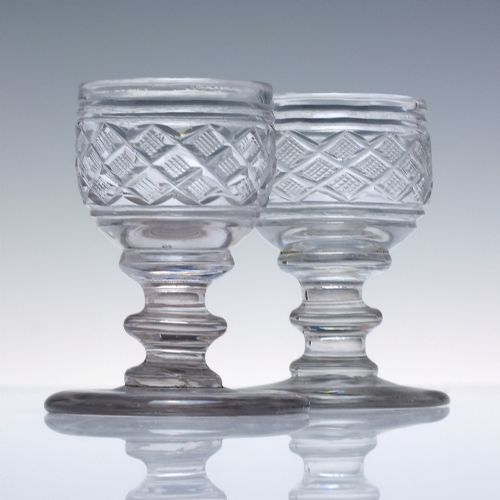
When you search for cut lead crystal glass, you encounter functional vessels and decorative items spanning the Georgian, Victorian, Regency and Edwardian eras. The selections on this page range from early nineteenth-century Anglo-Irish standing bowls and rummers to twentieth-century mushroom lamps and decanters.
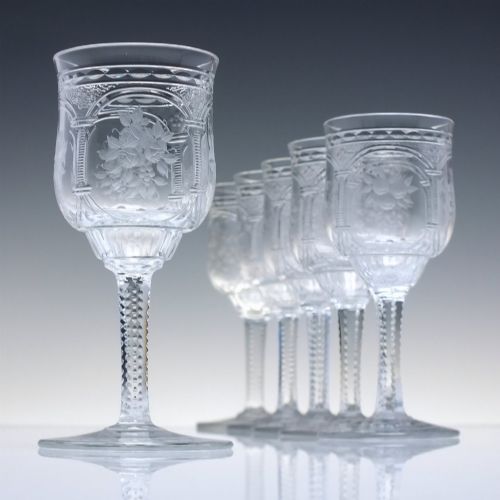
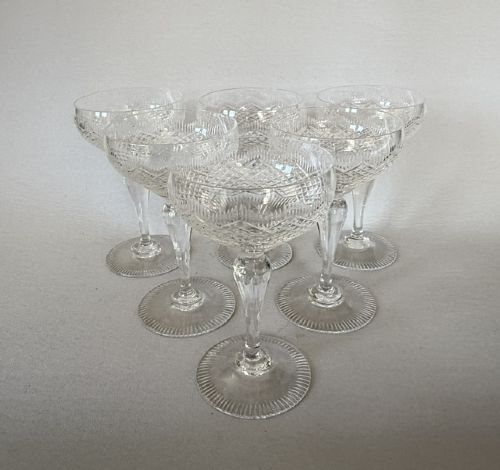
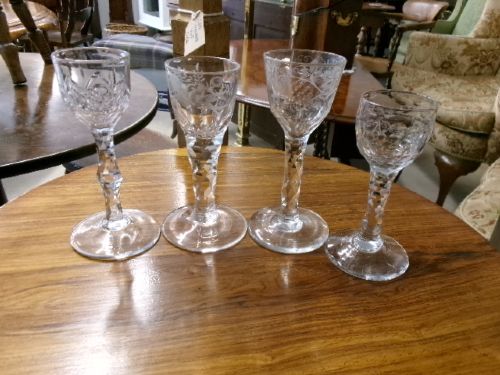
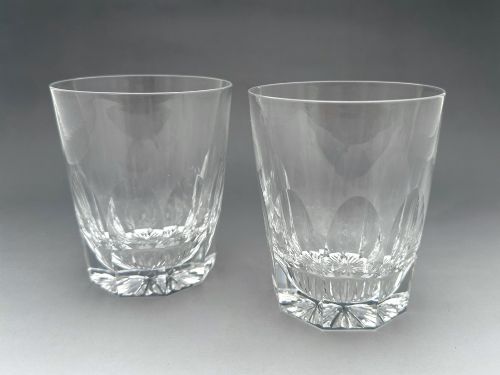
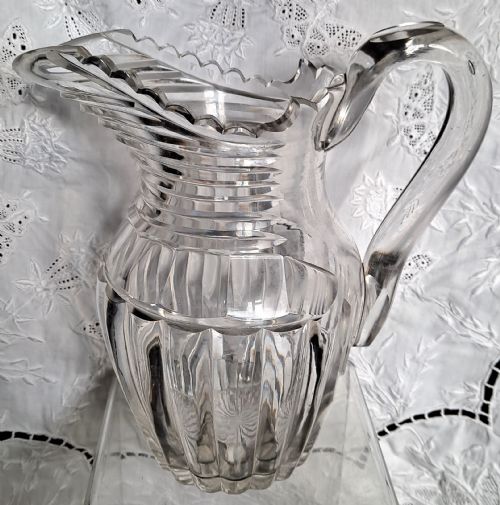
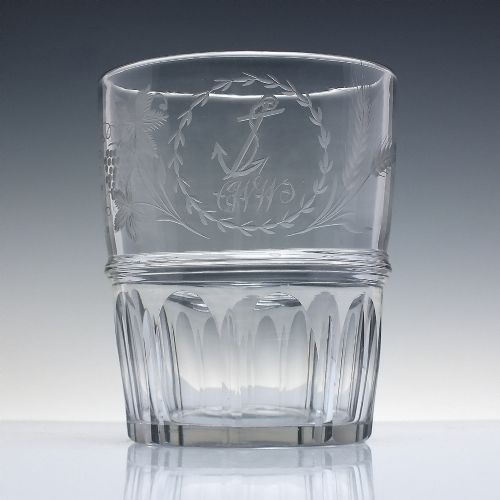
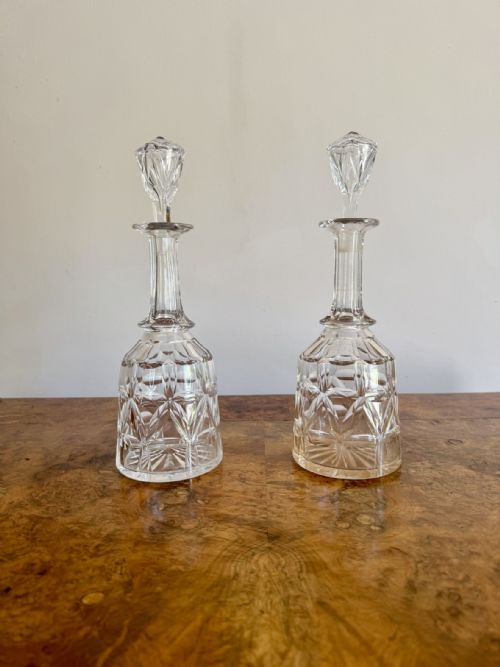
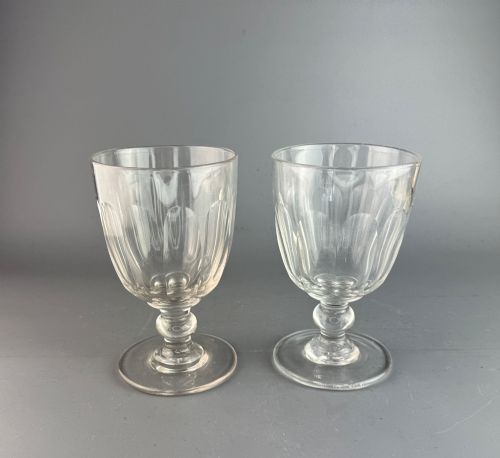
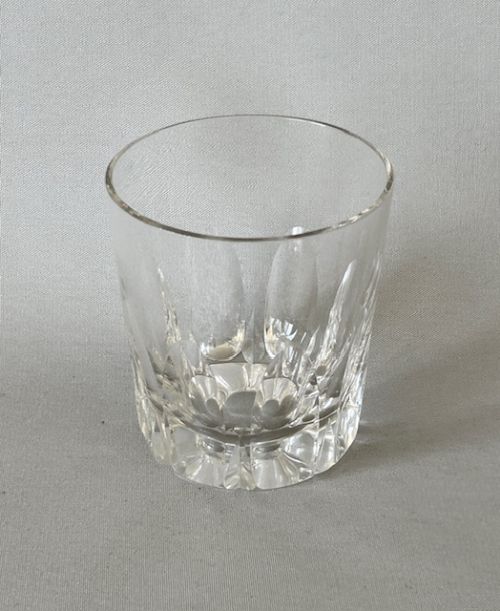
Drinking vessels dominate the available forms, including sets of whiskey tumblers, champagne bowls and port glasses alongside larger table jugs and water pitchers. Lighting fixtures such as pendant chandeliers and mushroom lamps also appear regularly.
Origin points skew heavily toward English and Irish workshops of the Georgian and Victorian periods, alongside continental European output from makers such as Val St Lambert. Buyers routinely find matched sets of drinking glasses as well as singular statement centrepieces.
Materials and production techniques
The objects are produced from heavy lead glass, which contains a high proportion of lead oxide to increase density, softness for cutting, and light dispersion. Makers shape the molten material by blowing into moulds or free-blowing before cooling it for subsequent cold-working.
Artisans cut patterns into the hardened surface using rotating iron and stone wheels fed with abrasive grit and water. Polishing follows on wooden or cork wheels with pumice or rouge to restore transparency to the ground facets.
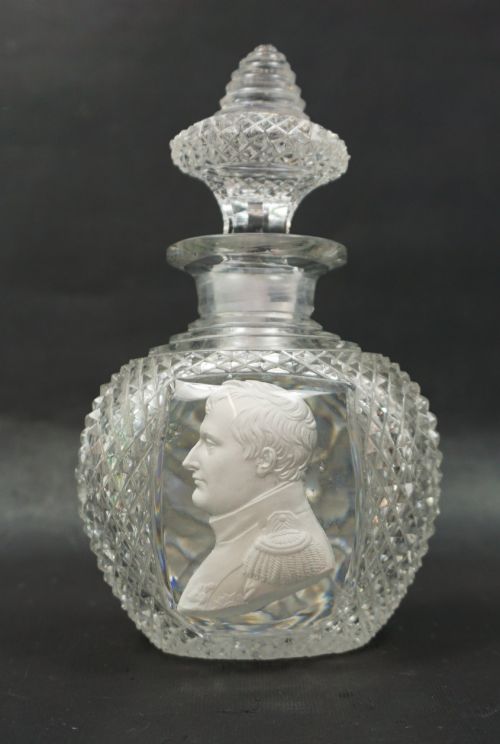
Napoleon watches silently from a tiny white cameo embedded inside a nineteenth-century scent bottle.
Defining characteristics of quality
Quality rests upon the crispness of the wheel-cut facets and the depth of the pattern relief. Superior examples exhibit sharp, clean junctions between cuts without blurring or rounding at the edges.
The clarity and weight of the metal itself dictate distinction, with top-tier pieces showing high refractive index, absence of internal bubbles or cloudiness, and a resonant, clear ring when struck.
Val St Lambert·Charles Graffart for VSL·Joseph Simon for Val St. Lambert·Stuart Crystal
The Cut Lead Crystal Glass Glossary
- Hobnail cut
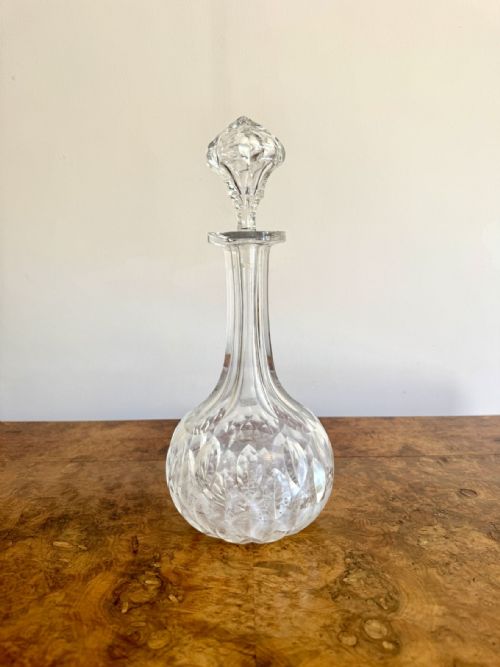
- A decorative pattern of intersecting facets resembling the broad heads of hobnails used in country boots. This texture creates intense light refraction across the surface of the glass.
- Pillar and prism cut
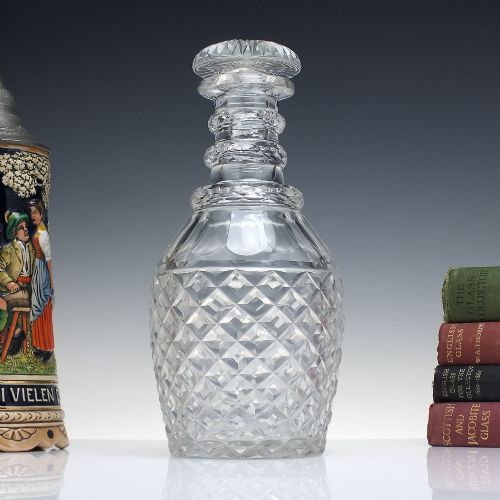
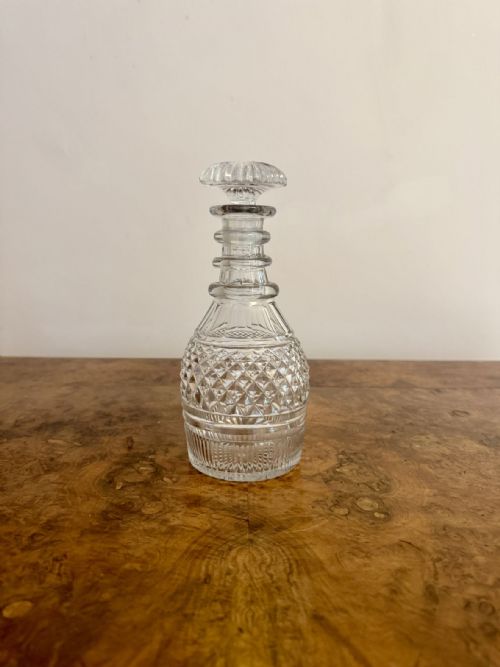
- A linear cutting style featuring vertical flutes combined with sharp triangular or diamond prisms. It appears frequently on nineteenth-century jugs and heavy decanters.
- Sulphide
- A small white cameo made of porcelain paste embedded within the clear glass. These medallions typically portray historical figures or portraits and are found on nineteenth-century scent bottles.
- Over-crystal
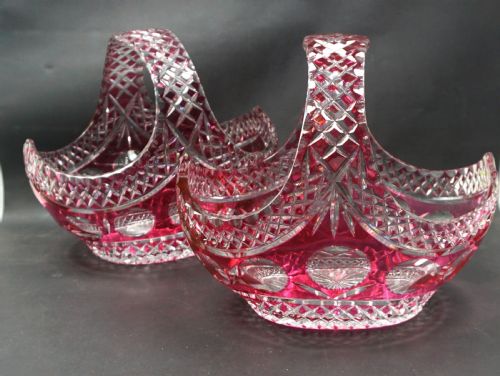
- Glass created by casing a clear lead crystal core with a layer of coloured glass before cutting through the outer layer. This technique reveals the clear crystal beneath in bold contrast.
Cut Lead Crystal Glass: Frequently Asked Questions
How do I clean antique cut crystal?
Wash pieces by hand in warm water using mild detergent, placing a towel at the bottom of the sink to cushion the heavy metal.
Avoid hot water and dishwashers, which can cause thermal shock or cloud the surface of older lead glass over time.
Are these glasses safe for daily use?
Many historical drinking glasses remain robust enough for regular dining and entertaining. Their thick lead walls provide durability, though hand-washing remains essential.
Older pieces with delicate rims or historic wear are better reserved for occasional use or display.
How do I distinguish Georgian from Victorian cut glass?
Georgian pieces often display deeper, hand-polished facets, heavier metal weights, and distinctive kick-ups or pontil marks on the base. Anglo-Irish items from this era feel exceptionally dense.
Victorian examples frequently introduce machine-assisted precision cutting, sharper geometric layouts, and a wider variety of table forms and novelty objects.
Why do some pieces have a greyish tint?
Older glass batches occasionally developed subtle colour variations due to the purity of the raw materials and the specific formulation of the lead flux used by the furnace.
This characteristic is typical of period manufacture and helps confirm the age of the material.