


Cut Glass Silver Bowl
A cut glass silver bowl combines heavy faceted crystal with polished metal mounts, offering a functional centrepiece for the table or dressing table.
Cut Glass Silver Bowl
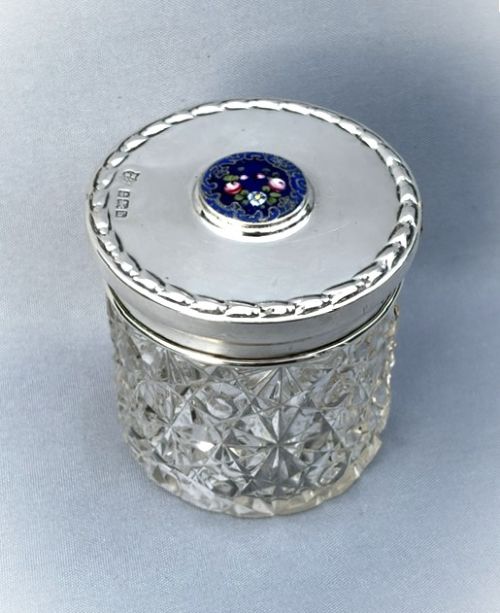
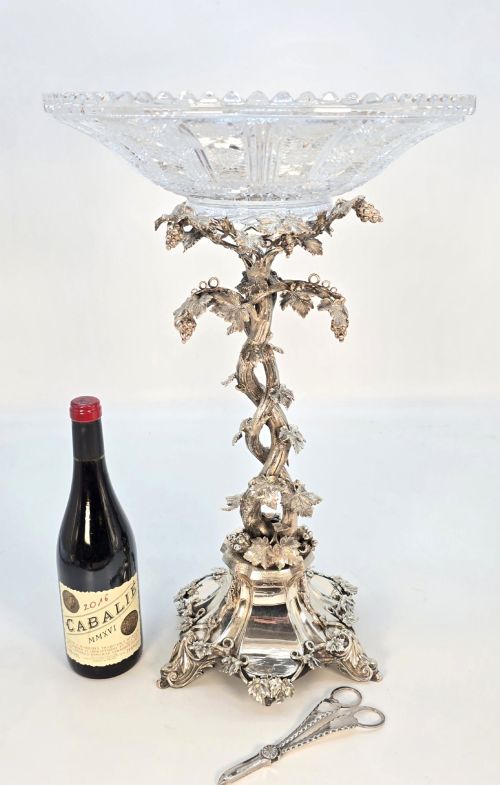
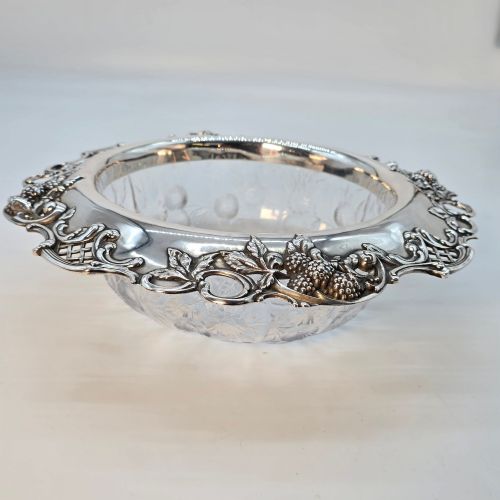
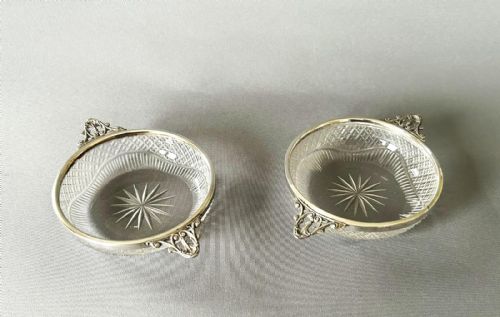
When searching for a cut glass silver bowl, buyers encounter a range of forms spanning the Victorian, Edwardian, and Art Deco periods, alongside mid-century examples. The selection on this page runs from small lidded trinket pots and dressing table jars to large table centrepieces, salad bowls, and decorative baskets.
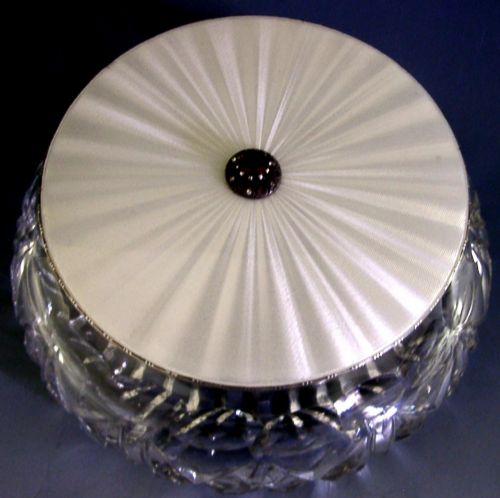
Table centrepieces and fruit bowls dominate the larger formats, often pairing heavy silver plated mounts with deeply cut crystal bodies. Smaller vanity jars and powder bowls frequently incorporate coloured enamel or tortoiseshell alongside sterling silver rims and covers.
Materials and construction
Makers combined heavy-walled glass and crystal with either sterling silver or silver plate, shaping the glass vessels through deep wheel-cutting and hobnail patterns to refract light. Metalwork mounts were cast, spun, or hallmarked, then fitted precisely to the rims and lips of the glass bodies.
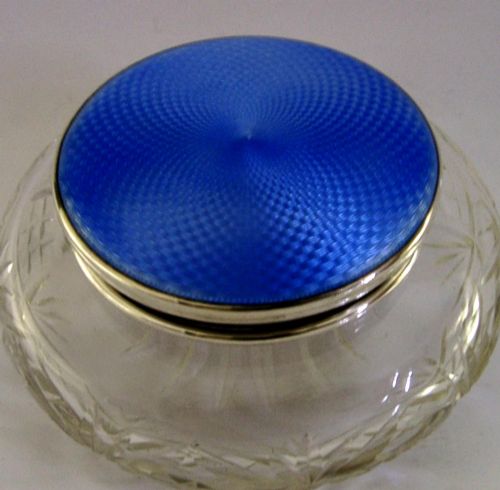
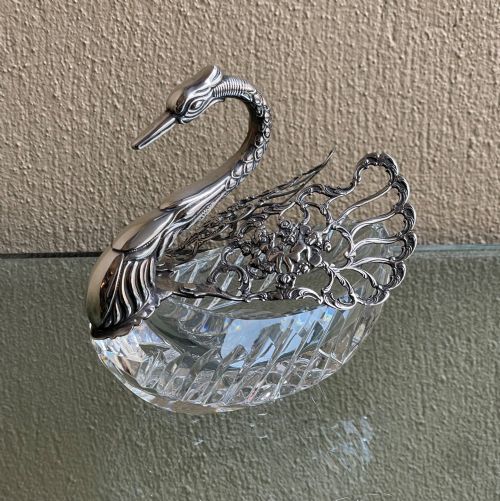
Specialised decorative elements such as guilloché enamel, tortoiseshell panels, and cast figural details like swans or nautical motifs were integrated into the metal lids and stands during the Edwardian and Art Deco decades.
The listings on this page span the Victorian, Edwardian, Art Deco, and Mid-Century Modern periods, utilising cut glass, sterling silver, and silver plate.
Distinctions in quality
Quality rests upon the depth and crispness of the glass cutting, the weight of the crystal vessel, and the gauge of the silver or silver plate used for the mounts. Superior examples display sharp facets with zero surface blurring and heavy metal mounts that fit snugly without adhesive.
The integration of supplementary materials like hand-painted enamel or genuine tortoiseshell, combined with clear hallmarks from known silversmiths, elevates certain pieces above standard domestic production.
Tiffany and Co·W M F·William Comyns·Christofle et Cie·Elkington and Co·Henri Lapeyre·Mappin and Webb
The Cut Glass Silver Bowl Glossary
- Sterling silver
- An alloy containing 92.5 percent silver by weight, widely used for the rims, lids, and mounts of high-end glass vessels.
- Silver plate
- A base metal, such as copper or Britannia metal, coated with a thin layer of silver through electroplating or old Sheffield plating techniques.
- Hobnail cut
- A raised, faceted pattern cut into the surface of glass or crystal that resembles the head of a traditional hobnail boot.
- Guilloché enamel
- A decorative technique where a fine geometric pattern is engraved into metal beneath a translucent layer of coloured enamel.
- Epergne
- An elaborate table centrepiece featuring a central bowl with branching arms that support smaller baskets or dishes.
- Taza
- A footed shallow cup or bowl used for serving fruit, sweets, or small items, popular in Art Deco and earlier decorative metalwork.
Cut Glass Silver Bowl: Frequently Asked Questions
Were these bowls used for food?
Many larger examples were designed specifically for serving fruit, salads, preserves, or sweetmeats at the dining table. Silver plated frames and cut crystal bowls handled acidic fruits and dressings safely without reacting.
Smaller covered pots and jars served entirely different domestic functions on dressing tables, holding pins, powder, trinkets, and cosmetics rather than provisions.
How can I date a piece without hallmarks?
Examine the style of the cutting, the weight of the glass, and the design motifs of the metal mount to determine the period. Art Deco items display geometric symmetry and enamel panels, while Victorian pieces often feature heavy hobnail cutting and ornate rococo revival mounts.
Look closely at the construction methods of the metal fittings, as machine-stamped joints differ from hand-cast mounts found on mid-nineteenth-century examples.
Are silver plated bowls lower quality than solid silver?
Silver plate does not imply inferior craftsmanship, as major firms like Elkington or Mappin and Webb produced monumental centrepieces using heavy plated mounts. The overall quality depends on the thickness of the plating, the depth of the glass cutting, and the weight of the base metal.
Solid sterling silver provides precious metal content and clear assay office hallmarks, but high-end silver plate often matches or exceeds it in sculptural detail and scale.