


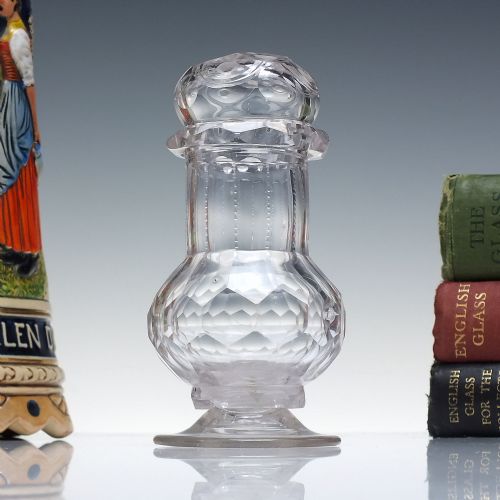


Cut Glass Shaker
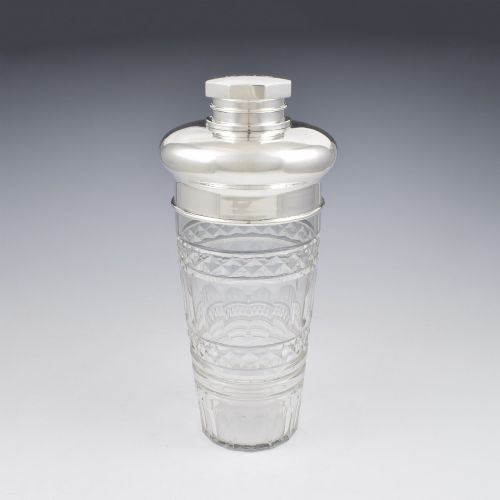
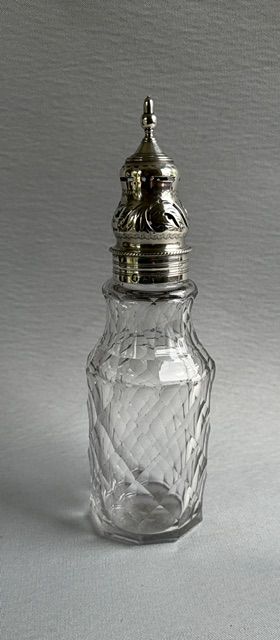
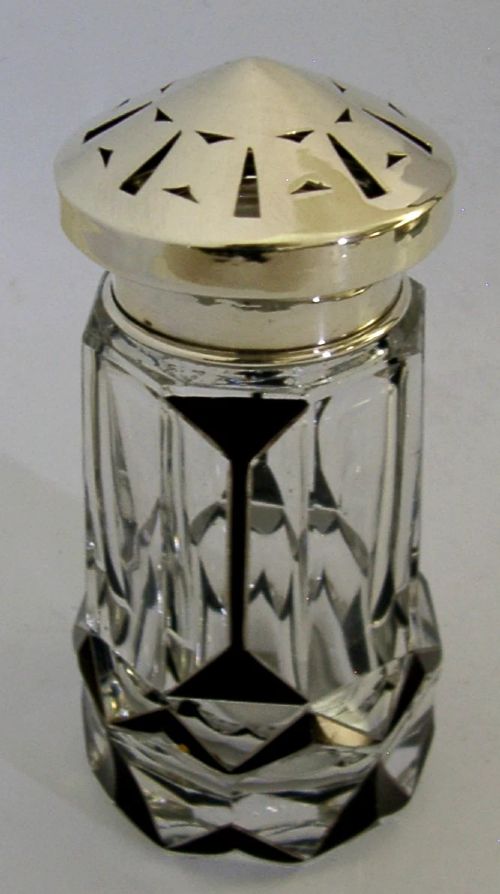
A cut glass shaker brings bright refraction and weight to the table, uniting heavy lead crystal with polished silver or enamel mounts.
Cut Glass Shaker
A cut glass shaker encompasses sugar casters, cocktail shakers, and condiment pots that bring faceted sparkle to dining and bar settings. When you search for a cut glass shaker, you encounter vessels ranging from Georgian silver-mounted sifters to Art Deco lighthouse forms and Edwardian cruet bottles.
The versions most commonly met on this page combine clear glass bodies with sterling silver tops, silver plate, or colourful enamel highlights. These items appear either as single sugar shakers and cocktail mixers or as part of larger multi-bottle cruet sets.
How they were made
Makers shaped the glass bodies by blowing molten metal into moulds or gathering it freehand before cutting deep geometric patterns into the surface. Wheel-cutting produced crisp facets and flutes that catch the light from every angle.
Mounts, lids, and screw feet in sterling silver or silver plate were fashioned to secure the glass securely. Pierced lids allowed the controlled distribution of sugar or pepper while enamel details added colour accents.
Cut Glass Shaker Retail Price Guide 2026
Typical asking prices for cut glass shaker among the pieces listed under this phrase on Sellingantiques today, from the lower quarter to the upper quarter. They describe what is for sale here now, not the wider market.
Victorian makers occasionally built silver-plated carriage frames for cruet bottles, ensuring condiments could travel across the dining table with wheeled velocity.
What varies in quality
The distinction between standard examples and superior pieces rests on the depth and crispness of the hand-cut facets. Heavy lead crystal provides a clearer ring and sharper refractive edges than ordinary pressed glass.
Weight and balance distinguish finer silver mounts from lighter alternatives, along with the precision of the piercing on the shaker top. Hallmarks indicating specific makers and assay offices elevate the standing of the metal components.
The Cut Glass Shaker Glossary
- Sugar caster
- A tall container with a perforated top used for sprinkling powdered sugar over food. These vessels often feature screw feet and cut glass bodies.
- Cruet set
- A matched collection of condiment bottles held in a stand for the dining table. They typically contain mustard, oil, vinegar, pepper, and salt.
- Lead crystal
- Glass containing metal oxide that increases weight, brilliance, and clarity. This material allows for deeper and sharper wheel-cut decoration.
- Silver plate
- A base metal coated with a thin layer of silver to provide a bright finish. Many Victorian and Edwardian cruet frames utilise this technique.
- Sifter
- An alternative term for a caster equipped with a pierced dome for dispensing sugar or spices. Examples often pair cut glass bases with sterling silver tops.
Cut Glass Shaker: Frequently Asked Questions
What is a cut glass shaker used for?
These vessels serve to dispense powdered sugar, fine spices, or cocktails at the table or bar. The perforated top allows a controlled flow of the contents.
Single shakers focus on sugar or pepper, while multi-bottle cruet sets house a selection of condiments for dining use.
How do I clean a cut glass shaker?
Wash the glass body gently in warm soapy water using a soft brush to clear residue from the cut facets. Avoid harsh abrasives that might scratch the surface.
Polish silver or silver plate components separately with an appropriate cloth to preserve the metal finish without touching the glass.
How do I date a cut glass shaker?
Examine the silver hallmarks on the top or mount for assay office marks and date letters that reveal the year of manufacture. The cutting style and overall form also point toward specific design eras.
Georgian and Victorian pieces display different facet patterns and mount shapes compared to later Art Deco lighthouse designs.
Are shaker tops solid silver?
Shaker tops and mounts occur in both sterling silver and silver plate, depending on the piece and period. Hallmarks stamped into the metal confirm solid silver construction.
Unmarked metal mounts on nineteenth-century cruet sets are typically silver plate over a base metal foundation.