






Cut Glass Rummer Goblet
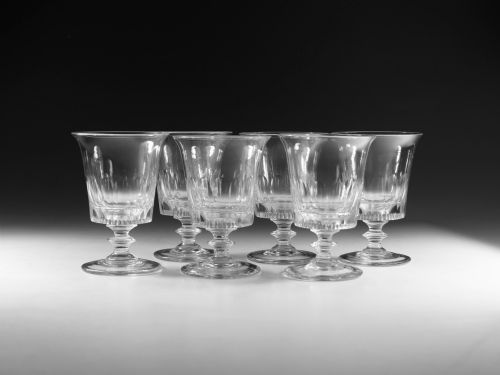
These heavy, substantial cut glass rummer goblet examples span the Georgian, Regency, and Victorian eras, built for serious evening drinking.
Cut Glass Rummer Goblet
A cut glass rummer goblet is a drinking vessel designed for heavy toasts, punch, and ale during the Georgian, Regency, and Victorian periods. You will regularly encounter pairs and sets of six from English makers, ranging in date from eighteen hundred through to nineteen hundred.
Forms vary from pan rummers and bucket rummers to large table rummers, often featuring square lemon squeezer feet or baluster stems. The heavier pieces show robust lead glass construction intended for practical use rather than display alone.
How they were made
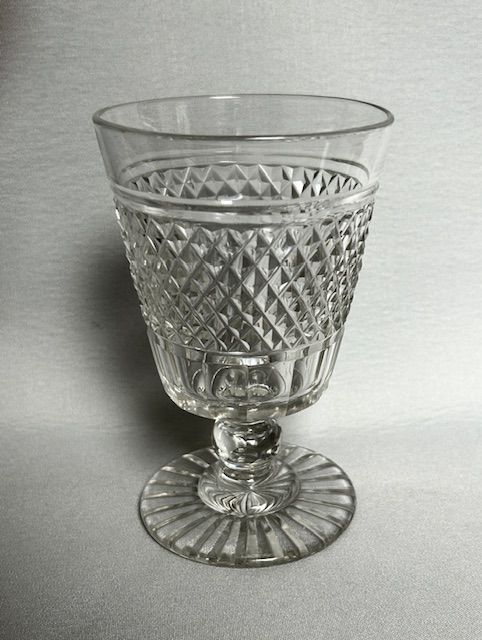
Makers utilised heavy lead glass, clear glass, and flint glass, occasionally working with cranberry glass for specific decorative effects. Artisans applied wheel-cutting techniques to create hobnail patterns and flat panels across the surface of the bowl.
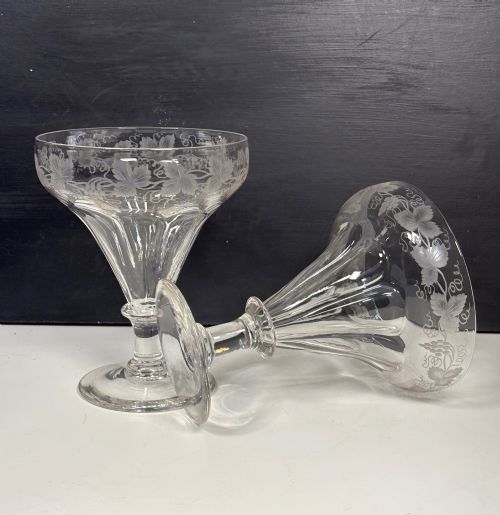
Engraving often accompanied the cutting, adding floral or Masonic motifs to the exterior. Bases frequently relied on moulded square lemon squeezer feet or turned baluster stems to support the substantial weight of the bowl.
Cut Glass Rummer Goblet Retail Price Guide 2026
Typical asking prices for cut glass rummer goblet among the pieces listed under this phrase on Sellingantiques today, from the lower quarter to the upper quarter. They describe what is for sale here now, not the wider market.
Some nineteenth-century drinkers needed glasses so large they required their own square lemon squeezer feet just to stay upright.
What varies in quality
The clarity and weight of the lead crystal establish the foundation of quality, separating dense, ringing metal from ordinary glass. Deeper, crisper wheel-cutting commands attention, particularly where hobnail or panel cuts remain sharp to the touch.
Proportion and matching uniformity within pairs or larger sets dictate desirability, as does the presence of an authentic square lemon squeezer base or baluster stem. Pieces with exceptional scale, such as unusually large table rummers, represent the upper tier of the range.
The Cut Glass Rummer Goblet Glossary
- Rummer
- A large drinking glass used in Britain from the eighteenth century onwards for ale, wine, or punch. The name likely derives from the continental roemer.
- Hobnail cut
- A sharp, faceted geometric surface pattern resembling the iron hobnails used in boot soles. This texture provides a secure grip on heavy drinking vessels.
- Lemon squeezer foot
- A square, pressed glass base with sloping sides reminiscent of a kitchen lemon squeezer. It appears frequently on Regency and Georgian table glass.
- Baluster stem
- A thick, swelling stem shape found on drinking glasses, influenced by architectural balusters. It adds substantial weight and balance to large goblets.
- Pan rummer
- A rummer featuring broad, flat vertical cuts around the lower portion of the bowl. These facets catch the light and emphasise the clarity of the lead glass.
Cut Glass Rummer Goblet: Frequently Asked Questions
What were rummers used for?
These large vessels served for drinking ale, wine, and mixed punches during social gatherings and toasts. Their generous capacity made them central to dining tables throughout the Georgian and Victorian eras.
Unlike delicate wine glasses, they were built for robust daily use and substantial hospitality.
How do I date an old rummer?
Dating relies on combining the form of the bowl, the style of the cutting, and the shape of the foot. Pieces from eighteen hundred often feature square lemon squeezer bases, while later Victorian examples introduce different stem profiles.
Examining the weight and tint of the lead glass also helps place the piece within the Georgian to Edwardian timeline.
Can I use these glasses today?
These robust vessels remain entirely usable for serving drinks, provided they receive careful hand washing. Their heavy lead glass construction was originally intended for practical dining rather than cabinet display.
Avoid thermal shock by keeping them away from sudden temperature changes and dishwashers.
What does a hobnail cut look like?
A hobnail cut creates a pyramid of small facets that sparkle across the surface of the glass. This tactile pattern gives the bowl a textured, diamond-like appearance.
It is commonly found on Regency and Georgian pieces to enhance light refraction.