
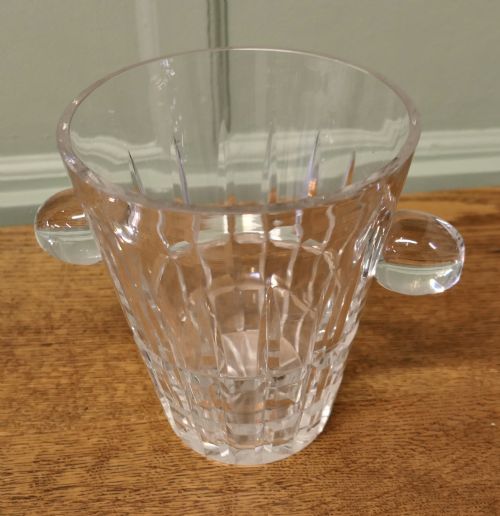
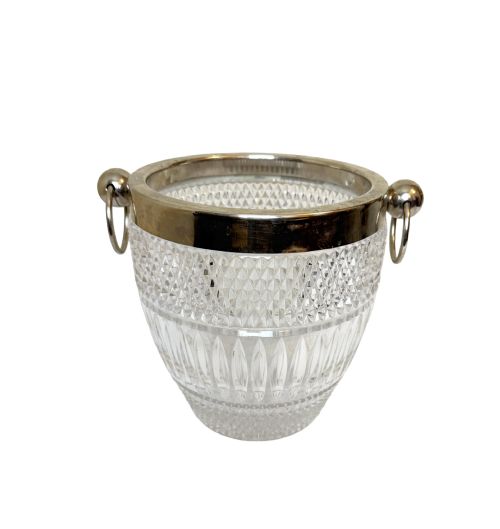


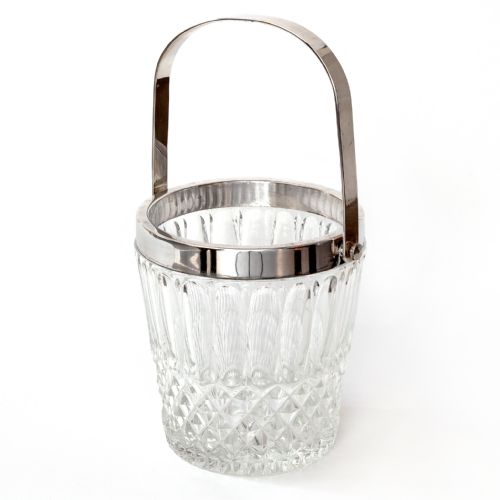


Cut Glass Ice Bucket
A cut glass ice bucket brings heavy refraction and polished metal to a home bar, combining functional chill with period weight.
Cut Glass Ice Bucket
When you search for a cut glass ice bucket, you encounter heavy vessels designed for table service, hospitality, and home bars. The selection ranges from compact Edwardian ice pails to substantial Art Deco champagne coolers.
You frequently meet pieces pairing heavy lead crystal or cut glass with silver-plate mounts, folding handles, and occasionally matching tongs. Forms cross over with wine coolers, champagne buckets, and occasionally biscuit barrels.
Origins span English and French workshops, moving through styles from Regency and Victorian through Edwardian elegance to geometric Art Deco lines. The 1920s and 1930s represent the peak periods for surviving examples on the market.
Materials and Construction
Makers utilised thick lead crystal or glass, deeply cut by hand with geometric, diamond, or spiral facets to catch the light. This dense material provides the necessary weight for stability when filled with ice and bottles.
Mounts, rims, and swinging handles were typically formed from silver-plate, sterling silver, or gilt bronze, sometimes secured with decorative collars. Metal components frequently feature cast detailing, talon tongs, or structured swing bails.
Assessing Quality and Execution
The distinction between standard utility barware and finer pieces rests in the depth and crispness of the glass cutting. Superior vessels display sharp, precise facets that create intense refraction, contrasting with softer, shallower wheel work.
The thickness and heft of the glass body dictate the overall substance of the piece, alongside the weight and plating quality of the metal mounts. Integrated additions such as original silver-plated tongs, strainers, or gilt bronze mounts elevate the execution.
Mappin & Webb·Goldsmiths & Silversmiths·Maple & Co
The Cut Glass Ice Bucket Glossary
- Lead crystal
- Glass containing a high proportion of lead oxide, increasing the weight, clarity, and brilliance of the cut facets.
- Silver-plate
- A base metal foundation coated with a thin layer of silver, common on rims, handles, and mounts for barware.
- Gilt bronze
- Bronze finished with a layer of gold, utilised for decorative mounts and handles on French coolers.
- Diamond cut
- A pattern of intersecting cuts forming diamond-shaped facets across the exterior of the glass body.
- Bail handle
- A curved, swinging metal handle attached to opposite sides of the bucket rim for lifting.
Cut Glass Ice Bucket: Frequently Asked Questions
How do I date a cut glass ice bucket?
Dating relies on combining the stylistic markers of the metal mounts and the cutting style on the glass. Edwardian pieces often lean towards delicate silver rims, whereas Art Deco examples display geometric profiles from the 1920s and 1930s.
Earlier nineteenth-century pieces demonstrate heavier proportions and hand-blown pontil marks on the base. Comparing the handle attachment and the depth of the glass cutting against known period examples clarifies the decade of manufacture.
Were these used for wine or ice?
These vessels served multiple hospitality functions depending on their scale and proportion. Smaller pails held ice cubes for spirits, while larger champagne coolers and wine coolers accommodated bottles with ice.
Many surviving pieces include internal strainers or came paired with tongs specifically for ice service. Their dual utility explains why forms frequently overlap with biscuit barrels in historical catalogues.
How do I care for silver-plated mounts?
Silver-plated rims and handles require gentle cleaning with a non-abrasive silver polish to maintain the finish without wearing through the plating. Care must be taken to keep polish away from the glass cuts where residue can lodge.
Hand washing in warm soapy water preserves both the metal and the lead crystal. Avoid abrasive scouring pads that scratch the glass surface and strip the silver coating.
What is the difference between glass and lead crystal?
Lead crystal contains lead oxide, which increases the density, refractive index, and overall weight of the material. This composition allows for deeper, sharper cuts that scatter light more intensely than standard glass.
When tapped, lead crystal produces a resonant chime rather than a dull thud. This heavier material was preferred for quality ice buckets to withstand the thermal shock of ice.