


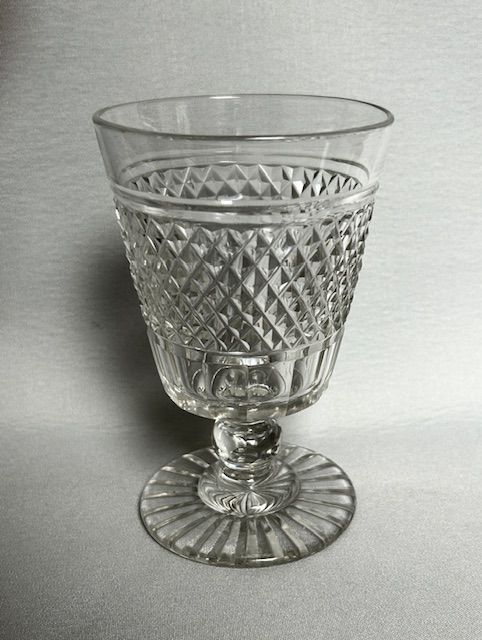

Cut Glass Goblets
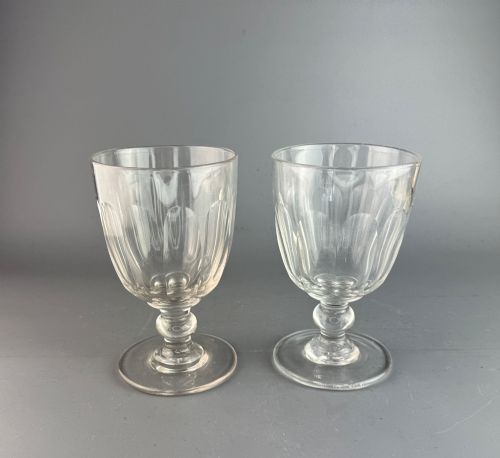
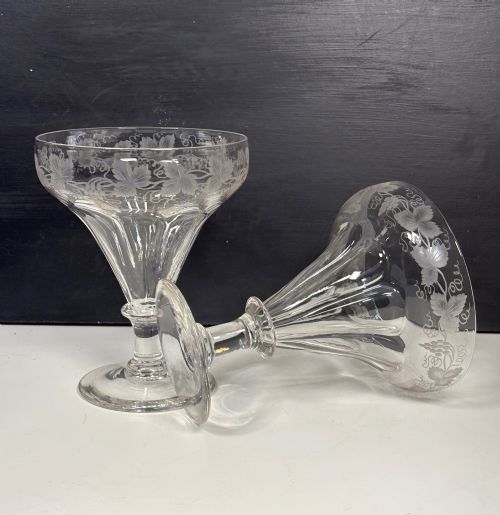
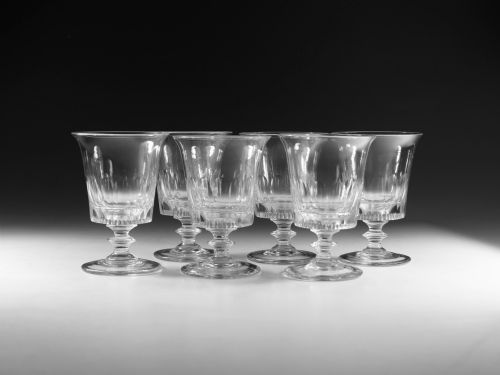
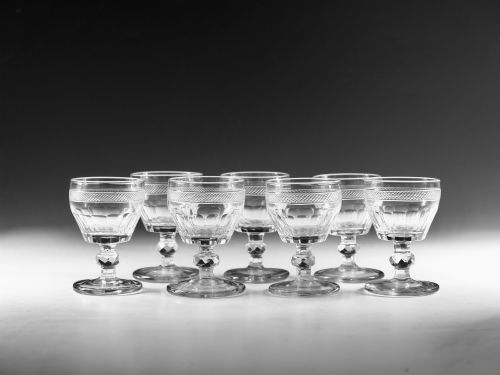
These cut glass goblets carry the weight of centuries past, offering a tangible link to formal dining traditions and heavy crystal craftsmanship.
Cut Glass Goblets
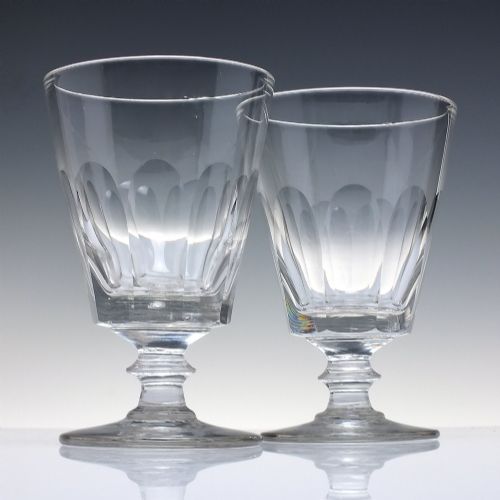
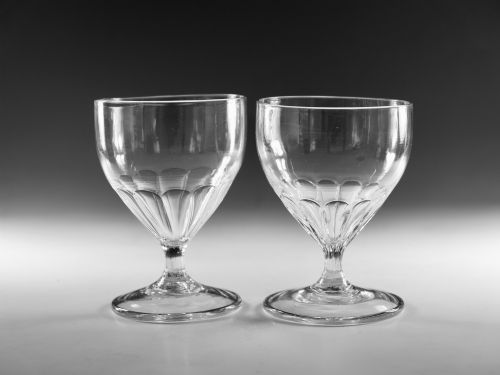
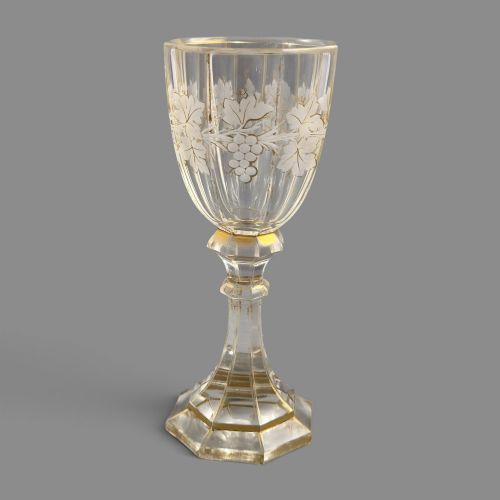
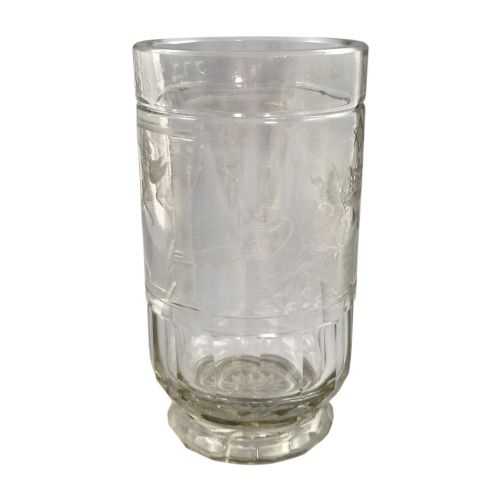
Cut glass goblets encompass drinking vessels designed for wine, spirits, and ceremonial use, stretching from the Georgian era through the Victorian period and into the twentieth century. These pieces appear in forms ranging from heavy rummers with square lemon squeezer feet to slender hock glasses and engraved commemorative vessels.
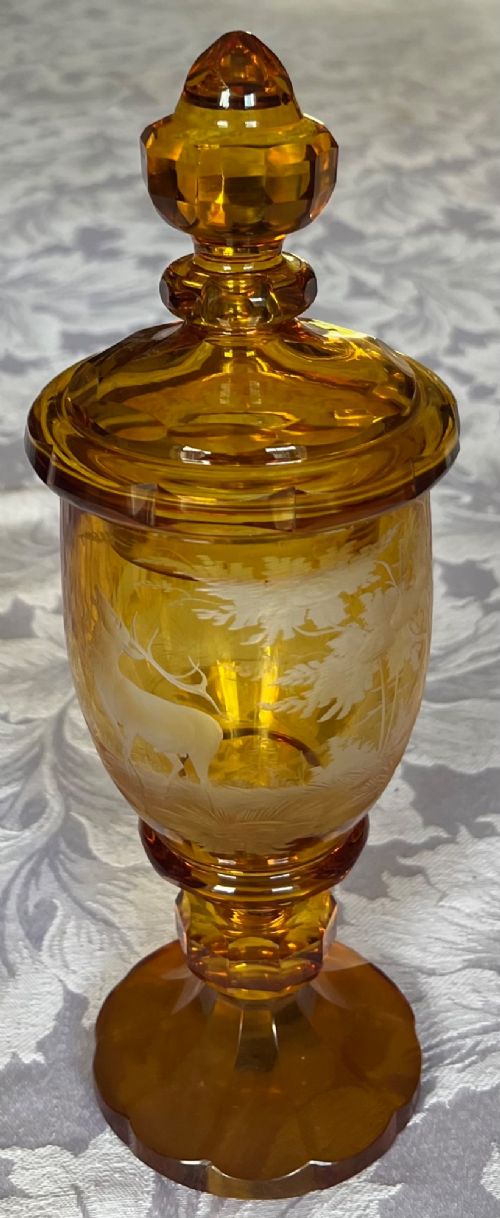
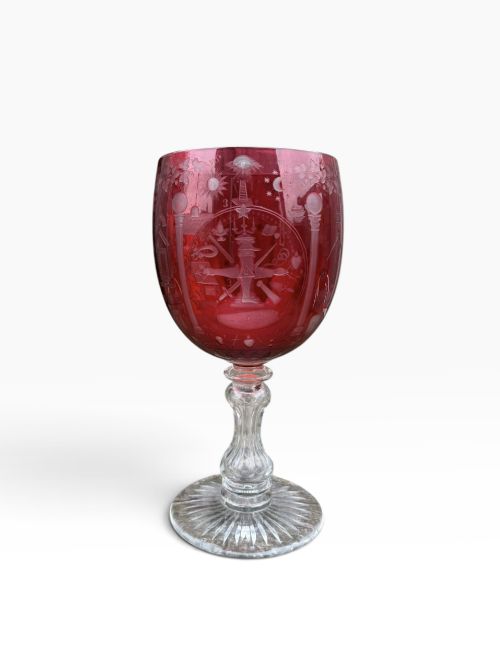
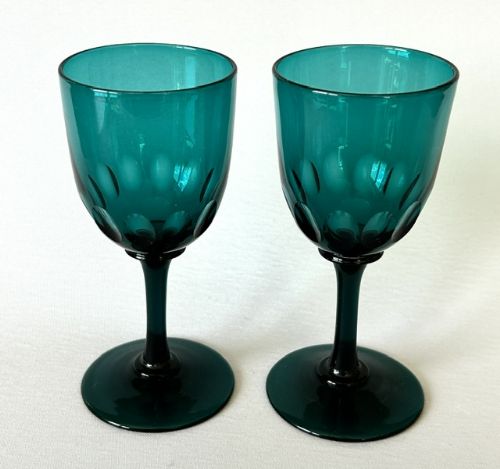
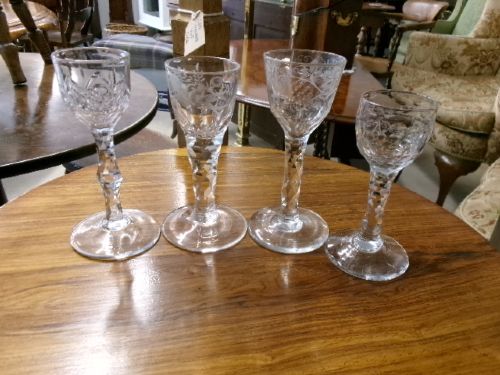
Georgian examples often display facet cut stems and Anglo Irish influence, while Victorian pieces lean towards substantial rummers, cranberry glass, and vaseline tones. Later twentieth century additions introduce French crystal services and Bohemian cased glass variations.
Collectors encounter matching sets alongside individual rummers and pairs, reflecting how households consumed and displayed beverages across different decades.
How they were made
Maker operations utilised lead crystal, clear glass, and cased glass, applying wheel cutting and intaglio engraving to shape intricate patterns across the surface. Lead glass provided the necessary weight and refractive quality required for deep hobnail cutting and faceted stems.
Techniques such as acid cutting, gilding, and flashing added colour layers, particularly evident in green, cranberry, and aqua items originating from English, French, and Bohemian workshops.
Listings feature lead crystal and cased glass from Georgian, Victorian, and Edwardian periods, alongside twentieth-century French and Bohemian makers.
What varies in quality
Quality rests in the crispness of the cutting, the weight of the metal, and the proportion of the bowl to the stem and foot. Superior examples display sharp, cleanly defined facets without wobble on flat surfaces like lemon squeezer bases.
The clarity of the crystal and the precision of any wheel engraving or gilding dictate the standing of an individual goblet within its period.
Moser·Baccarat·Webb Corbett·James Giles·Stevens and Williams
The Cut Glass Goblets Glossary
- Rummer
- A large heavy drinking glass popular in the eighteenth and nineteenth centuries, often used for ale, wine, or punch. These sturdy pieces usually feature short stems and capacious bowls.
- Lemon squeezer base
- A square, moulded foot base found on Georgian and Anglo Irish drinking glasses. The sharp corners mimic the shape of a kitchen squeezer.
- Cased glass
- Glassware formed of two or more distinct layers of different colours. The outer layer is cut away to reveal the contrasting colour beneath.
- Hobnail cut
- A raised, diamond-shaped decorative pattern cut into the surface of the glass. This tactile motif creates a series of sparkling points.
- Facet cut
- Flat polished planes ground into the stem or bowl of a glass. These surfaces catch the light from multiple angles.
- Intaglio engraving
- A technique where the design is carved directly into the glass surface rather than left raised in relief. It produces a sunken, highly detailed picture.
Cut Glass Goblets: Frequently Asked Questions
Were rummers used for wine?
Georgian and Victorian households utilised rummers for ale, beer, punch, and robust red wines during large dinners.
Their substantial size accommodated the heavier drinks of the period before smaller, specialised wine glasses became standard.
How can I date a facet stem?
Facet stemmed drinking glasses from the eighteenth century typically feature lighter, more delicate proportions with specific tool marks on the pontil.
Nineteenth-century reproductions or later revival pieces often display heavier metal and machine-polished facets lacking the soft hand-ground feel of earlier work.
What is cased glass?
Cased glass consists of a clear or coloured body covered by one or more thin exterior layers of contrasting glass.
artisans cut through the top layer during manufacture to expose the base colour underneath, creating striking two-tone decorative effects.