

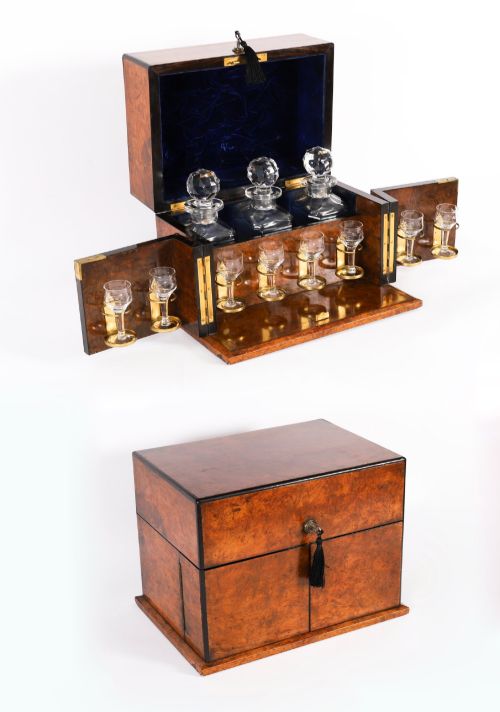
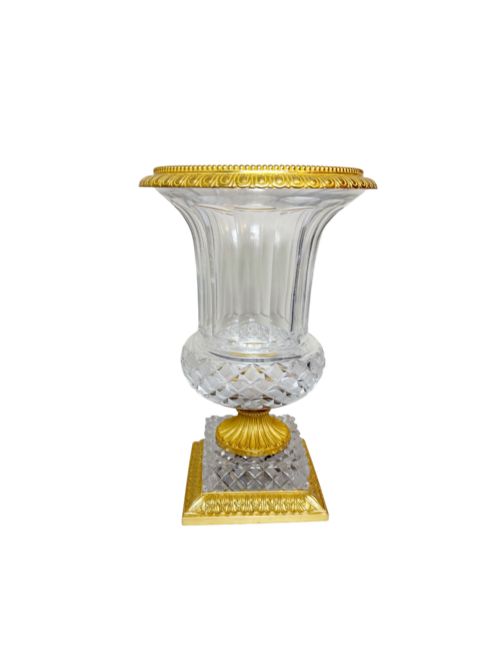
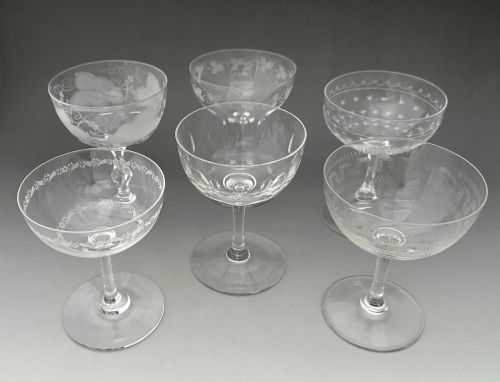
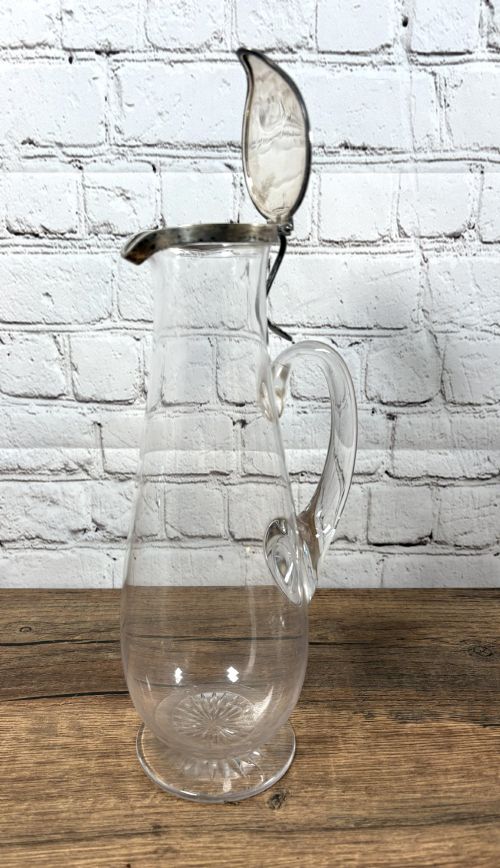
Cut Glass Glasses
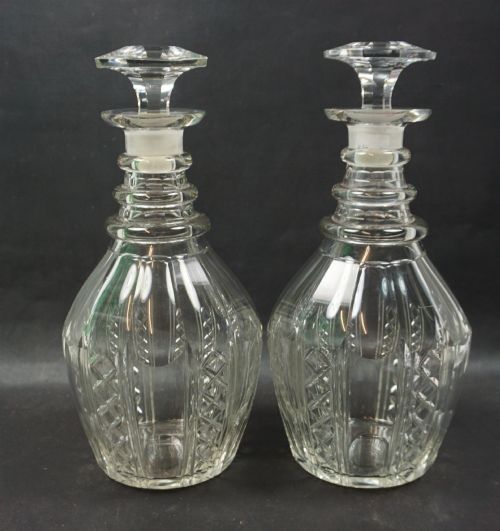
These cut glass glasses bring weight and brilliance to the table, formed by wheel-cutting and facet-grinding to catch the light.
Cut Glass Glasses
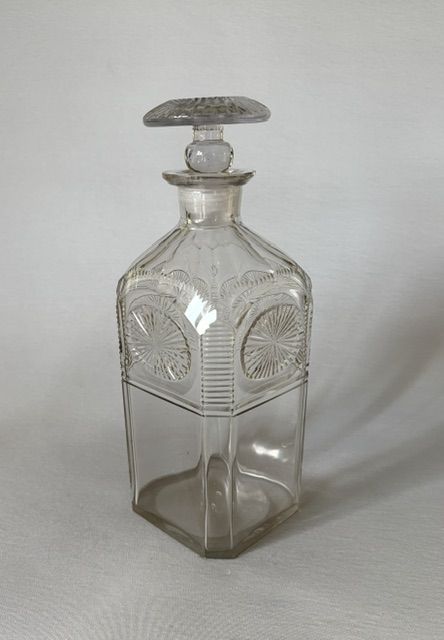
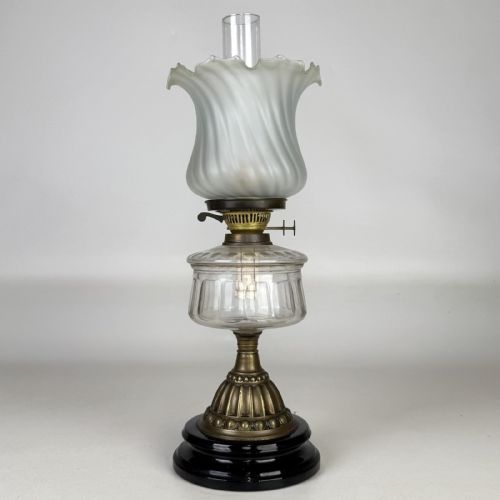
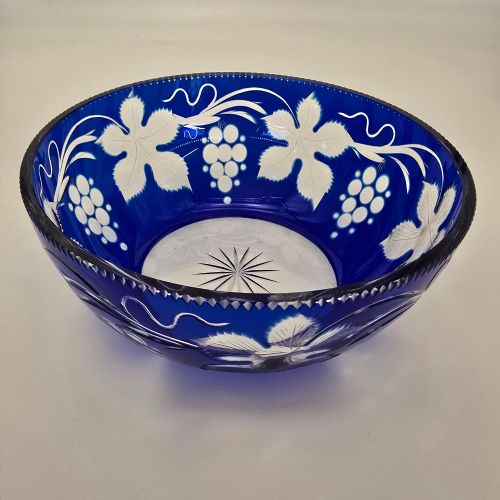
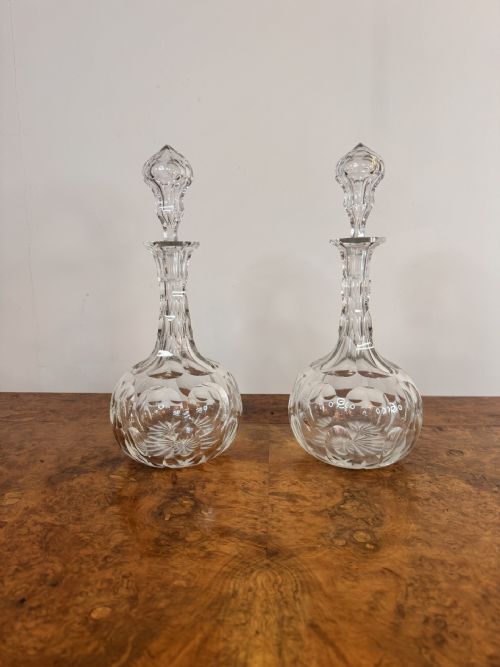
When you search for cut glass glasses, you are looking at drinking vessels shaped from heavy crystal or clear glass with deep geometric or linear incisions. The selection includes dram glasses, white wine glasses, and tall champagne flutes spanning the Victorian, Edwardian, and Art Nouveau periods.
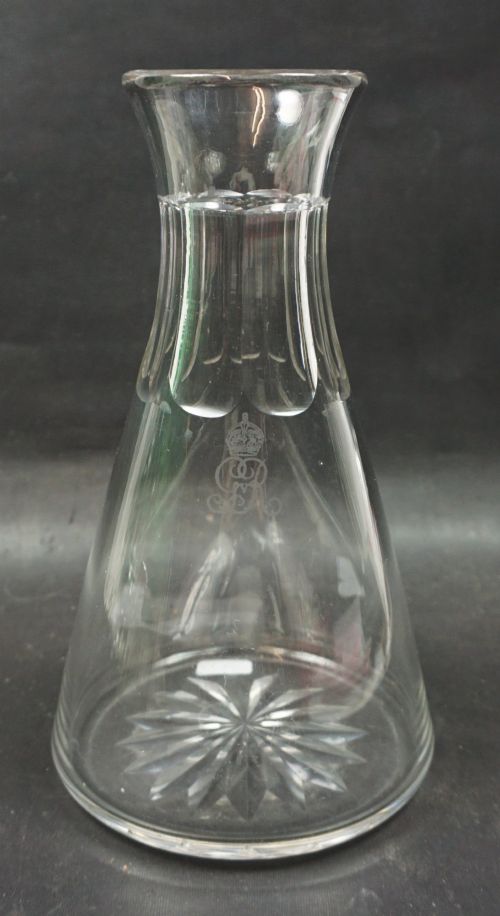
The version you are most likely to meet on this page is an early twentieth-century stemmed glass, often associated with continental makers like Baccarat. These drinking vessels combine blown forms with sharp wheel-cut patterns that produce tactile facets along the bowl and stem.
How they were made
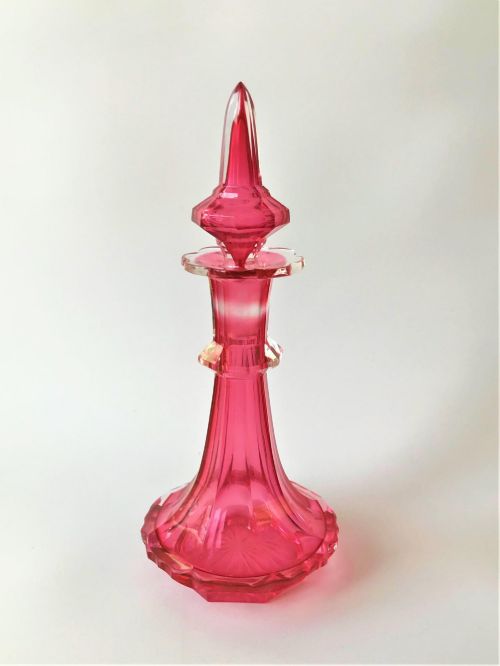
These items rely on lead crystal or clear glass, blown into moulds or free-blown before being cooled and worked by hand. Artisans held the glass against rotating stone and iron wheels fed with abrasive grit to carve flutes, diamonds, and star motifs into the surface.
Finishing involved polishing the cut channels either by hand with cork and pumice or by acid-dipping to restore transparency to the matte incisions. Metal mounts in sterling silver or gilt brass were occasionally added to rims and bases, secured with adhesives or threaded collars.
Cut Glass Glasses Retail Price Guide 2026
Typical asking prices for cut glass glasses among the pieces listed under this phrase on Sellingantiques today, from the lower quarter to the upper quarter. They describe what is for sale here now, not the wider market.
Early twentieth-century tables occasionally glittered with flying cherubs holding crystal spikes right above the butter dish.
What varies in quality
The clarity of the material and the crispness of the wheel-cutting define the upper tier of these pieces. Deep, sharp facets with clean edges reflect light uniformly, whereas lower-quality examples show rounded cuts and cloudy metal inclusions within the glass body.
Balance and weight separate standard production items from fine tableware. A superior glass sits firmly on a polished foot, showing uniform wall thickness and precise symmetry across matching sets.
Baccarat Vallee·William Comyns
The Cut Glass Glasses Glossary
- Cut glass
- Glass decorated by grinding designs into the surface using rotating wheels. This technique produces deep facets and sharp edges that scatter light.
- Lead crystal
- Glass containing a high percentage of lead oxide, which increases weight, refractive index, and working time for the cutter.
- Flute
- A tall, narrow drinking glass designed for sparkling wines. The elongated bowl preserves effervescence.
- Dram glass
- A small drinking vessel intended for spirits. These items feature sturdy bases and thick walls suited to neat pours.
Cut Glass Glasses: Frequently Asked Questions
How do I clean antique cut glass?
Wash these pieces by hand in warm water using a mild liquid detergent. Avoid sudden temperature changes to prevent thermal shock.
Place a towel at the bottom of the sink to cushion the heavy crystal. Dry immediately with a lint-free cloth to maintain clarity.
Can I use these glasses daily?
These drinking vessels suit occasional dining and celebratory use. Their lead crystal construction is durable but vulnerable to chipping against modern crockery.
Store them upright on stable shelving rather than hanging them by their rims. Handle them by the stem to prevent smudging the polished facets.
How do I identify Edwardian cut glass?
Edwardian examples often feature lighter cutting styles and delicate floral or ribbon motifs combined with star-cut bases. The glass tends to be bright and resonant.
Compare the weight and pattern depth against Victorian pieces, which frequently display heavier diamond point and fan cuts across thicker walls.
What makes Baccarat glassware distinct?
Baccarat pieces from the early twentieth century demonstrate exceptional clarity and precise wheel-cutting. The crystal exhibits a distinct ring when tapped gently.
Look for refined proportions on stemmed wine glasses and champagne flutes, where the transition from bowl to stem shows seamless integration.