

Cut Glass Drops
Cut glass drops catch the light in chandeliers, lustres, and jewellery from the nineteenth and early twentieth centuries, bringing brilliance to any interior.
Cut Glass Drops
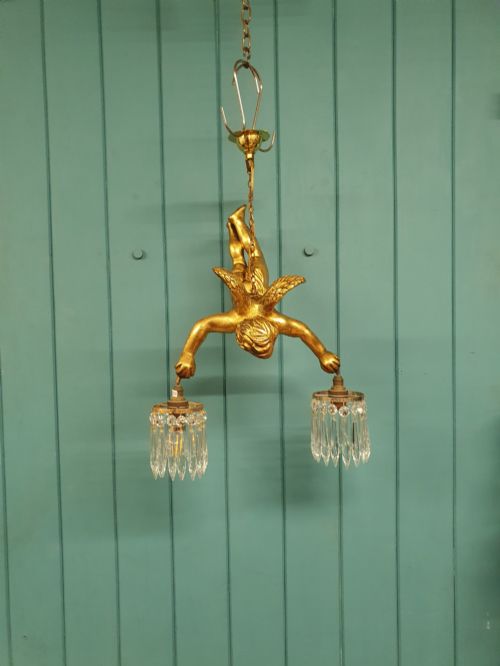
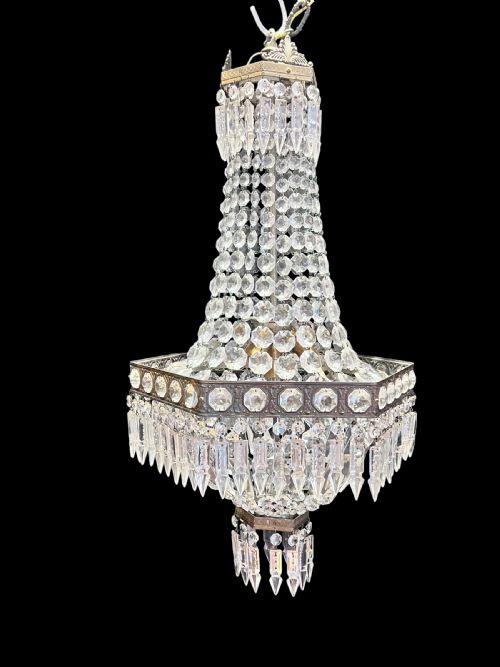
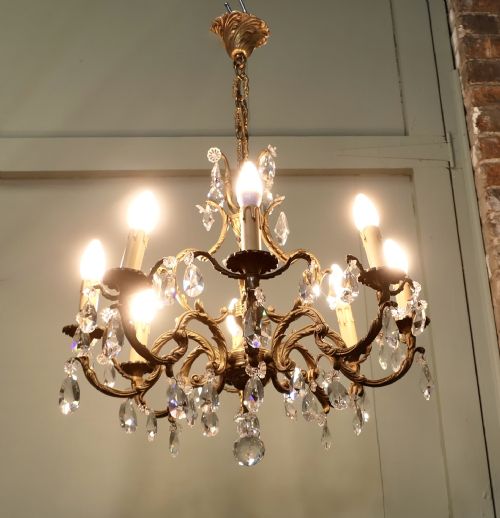
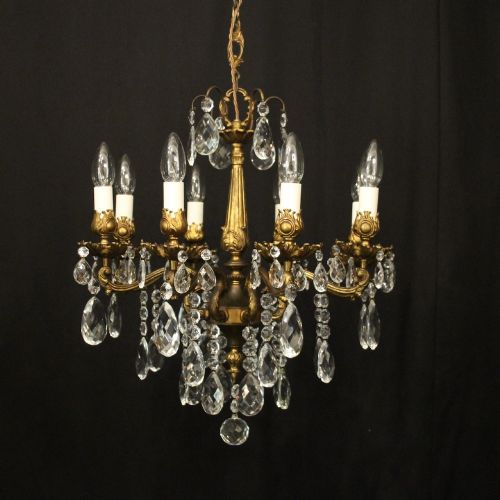
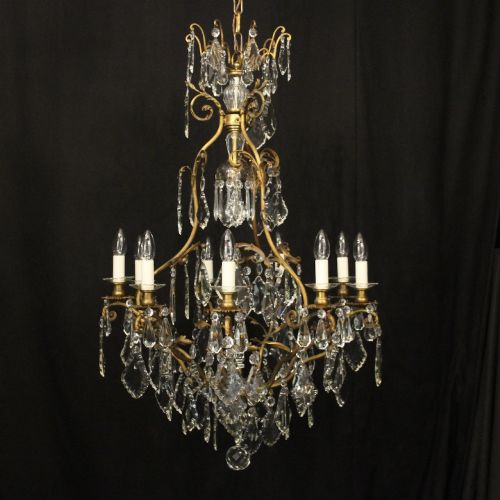
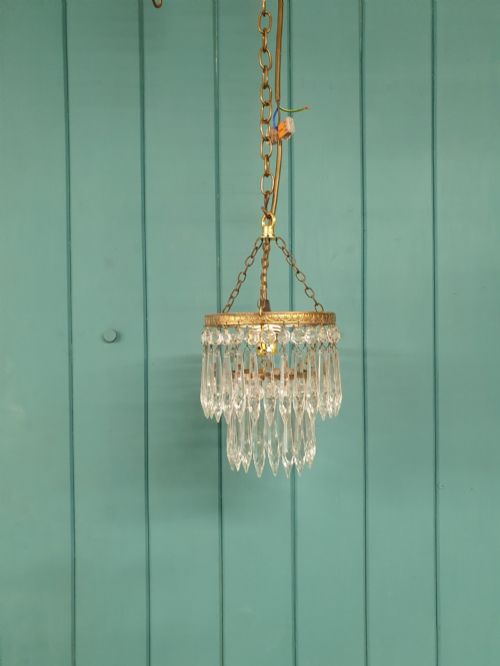
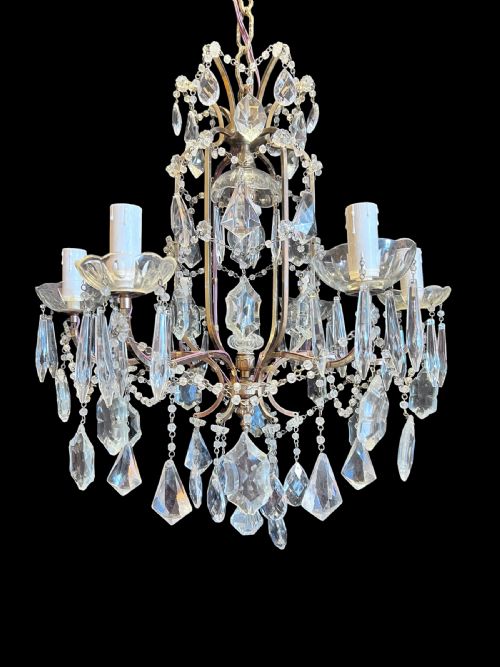
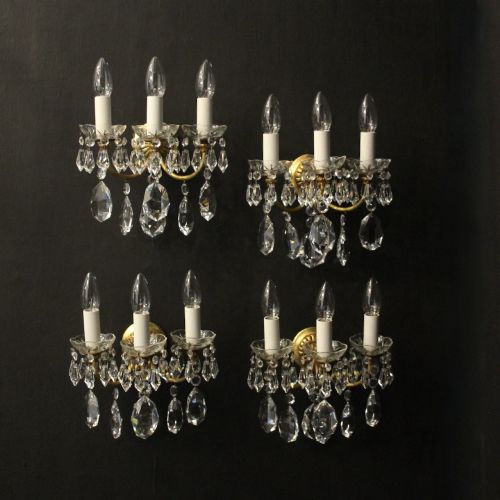
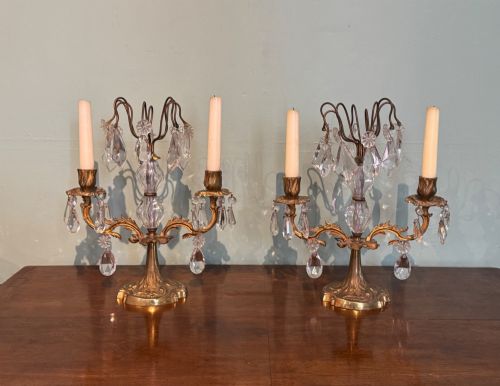
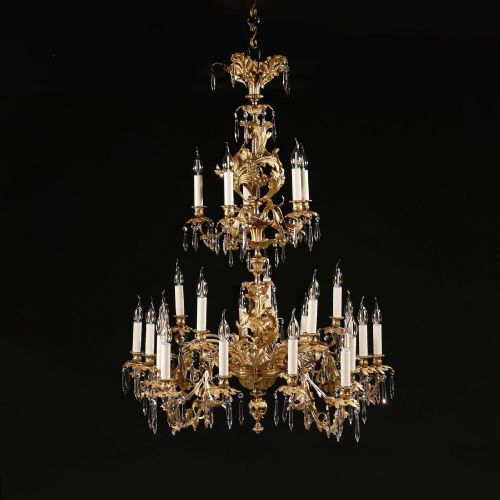
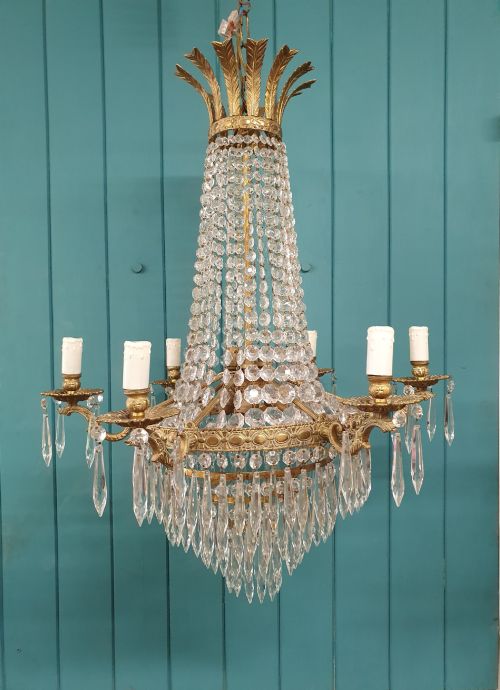
Cut glass drops appear on lighting and decorative objects such as chandeliers, ceiling lights, wall lights, and mantel lustres spanning the Victorian, Edwardian, and Art Deco periods. Buyers looking for cut glass drops find them suspended from brass, gilt bronze, and gilt brass frames, often accompanying French basket or tent designs.
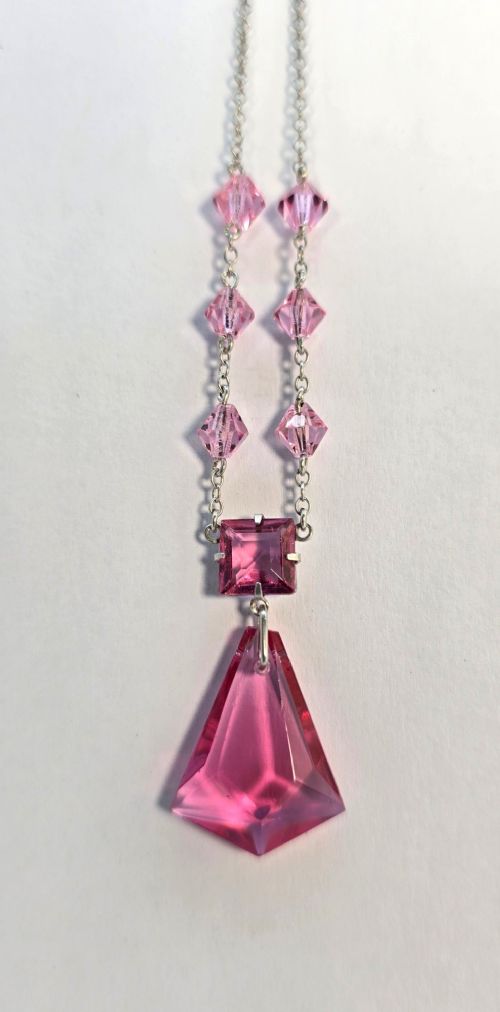
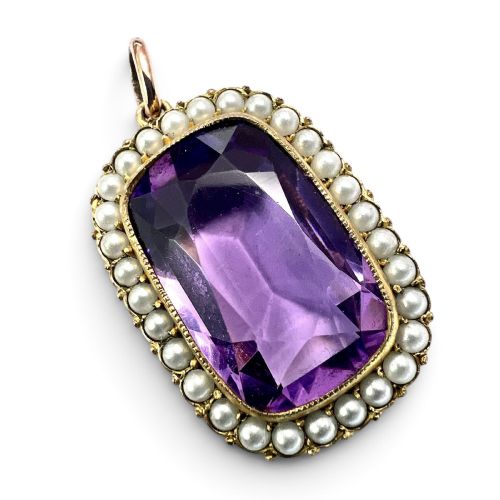
The phrase also extends to jewellery, including necklaces, earrings, and pendants incorporating paste stones and cut crystal. The selection ranges from small prismatic drops on compact fixtures to substantial arrangements on large multi-light chandeliers and coloured glass lustres.
What varies in quality
Quality depends on the clarity of the crystal and the precision of the facet cutting, which determines how sharply the glass refracts light. Superior pieces show crisp edges on every cut and uniform colour saturation in tinted varieties.
The integrity of the supporting metalwork and the completeness of the hanging drops dictate the overall standard of the piece. Matching sets of drops and robust mounting frames separate standard decorative items from finer examples.
Some French chandeliers are quietly dripping with crystal amber and mauve fruits.
The Cut Glass Drops Glossary
- Lustre
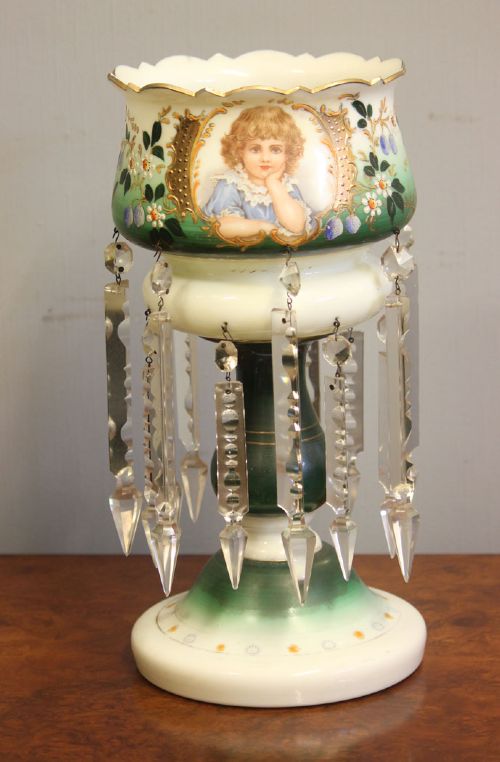
- A decorative tabletop ornament featuring a central vase or pedestal hung with long crystal pendants. These pieces often utilise coloured glass bases in Victorian styles.
- Prism
- A geometric cut glass component designed to refract light into spectral colours. Prisms hang from chandeliers and wall lights in various lengths.
- Tent and bag
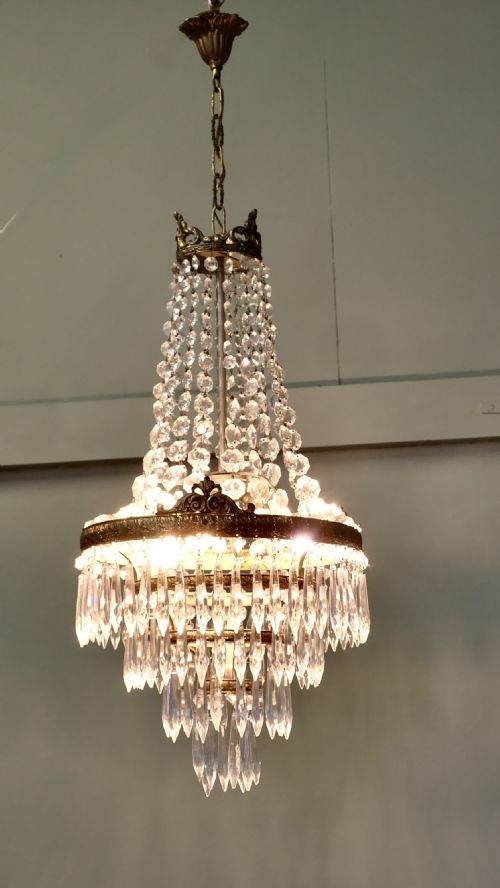
- A chandelier configuration featuring an upper conical section of glass strings dropping down to a gathered basket of crystals. This form is common in French lighting designs.
- Paste
- Hand-cut glass or lead crystal used as a gemstone simulation in antique jewellery. Paste stones are typically set in silver or gilt mounts.
- Gilt bronze
- A bronze metal object treated with a fine layer of gold leaf or mercury gilding. This material forms decorative mounts on ornate nineteenth-century chandeliers.
Cut Glass Drops: Frequently Asked Questions
How do I clean cut glass drops?
Remove dust with a soft brush and wash individual drops in warm water with mild soap. Dry each piece thoroughly with a lint-free cloth before rehanging.
Avoid harsh chemical cleaners that can damage the surrounding metal mounts or alter the surface of older glass and gilt finishes.
Can missing drops be replaced?
Replacement drops can be sourced to match the approximate age, cut, and size of existing elements on a chandelier or lustre. Matching the precise tint and facet pattern maintains the visual consistency of the piece.
Consult specialist restorers who stock period-appropriate crystal components for vintage lighting fixtures.
What periods do these pieces date from?
The available items primarily date from the nineteenth century, the Victorian era, the Edwardian period, and the 1920s and 1930s. Stylistic influences range from French Empire and Rococo to Art Deco.
Construction details such as pin fixings, metal composition, and glass tints help determine the precise era of manufacture.
How were mantel lustres used?
Mantel lustres served as decorative mantelpiece ornaments during the Victorian period, positioned to catch and reflect light from candles and lamps. The hanging crystal drops added visual sparkle to the parlour.
They were often produced in pairs alongside matching glass domes or table candelabra.