

Cut Glass Drop Light
These cut glass drop light pieces catch the light wonderfully and bring a genuine antique atmosphere to any room.
Cut Glass Drop Light
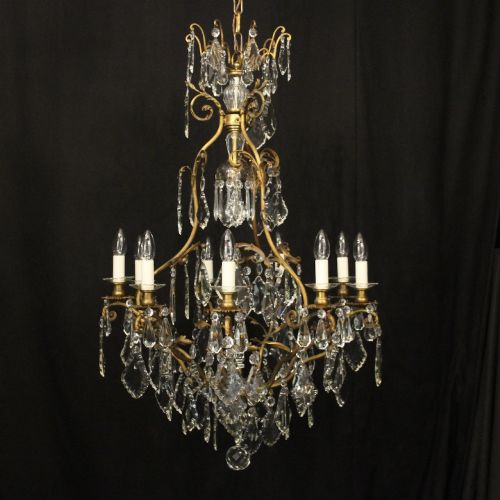
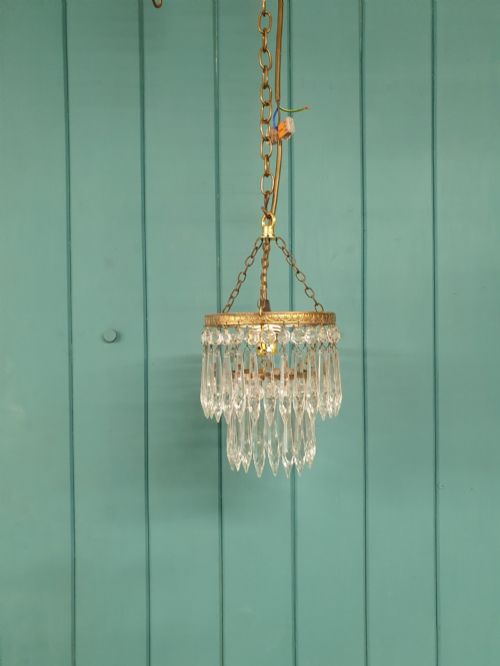
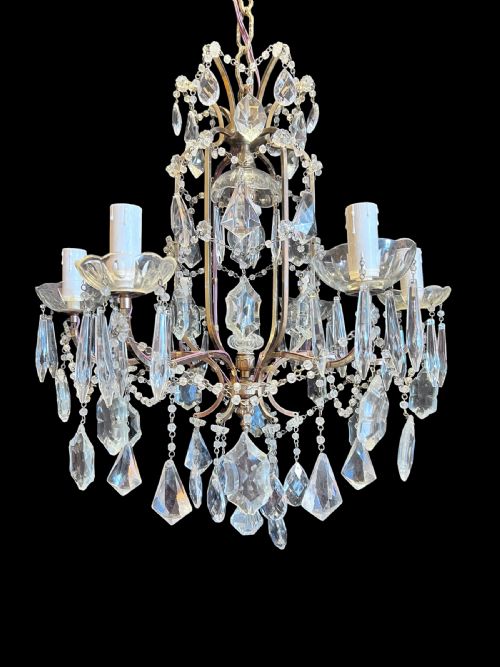
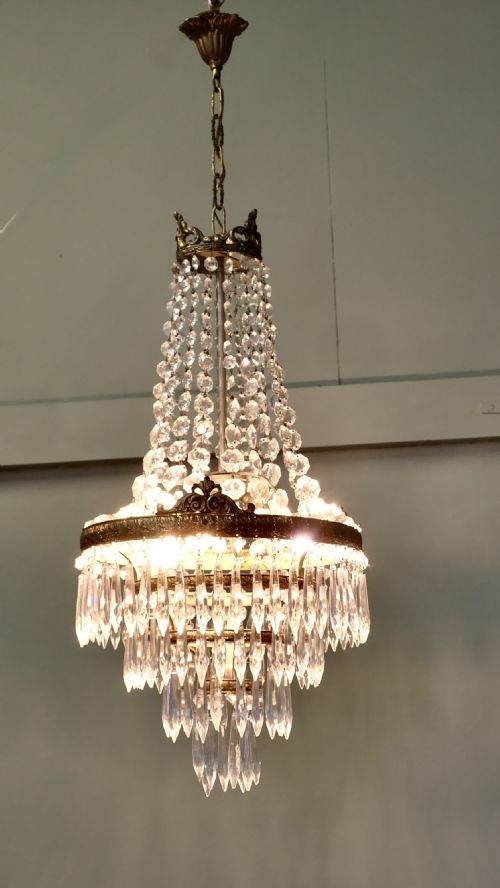
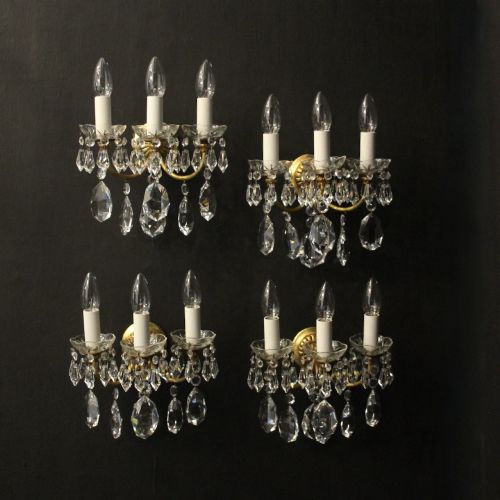
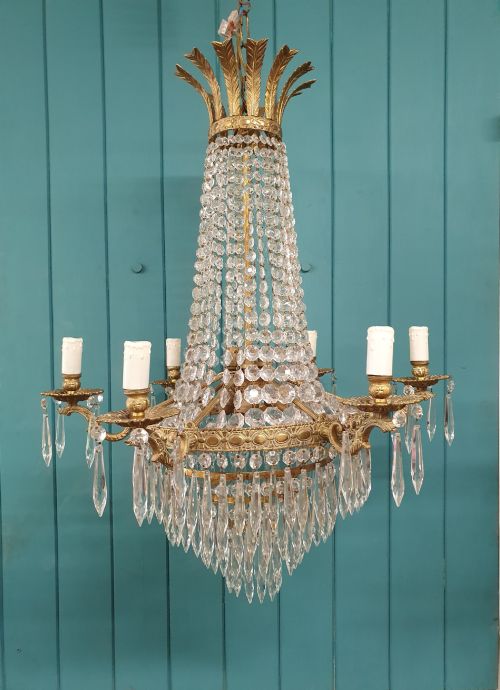
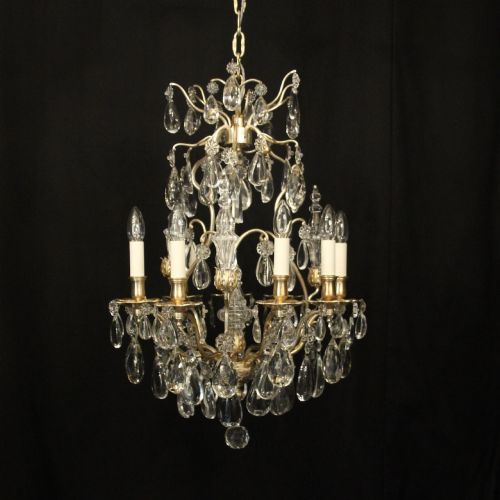
When you search for a cut glass drop light, you encounter a range of hanging ceiling fixtures, chandeliers, and wall lights designed to illuminate and refract light. The selection includes French basket chandeliers, tent and bag chandeliers, and drop light pendants from the Edwardian period.
The most common versions on this page are brass and crystal chandeliers, alongside Victorian glass lustres and wall lights. These objects originate from various periods including the nineteenth century, Edwardian era, and the nineteen-thirties.
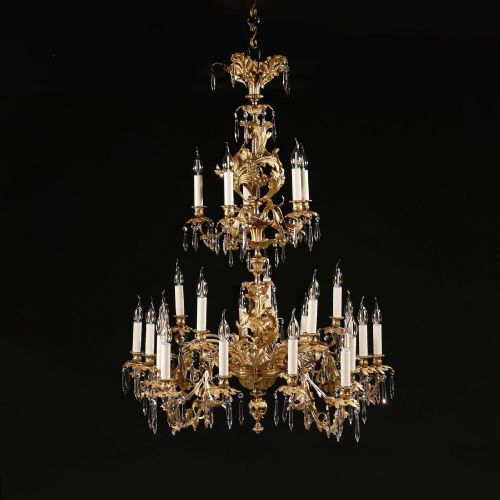
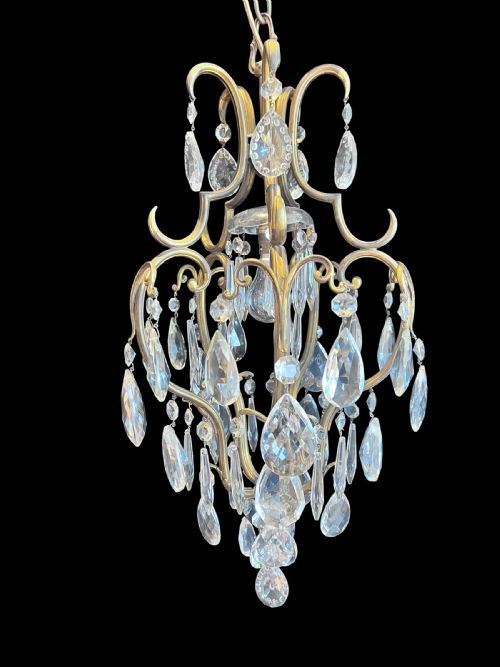
Styles span French Empire, French Rococo, and Art Deco, offering distinct decorative profiles. Buyers find everything from single-light pendants to grand multi-armed fixtures hung with crystal drops.
How they were made
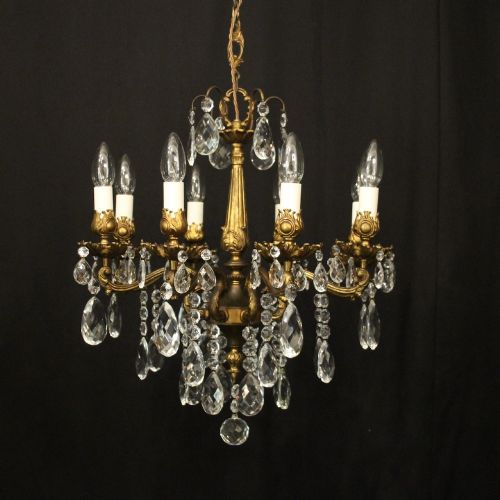
Craftsmen built these pieces using brass, bronze, and gilt metal frameworks combined with clear, ruby, or pink glass and crystal components. Metal mounts and brass frames provide structural support for intricate arrays of glass drops and spikes.
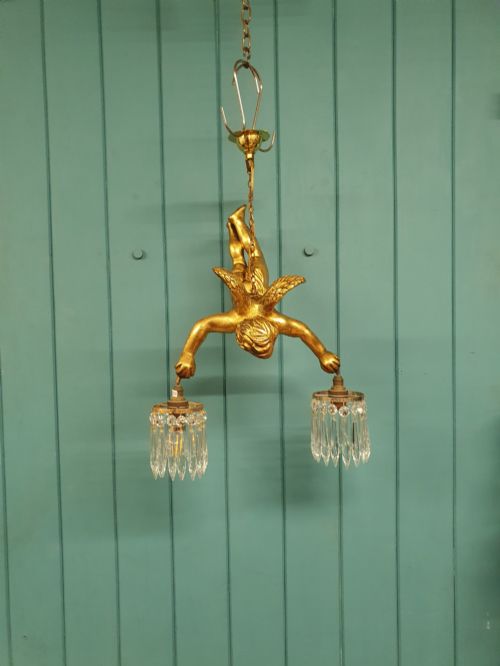
Makers shaped the glass through cutting and moulding techniques to create light-reflecting facets on drops, pendants, and lustres. Metalwork elements frequently feature gilded finishes or cast details such as leaves and cherubs.
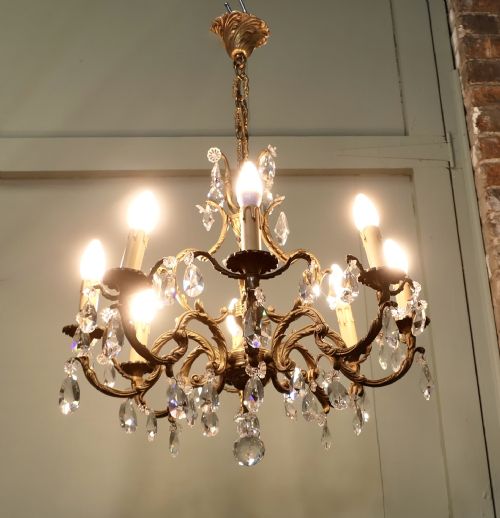
Certain French chandeliers come hung with unexpected crystal amber and mauve fruits alongside traditional drops.
What varies in quality
The quality of a cut glass drop light depends upon the precision of the glass cutting and the clarity of the crystal components. Finer examples display sharp facets that refract light cleanly, whereas simpler pieces use basic moulded glass.
Metalwork construction also dictates the grade of the piece, with heavy cast brass or gilt bronze frames offering superior durability compared to lighter stamped metal mounts. The complexity of the design, such as elaborate tent and bag configurations or matched pairs, separates standard items from exceptional ones.
The Cut Glass Drop Light Glossary
- Lustre
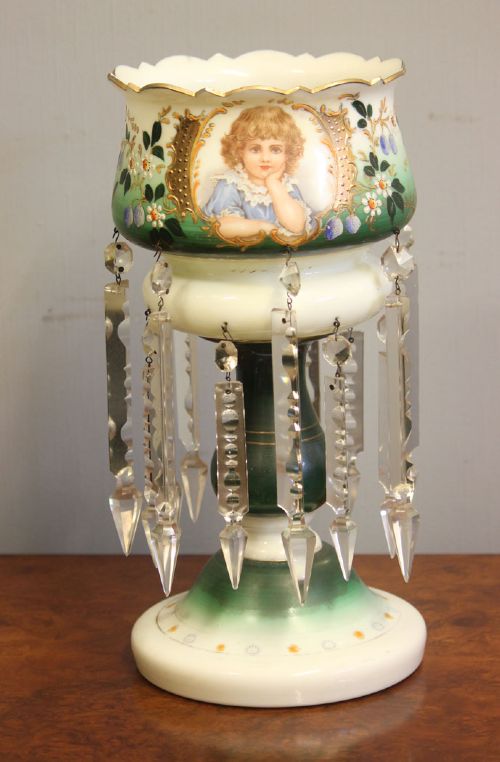
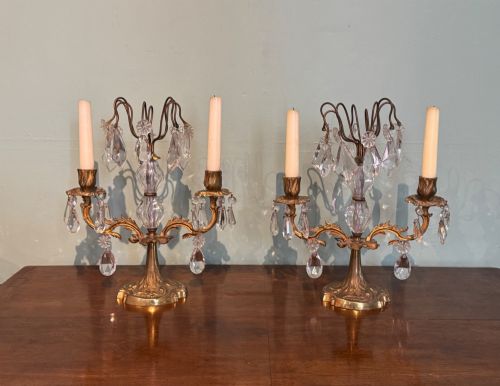
- A decorative tabletop ornament featuring hanging glass prisms, often paired with a central candle holder. Victorian examples come in colours such as ruby and pink glass.
- Tent and bag chandelier
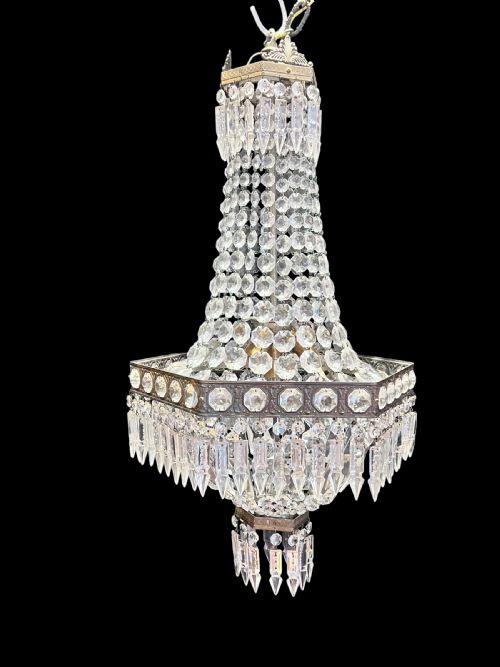
- A lighting fixture featuring an upper conical tent of strung beads cascading down into a basket or bag shape formed of tighter glass drops.
- Spike chandelier
- A hanging light incorporating sharp, elongated crystal spikes radiating from the central frame. These compact fixtures often date to the Edwardian period.
- Gilt bronze
- Metalwork finished with a thin layer of gold or gold-coloured alloy applied to a bronze base. This technique appears frequently on French chandeliers.
- Prism
- A cut glass or crystal element designed to refract light into spectral colours. Prisms hang from chandeliers and wall lights to enhance illumination.
Cut Glass Drop Light: Frequently Asked Questions
How do I identify an Edwardian cut glass drop light?
Edwardian pieces often appear as compact pendant lights or small spike chandeliers featuring cut glass tear drops. These fixtures frequently date from the early twentieth century and utilise brass or glass construction.
Archival sold items show that Edwardian examples commonly include specific tear drop light pendants and wall lights. Checking the proportion and the style of the metal mounts helps confirm this period.
What styles are available for these lights?
The inventory encompasses French Chateau, French Rococo, French Empire, Regency, Victorian, Edwardian, and Art Deco styles. French designs often incorporate gilt brass, bronze, and elaborate crystal configurations.
Victorian pieces frequently feature coloured glass lustres in pink or ruby tones. Art Deco and later Edwardian pieces tend towards cleaner lines while retaining glass drop embellishments.
How were mantle lustres used?
Table and mantle lustres functioned as decorative ornaments placed upon mantelpieces or tabletops during the nineteenth and early twentieth centuries. They combine a central stem with hanging glass prisms that reflect candlelight or room illumination.
Unlike hanging chandeliers, these stationary pieces sat on surfaces and often incorporated matching glass domes or candle holders.