




Cut Glass Decanter Stand
A cut glass decanter stand holds spirits and wine bottles securely on the dining table, combining heavy crystal with supportive metal frames.
Cut Glass Decanter Stand
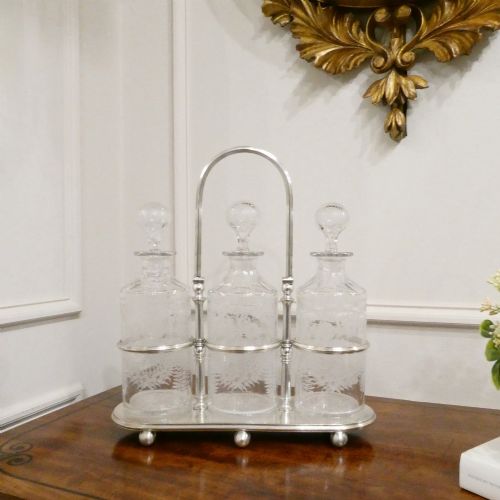
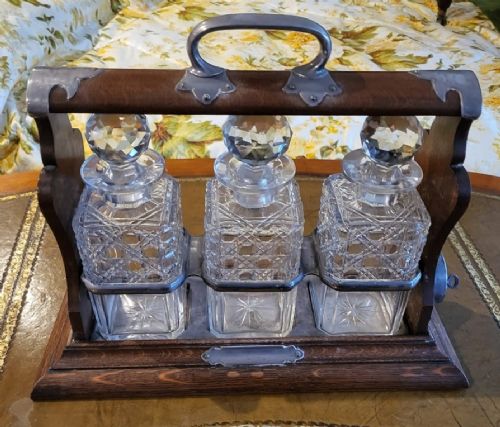
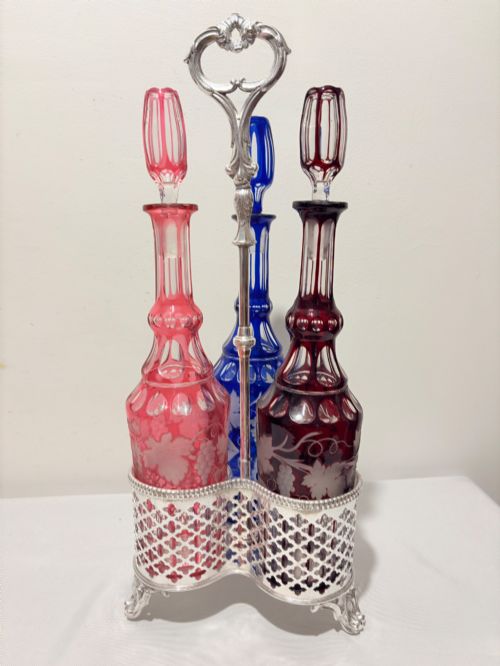
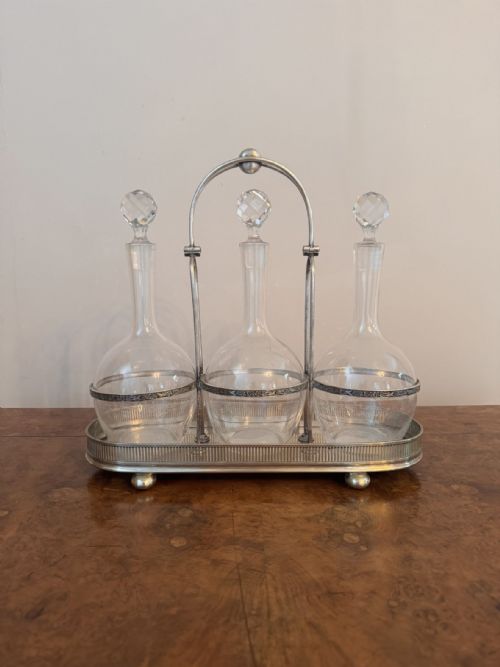
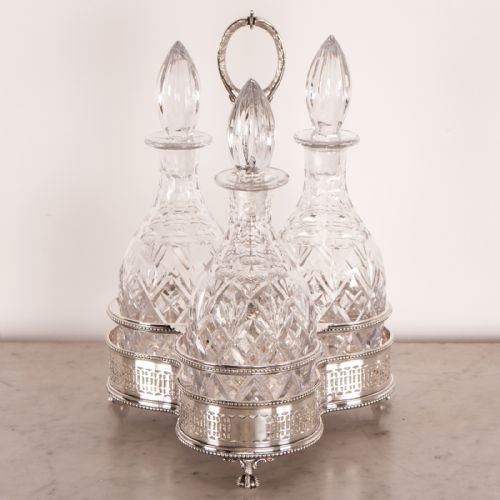
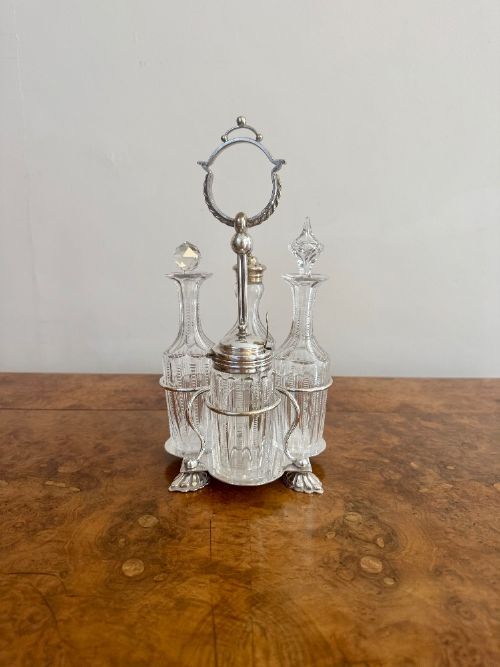
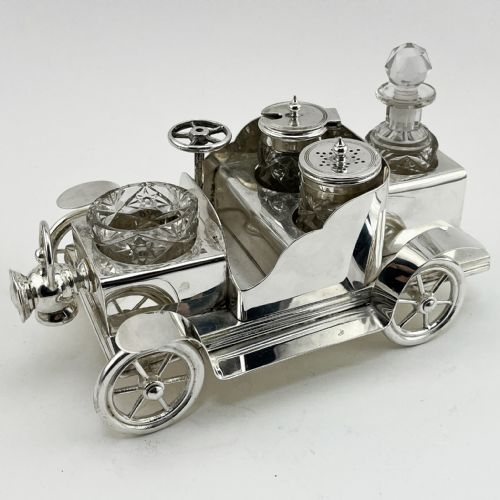
A cut glass decanter stand appears in several distinct forms across the nineteenth and early twentieth centuries, most commonly as silver plated frames holding multiple crystal bottles. You will frequently encounter Victorian and Edwardian tantalus sets alongside cruet sets and liqueur stands.
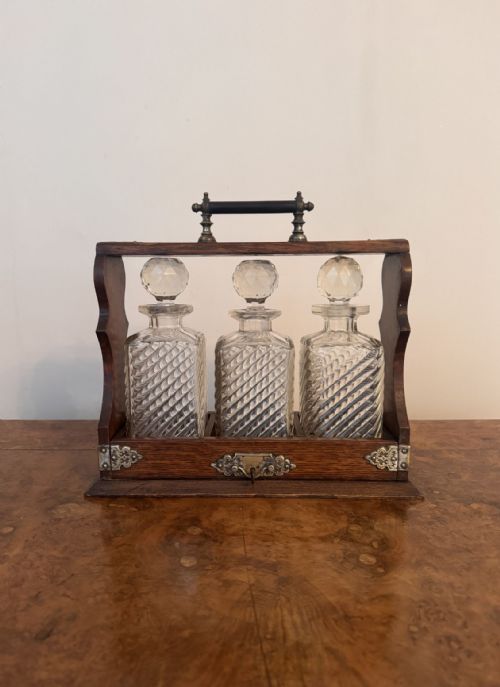
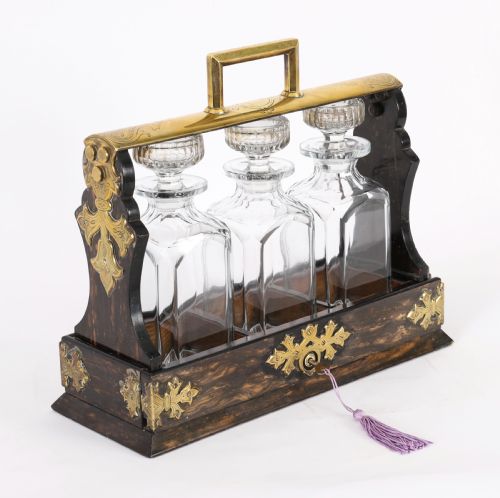
The materials span oak, coromandel, walnut, and mahogany combined with cut glass, crystal, silver plate, and brass. These pieces range from single-bottle oak cases to large multi-bottle frames designed to lock away fine spirits.
Materials and construction
The wooden frames and cases utilise figured oak, coromandel, and walnut, often enhanced with marquetry stringing or brass mounts. Silversmiths formed the stands using silver plate, Old Sheffield plate, or solid silver to create supportive galleries and locking mechanisms.
The glassware consists of heavy cut glass or cut crystal bottles, shaped to fit precisely into fitted metal or wooden compartments. Metal frames rely on sturdy handles and locking bars that secure the decanter stoppers in place.
Cut Glass Decanter Stand Retail Price Guide 2026
Typical asking prices for cut glass decanter stand among the pieces listed under this phrase on Sellingantiques today, from the lower quarter to the upper quarter. They describe what is for sale here now, not the wider market.
Some Victorian spirit stands doubled as games compendiums, concealing playing cards and cribbage boards beneath the liquor bottles.
Assessing quality
Quality rests in the crispness of the glass cutting, the weight of the silver plating, and the density of the timber used for the base or case. Superior examples feature well-fitted locking mechanisms, matching original cut crystal decanters, and substantial metal mounts.
The distinction between standard production items and finer pieces lies in decorative details such as marquetry inlay, ornate frame casting, and the integration of games compendiums or multiple matched bottles.
Walker and Hall·Charles Thomas Fox·Hester Bateman·Elkington·Wade Wingfield Wilkins·Hukin and Heath·The Goldsmith Co
The Cut Glass Decanter Stand Glossary
- Tantalus
- A locking drink stand that holds decanters securely by their necks, preventing removal until the wooden or metal bar is unlocked with a key.
- Cruet set
- A matched collection of glass bottles mounted on a stand, originally intended for condiments, oils, or vinegars at the dining table.
- Old Sheffield plate
- A composite material made by fusing a thin sheet of silver to a thicker copper base, common on pieces from the eighteenth and nineteenth centuries.
- Coromandel
- A dense, dark exotic timber with contrasting figure, frequently utilised for luxury nineteenth-century games compendiums and decanter cases.
- Cave à liqueur
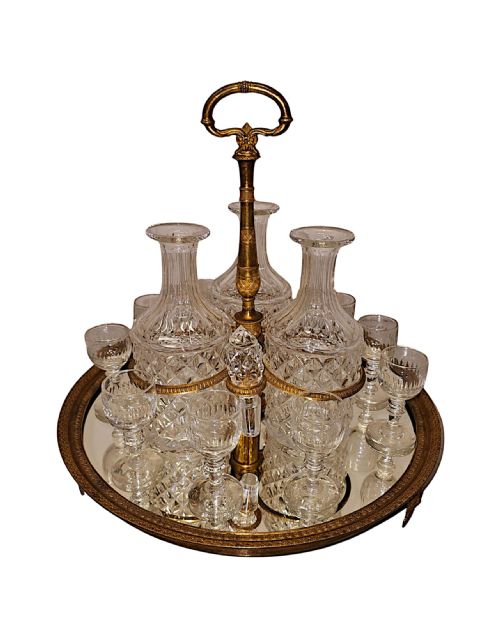
- A French portable cabinet or stand fitted with glass decanters and liqueur glasses, often adorned with ormolu mounts.
Cut Glass Decanter Stand: Frequently Asked Questions
What is a cut glass decanter stand used for?
These stands serve to display and organise decanters and bottles on a sideboard or dining table. They keep serving vessels stable and ready for pouring.
Tantalus versions add a locking mechanism to secure valuable spirits away from household staff or guests. Cruet sets hold smaller condiment bottles for meals.
How do I date a Victorian tantalus?
Dating relies on the style of the timber case, the mounting hardware, and the silver plating marks. Victorian pieces often use heavy oak or coromandel with brass mounts.
Later Edwardian versions tend to feature simpler frames, while mid-nineteenth-century examples display ornate casting and distinct silver plating techniques.
Are the decanters usually original to the stand?
Many pieces retain their original matching cut crystal decanters, which fit precisely into the dividers of the metal or wooden frame. Glassware was fragile and frequently replaced over time.
Matching cut patterns and exact neck sizes help determine whether the bottles belonged to the stand originally.
How do I care for silver plated decanter stands?
Silver plate requires gentle cleaning with a soft cloth and a specialised polish to avoid wearing through the thin silver layer to the base metal. Wooden bases benefit from occasional wax application.
Glass decanters should be washed by hand with warm water, avoiding harsh abrasives that might scratch the cut crystal surface.