



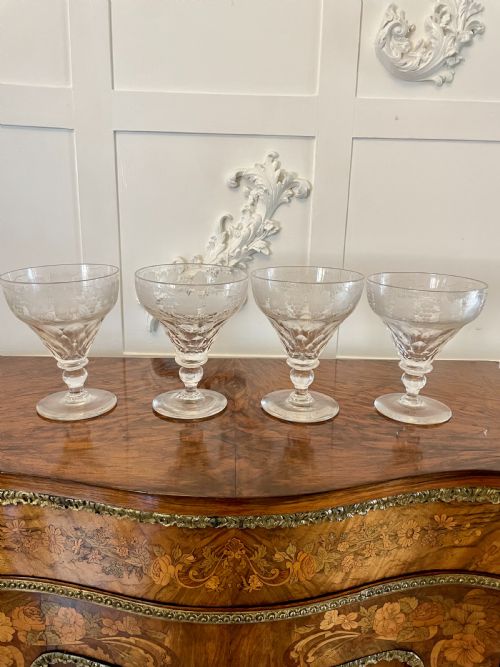
Cut Glass Coupe Glasses
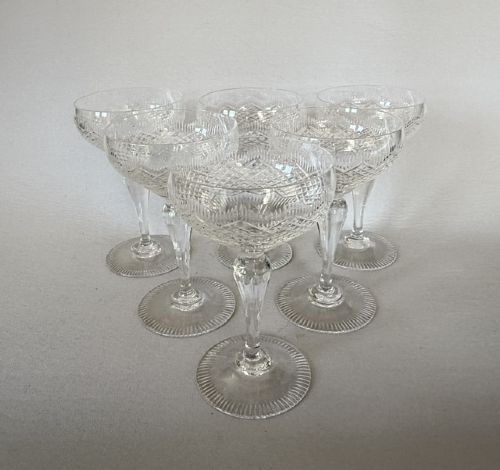
These cut glass coupe glasses combine heavy lead crystal and bright gilding, offering an elegant vessel for champagne and celebration.
Cut Glass Coupe Glasses
When you search for cut glass coupe glasses, you encounter sophisticated drinking vessels and serving bowls spanning the Victorian, Edwardian, and Art Nouveau periods. These pieces serve champagne and sparkling wine, functioning as shallow bowls mounted on slender stems or substantial bases.
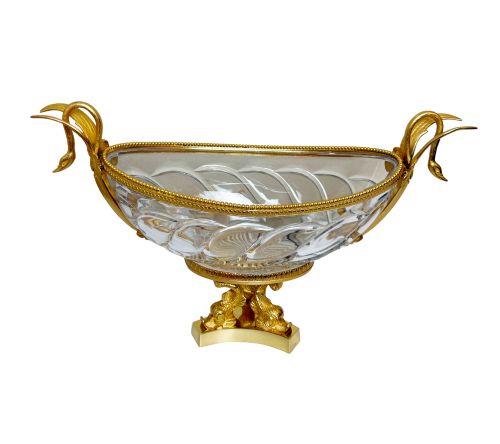
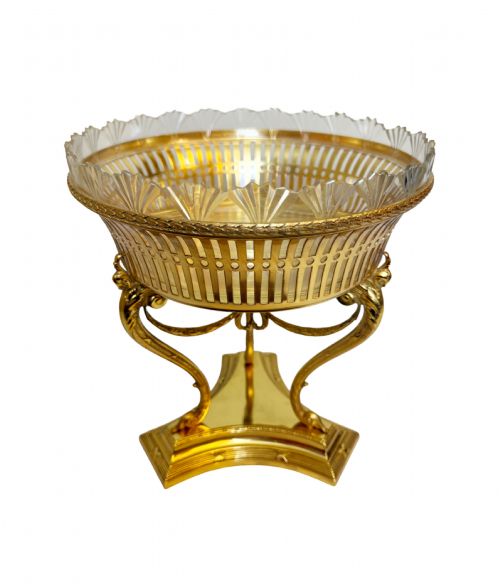
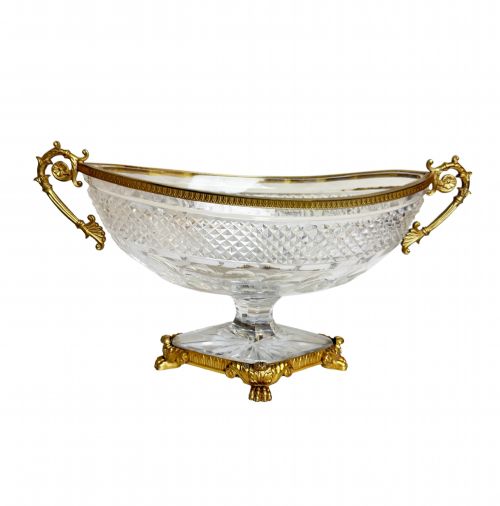
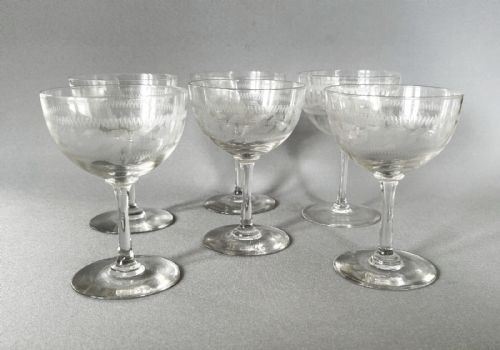
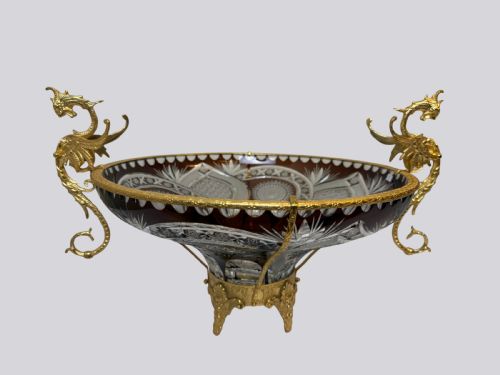
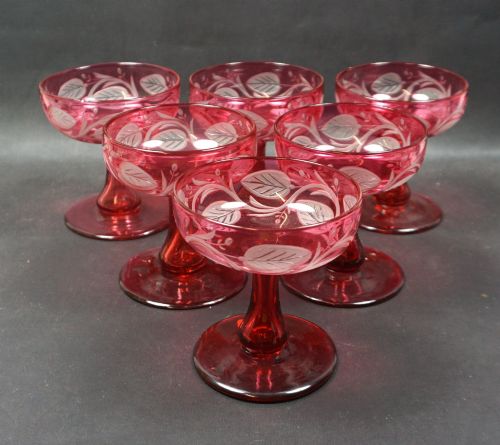
The selections available on this page include sets of six small champagne bowls, large engraved glasses, and coloured crystal coupes featuring cranberry and green overlays. Alongside traditional stemware, the inventory includes related centrepieces in gilt bronze and crystal from the nineteenth and early twentieth centuries.
Originating from French and English workshops, these items reflect design movements such as Empire, Neoclassical, and Belle Epoque. A buyer is most likely to meet matching sets of champagne glasses or pairs of engraved coupes suitable for formal dining.
How they were made
Maker operations utilised heavy lead crystal and clear glass, shaping the material by hand before applying intricate wheel-cutting and engraving techniques. Artisans often combined glass with gilt bronze and ormolu mounts to create elaborate centrepieces and decorative stands.
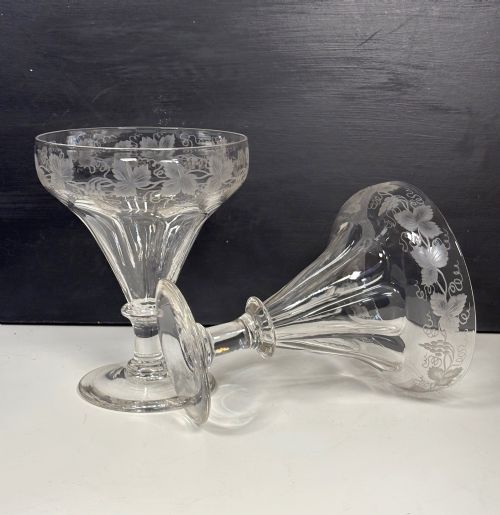
Decoration relied on precise wheel-engraving to produce botanical motifs like convolvulus, geometric Greek key patterns, and panel cuts that catch the light. Coloured wares were formed using layered techniques, producing cranberry or green glass over a clear crystal core.
Cut Glass Coupe Glasses Retail Price Guide 2026
Typical asking prices for cut glass coupe glasses among the pieces listed under this phrase on Sellingantiques today, from the lower quarter to the upper quarter. They describe what is for sale here now, not the wider market.
Victorian diners enjoyed champagne from coupes specifically engineered to display the bubbles against deep botanical engravings of convolvulus.
What varies in quality
The standard of cutting and engraving dictates the distinction between standard production and exceptional examples, with deeper, crisper facets demonstrating superior craftsmanship. The clarity of the lead crystal and the weight of the metal mounts further separate the finest pieces from simpler domestic glassware.
Completeness within sets and the integrity of coloured glass overlays influence desirability among collectors. Items retaining their original gilt bronze fittings without alteration represent the higher tier of period manufacture.
Baccarat
The Cut Glass Coupe Glasses Glossary
- Coupe
- A shallow, broad-bowled glass traditionally utilised for serving champagne. This form allows the aromas of sparkling wine to develop fully.
- Lead crystal
- Glass containing metallic oxide that increases weight, refractive index, and brilliance. This material enables deeper and sharper facet cutting.
- Overlay
- A technique involving a layer of coloured glass fused over a clear crystal body. Cutting through the outer layer reveals the contrasting clear glass beneath.
- Ormolu
- Gilded bronze mounts applied to decorative objects and centrepieces. This material provides ornate architectural support and rich metallic contrast to the glass.
- Greek key
- A decorative border motif composed of a continuous geometric line folded into repeated right angles. It appears frequently on Edwardian glassware.
Cut Glass Coupe Glasses: Frequently Asked Questions
What are cut glass coupe glasses used for?
These shallow bowls serve champagne and sparkling wine at formal gatherings. Their wide design releases the effervescence and aromas of the drink.
Historically, they also functioned as dessert dishes for serving custards, jellies, and small trifles during nineteenth-century dinners.
How do I date a cut glass coupe?
Dating relies on examining the weight of the crystal, the depth of the wheel-cutting, and stylistic indicators such as Greek key borders or overlaid colours. Victorian and Edwardian examples show distinct handling of botanical engraving and stem thickness.
Comparing the optic qualities of the lead crystal with known production periods from English and French makers clarifies the era of manufacture.
Are these glasses safe to use today?
Most antique crystal and cut glass pieces remain entirely functional for modern dining and celebrations. Hand washing protects the delicate engraved surfaces and any applied metal elements.
Harsh detergents and automatic dishwashers should be avoided to preserve the clarity and polish of the lead crystal.
How do I care for gilt bronze mounts?
Gilt bronze and ormolu components require gentle dusting with a soft, dry cloth to prevent the accumulation of moisture and grime. Chemical cleaners strip the historical gilding and damage the adjacent glass.
Keeping the metal dry ensures the longevity of the combined bronze and crystal centrepieces.