


Cut Glass Candlesticks
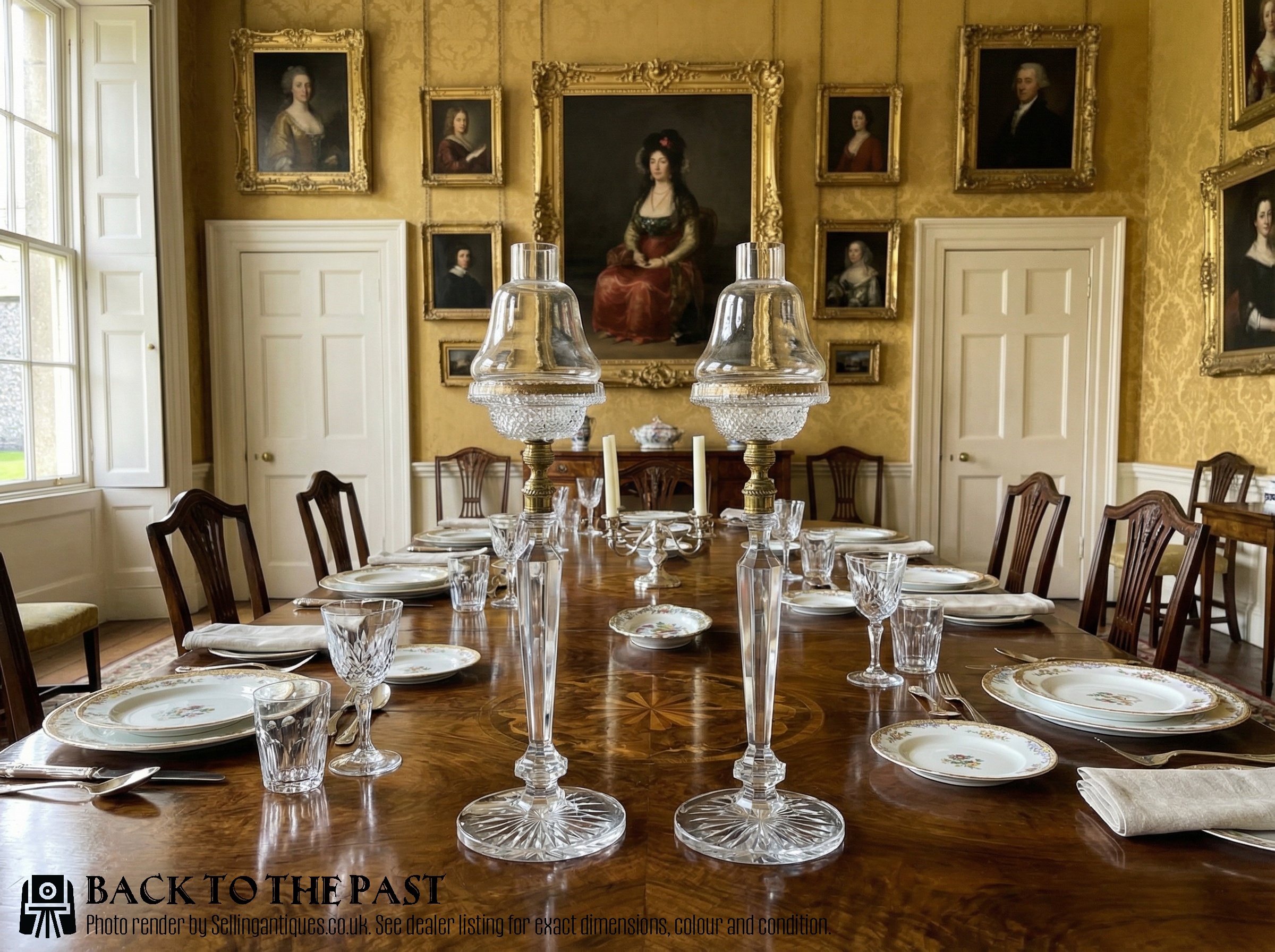
Cut glass candlesticks catch the light on a dining table, bringing heavy nineteenth-century weight and crystal brilliance to a room.
Cut Glass Candlesticks
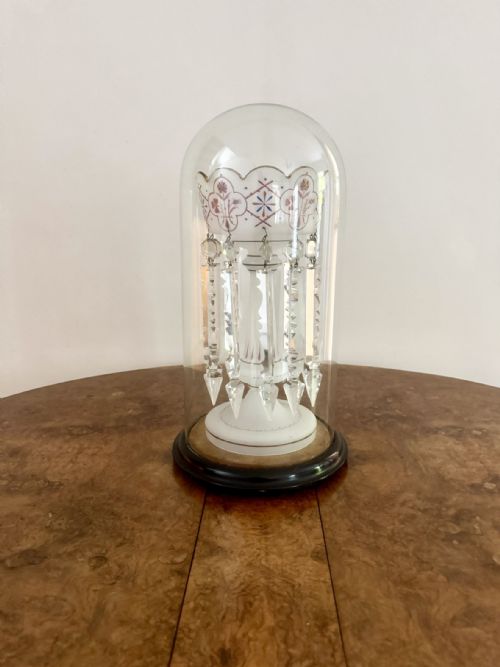
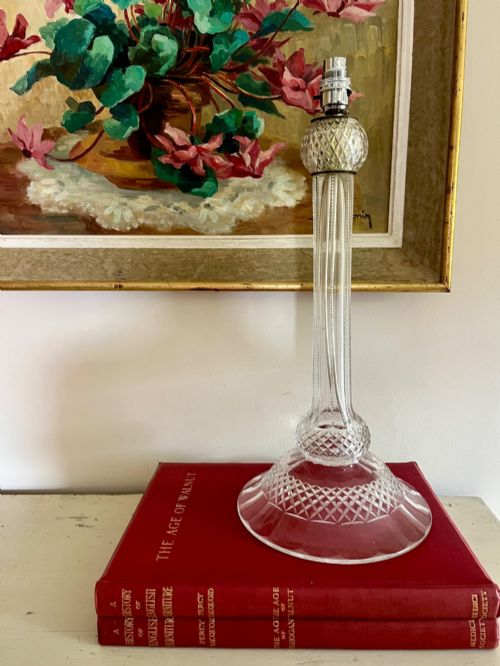
Cut glass candlesticks span the eighteenth, nineteenth, and early twentieth centuries, appearing alongside related forms such as mantel lustres and table lamps. These pieces range from simple table stands to elaborate pairs set with hanging drops.
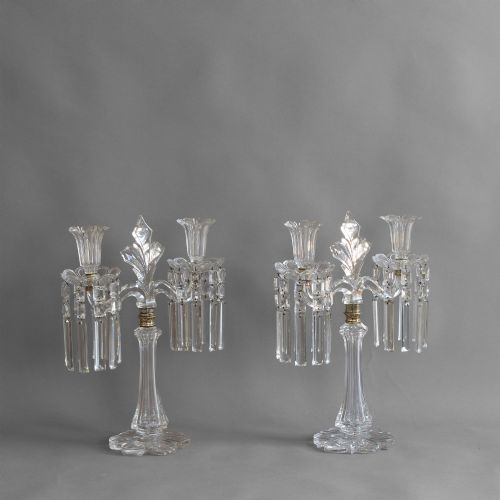
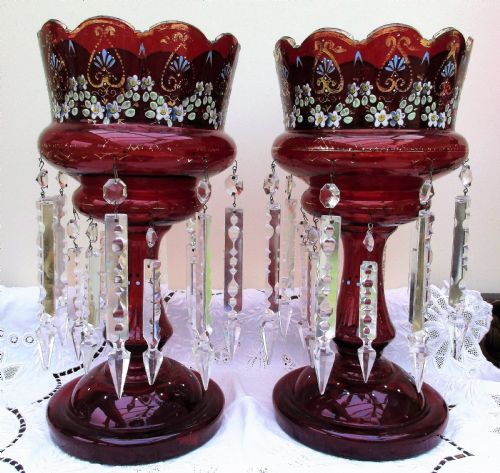
Victorian and Edwardian examples dominate the selection, often taking the form of matched pairs intended for mantelpieces or sideboards. Earlier Regency and eighteenth-century items also emerge, alongside Continental variations in ruby and cranberry glass.
Buyers encounter functional single sticks, towering table lamps, and multi-light candelabra. Many incorporate metal mounts, brass bases, or enamel detailing alongside the primary glass body.
Materials and construction
The primary material is heavy lead crystal or glass, shaped by blowing or pressing before being hand-cut with facets, flutes, and diamond patterns. This deep cutting maximises the refraction of candlelight.
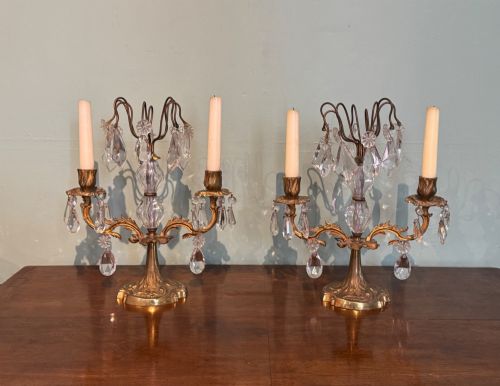
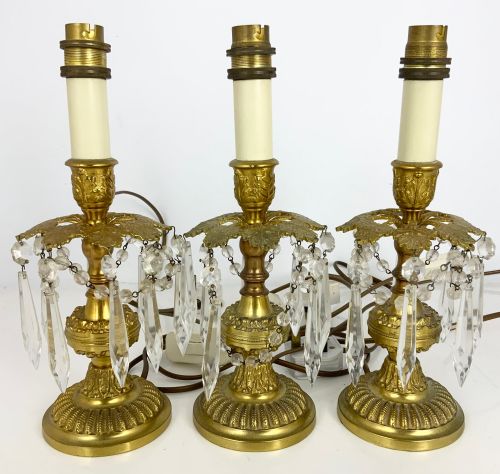
Many items combine glass with metal elements, utilising brass, gilt brass, or bronze for sockets, stems, and weighted bases. Pairs frequently incorporate suspended glass prisms or spear drops linked by wire around the sconce.
Some Victorian examples hide their brilliance inside horn-shaped cornucopia inkwells or double as miniature indoor solar systems.
Assessing quality
Quality rests on the crispness of the facet cutting and the clarity of the metal-infused glass. Superior examples show sharp, clean edges to every cut and substantial weight in the hand.
The integration of metal mounts, such as ormolu or hallmarked silver details, separates standard production from finer decorative objects. Matching sets of hanging drops that retain their original number and configuration indicate a higher grade of survival.
The Cut Glass Candlesticks Glossary
- Lustre
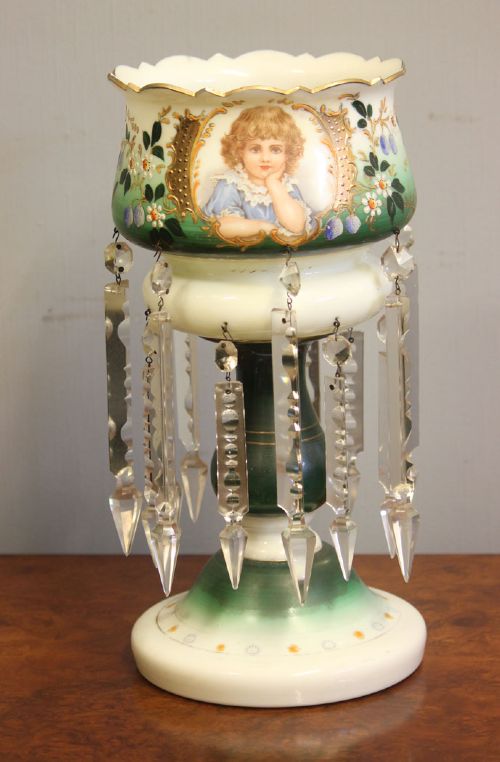
- A decorative tabletop piece fitted with a central column and a ring of hanging glass prisms. These drops catch and multiply the flicker of candles.
- Cricklite
- A patented nightlight and candle holder system often mounted in cut glass and brass. Clarke held the patent for these popular Victorian lighting arrangements.
- Candelabra
- A branched candlestick holding multiple lights on a single base. These grander pieces often feature elaborate cut glass stems and matching lustres.
- Prism
- A cut glass pendant or drop hung from the sconce of a candlestick or lustre. They swing and glitter when air moves in the room.
- Sconce
- The upper cup or nozzle designed to catch wax and hold the candle firmly in place. On these pieces, it is frequently surrounded by a ring of hanging drops.
Cut Glass Candlesticks: Frequently Asked Questions
How do I clean cut glass candlesticks?
Wash them gently by hand in warm soapy water using a soft cloth. Avoid harsh scrubbing or abrasive scourers that might scratch the surface.
Remove any hanging drops beforehand to clean them individually. Dry thoroughly with a lint-free cloth to restore the sparkle.
Can I burn real candles in them?
Most antique pieces hold standard dinner tapers securely in the metal or glass socket. Ensure the candle fits snugly to prevent any tilt.
Keep burning candles away from draughts to avoid uneven melting. Clean away residual wax carefully while it remains soft.
How do I spot a matched pair?
Examine the height, weight, and cutting patterns of both sticks side by side. Hand-cut items often show slight variations in facet width or bubble distribution.
Check the base and metal mounts for matching wear and patina. True pairs share identical proportions and the same number of hanging drop attachments.
What is the difference between lustres and candlesticks?
Candlesticks serve strictly to elevate and display a single burning taper. Lustres incorporate a decorative bowl or ring hung with crystal prisms.
While lustres can hold candles, their primary role is visual display and light refraction. They dominate mantelpieces where their hanging drops create dramatic sparkle.