
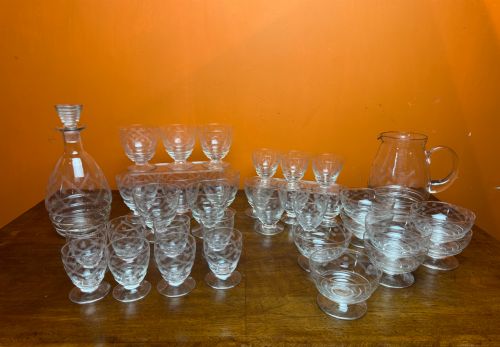

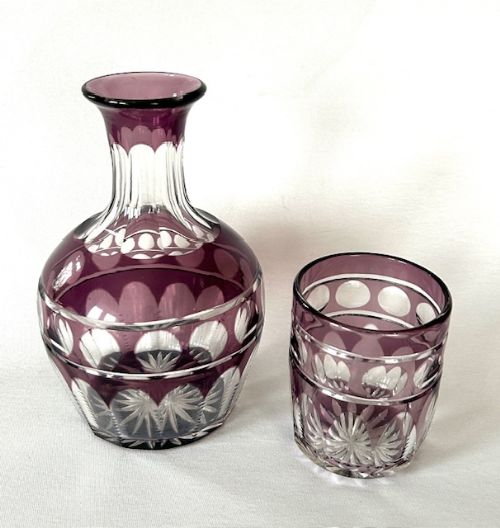


Cut Crystal Water Pitcher
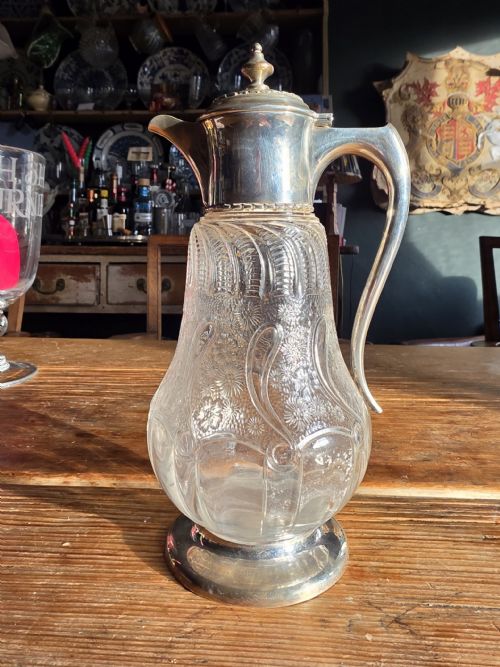
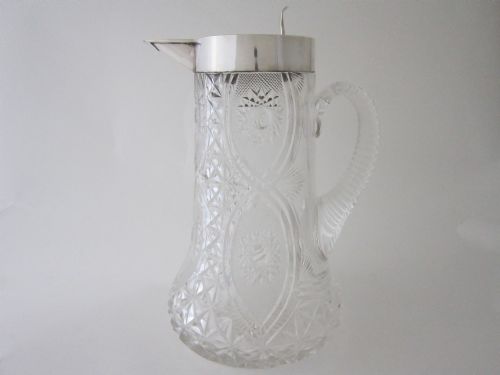
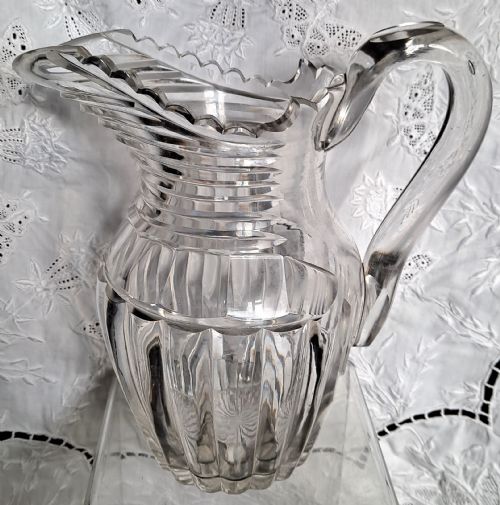
A cut crystal water pitcher brings heavy brilliance to the table, combining deep wheel-cut facets with substantial handle forms.
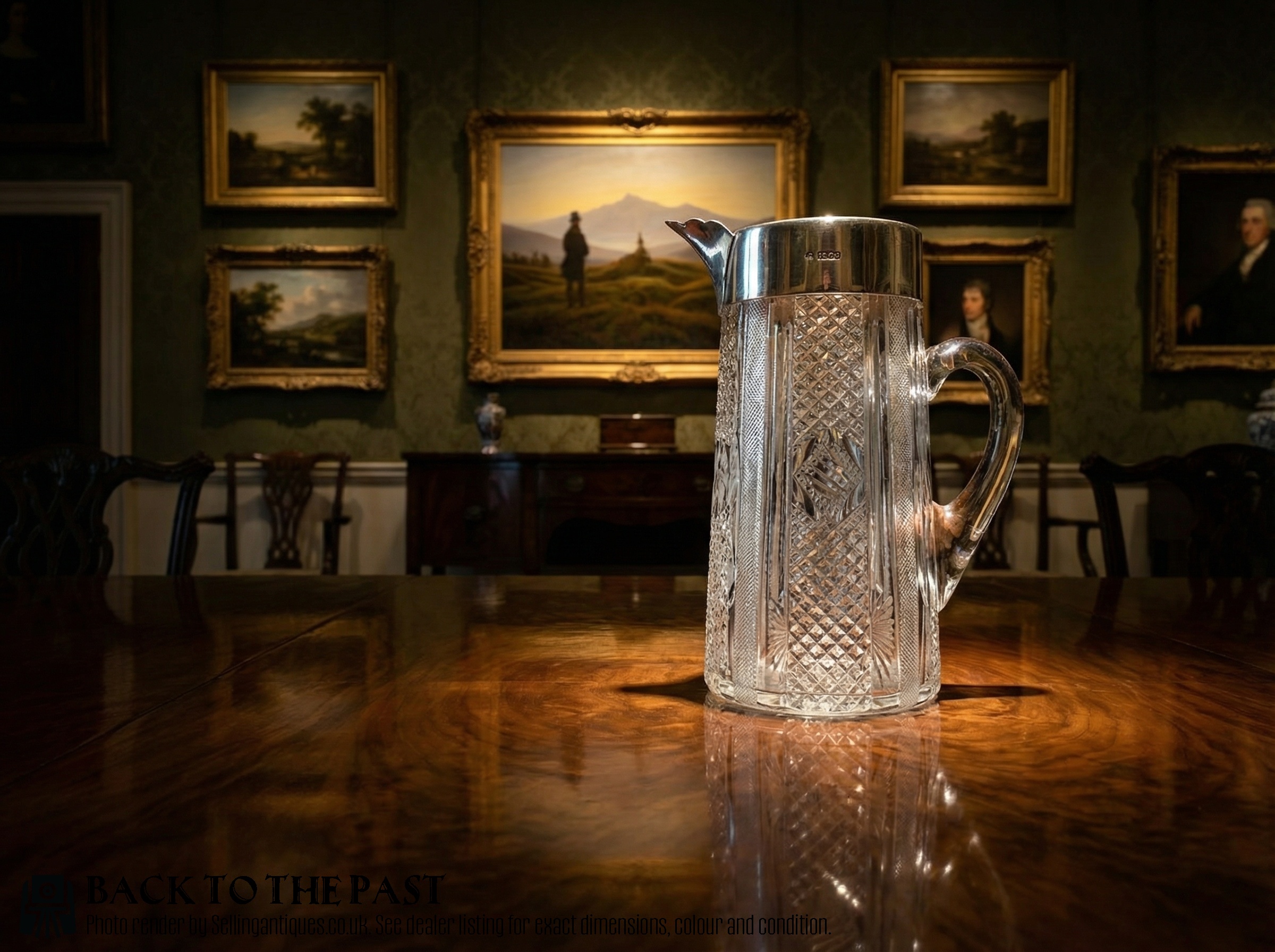
Cut Crystal Water Pitcher
A cut crystal water pitcher serves as a heavy functional vessel shaped for pouring, most frequently encountered here in Victorian, Edwardian and nineteenth-century forms.
The selection ranges from tall ewers and claret jugs to chunky pitchers mounted in sterling silver or silver plate, alongside related carafes and decanters.
Makers and makers' mounts span English, American and French origins, taking the form of clear glass, lead crystal and occasionally amethyst glass.
How they were made
The bodies rely on heavy lead crystal or clear glass formed by blowing and pressing, then subjected to deep wheel-cutting to create geometric facets, flutes and stars.
Mounts in sterling silver and silver plate provide sturdy hinged lids and rims, secured to the glass handles and necks by period silversmiths.
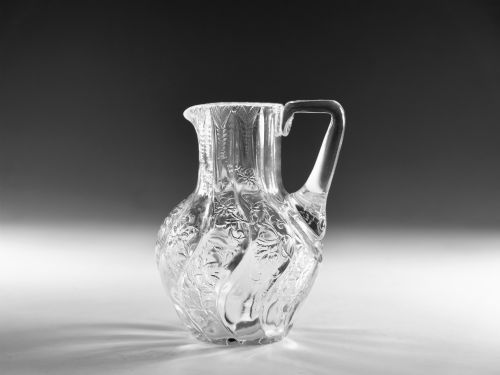
Surface decoration frequently extends to intaglio engraving, depicting floral motifs, crests, dolphins and grapevines using hand-held abrasive wheels.
Object types vary across water jugs, claret jugs, carafes, decanters and complete drinking service glassware.
What varies in quality
Quality rests upon the crispness of the cutting and the weight of the metal, where sharp facet junctions and thick lead crystal distinguish finer production.
Silver mounts add structural and material value, with maker-stamped sterling silver collars demonstrating superior craftsmanship compared to basic plated brass.
William Comyns·Stevens and Williams·Webb Corbett·Richardsons·Tiffany·Gorham
The Cut Crystal Water Pitcher Glossary
- Lead crystal
- Glass containing metal oxides that increases refractive brilliance and softness for cutting. It gives these jugs their notable weight and clear ring.
- Ewer
- A large jug with a wide spout and looped handle, traditionally used for water or wine at the table.
- Intaglio
- A technique where designs are carved into the glass surface rather than left in relief. It creates subtle, sunken pictorial details like flowers and dolphins.
- Silver plate
- A thin layer of silver fused to a base metal, commonly used for the rims, hinged lids and mounts of Edwardian jugs.
Cut Crystal Water Pitcher: Frequently Asked Questions
How do I clean a cut crystal water pitcher?
Wash the vessel by hand using warm water and mild detergent, avoiding sudden temperature changes that can crack heavy lead crystal.
Dry the interior with a lint-free cloth and store it upright to protect the delicate rim and cut facets.
Can I use these pitchers for serving water daily?
These robust jugs are fully functional for serving water or wine at the dining table, provided they are handled with care.
The thick lead crystal withstands regular use, though silver mounts require gentle polishing to prevent tarnishing.
How do I tell Victorian jugs from Edwardian ones?
Victorian examples often feature intricate engraved grape and vine motifs or heavy amethyst glass, dating from the nineteenth century.
Edwardian pieces lean towards brighter geometric cut crystal combined with silver-plated mounts or maker-marked sterling collars.
What is the difference between a pitcher and a claret jug?
A water pitcher generally has an open pouring spout and an open top designed for everyday table service.
A claret jug typically incorporates a hinged silver or plated lid operated by a thumbpiece to keep wine sealed.