
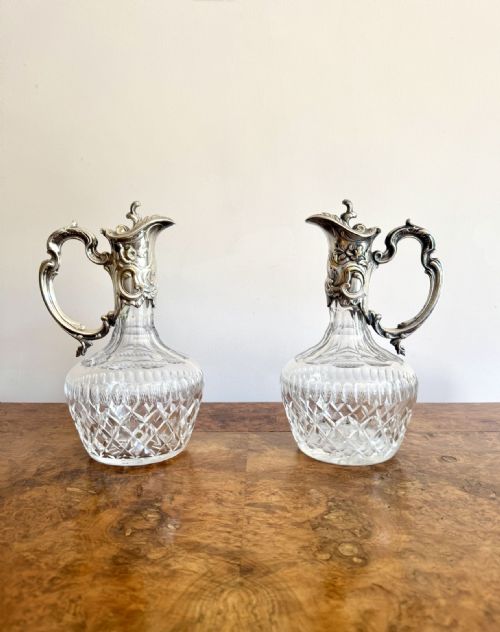


Vintage Cut Crystal Jug
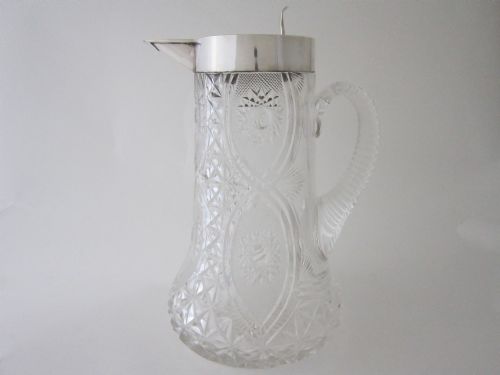
A vintage cut crystal jug holds wine or water for the table, combining heavy refractivity with polished silver mounts.
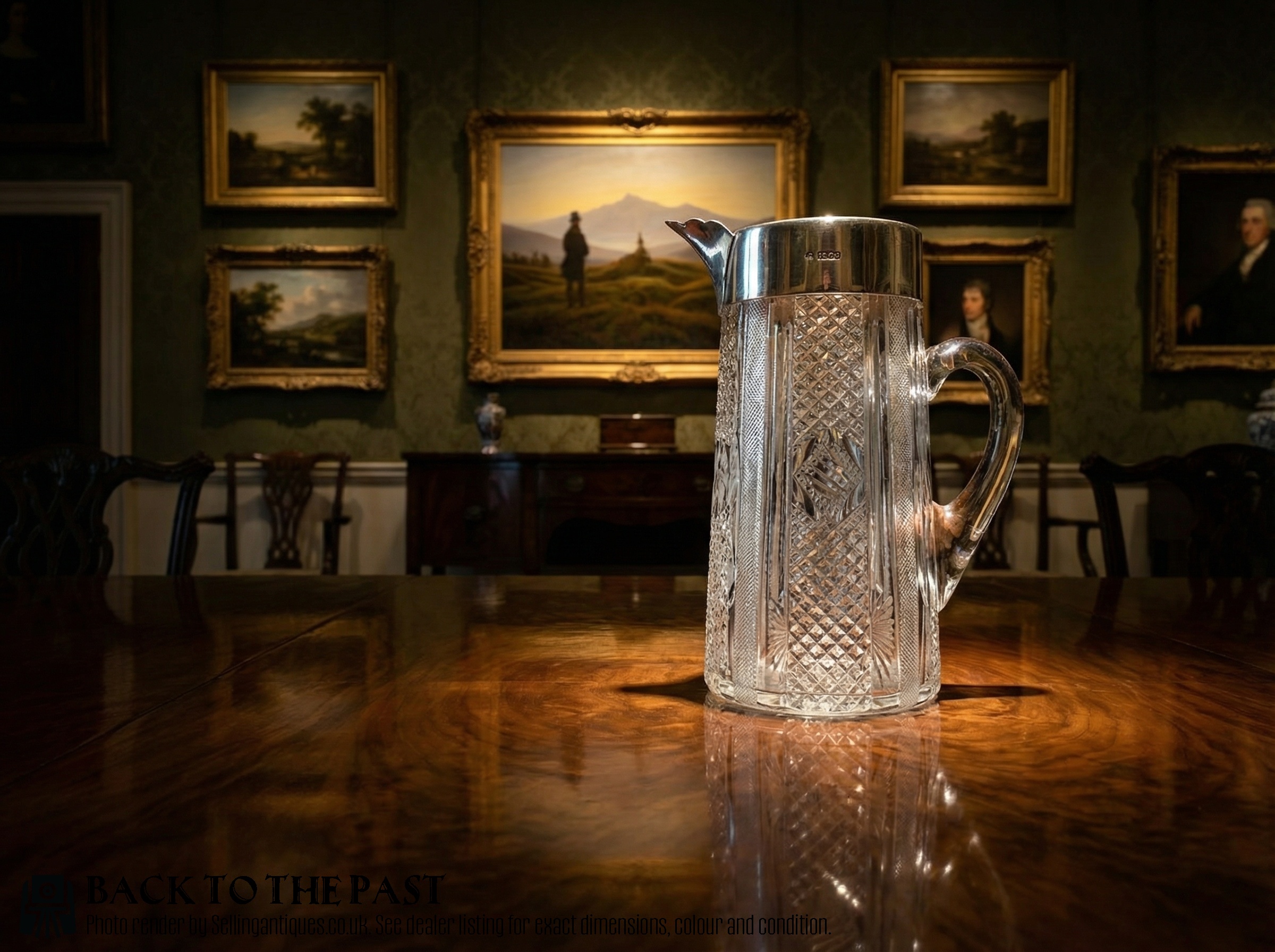
Vintage Cut Crystal Jug
When you search for a vintage cut crystal jug, you encounter vessels designed for serving wine, claret, or water at the dining table. The pieces span periods from the nineteenth century through the Edwardian era, George V, and into the Art Deco epoch.
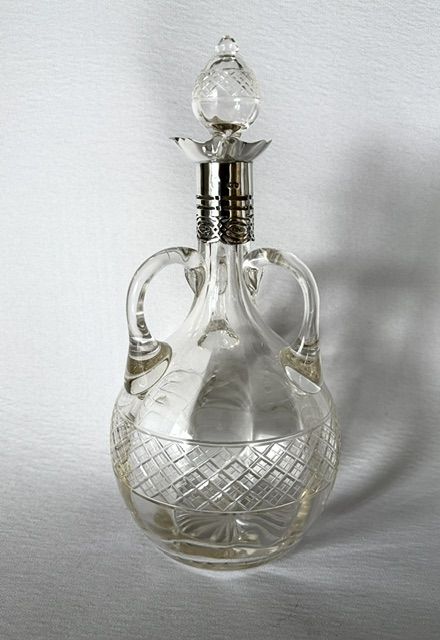
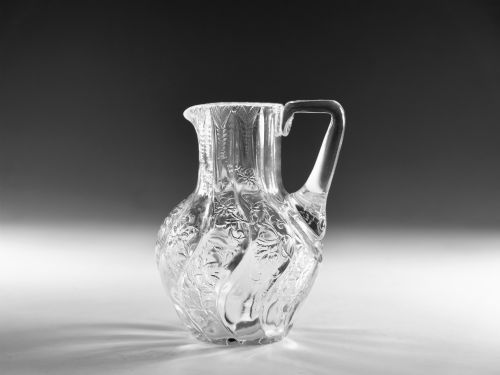
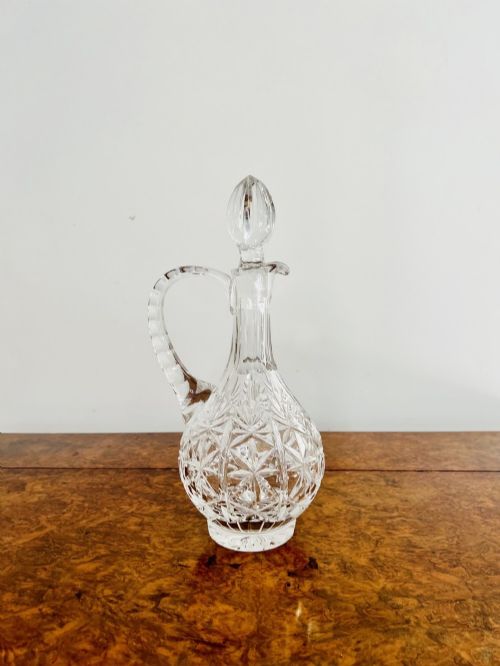
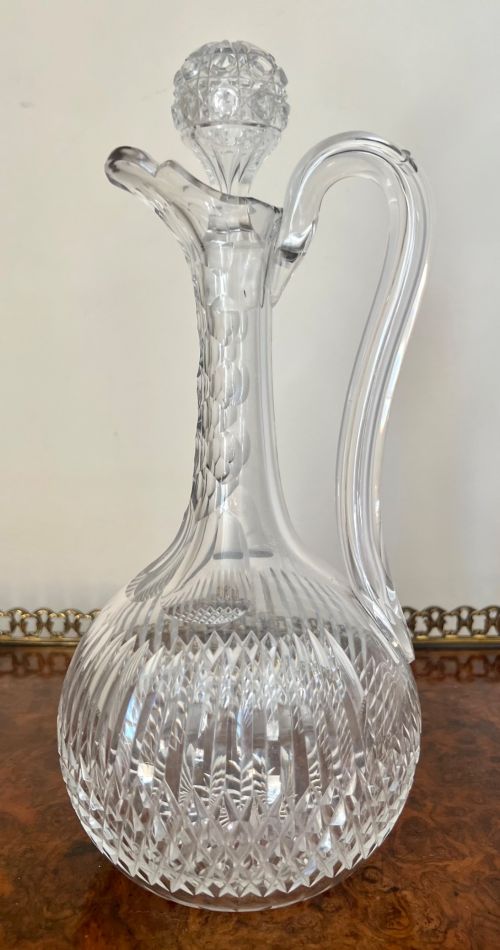
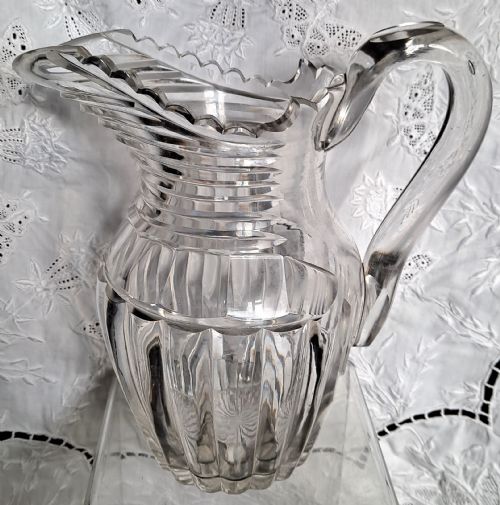
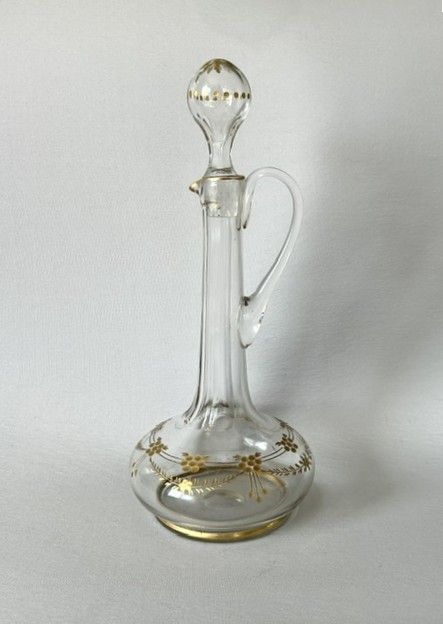
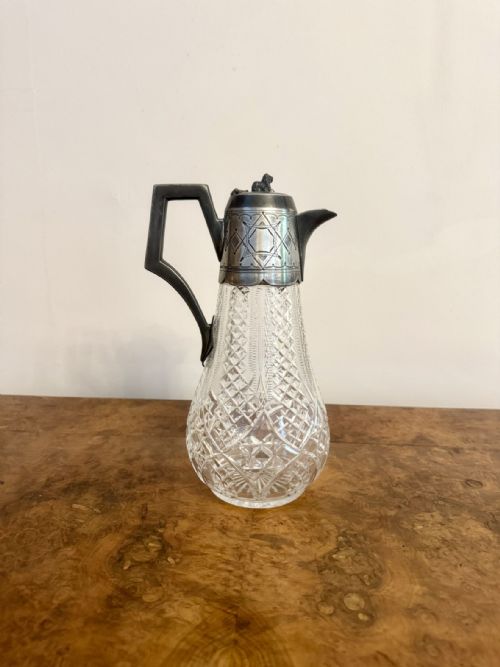
The forms on this page include claret jugs, water pitchers, ewers, and cordial servers. Edwardian and Victorian examples mounted in silver plate or sterling silver dominate the selection, often featuring deep wheel-cut facets.
Origin points encompass English, Anglo-Irish, and Bohemian workshops. Alongside standalone pitchers, the selection includes matched pairs and occasional drinking services with matching glassware.
How they were made
Makers shaped the vessels from heavy lead crystal or clear glass using traditional blowing techniques before applying deep wheel cuts and intaglio engravings. Common decorative motifs include geometric pillars, prisms, and naturalistic grape vines.
Metal mounts in sterling silver or silver plate were fitted to necks and spouts, sometimes secured with hinged covers and thumbpieces. Craftspeople combined glassblowing, lapidary cutting, and silversmithing to complete each service piece.
What varies in quality
The crispness of the wheel cutting separates basic vessels from superior examples. Sharp, deep facets refract light cleanly, whereas softer impressions lack definition.
The weight of the lead crystal and the thickness of the silver mounts dictate the substance of the object. Heavier crystal bodies and hallmarked sterling silver collars indicate higher workshop standards.
Stevens & Williams·Webb Corbett·Richardsons·Tiffany
The Vintage Cut Crystal Jug Glossary
- Claret jug
- A specialised vessel designed specifically for serving red wine at the table. These pieces frequently incorporate hinged metal lids and spouts.
- Ewer
- A large jug with a wide spout and a curved handle, originating from classical forms. They serve water or wine in formal dining settings.
- Intaglio
- A technique where designs are carved into the surface of the glass rather than raised above it. This method requires precise wheel work.
- Silver plate
- A layer of silver fused to a base metal foundation, commonly used for the mounts and handles of Edwardian serving vessels.
- Lead crystal
- Glass containing metal oxides that increase weight, brilliance, and refractive index. It allows for deep, sharp cutting without fracturing.
Vintage Cut Crystal Jug: Frequently Asked Questions
What is a claret jug used for?
A claret jug serves red wine at the dining table, allowing the host to decant and pour the liquid gracefully.
The hinged lid keeps the contents covered between pours during formal meals.
How do I clean a crystal jug?
Wash the glass by hand in warm soapy water using a soft cloth to avoid scratching the surface.
Remove silver mounts carefully and dry all metal parts immediately to prevent tarnishing.
How do I date an antique jug?
Examine the style of the cutting, the form of the handle, and any hallmarks stamped onto the silver mounts.
Victorian and Edwardian pieces often display distinct mounting styles and registration marks that help narrow the decade.
What is the difference between glass and crystal?
Lead crystal contains metallic content that gives the material greater weight and a clearer ring when struck.
This heavier composition allows artisans to cut deeper, sharper geometric patterns into the body.