

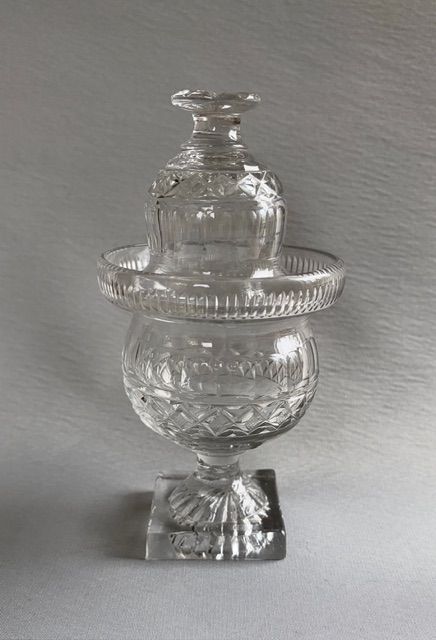
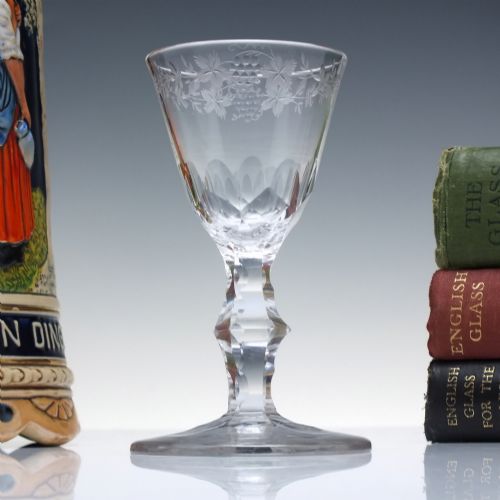
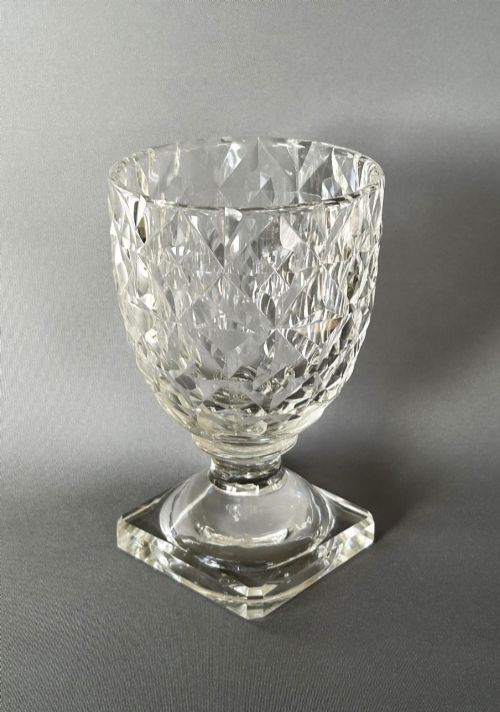
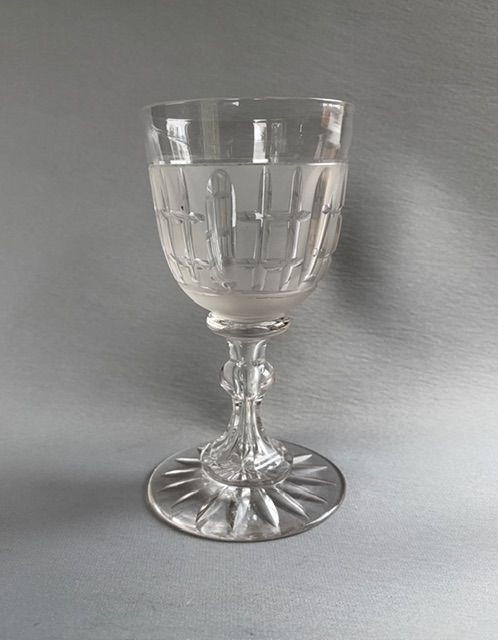
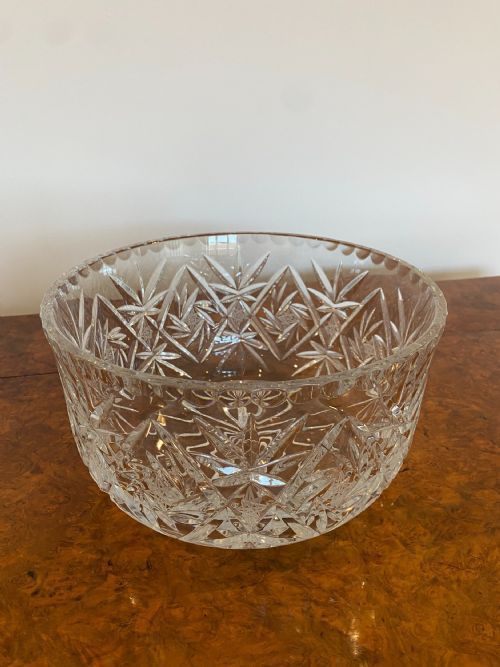
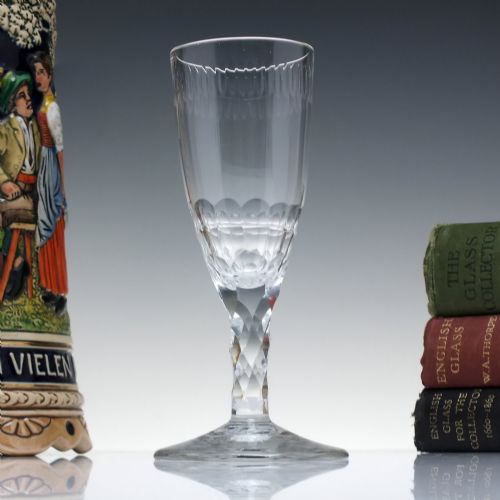
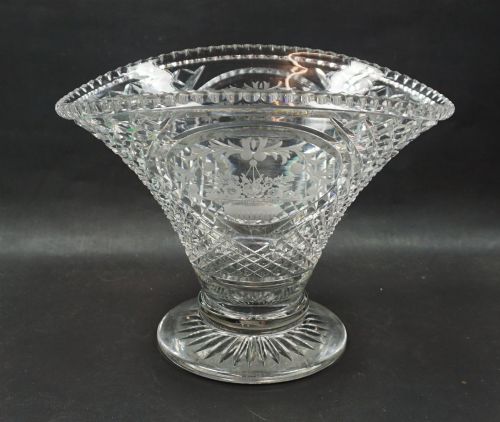
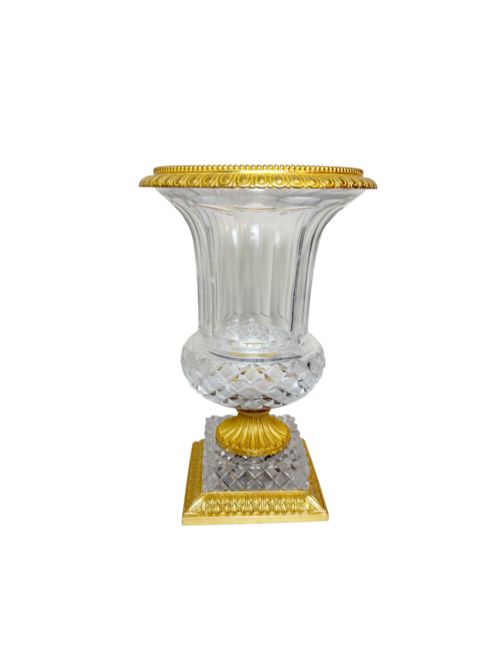
Cut Crystal Vessel
These heavy cut crystal vessel pieces range from Georgian decanters to Art Deco coloured vases, offering brilliant refractive surfaces and substantial handling weight for the table.
Cut Crystal Vessel
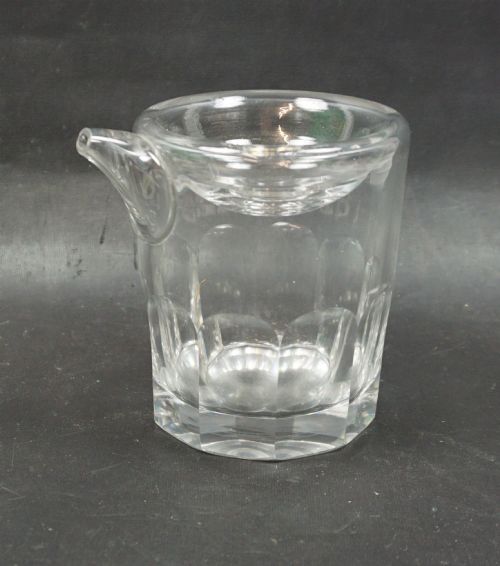
A cut crystal vessel encompasses everything from Georgian tea mixing bowls and Regency celery vases to Edwardian decanters, Victorian jugs, and Art Deco coloured vases. The forms span functional tableware, drinking vessels, and decorative centrepieces designed for display under artificial or natural light.
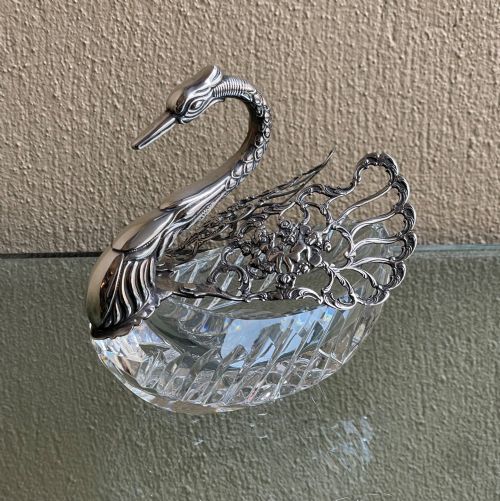
Buyers meet pieces spanning the eighteenth century through to the mid twentieth century, originating from English, French, and Belgian workshops. Decanters, vases, and bowls dominate the selection, often combining heavy lead crystal with silver mounts, or overlaid with contrasting coloured glass layers.
Materials and construction
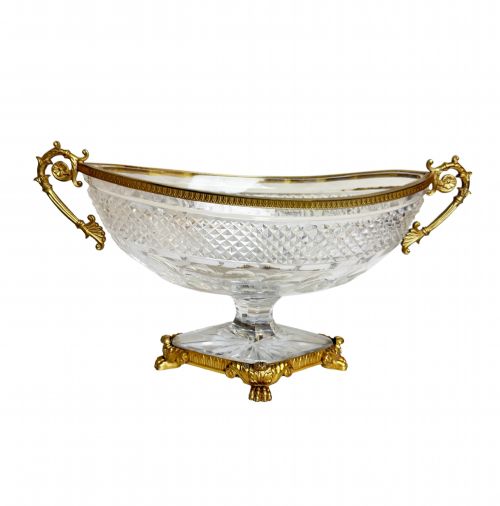
The objects combine heavy lead crystal or standard cut glass with metal mounts in silver, sterling silver, or ormolu. Artisans shaped the hot metal through blowing and moulding before applying deep wheel cutting, intaglio engraving, or surface etching to create faceted and patterned designs.
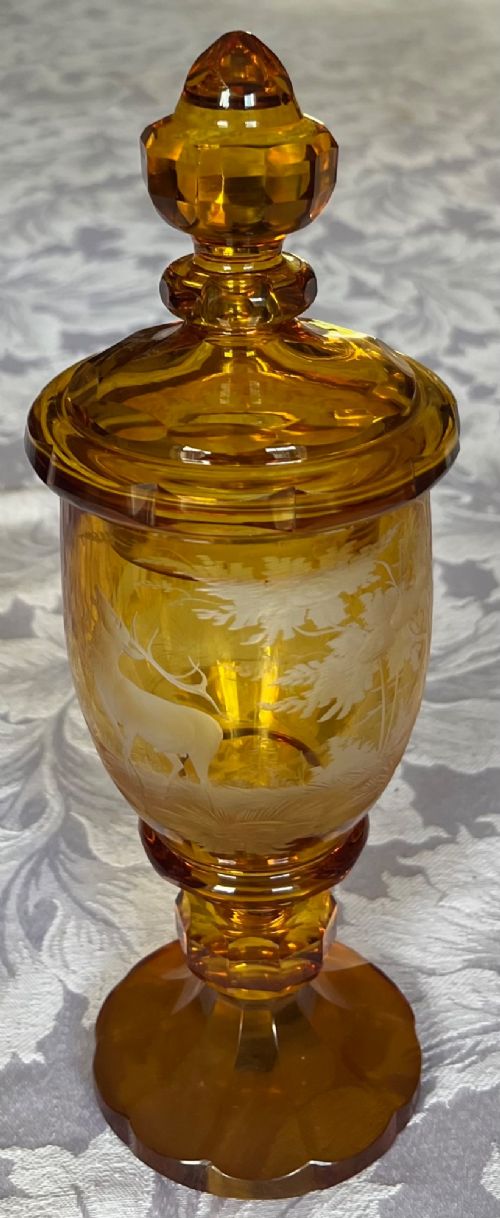
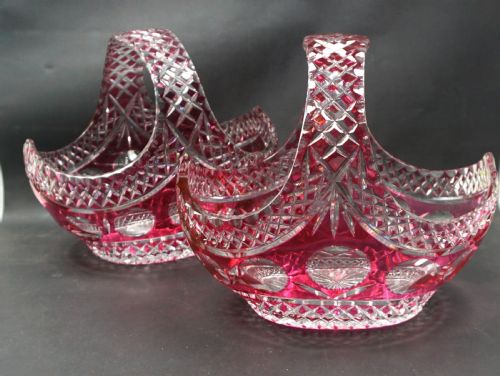
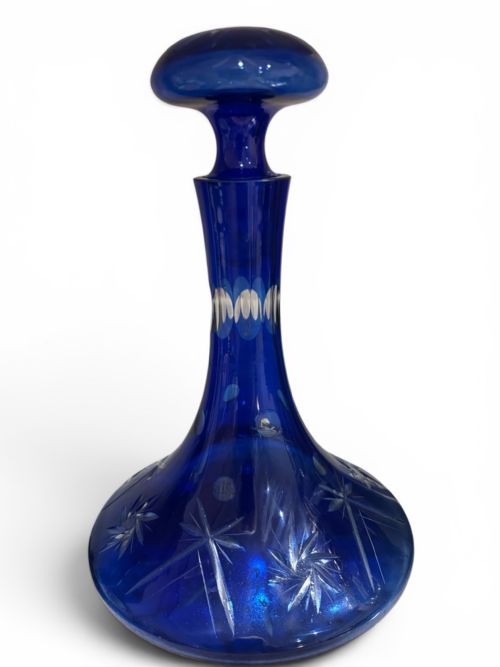
Coloured pieces frequently utilise an overlay technique, fusing a layer of vibrant glass, such as cranberry, cobalt blue, sapphire, or green, over a clear crystal core. Subsequent cutting cuts down through the outer coloured layer to expose the clear glass underneath, producing sharp contrast and depth.
Cut Crystal Vessel Retail Price Guide 2026
Typical asking prices for cut crystal vessel among the pieces listed under this phrase on Sellingantiques today, from the lower quarter to the upper quarter. They describe what is for sale here now, not the wider market.
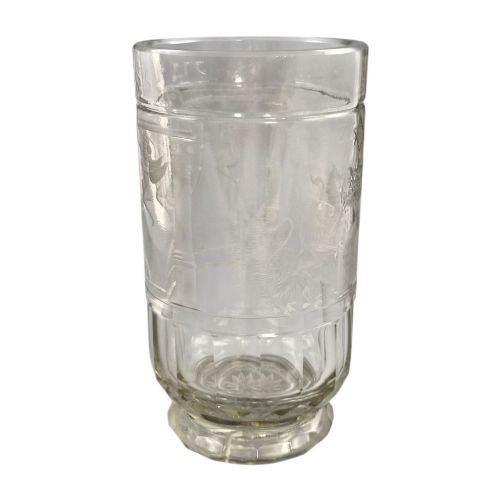
One extraordinary piece in the records is a massive Bohemian Jewish Masonic ceremonial engraved glass beaker dating from the mid nineteenth century.
Distinctions in quality
Quality rests upon the crispness of the facet cutting, the depth of the wheel engraving, and the purity of the metal content within the glass. Superior examples display sharp, cleanly defined edges along the geometric patterns without softness or rounding in the troughs.
The weight and balance of the vessel dictate its standing, alongside the integration of secondary materials such as hallmarked silver mounts, gilt bronze stands, or ormolu fittings. Thicker lead content yields greater refractive index and a more resonant ring when struck.
Val St. Lambert·Charles Graffart for VSL·Joseph Simon for Val St. Lambert·Hukin & Heath·Asprey & Co.
The Cut Crystal Vessel Glossary
- Cut crystal
- Glass containing lead oxide that increases density and brilliance, shaped by abrasive wheels to form facets and patterns. This heavy composition allows for deeper, sharper incisions than standard soda-lime glass.
- Overlay
- A technique where a layer of coloured glass is fused over a clear crystal body before cutting away portions of the top layer. The resulting contrast highlights the geometric pattern against the clear core.
- Intaglio
- A method of engraving where the design is carved into the surface of the glass rather than raised in relief. The recessed cuts catch the light differently from surface facets.
- Celery vase
- A tall nineteenth-century vessel specifically designed to hold and display stalks of celery on the formal dining table. These pieces often feature a pedestal foot and deep bowl.
- Decanter
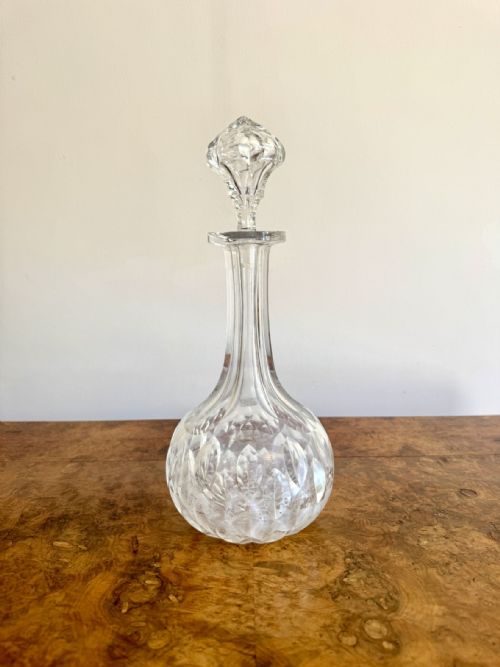
- A stoppered bottle intended for holding and serving wine or spirits. They feature heavy bases and tight necks to preserve contents.
Cut Crystal Vessel: Frequently Asked Questions
How do I clean an old decanter?
Wash the interior using warm water and mild detergent with non-abrasive cleaning beads to remove residue without scratching the inner walls. Avoid sudden temperature changes to prevent thermal shock in heavy lead crystal.
Dry the exterior thoroughly with a lint-free cloth to maintain the brilliance of the exterior facet cutting. Leave the stopper out until the interior is completely dry.
Are these items safe for daily use?
Most sturdy decanters, bowls, and glasses handle regular service, though antique pieces warrant careful hand washing rather than dishwasher cycles. The lead content in older crystal means acidic liquids should not sit in vessels for extended periods.
Silver mounts and silver-plated fittings require occasional polishing with appropriate agents while keeping compounds away from the glass surface. Gentle handling prevents chips along the sharp edges of the cuts.
How can I tell a Georgian piece from a Victorian one?
Georgian pieces generally exhibit heavier metal weight, simpler broader flutes, and pontil marks on the base where the blowing iron was detached. The silhouettes tend toward robust utility with thick rims and sturdy proportions.
Victorian and later items frequently show more complex machine-assisted cutting, brighter overlay colours, and finer wheel engraving. The introduction of refined chemistry during the nineteenth century also increased overall clarity.
What is an over-crystal glass?
Over-crystal glass describes a vessel formed of two distinct layers, typically a vibrant hue over a clear crystal base. The maker cuts through the outer coloured stratum to reveal the transparent material beneath.
This method creates strong visual contrast and allows artisans to play with light and depth across the surface of vases, baskets, and carafes.