





Cut Crystal Stand
A cut crystal stand holds heavy glass bottles or bowls within fitted metal frames, bringing brilliant refraction and proportion to a dining table.
Cut Crystal Stand
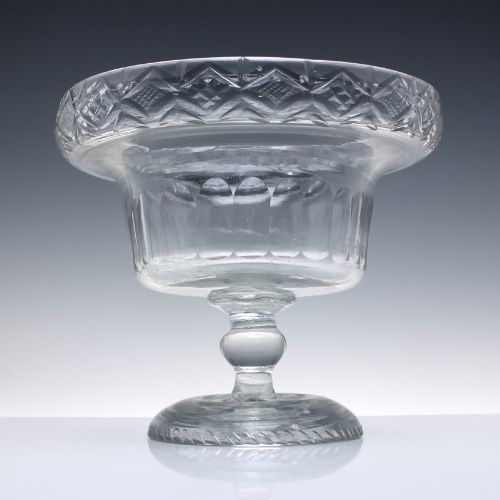
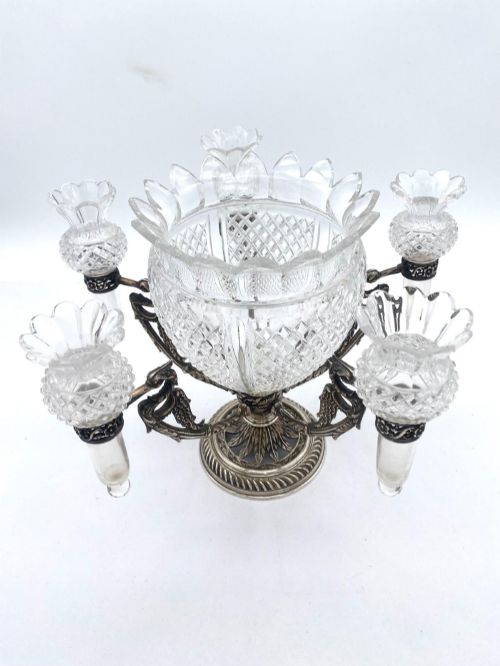
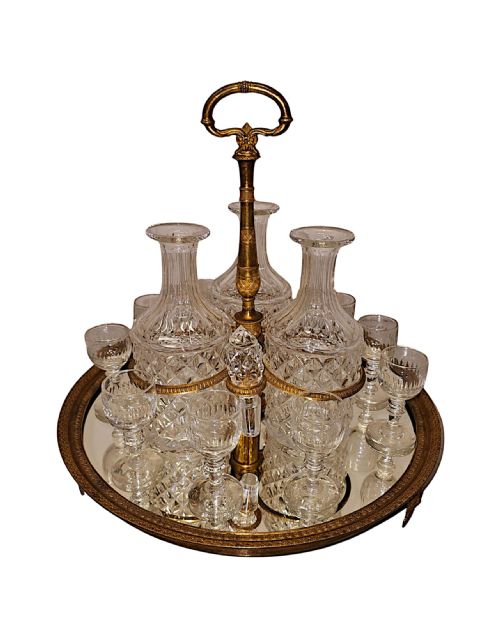
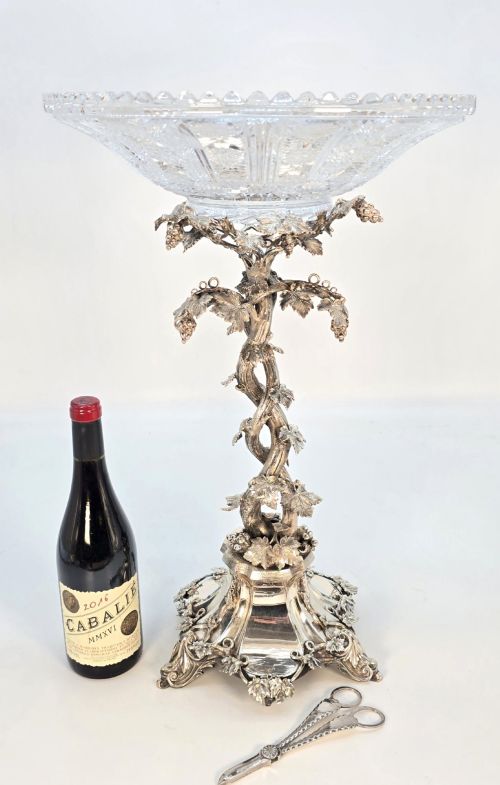
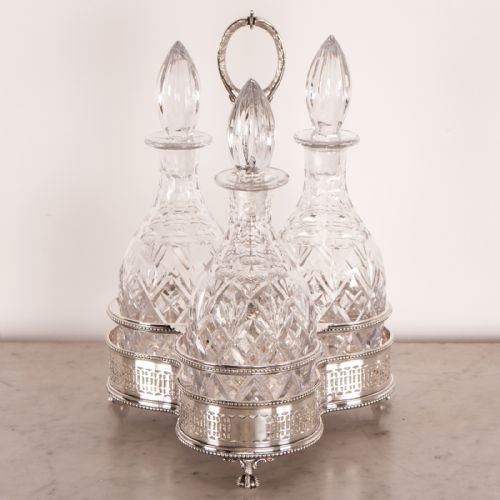
A cut crystal stand encompasses several functional household forms, most frequently appearing here as cruet sets, tantalus frames, centrepieces, and candlesticks. These pieces span the Victorian, Edwardian, and Art Deco periods, alongside 19th-century French and Georgian examples.
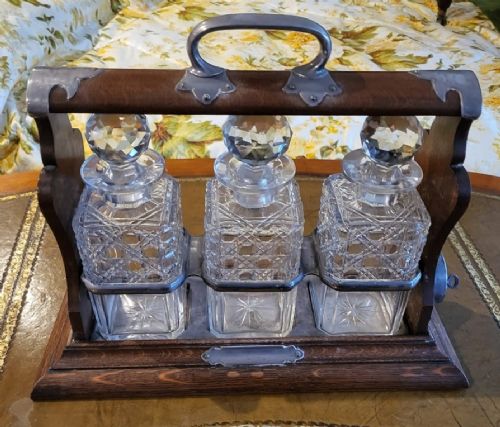
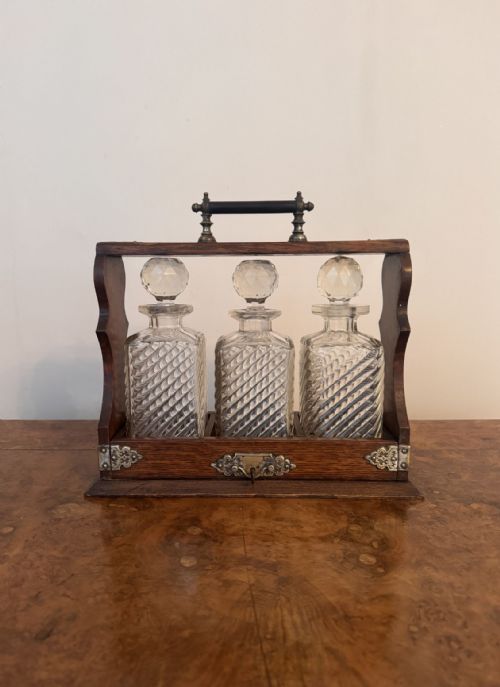
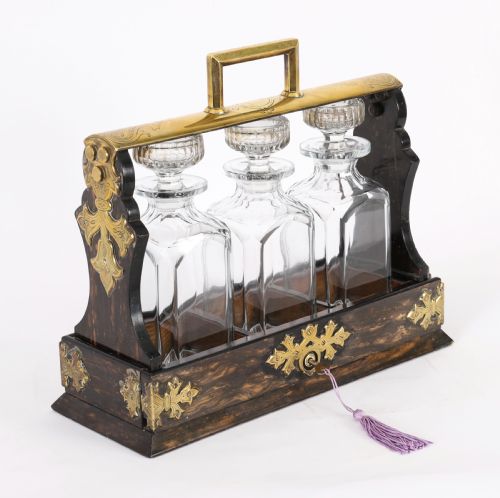
The most common version encountered on this page is the tantalus or bottle stand, often cased in oak, coromandel, or walnut and fitted with silver-plated mounts. Cruet sets and table centrepieces also feature regularly, pairing deep-cut lead crystal with metal frames and stands.
Materials and construction
The heavy glass components rely on lead crystal or cut glass, shaped by hand-cutting wheel techniques that produce deep prismatic facets, flutes, and stars. This glass sits within frames constructed from silver plate, Old Sheffield plate, brass, or ormolu.
Wooden stands utilise oak, walnut, or coromandel woods, often featuring inlaid details, brass mounts, and specialised locking mechanisms designed to secure spirit decanters.
Cut Crystal Stand Retail Price Guide 2026
Typical asking prices for cut crystal stand among the pieces listed under this phrase on Sellingantiques today, from the lower quarter to the upper quarter. They describe what is for sale here now, not the wider market.
Listings feature items spanning the Victorian, Edwardian, and Art Deco eras, constructed from cut glass, silver plate, oak, and ormolu.
Assessing the range
The distinction between standard and superior pieces rests on the crispness of the glass cutting and the weight of the metal mountings. Finer stands exhibit deep, sharp facets on the crystal and substantial silver plating or solid metal work rather than thin finishes.
Design complexity and maker reputation further separate the tiers, with fitted game compendiums, secure locking frames by known makers, and complex ormolu mounts sitting at the upper end of the range.
Walker & Hall·Elkington·Hukin and Heath·The Goldsmith Co.
The Cut Crystal Stand Glossary
- Tantalus
- A locking beverage stand that holds decanters securely in place while displaying the cut crystal bottles within a metal and wood frame. The locking mechanism prevents unauthorized pouring while keeping the contents visible.
- Cruet set
- A matched collection of small glass bottles or castors mounted on a single stand for holding condiments like oil, vinegar, salt, and pepper at the dining table.
- Centrepiece
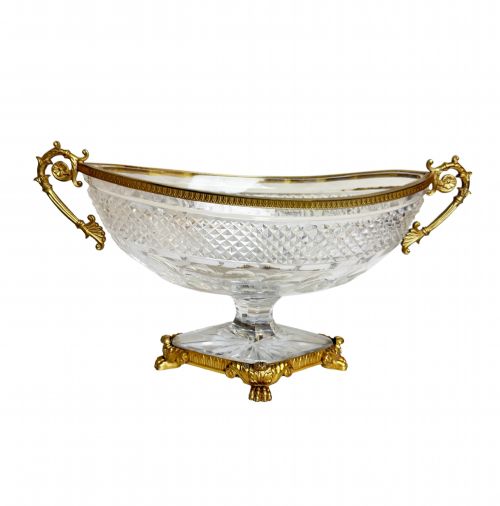
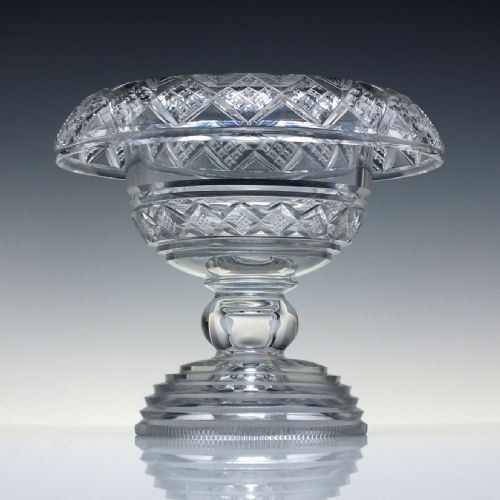
- A large decorative stand placed in the middle of a table, often combining cut glass bowls, tazzas, or epergnes with silver-plated or ormolu supports.
- Ormolu
- Gilt bronze mounts cast and chased by hand to ornament furniture, glass stands, and decorative objects during the 19th century.
- Tazza
- An elevated shallow bowl or plate supported on a central foot or stand, typically formed from cut or etched crystal glass.
Cut Crystal Stand: Frequently Asked Questions
What is a cut crystal stand used for?
These stands serve to organise and display functional glassware such as decanters, condiment bottles, and centrepiece bowls. They keep dining table items portable and secure.
Historically, tantalus stands allowed hosts to lock away spirits while keeping them visible to guests in the dining room or study.
How do I clean a cut crystal stand?
Wash the glass elements gently in warm water using mild soap, avoiding sudden temperature changes that can crack heavy lead crystal. Dry the pieces thoroughly with a soft cloth to preserve the clarity of the cuts.
Polish the metal frames or wooden bases separately with appropriate conservation products suited to silver plate, brass, or polished hardwoods.
How do I date a cut crystal stand?
Examine the style of the metal mounts, the wood types used in the base, and the depth of the glass cutting. Victorian pieces frequently feature ornate silver plating and heavy oak frames, while Art Deco examples show geometric heavy lead crystal.
Maker marks stamped onto the metal mounts or patent names on the fittings provide definitive clues to the exact period of manufacture.
Are keys usually included with tantalus stands?
Many antique tantalus stands retain their original working keys, though some are found without them due to loss over the decades. The presence of a functioning lock adds historical completeness to the piece.
Even without a key, the mechanical locking bar generally remains a striking design feature of the wooden and metal framework.