


Cut Crystal Dressing Jar
A cut crystal dressing jar brings weight and brilliance to a dressing table, combining heavy cut glass with precious metal mounts.
Cut Crystal Dressing Jar
When searching for a cut crystal dressing jar, a buyer looks at a variety of vanity containers, perfume bottles, and trinket boxes designed for the dressing table. The versions met most frequently on this page span from the Victorian and Edwardian eras into the Art Deco period, featuring sturdy glass bases paired with fitted metal lids.
These vessels served practical purposes for holding cosmetics, salts, and fragrances before transitioning into decorative dressing table accessories. The forms range from compact heart-shaped boxes to tall vanity jars and matching sets originating from English, French, and German makers.
Materials and construction
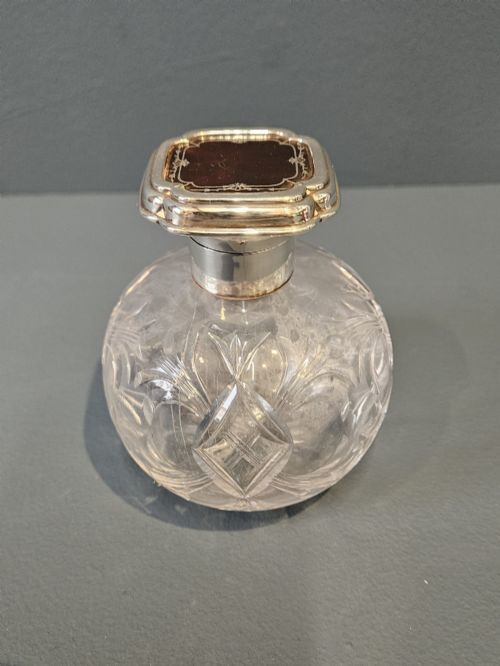
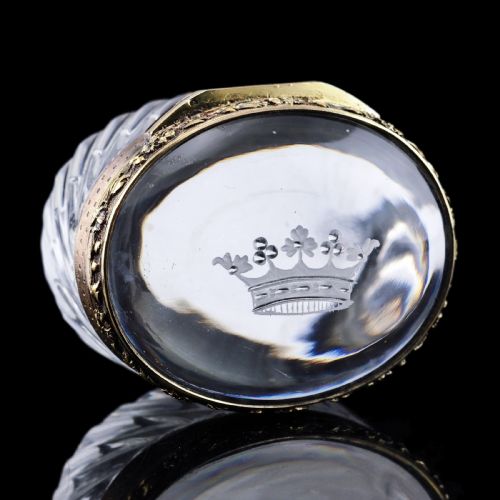
The construction relies on heavy cut glass or crystal bodies shaped by deep wheel-cutting to produce geometric or floral facets that catch the light. Master craftsmen married these glass bases with cast, chased, or engraved metal mounts, most commonly sterling silver, silver gilt, and occasionally German silver.
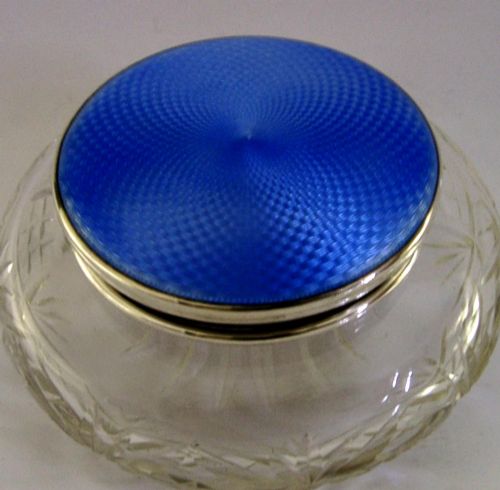
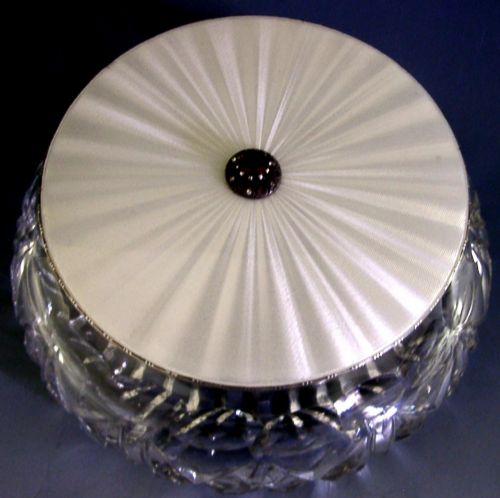
Lids incorporate organic materials such as tortoiseshell and vitreous enamel alongside the metalwork, secured by hinges or tight collars. Hallmarks stamped into the silver components provide reliable markers for assay office locations and specific production years.
Quality variations in the range
The distinction between standard containers and finer pieces rests upon the crispness of the glass cutting and the weight of the metal mounts. Heavy crystal bases with deep, sharp facets command greater attention than light, pressed-glass alternatives.
Superior examples feature intricate detailing such as hand-painted enamel panels, inlaid tortoiseshell, or matching sets bearing clear hallmarks. The integrity of the silver hinges and the precision of the lid fit further separate utilitarian vessels from luxury dressing table appointments.
Posen of Frankfurt and Berlin·Barnsley and Co
The Cut Crystal Dressing Jar Glossary
- Cut crystal
- High-clarity glass shaped by deep wheel-cutting to create sharp facets and reflective patterns.
- Sterling silver
- A silver alloy containing 92.5 percent pure silver by weight, widely used for the lids and collars of these jars.
- Silver gilt
- Sterling silver that has been coated with a thin layer of gold on its surface, seen on French and English pieces.
- Tortoiseshell
- The mottled brown keratin shell of certain turtle species, utilised as an elite inlay material on vanity jar lids.
- Enamel
- A glassy substance fused to metal through firing, providing coloured decoration on Art Deco and Edwardian bottle tops.
- Hallmark
- A series of official marks stamped on precious metal objects to guarantee the metal standard and trace the origin.
Cut Crystal Dressing Jar: Frequently Asked Questions
What is a cut crystal dressing jar?
A cut crystal dressing jar is a vanity container featuring a heavy, faceted glass base and a fitted lid, typically made of sterling silver.
These pieces were produced for dressing tables to hold powders, creams, and perfumes.
How do I know the date of a jar?
Many pieces feature silver hallmarks on the lids that indicate the exact year of assay and the city of origin.
Stylistic markers like Edwardian fluting or Art Deco geometry also help assign pieces to periods such as the 1920s or 1930s.
Were these jars made in sets?
Yes, some examples survive as part of larger matching dressing table sets containing multiple jars and perfume bottles.
Individual vanity jars and scent bottles were also purchased separately or added to existing collections over time.
What materials are paired with the crystal?
Sterling silver is the most common metal used for the lids, collars, and mounts of these dressing accessories.
Craftsmen also incorporated silver gilt, tortoiseshell, coloured enamel, and German silver to enhance the decorative appeal.