
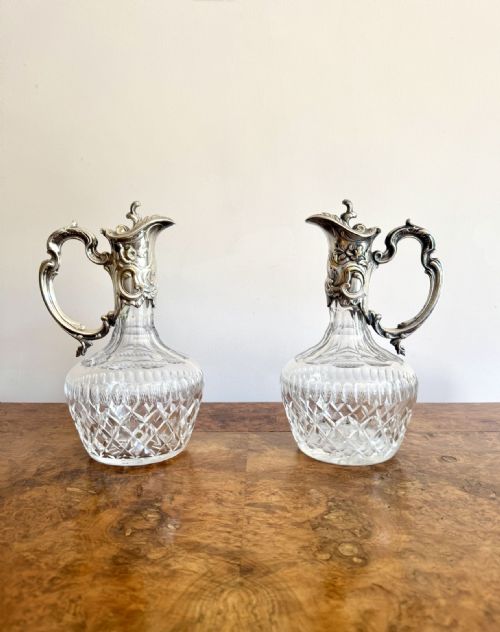


Cut Crystal Claret Pitcher
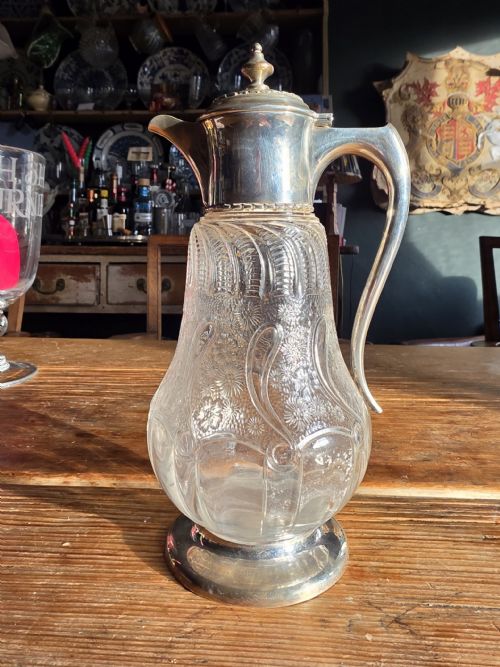
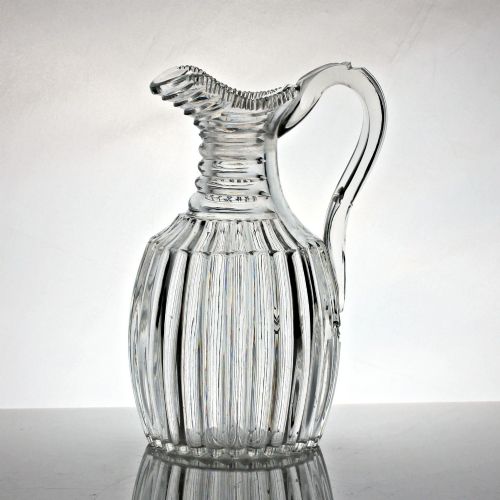
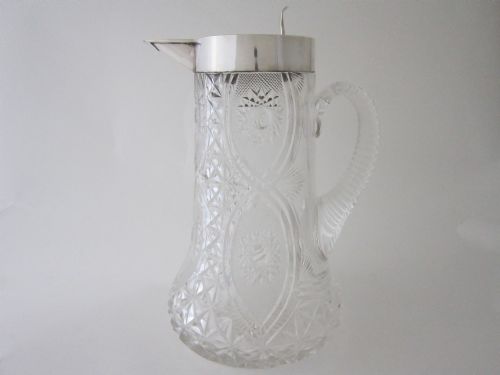
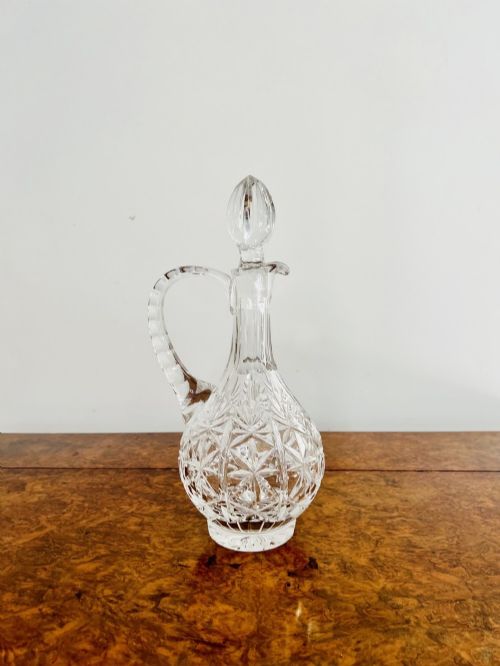
These cut crystal claret pitcher pieces bring elegance to the dining table, combining brilliant glass bodies with polished mounts.
Cut Crystal Claret Pitcher
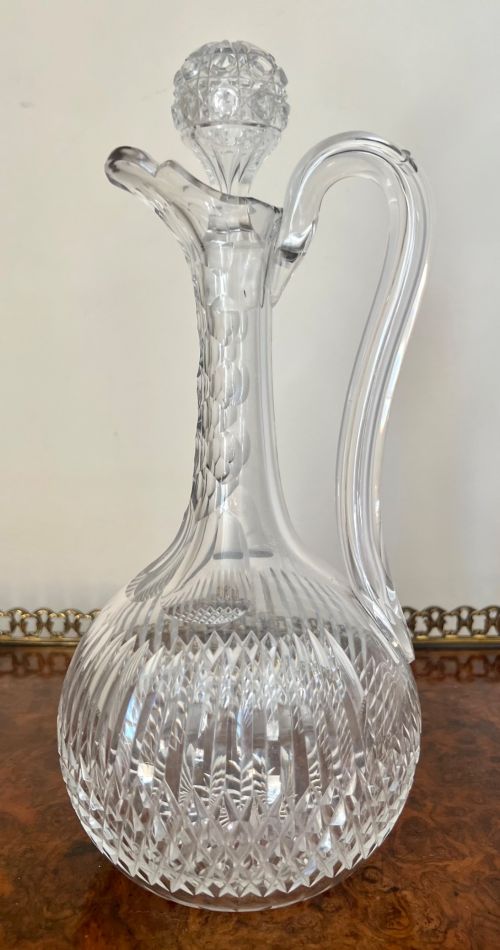
A cut crystal claret pitcher is a serving vessel designed for wine, combining a glass body with a pouring spout and handle. When you search this phrase, you encounter vessels spanning from the nineteenth century into the twentieth century, with Victorian and Edwardian examples appearing most frequently.
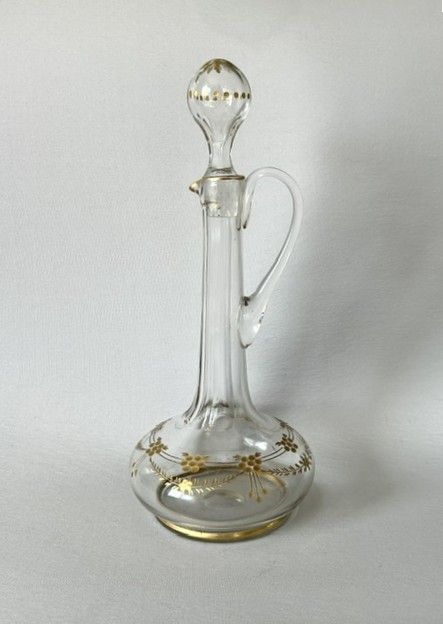
The forms range from traditional tall ewers and decanters to novelty shapes such as ducks, alongside related wine and water jugs. These pieces originate from periods including the Georgian, Victorian, Edwardian, and Art Deco eras, reflecting shifting tastes in formal dining.
How they were made
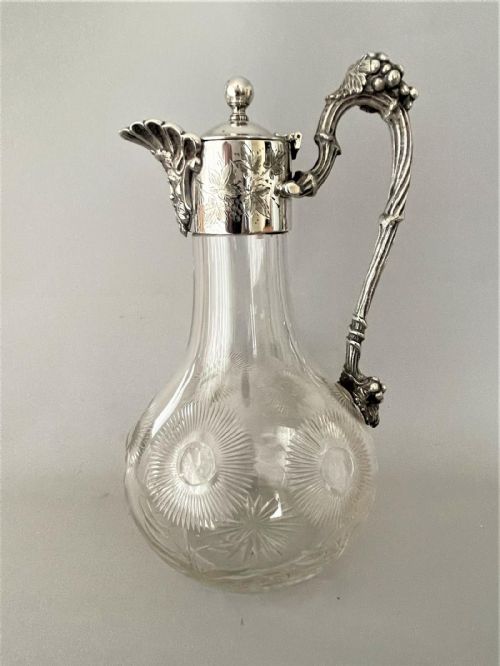
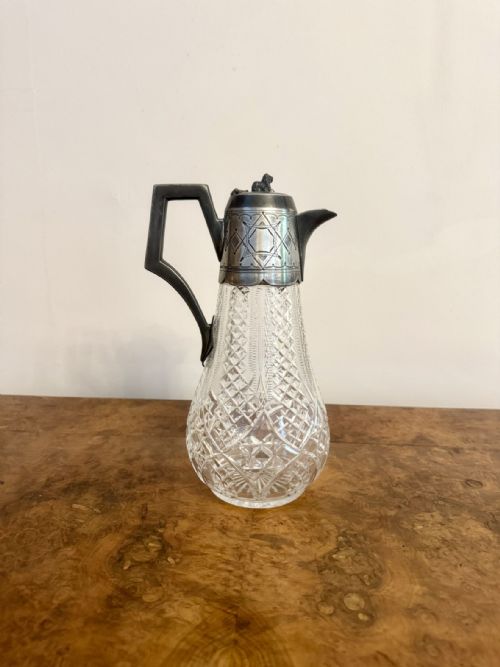
Makers shaped the vessels from clear glass, crystal, or cut glass, often applying wheel-cut patterns, pillar and prism motifs, or engraved details such as dolphins and grapevines. Artisans then fitted these glass bodies with mounts, covers, and handles made from sterling silver, silver plate, or gilded elements.
Metal mounts were securely fastened to the necks and lips of the jugs, frequently featuring hinged lids and detailed spouts, including unusual face designs. The combination of heavy cut glass and shaped metal required precise alignment between the glassblower and the silversmith.
Listings feature vessels from the Victorian, Edwardian, and Art Deco periods, utilising clear glass, sterling silver, and silver plate.
What varies in quality
The distinction between standard examples and the finest pieces rests on the crispness of the glass cutting and the weight of the material used. Deep, sharp facets catch the light more effectively than shallow or soft pressing, indicating superior craftsmanship.
The substance of the mount also defines the tier of the piece, with substantial sterling silver or heavy silver-plating representing higher production standards than lighter alternatives. Additionally, artistic ambition in the design of handles, spouts, and engraved motifs separates ordinary service vessels from exceptional works.
Richardsons·Hukin & Heath·Tiffany
The Cut Crystal Claret Pitcher Glossary
- Ewer
- A large jug with a wide spout and handle, traditionally used for holding and pouring wine or water. They often feature decorative bodies made of cut glass or crystal.
- Claret jug
- A specialised serving vessel intended for red table wine, typically constructed with a glass or crystal body and a metal top. These pieces date predominantly from the Victorian and Edwardian periods.
- Silver plate
- A manufacturing technique where a thin layer of silver is bonded to a base metal, frequently used for the mounts and handles of serving jugs. This method provided the appearance of solid silver at a different cost.
- Sterling silver
- An alloy consisting of silver and other metals, standardised for durability and purity in tableware mounts. Pieces bearing sterling silver marks indicate higher-end production.
- Pillar and prism cut
- A specific decorative glass-cutting technique that creates strong vertical planes and geometric refractions. This style is frequently found on nineteenth-century vessels.
Cut Crystal Claret Pitcher: Frequently Asked Questions
What is a cut crystal claret pitcher used for?
These vessels were originally designed to hold and serve claret or other red wines during formal nineteenth and twentieth-century dining. The wide body allowed the wine to breathe before pouring.
Today, they function as decorative table centrepieces or serving jugs for water and wine during dinner parties.
How do I date a silver mounted jug?
Dating relies primarily on hallmarks stamped into the metal mounts, which indicate the assay office, city, and specific year of production. Stylistic clues such as Victorian aesthetic preferences or later Art Deco geometric lines also help determine the period.
Comparing the depth of the glass cutting and the shape of the handle provides additional context for the era of manufacture.
What is the difference between crystal and glass?
Crystal contains mineral additives such as lead oxide that increase the weight, brilliance, and refractive index of the material. This composition allows for deeper and sharper cuts than standard soda-lime glass.
When tapped, high-quality crystal produces a clear ringing tone rather than a dull thud.