


Curved Wooden Footstool
These curved wooden footstool pieces offer honest craft and warm timber tone, bringing practical seating and historic character to any room.
Curved Wooden Footstool
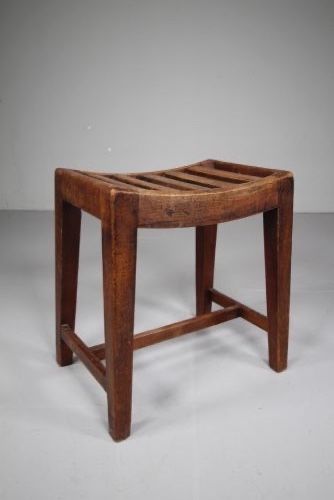
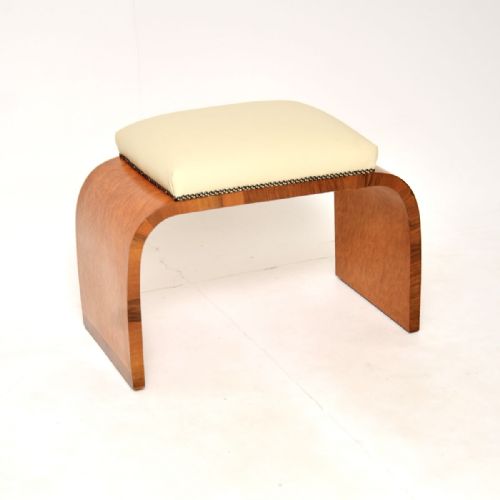
A curved wooden footstool is a low seating piece defined by rounded lines, ranging from Georgian mahogany shapes to Edwardian oak frames and Art Deco maple designs. These items serve as functional footrests or low occasional seats.
The versions most commonly met on this page span the eighteenth century to the nineteen thirties, encompassing domestic English cabinet work alongside African tribal forms. Buyers encounter saddle seats, x-frames and dressing stools with distinctive curved profiles.
Makers utilised various timbers including oak, walnut, mahogany and birds eye maple to build these compact items. Each period brought distinct stylistic touches, from Arts and Crafts simplicity to Egyptian Revival motifs.
How they were made
Makers fashioned these stools using solid hardwoods such as oak, mahogany and walnut, shaping the timber to create flowing curves and supportive frames. Joinery methods varied from traditional pegged joints in Arts and Crafts pieces to sleek veneered surfaces on Art Deco dressing stools.
Upholstered elements frequently involved leather or woven fabric fixed over padded tops, while other examples relied purely on carved wood, slatted timber or woven cord. Metal details occasionally appeared to reinforce structural points or provide decorative contrast.
Ancient Egyptian seating designs inspired nineteenth and twentieth century makers to build stools with remarkably comfortable concave wooden tops.
What varies in quality
Quality rests upon the selection of timber and the precision of the joinery, distinguishing straightforward utility items from ambitious cabinet work. Finer examples display carefully chosen wood grain, such as birds eye maple or figured walnut, integrated harmoniously into the curved design.
The integrity of the construction and the fidelity of the period style dictate the standing of a piece within its category. Items retaining original upholstery materials or displaying competent hand carving hold greater interest for collectors.
Harry Lou Epstein
The Curved Wooden Footstool Glossary
- Birds Eye Maple
- A decorative timber figured with small circular patterns resembling eyes. Cabinet makers prized this wood for Art Deco furniture surfaces.
- Saddle Seat
- A wooden seat base carved with hollows to fit the human form. This shaping provides ergonomic comfort on Arts and Crafts examples.
- X Frame
- A support structure formed by intersecting diagonal members resembling the letter X. This classical configuration creates sturdy seating on period walnut stools.
- Thebes Stool
- A low stool type inspired by ancient Egyptian furniture with splayed legs and a concave seat. Liberty and other firms revived this form during the early twentieth century.
Curved Wooden Footstool: Frequently Asked Questions
What is a curved wooden footstool?
A curved wooden footstool is a low seating piece featuring rounded timber forms, designed for resting feet or serving as a compact occasional seat.
These items appear in various styles from the eighteenth century onwards, utilising woods like oak, mahogany and birds eye maple.
How do I date a curved wooden footstool?
Dating relies on examining the timber species, joinery techniques and stylistic details characteristic of specific periods like Georgian or Art Deco.
Comparing the construction methods against known historical examples helps establish the likely decade of manufacture.
Were these stools used as seats?
Many of these pieces functioned as dressing stools or low occasional seats in addition to serving as footrests.
Sturdy saddle seats and upholstered frames provided comfortable seating for dressing tables or firesides.
How do I care for wooden stools?
Keep wooden surfaces clean with a soft dry cloth and avoid placing them in direct sunlight or near heat sources.
Treat leather and wood components with appropriate mild conditioners periodically to maintain the material condition.