

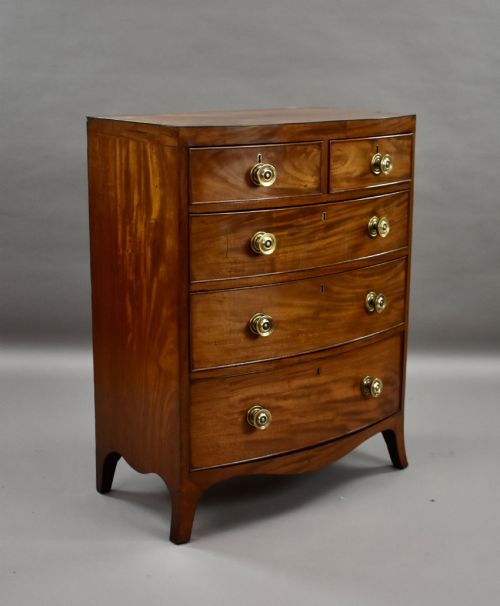

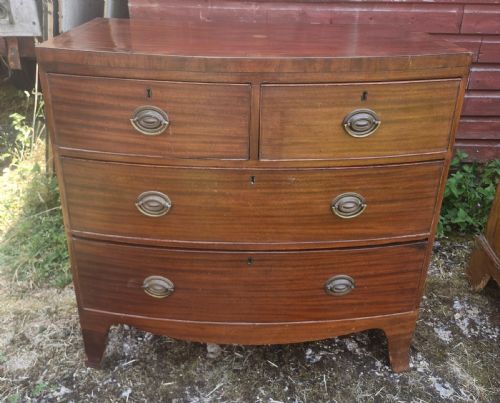
Curved Wooden Commode
A curved wooden commode brings effortless movement to a room, offering generous storage through swelling drawer fronts shaped in mahogany, walnut, and oak.
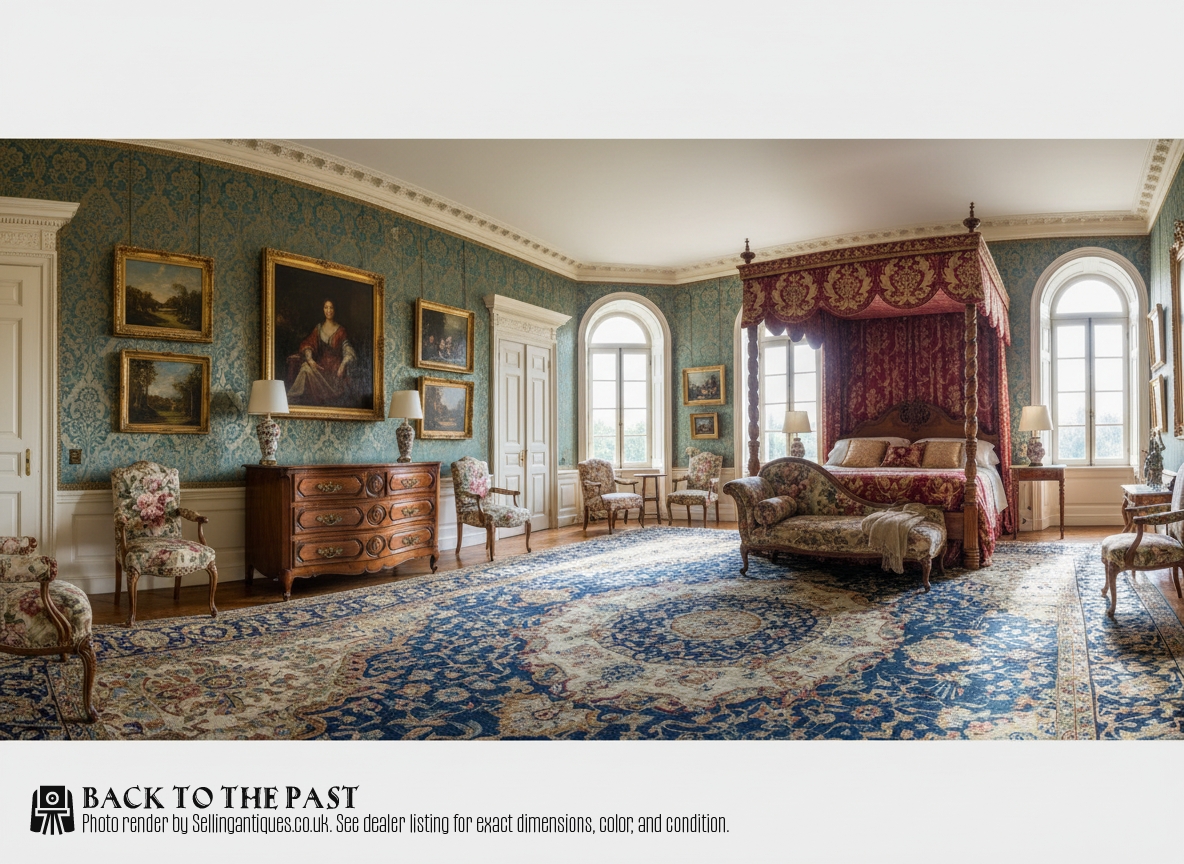
Curved Wooden Commode
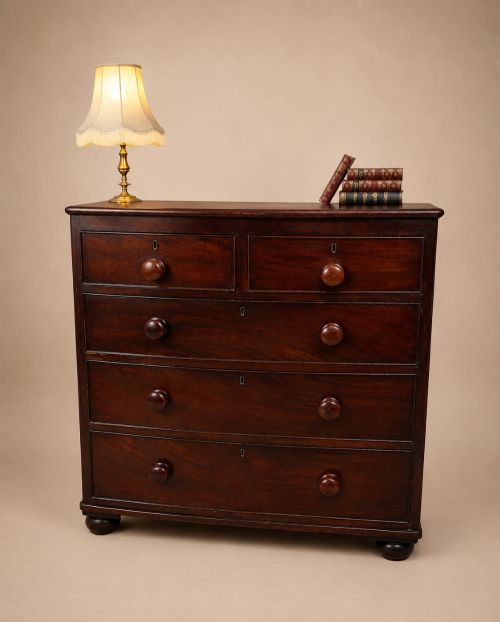
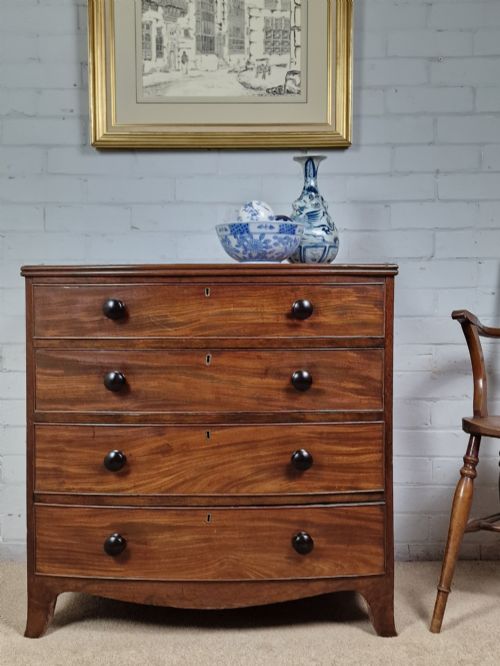
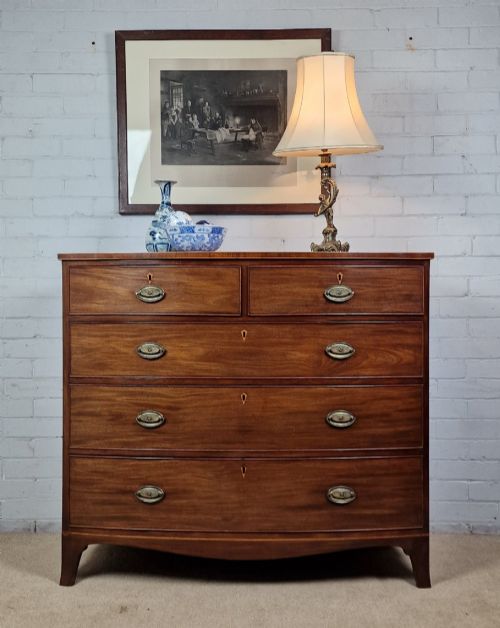
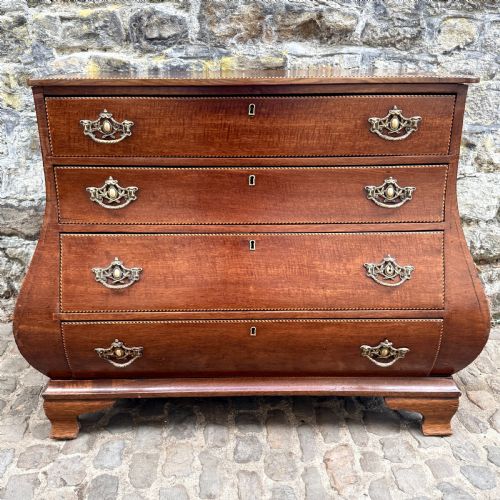
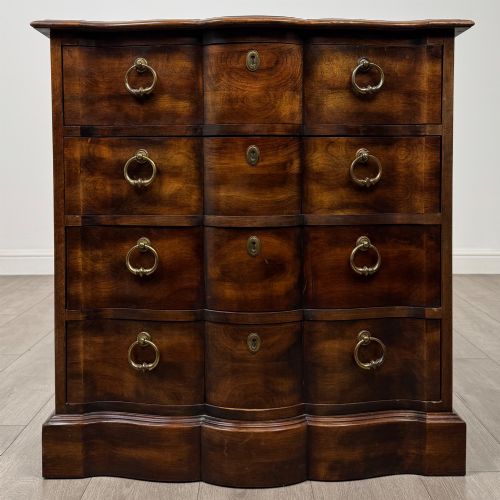
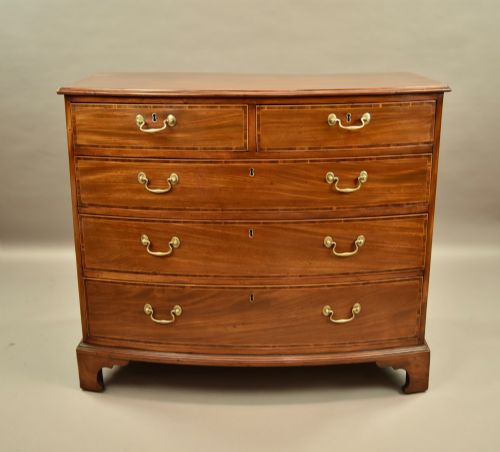
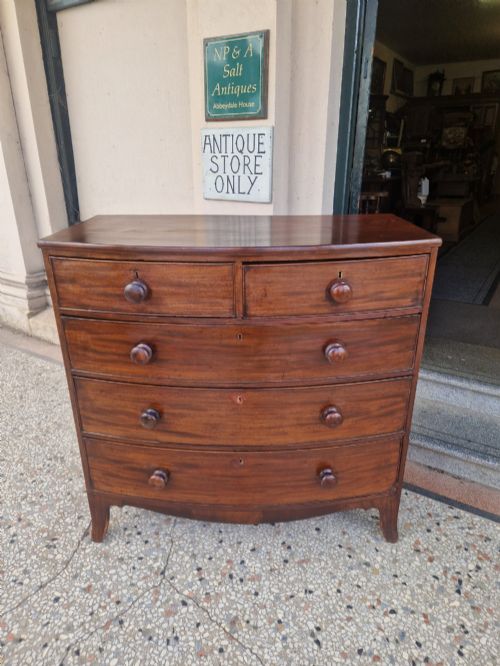
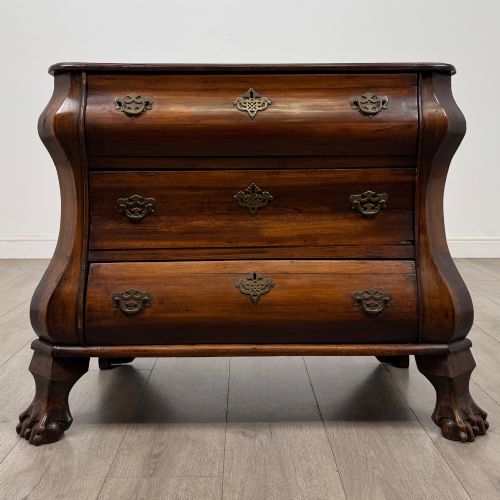
A curved wooden commode is primarily represented on this page by bowfront and serpentine chests of drawers, alongside Dutch bombe and French commode forms. These pieces span periods from the eighteenth century through the Georgian, Regency, and Victorian eras into the twentieth century, reflecting varied regional tastes.
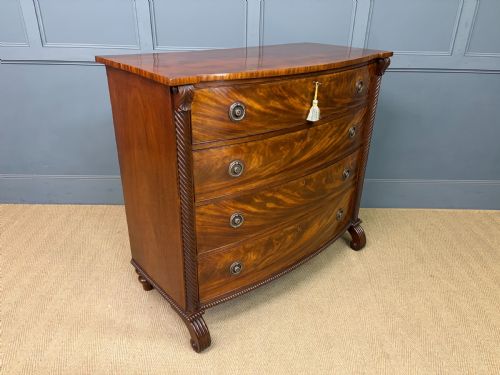
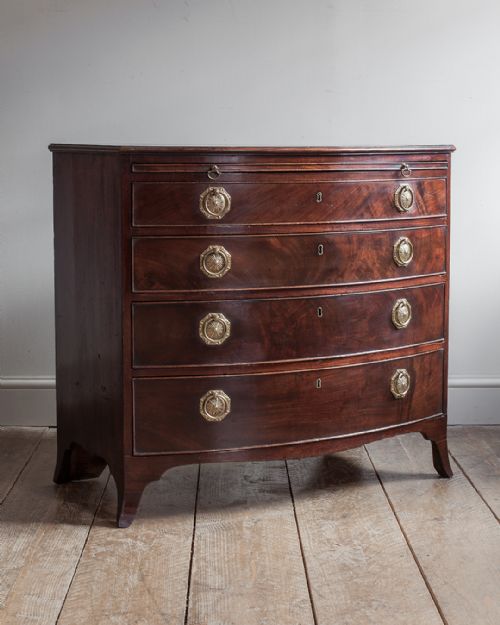
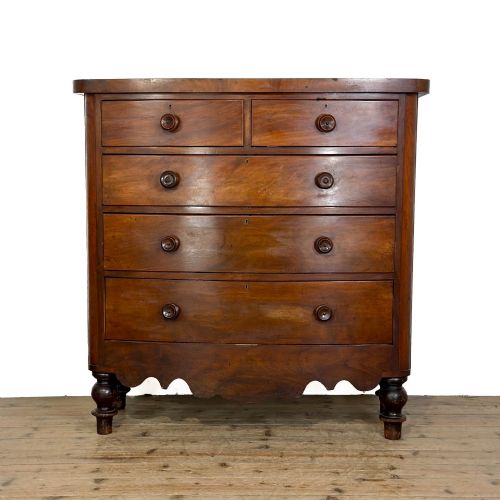
The most common version met here is the mahogany bow front chest of drawers, typically constructed during the Georgian or Regency periods with graduated drawers and bracket feet. Buyers frequently encounter smaller proportions as well as grander examples suited to principal bedchambers and reception rooms.
Materials and construction methods
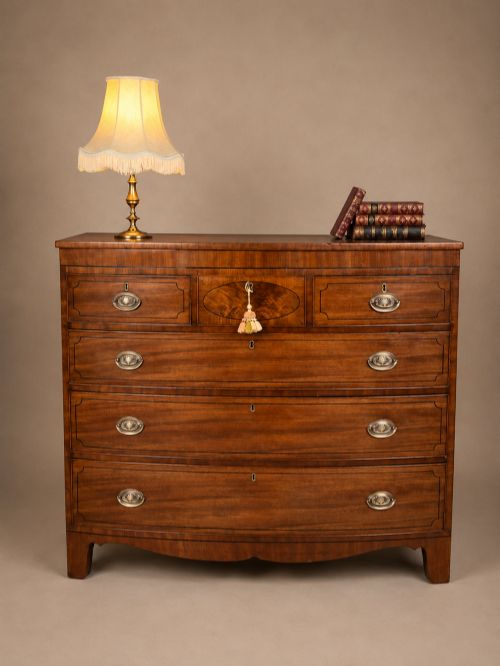
Cabinet makers relied on solid timbers and veneers of mahogany and walnut, frequently applying flame mahogany veneer to primary surfaces to create striking grain patterns. Secondary structural elements commonly utilise oak, while decorative highlights involve boxwood inlay and brass drawer pulls.
Curved drawer fronts and shaped carcasses required skilled timber bending and segmented framing techniques. Carcass construction demanded precise joinery to ensure drawers operated smoothly within swelling frames.
Some chests hide secret drawers tucked neatly beneath the top moulding.
Distinctions in quality
The standard of a curved wooden commode rests on the selection of timber veneers and the precision of the curved joinery. Superior examples display continuous grain matching across drawer fronts and crisp boxwood stringing.
Proportion and execution of hardware also separate finer pieces from simpler utilitarian chests. Original brass handles and well-formed bracket feet or apron bases indicate a higher tier of cabinet making.
The Curved Wooden Commode Glossary
- Bow front
- A convex curved front projecting outward from the centre. This shape gained immense popularity in British furniture design during the late eighteenth century.
- Serpentine
- A shaped furniture front featuring a convex centre flanked by concave curves. It requires advanced woodworking skill to execute properly.
- Bombe
- A swelling, bulging contour typical of continental furniture styles such as Dutch Baroque. The sides and front curve outward in sweeping lines.
- Commode
- A low cabinet or chest of drawers designed for domestic storage. The term often describes continental European examples topped with marble.
- Veneer
- A thin layer of figured wood applied over a secondary timber base. Flame mahogany veneers created dramatic visual movement on drawer surfaces.
Curved Wooden Commode: Frequently Asked Questions
What is the difference between a commode and a chest of drawers?
In British usage, a chest of drawers functions primarily for storing clothing in bedrooms. A commode often refers to continental European forms or lower cabinet designs, sometimes featuring marble tops.
Both types share curved wooden profiles on this page, but continental commodes frequently display bombe shapes or inlaid surfaces rather than standard British bowfront drawer configurations.
How do I identify a Georgian bowfront chest?
Georgian examples generally exhibit dense mahogany timbers, hand-cut dovetail joints on the drawer construction, and delicate bracket feet. Look for subtle proportions and patination developed over centuries.
Later revival pieces from the twentieth century often use different interior timbers and lack the mellow surface depth found on authentic eighteenth-century furniture.
Were these pieces always used in bedrooms?
While many chests served in private sleeping quarters for linen and garments, larger or more decorative curved commodes stood in reception rooms and hallways. French and Dutch models were often placed in prominent public spaces.
Their decorative curved fronts made them suitable for display as well as practical household storage.
How should I care for antique wood veneer?
Maintain stable room humidity and protect the surface from direct sunlight to prevent timber shrinkage and veneer lifting. Regular dusting with a dry cloth preserves the polished finish.
Avoid placing damp items directly onto antique mahogany or walnut surfaces, as moisture damages traditional wax and polish treatments.