

Curved Side Table
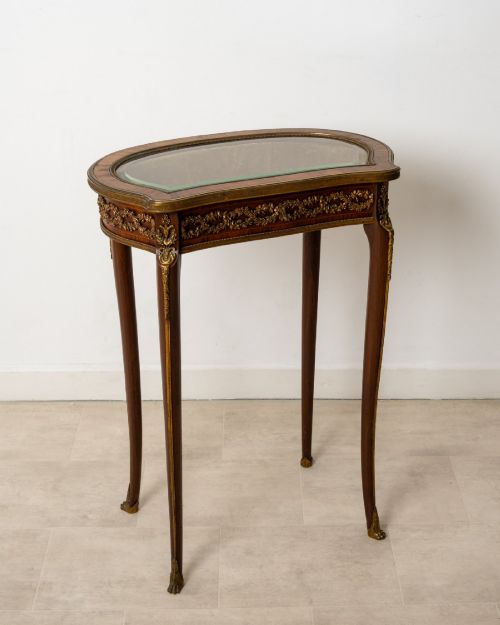
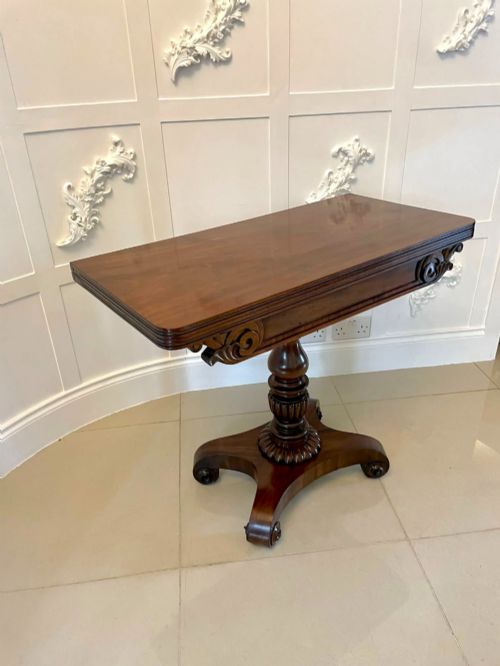
A curved side table brings fluid lines and practical surface space to a room, ranging from Georgian mahogany to Art Deco walnut.
Curved Side Table
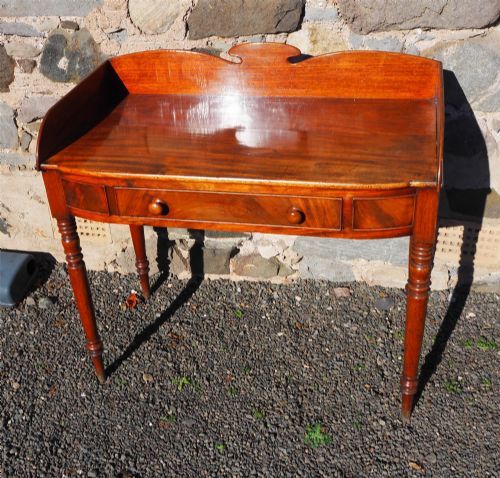
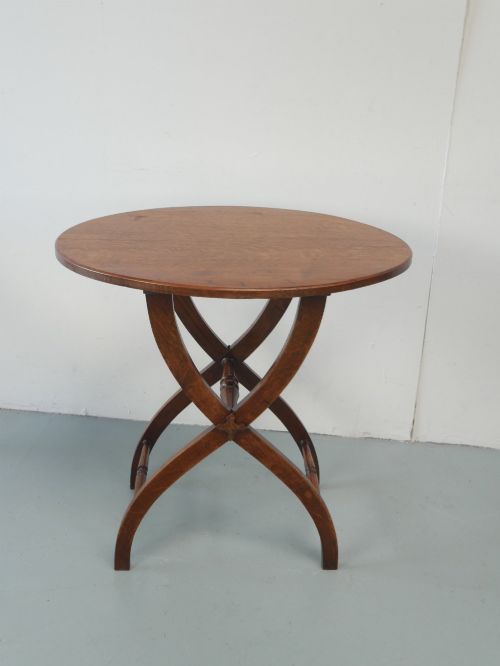
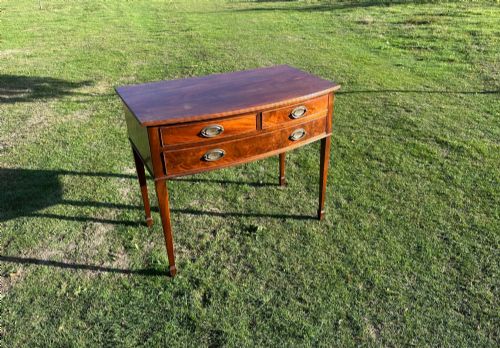
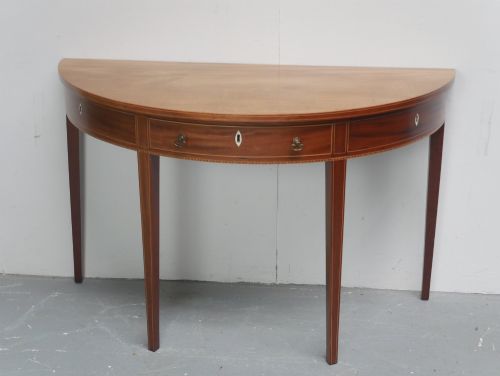
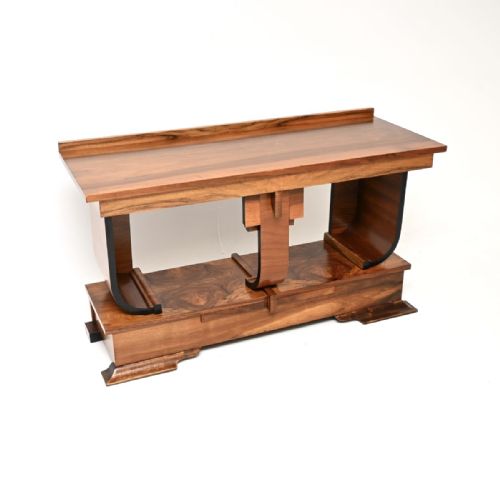
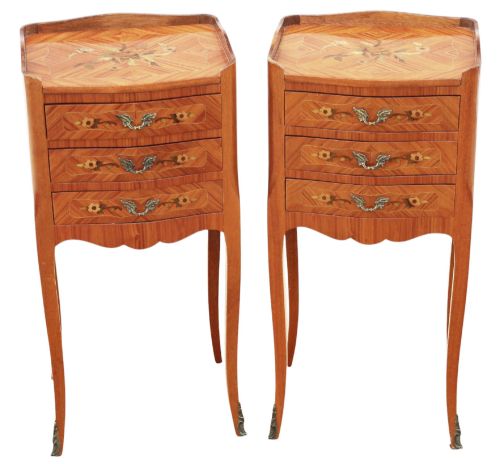
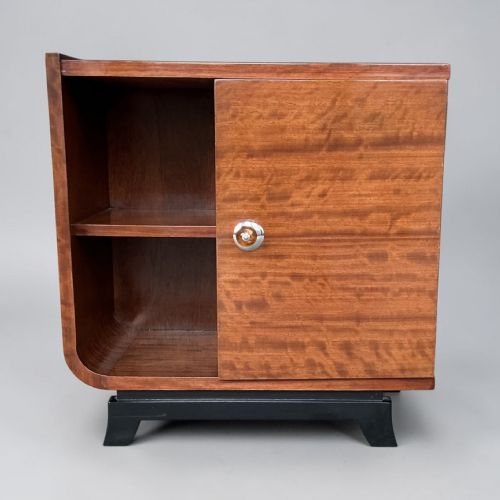
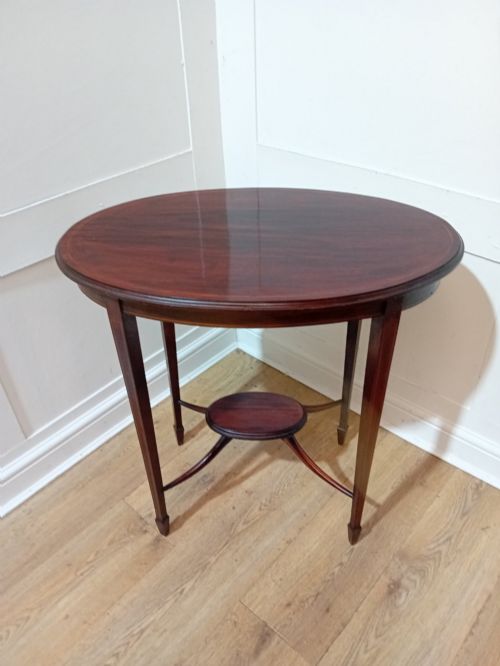
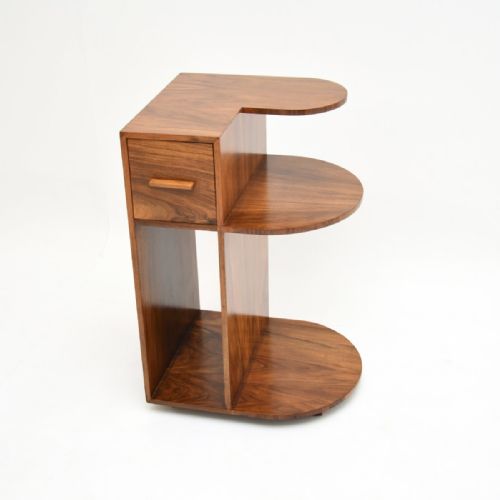
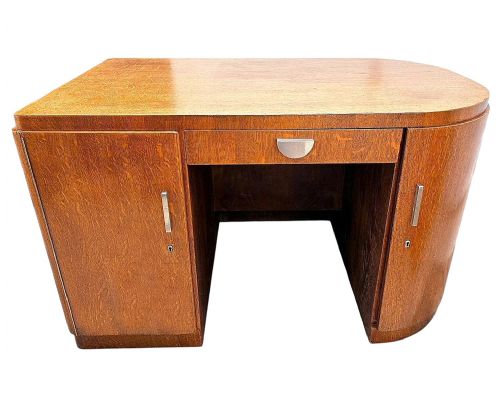
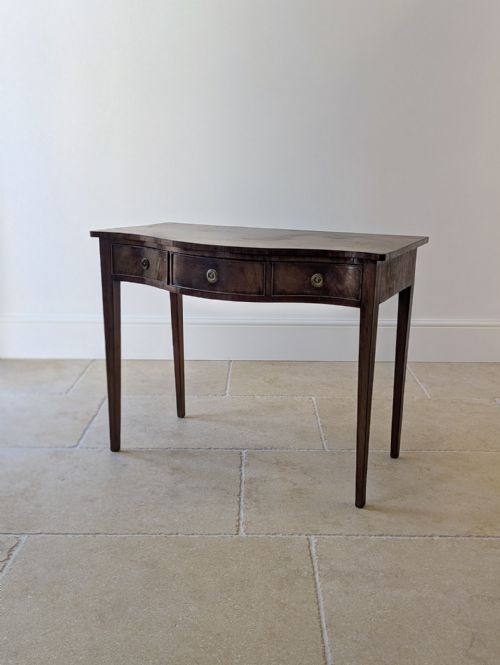
A curved side table brings useful surface area and distinct silhouettes to a room, appearing in forms such as demi-lune consoles, serpentine tables, and D-end desks. When you search for a curved side table, you encounter pieces spanning the Georgian and Regency periods through to the Art Deco era and the twentieth century.
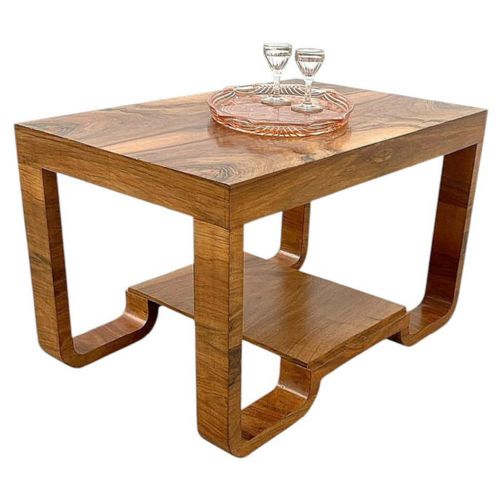
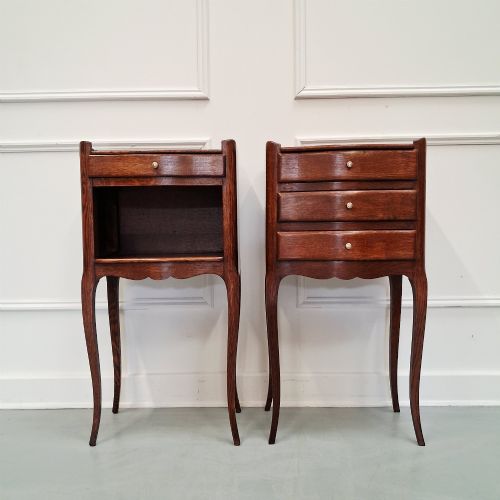
The selection on this page relies heavily on nineteen-thirties modernist designs, French polish finishes, and classic walnut or mahogany timbers. You will find occasional tables, nests of tables, and bedside units alongside larger console pieces suited to hallways and reception rooms.
How they were made
Cabinet makers utilised solid timbers alongside specialised veneers, applying figured walnut, burr maple, and rosewood over foundational woods like oak and mahogany. Joinery methods varied from traditional dovetails in drawer construction to curved laminated frames found in later modernist pieces.
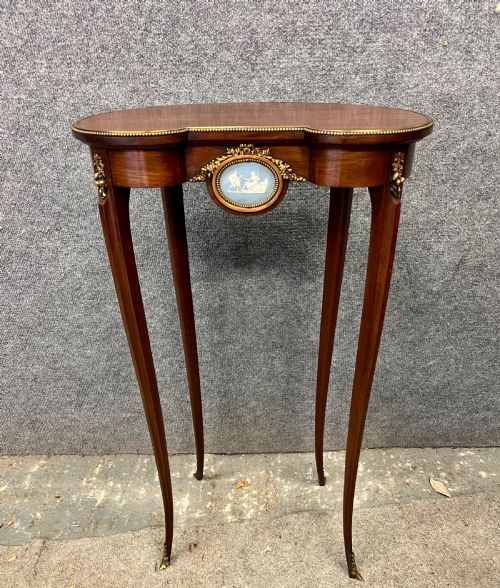
Surface ornamentation involved marquetry, parcel gilding, brass mounts, and ormolu details, particularly on French and revival items. Marble tops also appear on specific console forms, supported by wrought iron or carved wooden bases.
Curved Side Table Retail Price Guide 2026
Typical asking prices for curved side table among the pieces listed under this phrase on Sellingantiques today, from the lower quarter to the upper quarter. They describe what is for sale here now, not the wider market.
Object types include console tables, lamp tables, tea tables, nests of tables, and bedside cabinets.
What varies in quality
The selection of timber grain dictates much of the visual appeal, with book-matched burr walnut and figured mahogany representing finer periods of production. The crispness of carved details, inlay work, and ormolu mounts separates standard utility items from master-workshop pieces.
Structural integrity depends on the stability of curved joints and the preservation of original veneer work without excessive lifting or dry cracking. Maker attributions and documented provenance further distinguish exceptional examples from anonymous production.
Hille·François Linke·Harry and Lou Epstein·Whytock and Reid
The Curved Side Table Glossary
- Demi-lune
- A half-moon shape characteristic of console and side tables designed to sit flush against a wall. This form became particularly popular during the Georgian and Regency periods.
- Serpentine
- A gently undulating tabletop or drawer front featuring a convex centre flanked by concave curves. It requires precise woodworking skill to execute properly.
- Marquetry
- Decorative patterns formed by inserting pieces of coloured wood, veneer, or shell into a solid wooden surface. It appears frequently on French bedside tables and cabinets.
- Ormolu
- Gilded bronze ornamentation applied to furniture, popular in French pieces and revival styles. The finish provides a bright metallic contrast to dark woods.
- Parcel Gilt
- A technique where portions of a wooden or painted surface receive a thin layer of gold leaf. This highlights specific carved motifs or architectural lines.
Curved Side Table: Frequently Asked Questions
Where does a curved side table fit best?
These tables suit hallways, living rooms, and bedrooms where straight lines dominate and soften the overall geometry of the space.
Demi-lune and console versions sit neatly against flat walls, while smaller occasional and coffee tables float easily beside seating arrangements.
How do I identify an Art Deco piece?
Art Deco pieces from the nineteen-thirties typically feature figured walnut, burr maple, or rosewood veneers with smooth, streamlined silhouettes. They often avoid heavy traditional carving in favour of geometric clarity and polished wooden surfaces.
Nests of tables, octagonal occasional tables, and streamlined side cabinets are common formats from this design period.
What is the difference between a console and a side table?
Console tables traditionally stand against a wall and sometimes require wall fixing for absolute stability, frequently taking a demi-lune or D-end shape.
Side tables generally stand freely on four or more legs and serve functional purposes beside chairs or beds without wall support.
How do I care for walnut veneer?
Keep veneered surfaces away from direct sunlight and strong heat sources to prevent the wood from drying out or the underlying glue from failing.
Dust regularly with a dry cloth and occasionally apply a suitable wax polish to maintain the sheen without building up heavy residues.