
Curved Mahogany Drawers
Curved mahogany drawers present practical storage fashioned with swelling fronts, satisfying both domestic utility and classical proportion.
Curved Mahogany Drawers
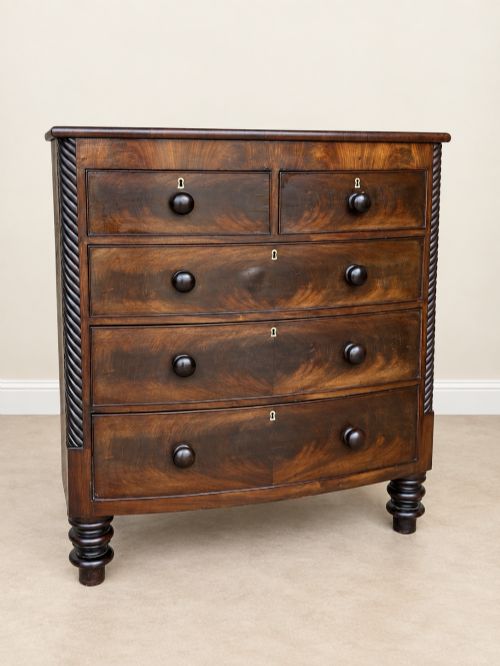
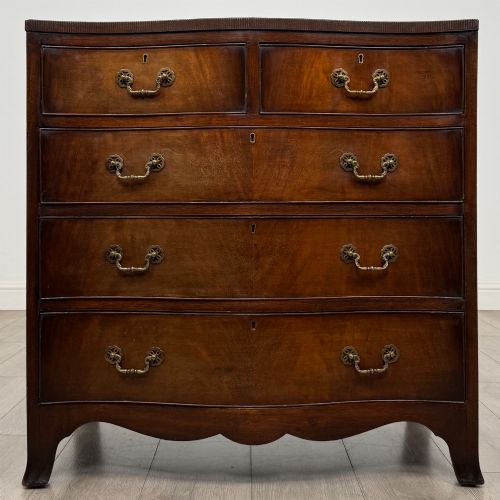
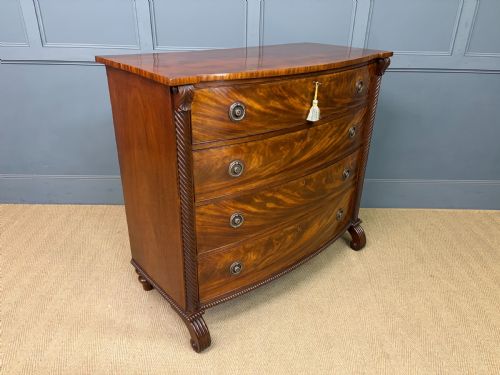
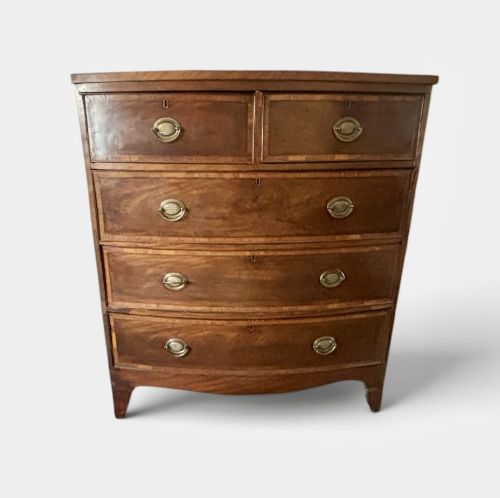
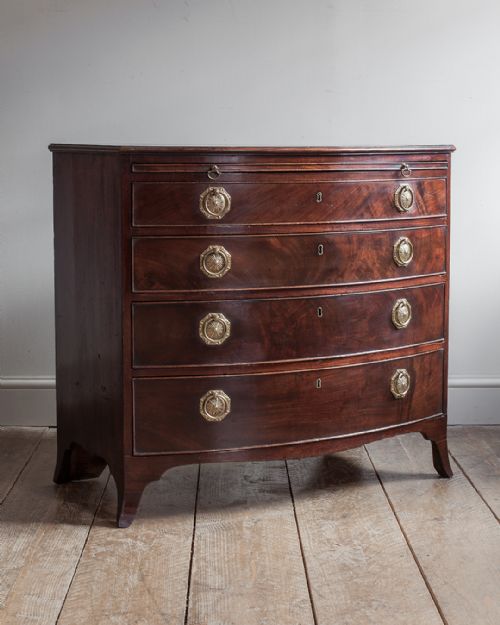
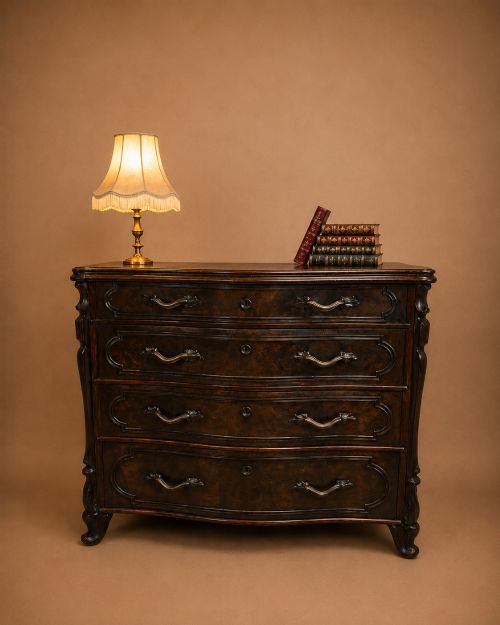
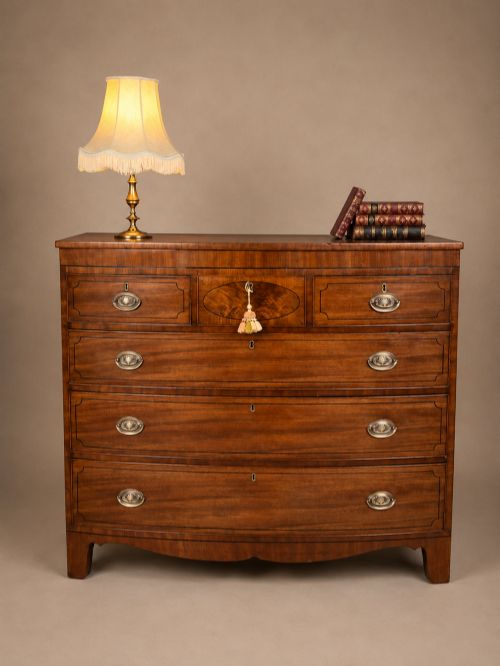
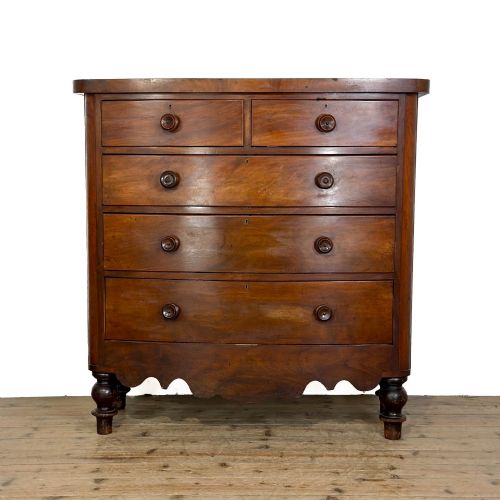
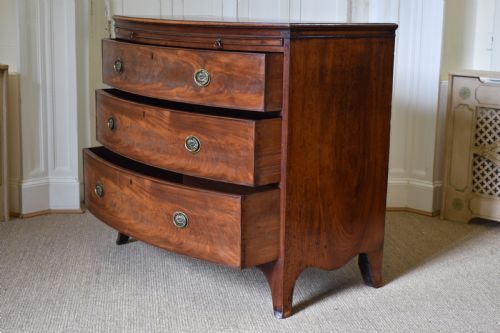
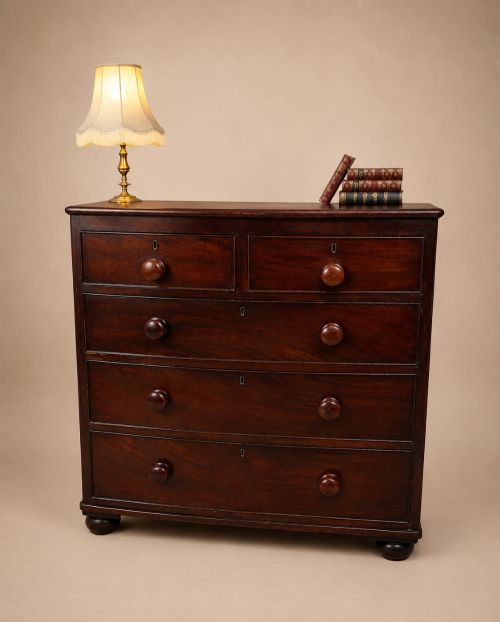
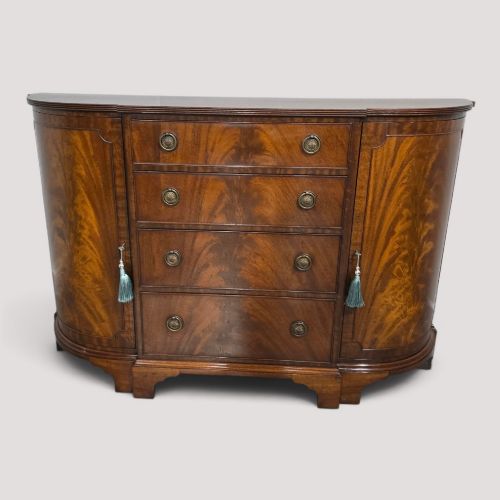
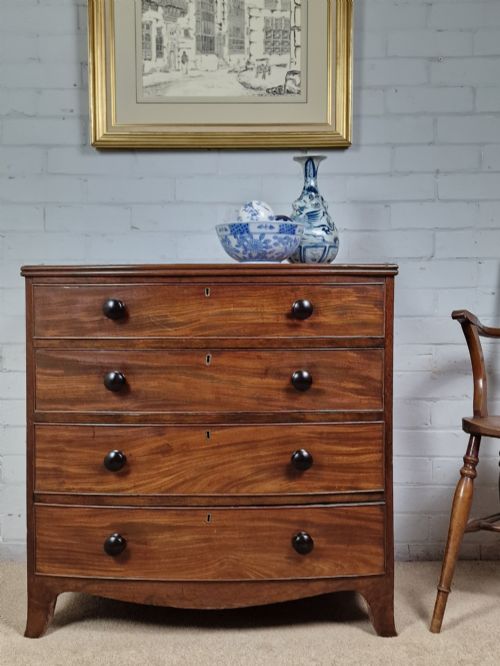
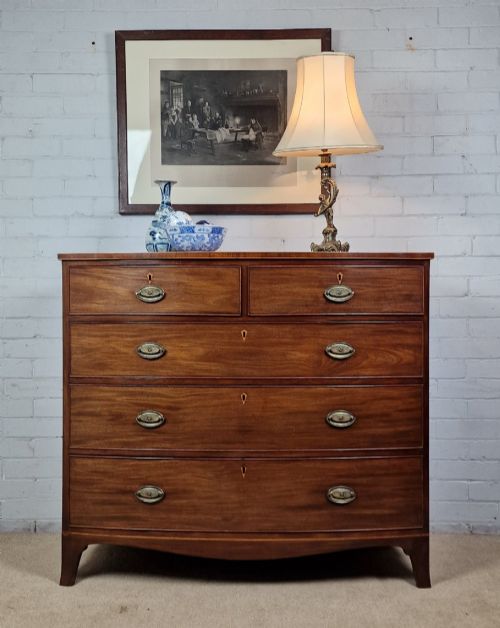
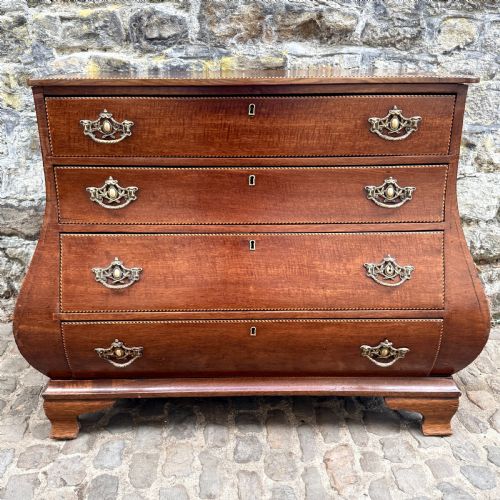
Curved mahogany drawers primarily take the form of chests of drawers, featuring prominently in Georgian, Regency, and Victorian iterations across this selection. Pieces span bow fronts and serpentine contours, occasionally appearing in sideboard or side table formats.
The objects derive from the late eighteenth century through the nineteenth century, extending into twentieth-century interpretations. Makers construct these items using solid timbers and rich veneers, frequently incorporating specialised secondary woods.
What varies in quality
Quality rests upon the selection and figure of the mahogany veneer, where rich flame patterns and symmetrical grain matching elevate the piece. The crispness of inlaid banding and the integrity of the curved carcase joinery further distinguish superior examples from standard production.
Proportion and execution of the curved drawer fronts dictate visual success, with finer workshops maintaining smooth, consistent radii without warping. The retention of original brass hardware and secondary framing timbers contributes substantially to the standing of an individual piece.
Object forms on this page include chests of drawers, sideboards, canterbury stands, and occasional side tables.
The Curved Mahogany Drawers Glossary
- Bow front
- A convex curved cabinet front that swells outward in the centre, commonly found on chests of drawers from the Georgian and Regency periods.
- Serpentine front
- A furniture front characterised by a central convex curve flanked by concave sweeps toward the outer edges.
- Flame mahogany veneer
- A highly figured wood veneer sliced from timber where the branch meets the trunk, producing a distinctive flickering flame pattern.
- Satinwood banding
- Narrow strips of pale exotic timber inlaid around the perimeter of drawer fronts to create a contrasting decorative border.
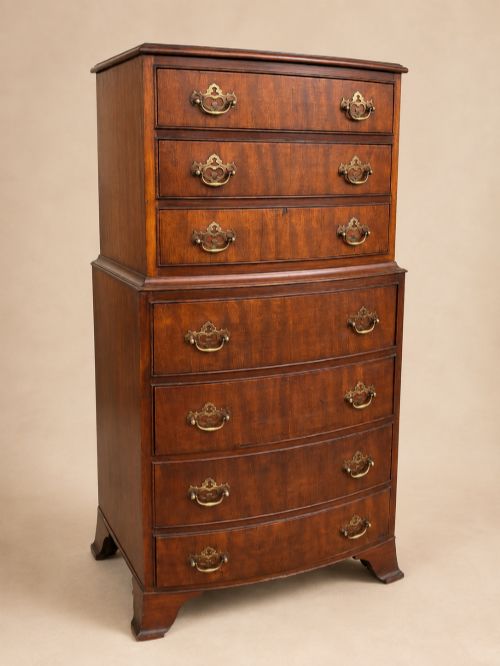
- Chest on chest
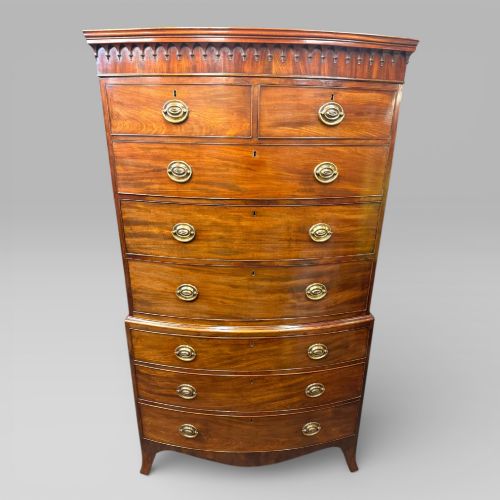
- A tall case furniture form comprising two distinct chest sections stacked vertically, often seen with bow-fronted configurations.
Curved Mahogany Drawers: Frequently Asked Questions
How do I identify a Regency bow front?
Regency pieces generally display sharper proportions, crisper inlay work, and distinctive reed or pillar details flanking the drawers. The mahogany used in this era often exhibits a rich, dark patina developed over centuries of polish.
Foot styles also provide clues, as Regency makers frequently utilised bracket feet, French feet, or short turned supports rather than the heavier bases seen on later Victorian iterations.
Are these drawers suitable for daily use?
These pieces function well for modern storage provided humidity remains stable to prevent timber movement in the wide top boards. Traditional dovetail construction and waxed runners allow the drawers to glide smoothly when handled with reasonable care.
Placing them away from direct heat sources protects the fragile mahogany veneers and prevents the antique polishes from drying out over time.
How do Georgian and Victorian pieces differ?
Georgian examples usually showcase finer proportions, delicate stringing, and restrained decorative elements focused on timber figure. Victorian versions tend to be heavier in scale, sometimes utilising denser mahogany stocks and bolder brass handles.
Internal construction details, such as the wood used for drawer bottoms and secondary framing, also shift from native softwoods in earlier eras to varied imported timbers later on.