




Curved Leg Lamp Table
These curved leg lamp table pieces bring classic timber forms and subtle period curves to a room.
Curved Leg Lamp Table
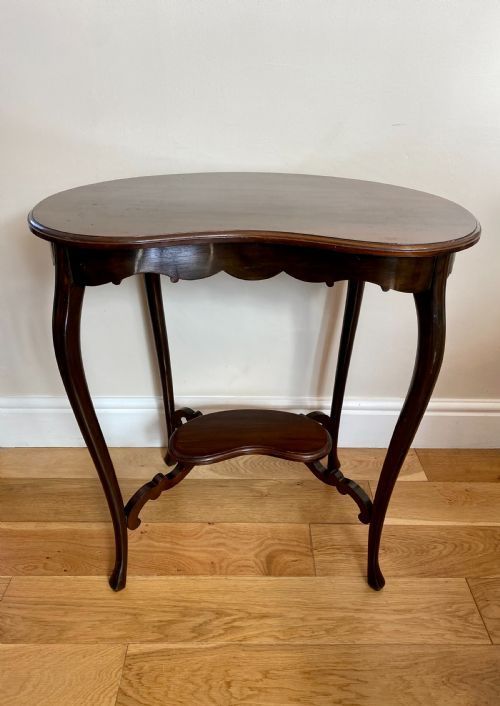
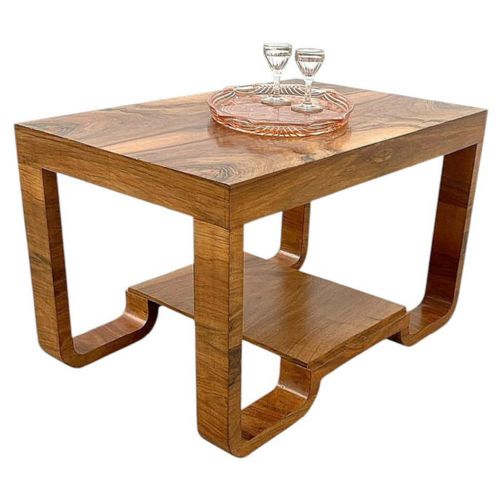
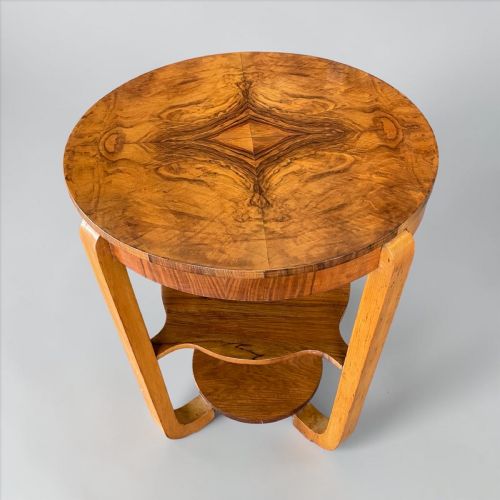
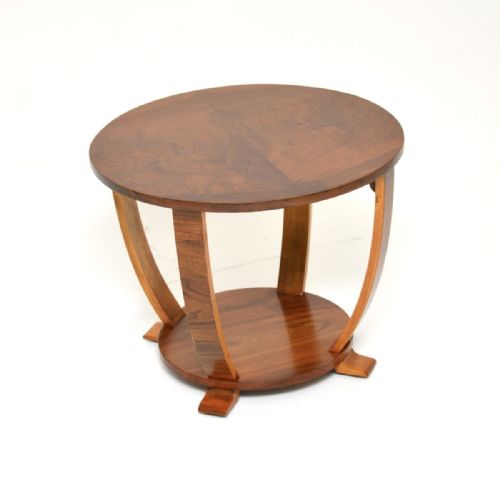
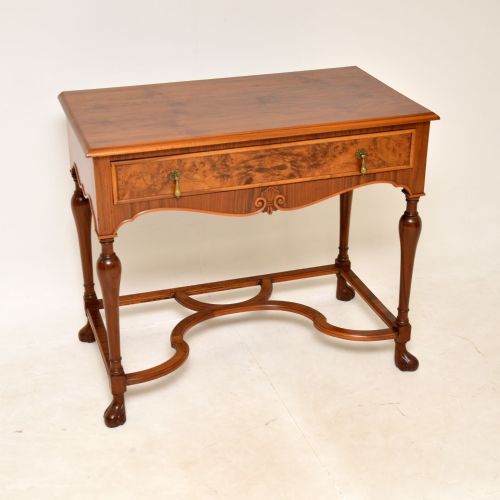
When you search for a curved leg lamp table, you find a selection of occasional, side, and console tables spanning the nineteenth and twentieth centuries. These tables draw on Edwardian, Art Deco, and revival styles including Queen Anne and Louis XV.
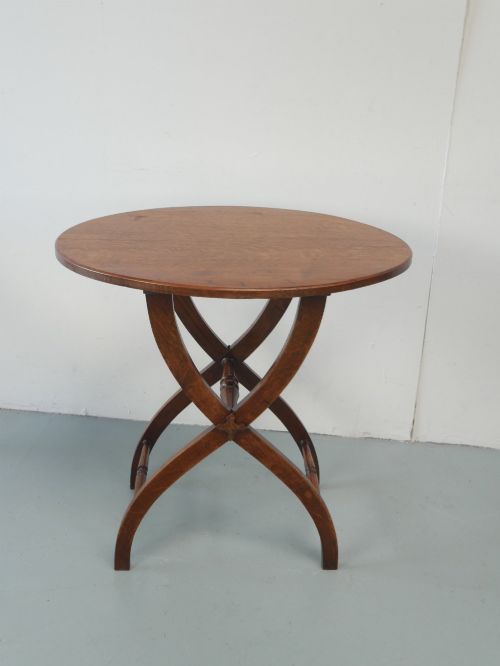
The pieces on this page include walnut, mahogany, oak, and satinwood forms designed to hold a lamp or display ornaments in a sitting room. You meet everything from octagonal occasional tables to kidney-shaped side pieces and three-tier designs.
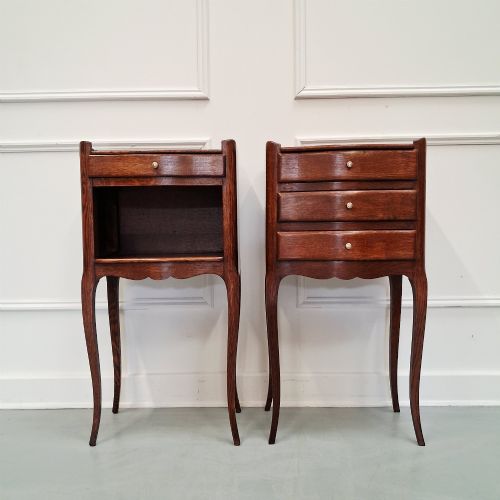
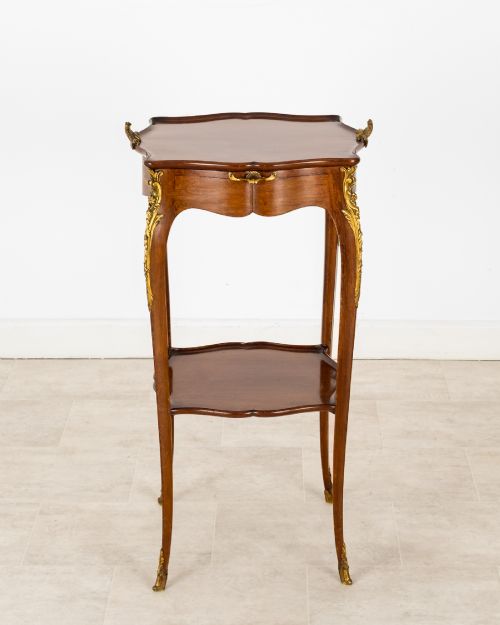
Originating from British and French workshops, these tables range from straightforward oak constructions to Ormolu mounted mahogany pieces. Each example offers a specific period interpretation of the curved leg silhouette.
Materials and construction
Cabinet makers utilised solid timbers alongside veneers, applying walnut, burr walnut, flamed mahogany, and birds eye maple over sturdy carcases. Grain patterns were selected carefully to give flat surfaces and curved borders visual depth.
Details such as brass fittings, ormolu mounts, and art nouveau tiles appear across the selection to accent the woodwork. Inlays in satinwood and ebonised timber provide contrast on Edwardian and Art Deco surfaces.
Curved Leg Lamp Table Retail Price Guide 2026
Typical asking prices for curved leg lamp table among the pieces listed under this phrase on Sellingantiques today, from the lower quarter to the upper quarter. They describe what is for sale here now, not the wider market.
Some tables wear art nouveau tiles, proving that even a cup of tea needed botanical backing.
Distinctions in quality
The standard of a curved leg lamp table rests on the precision of its timber selection and the fluidity of its shaping. Finer examples display matched veneers and balanced grain across the top surface, while simpler pieces rely on plain solid woods.
Construction methods also set pieces apart, from hand-cut joints to the integration of cast bronze or ormolu mounts. The crispness of inlaid borders and the stability of the frame dictate the standing of each table.
François Linke
The Curved Leg Lamp Table Glossary
- Ormolu
- Gilded bronze mounts applied to furniture. This technique adds decorative metallic detail to the corners and legs of French pieces.
- Veneer
- A thin layer of figured wood applied over a secondary timber base. This method allows cabinet makers to display striking grain patterns.
- Inlay
- Contrasting woods or materials set flush into the surface of a table. It creates geometric or floral patterns typical of Edwardian and revival pieces.
- Kidney shaped
- A curved, asymmetrical tabletop resembling a kidney bean. This form is common in French and Edwardian side tables.
- Occasional table
- A small, moveable table used for specific tasks in a reception room. These pieces were designed to be repositioned easily.
Curved Leg Lamp Table: Frequently Asked Questions
What is a curved leg lamp table used for?
These tables provide a sturdy surface for placing a reading lamp, clock, or decorative objects beside a seating area. Their compact footprint allows them to fit into corners or beside armchairs without crowding a room.
Historically, occasional tables served flexible purposes in nineteenth and twentieth-century homes, moving easily from sitting rooms to hallways as needed.
How do I identify an Art Deco table?
Art Deco pieces from the nineteen-thirties often feature streamlined geometric forms, stepped tiers, and figured walnut or birds eye maple veneers. They eschew heavy carving in favour of clean lines and contrasting ebonised details.
Makers of this era focused on the natural beauty of wood grain rather than elaborate applied ornamentation.
What distinguishes Edwardian tables?
Edwardian examples frequently showcase lighter timbers such as satinwood and mahogany, often enhanced with delicate stringing or floral inlay. They lean towards revival styles and graceful, slender supports.
These tables reflect a lighter aesthetic compared to the heavier Victorian furniture that preceded them.
Are these tables French or English?
The selection includes pieces from both traditions, with French models often featuring kidney shapes and ormolu mounts inspired by Louis XV designs. English pieces tend to utilise mahogany, walnut, or oak with Sheraton or Edwardian revival influences.
Construction details and timber choices usually point to the country of origin.