



Curved Glazed Side Cabinet
A curved glazed side cabinet organises a room with glass and polished wood, bringing elegance and display space to any interior.
Curved Glazed Side Cabinet
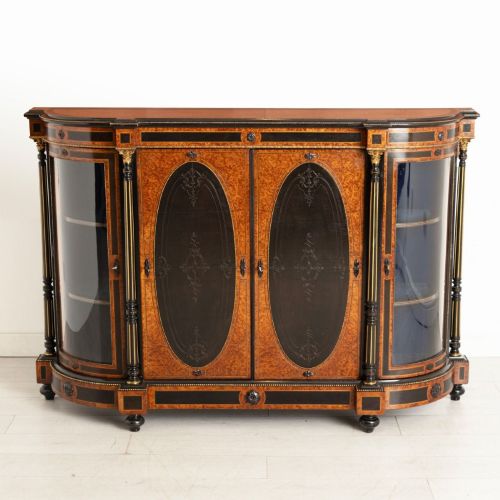
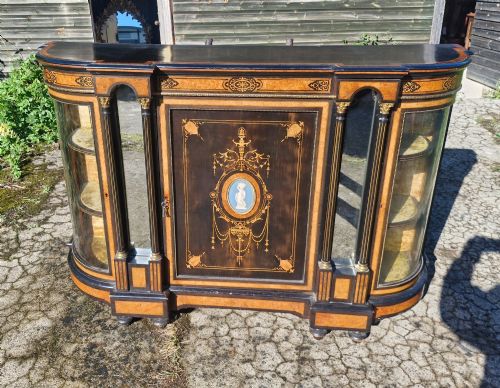
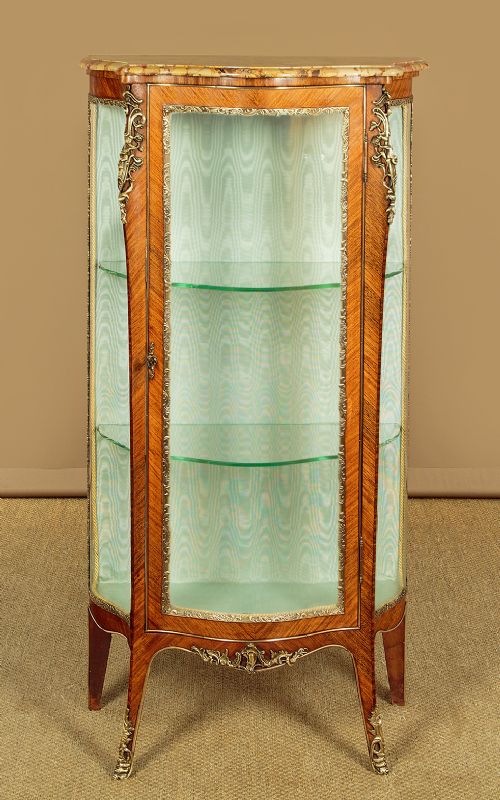
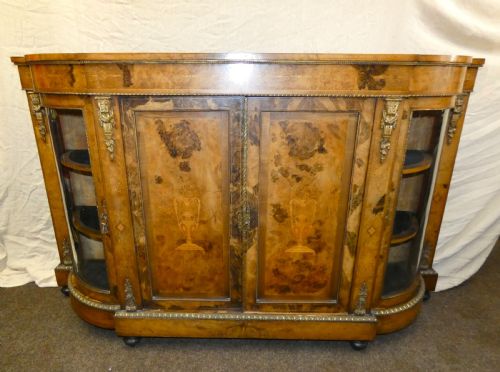
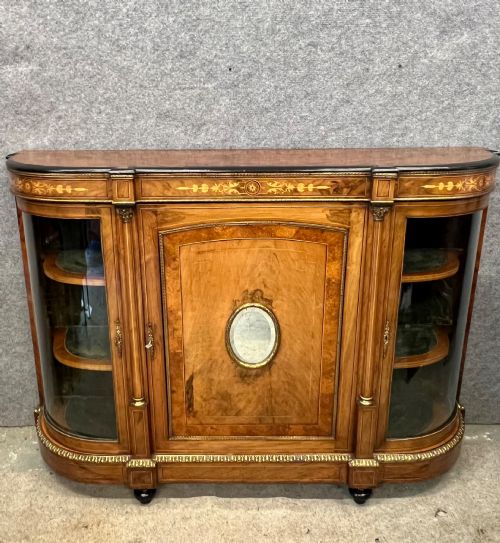
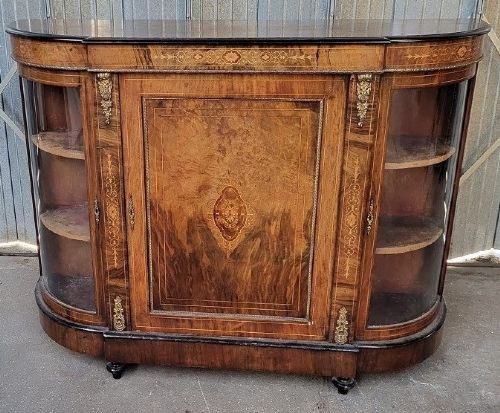
A curved glazed side cabinet is a refined piece of furniture designed to display objects while providing enclosed storage. These items frequently take the form of credenzas, vitrines, and display cabinets originating from the Victorian era up to the early twentieth century.
Most examples found here utilise walnut, burr walnut, and ebonised wood, often shaped with serpentine or bow fronts. The dominant style is Victorian, accompanied by French Revival, Louis XV, and Edwardian interpretations.
Buyers will encounter various formats, ranging from compact baby credenzas to large exhibition quality pieces with multiple doors. These cabinets combine glass panels with timber frameworks to create a striking focal point in a dining room or drawing room.
How they were made
Cabinet makers constructed these pieces using solid and veneered timbers such as walnut, mahogany, and ebonised wood over sturdy carcases. Complex curves required specialist bending techniques for both the timber framework and the curved glass panes.
Decoration relied heavily on intricate marquetry, boxwood inlay, and satinwood detailing set into the primary wood grain. Ormolu mounts in cast brass and fine stringing added further structural embellishment to the finished facades.
Curved Glazed Side Cabinet Retail Price Guide 2026
Typical asking prices for curved glazed side cabinet among the pieces listed under this phrase on Sellingantiques today, from the lower quarter to the upper quarter. They describe what is for sale here now, not the wider market.
The listings show a strong preference for walnut timber, alongside ebonised wood, boxwood inlay, and ormolu mounts across Victorian and Edwardian periods.
What varies in quality
The degree of craftsmanship is evident in the selection of timber veneers, particularly the figuring and grain matching within burr walnut surfaces. Superior pieces display meticulous marquetry and crisply cast ormolu mounts rather than plain or mass-produced ornamentation.
Structural integrity and the complexity of the design set exhibition quality examples apart from standard domestic furnishings. The ability to shape glass and timber into smooth curves without distortion marks the work of master workshops.
The Curved Glazed Side Cabinet Glossary
- Credenza
- A sideboard or display cabinet designed with glass doors and decorative mounts. These pieces often feature curved ends to soften the rectangular silhouette.
- Marquetry
- The art of applying decorative veneer pieces in wood to form intricate patterns and pictures. This technique defines the surface decoration of many Victorian cabinets.
- Ormolu
- Gilded bronze mounts applied to furniture for decorative effect. These metallic accents highlight the corners and framing of high-status cabinets.
- Vitrine
- A glass-fronted display cabinet used for showcasing porcelain and collectibles. They share many construction traits with side cabinets.
- Serpentine
- A furniture front characterised by a wavy contour with a convex centre flanked by concave curves. This shape demands advanced carpentry skills.
Curved Glazed Side Cabinet: Frequently Asked Questions
What is a curved glazed side cabinet?
A curved glazed side cabinet is a decorative storage piece featuring glass doors and rounded wooden panels. These items were designed to showcase valued possessions while keeping them dust-free.
Most examples date from the nineteenth and early twentieth centuries, utilising rich timbers like walnut and burr walnut.
Where were these cabinets placed?
These pieces traditionally occupied prominent positions in drawing rooms, dining rooms, and hallways. Their glass fronts allowed hosts to display fine ceramics, glassware, and curiosities to visiting guests.
Today, they serve a similar function in modern interiors, adding warmth and historical character to a living space.
How do I identify a Victorian credenza?
Victorian credenzas are typically constructed from figured walnut and often incorporate marquetry inlay and ormolu mounts. They frequently feature a central cupboard flanked by curved glass side doors.
Examining the interior timbers and construction joints helps confirm the nineteenth-century origins of the piece.
What is burr walnut?
Burr walnut refers to the highly figured wood grain taken from the growth growths on walnut trees. It creates a swirling, mottled pattern prized for its decorative appeal.
Cabinet makers used burr walnut veneers on the most expensive pieces to create striking visual movement across the facade.