
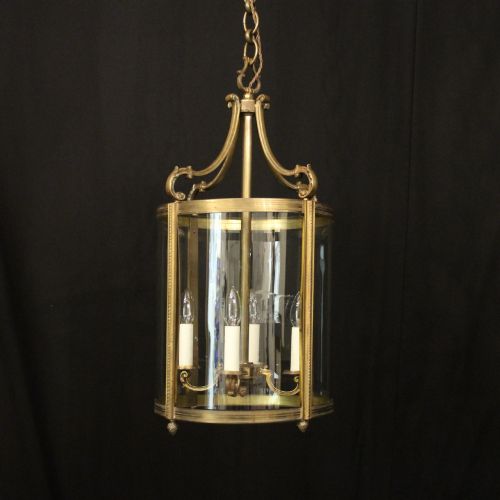
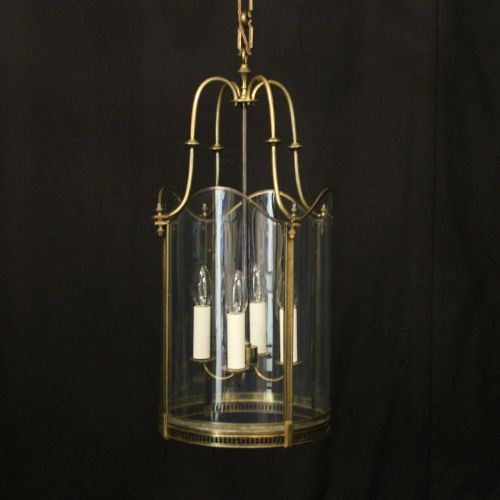
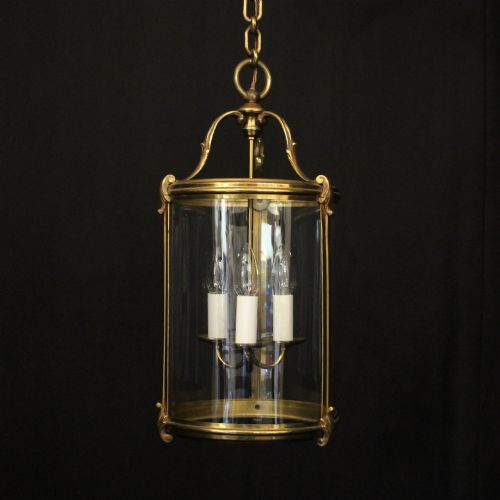
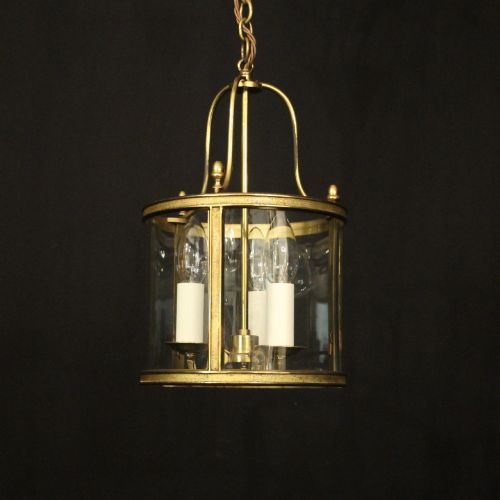
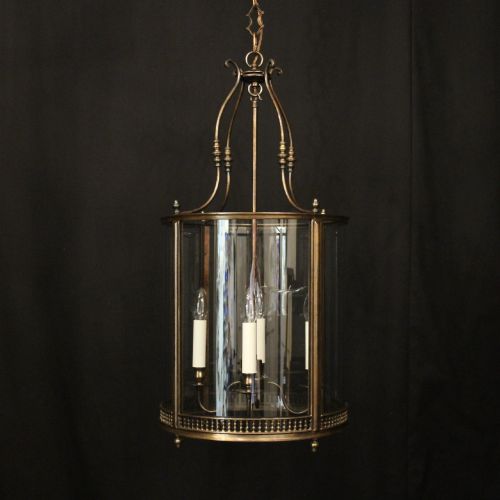
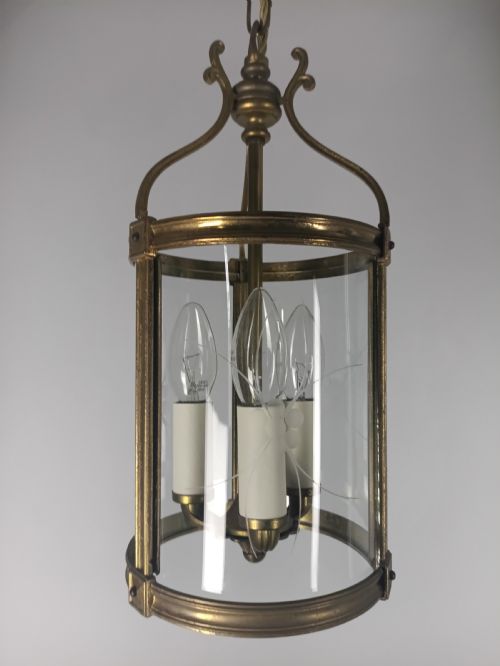
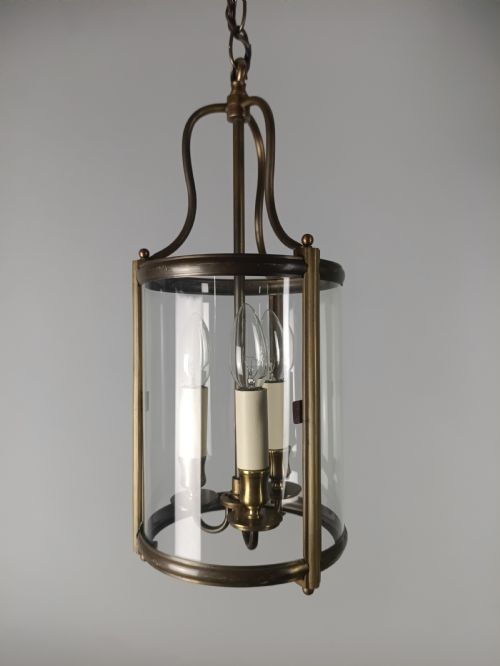
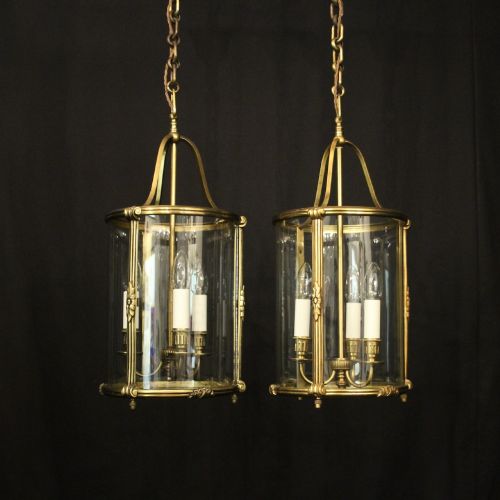


Curved Glass Hall Light
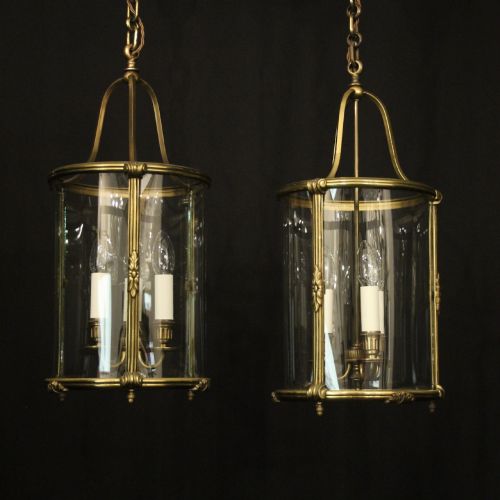
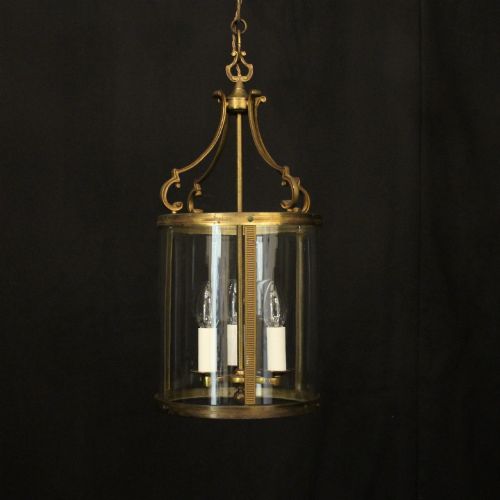
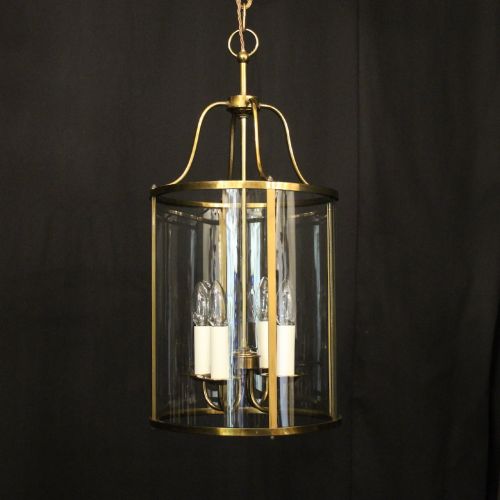
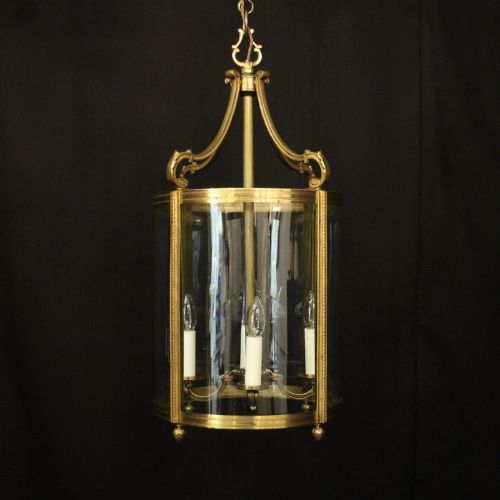
A curved glass hall light brings unmistakable presence to an entrance, shaping the light through bent plates of glass and metalwork.
Curved Glass Hall Light
A curved glass hall light is primarily designed for hallways, corridors, and vestibules, combining practical illumination with strong decorative character. The selection on this page centres heavily on pieces from the early twentieth century, specifically the 1920s and 1930s, alongside nineteenth-century examples.
Most items take the form of hall lanterns or ceiling pendants, often housing multiple internal lights behind convex or curved glass panels. French and English workshops dominate the origins, ranging from French Louis XVI style and Rococo Revival to English Regency designs.
Buyers will encounter various configurations, from twin and triple light fixtures up to substantial four-light lanterns. These fixtures balance functional brightness with the soft diffusion characteristic of curved glass panels.
Materials and construction methods
The structure relies heavily on metal frames cast or fabricated from brass, bronze, gilt brass, and gilded bronze. These metal mounts provide the robust cage necessary to secure the glass panels safely.
The defining characteristic is the glass itself, shaped into convex or curved plates that fit snugly into the metal framework. Some panels feature subtle etching, which serves to diffuse the internal bulb illumination gently across the hallway.
The listings on this site span the nineteenth century up to the 1930s, utilising brass, bronze, and glass.
Assessing quality in period lanterns
Quality rests significantly on the weight and finish of the metal frame, whether solid bronze or gilded brass. Finer examples display crisp casting detail and heavy gauge metal that holds its structural integrity securely.
The glass panels themselves dictate much of the refinement, with thicker, evenly curved glass representing superior manufacturing standards. The integration between the glass and the metal rebate shows the care taken during assembly.
The Curved Glass Hall Light Glossary
- Convex glass
- Glass that curves outward, swelling from the frame to refract light broadly across a space. This shape is essential for creating the characteristic profile of the lantern.
- Gilt bronze
- Bronze that has been treated with a layer of gold or gold-coloured finish. It provides a warm, enduring metallic lustre.
- Hall lantern
- A ceiling-hung lighting fixture specifically scaled for narrow spaces like corridors and entrances. These pieces direct illumination downward while casting a glow through side panels.
- Rococo revival
- A nineteenth-century style drawing on eighteenth-century asymmetry, scrollwork, and natural motifs. It appears frequently in decorative metal mounts.
Curved Glass Hall Light: Frequently Asked Questions
How do I clean a curved glass hall light?
Remove the glass panels carefully if the frame allows, washing them in warm soapy water before drying thoroughly.
Dust the metal framework with a soft dry brush to protect any gilded or bronze surfaces from abrasive wear.
Can these antique lanterns take modern bulbs?
Most period lanterns accommodate standard modern LED or incandescent bulbs, provided the wattage matches the internal wiring capacity.
Consult a qualified electrician to check the internal lampholders and ensure safe operation before installation.
Where should I hang a hall lantern?
Hang the fixture centrally in a hallway or entrance lobby where it has sufficient clearance from opening doors and passing traffic.
Ensure the bottom of the lantern sits high enough to allow comfortable headroom for anyone walking underneath.
How do I tell French and English lanterns apart?
French examples often lean towards decorative styles like Louis XVI or Rococo Revival with ornate gilt bronze mounts.
English pieces tend to display more restrained classical proportions reminiscent of the Regency period.