

Curved Front Wooden Drawers
Curved front wooden drawers bring immediate architectural movement to a room, offering deep storage paired with soft, rounded lines.
Curved Front Wooden Drawers
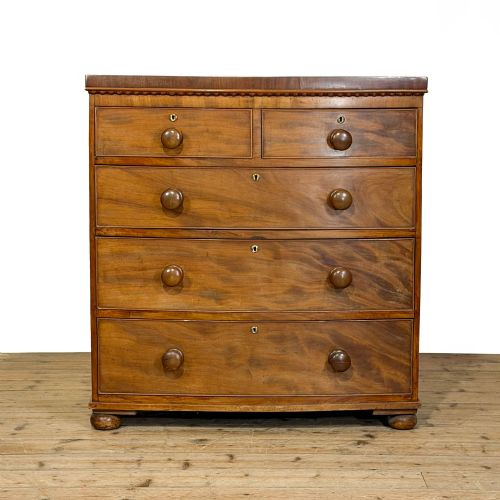
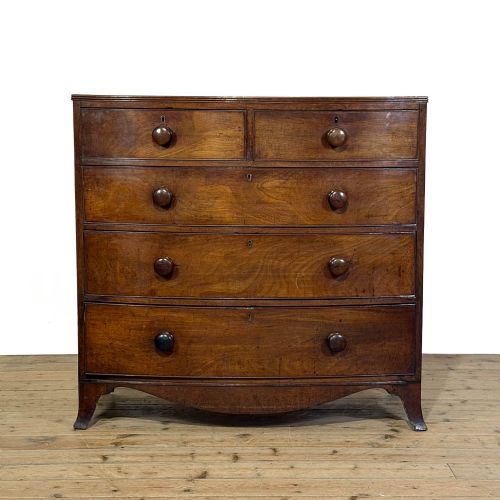
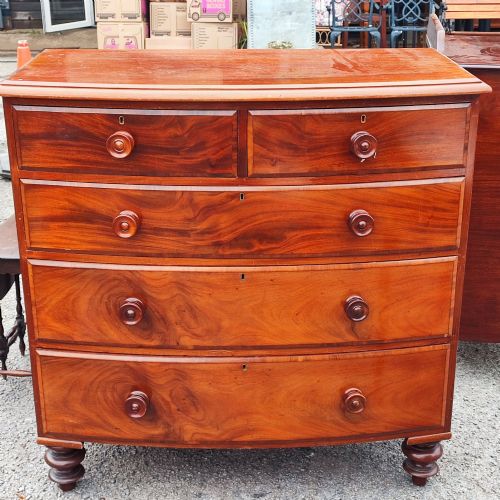
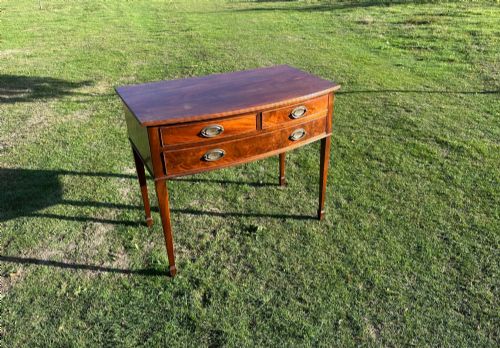
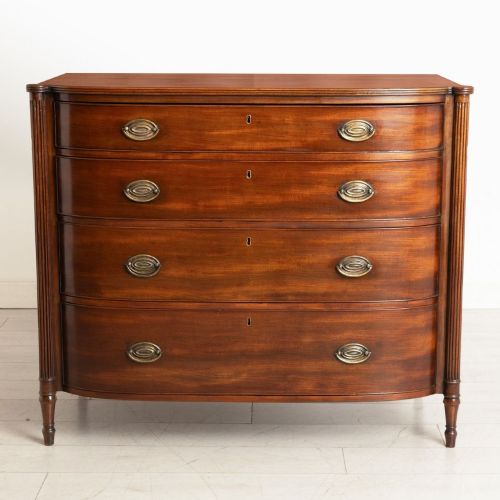
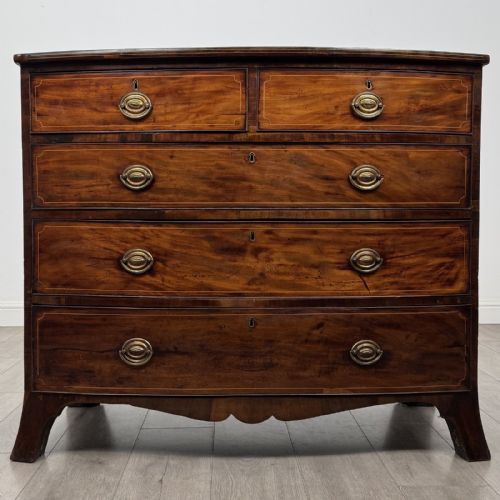
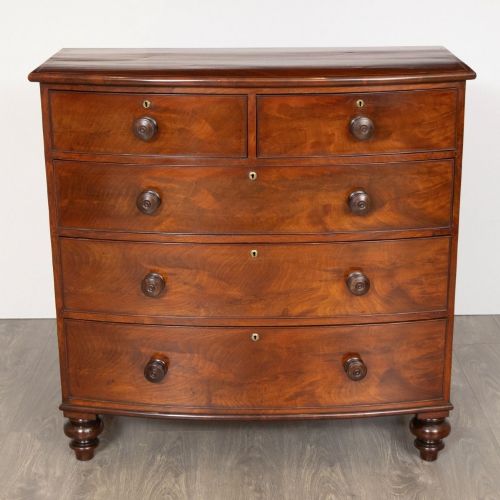
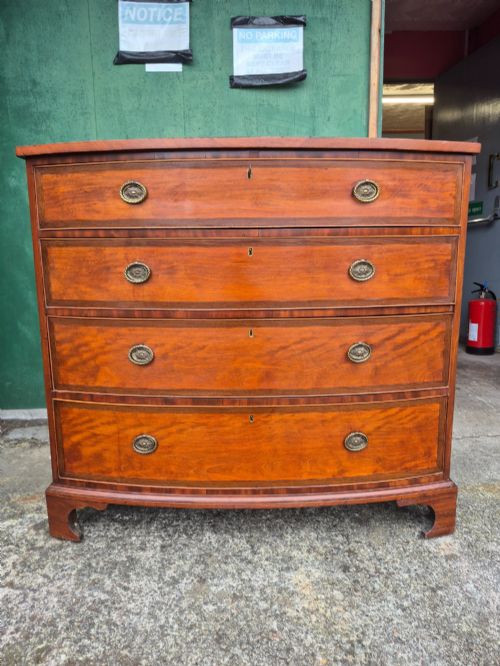
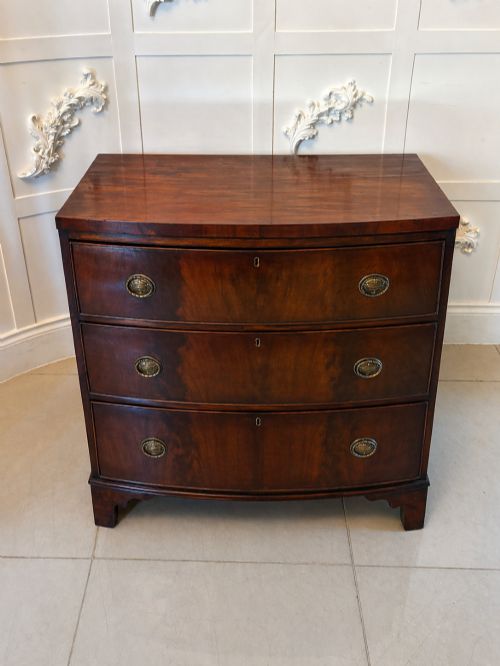
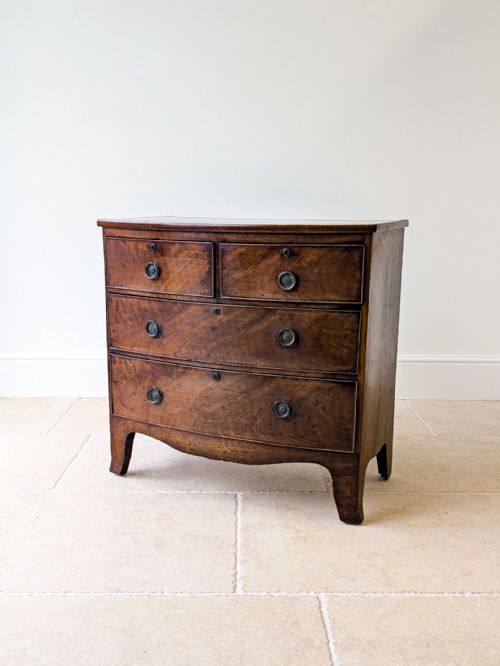
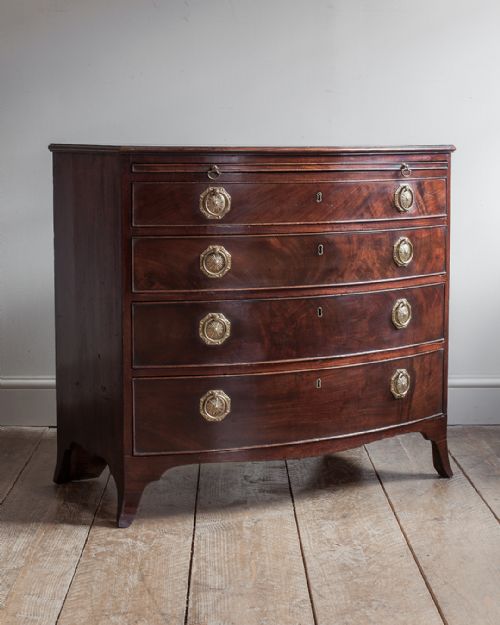
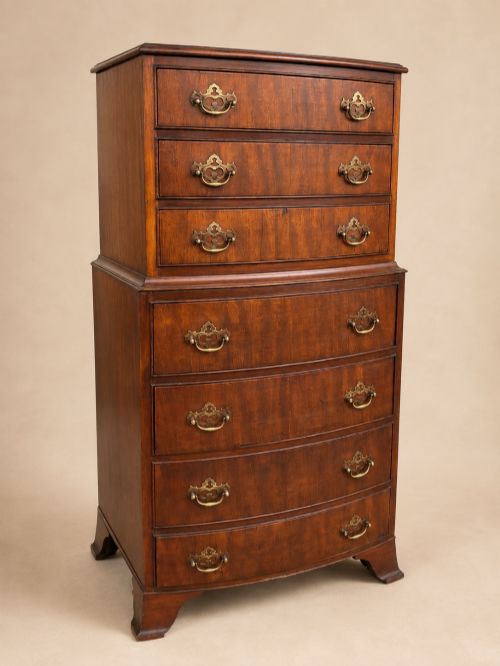
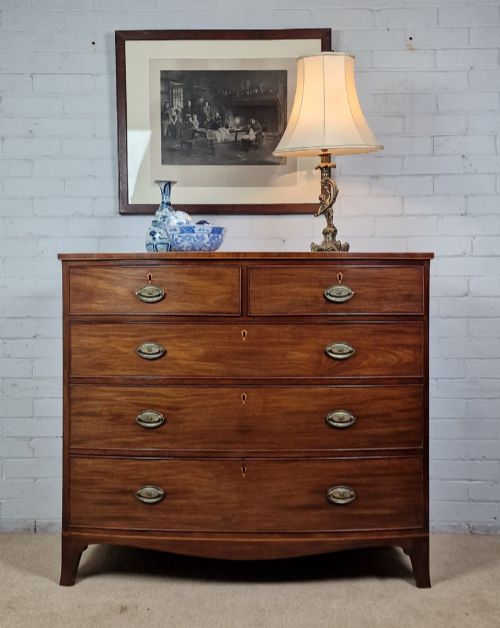
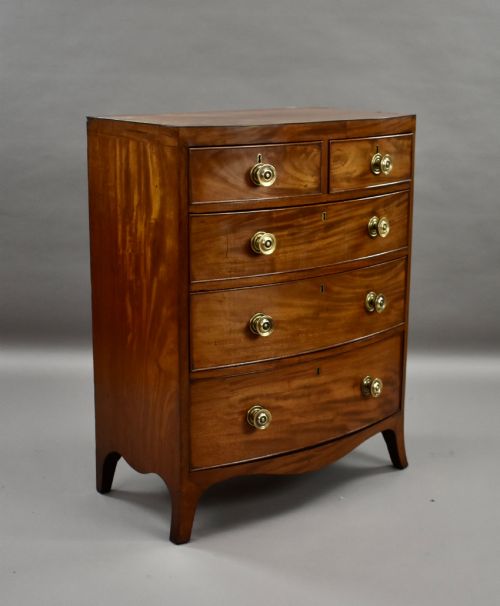
The dominant form on this page is the mahogany bow-front chest of drawers, spanning the late eighteenth century through to the nineteenth century. These items range from compact, narrow proportions suitable for smaller spaces to large, imposing chests on chests.
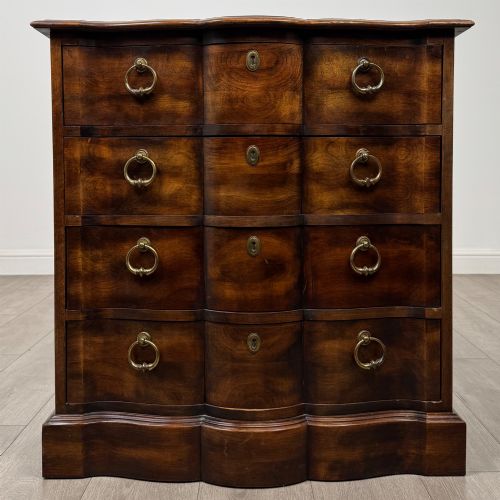
Makers utilised various regional interpretations, including English bow-fronts and continental variations such as French marble-topped commodes and Dutch bombe shapes. Secondary forms like console tables and side tables also appear with curved timber profiles.
Materials and construction methods
Makers built these pieces predominantly using solid timber carcasses overlaid with wood veneer, choosing mahogany as the primary structural and visual medium. Flame mahogany veneer and figured walnut provide distinct grain patterns across the curved drawer fronts.
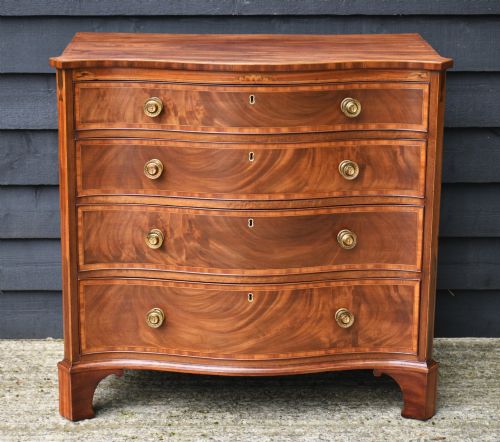
Cabinetmakers integrated contrasting details such as boxwood and satinwood inlay to frame the drawers and top surfaces. Structural hardware relies heavily on cast brass handles and escutcheons fitted to the curved drawer faces.
Curved Front Wooden Drawers Retail Price Guide 2026
Typical asking prices for curved front wooden drawers among the pieces listed under this phrase on Sellingantiques today, from the lower quarter to the upper quarter. They describe what is for sale here now, not the wider market.
Listings feature woods including mahogany, walnut, and painted surfaces, spanning Georgian, Regency, and Victorian periods.
Distinctions in craftsmanship and finish
Quality rests in the precision of the curved joinery and how evenly the wood grain follows the radius of the bow or serpentine front. Superior examples maintain structural integrity in the drawer runners and side panels despite the natural expansion and contraction of curved timber over centuries.
The choice and application of veneer dictate the visual hierarchy, with book-matched flame mahogany or intricate boxwood inlay marking out finer workshops. Original brass hardware, crisp cock-beading around the drawer edges, and untouched patination further separate standard items from exceptional ones.
The Curved Front Wooden Drawers Glossary
- Bow front
- A convex curved front that swells outward in the centre, commonly found on Georgian and Regency chests of drawers. This shape softens the rectangular geometry typical of case furniture.
- Serpentine front
- A curved front featuring a concave centre flanked by convex outer sections, or vice versa, creating an undulating line. It demands advanced woodworking skill to execute properly.
- Chest on chest
- A tall case furniture piece consisting of a smaller upper chest stacked directly upon a larger lower chest, often called a tallboy. These units maximise vertical storage capacity.
- Veneer
- A thin layer of figured wood applied over a secondary timber base to create decorative surfaces. Flame mahogany veneer uses highly-figured wood grain for dramatic visual effect.
- Cock-beading
- A small, rounded moulding projecting around the edges of drawer openings or drawer fronts. This detail protects the drawer edges and provides a neat visual border.
Curved Front Wooden Drawers: Frequently Asked Questions
How do I date a curved wooden chest?
Dating relies on timber choice, handle design, and construction methods visible inside the drawers and carcass. Earlier pieces from the Georgian period often feature hand-cut dovetails and oak linings, whereas Victorian examples tend to use deal or pine for internal secondary woods.
stylistic details such as the sharpness of the bow front, the presence of boxwood inlay, and the type of bracket or French feet also indicate the era of manufacture.
Where should I place a bow front chest?
These chests suit entryways, bedrooms, or living rooms where a softer silhouette helps break up a room lined with flat-fronted furniture. Their curved projection works well against walls where sharp corners might interrupt a walkway.
measuring the depth carefully is essential, as the outward-swelling bow shape extends further into the room than a standard flat chest of drawers.
Are curved drawers harder to maintain?
Curved drawers require the same basic care as standard antique furniture, involving stable indoor humidity and occasional application of appropriate wax polish. The primary difference lies in the drawer fit.
because timber moves with humidity changes, drawers curved to a specific radius must remain in their original slots to ensure smooth operation within the bowed carcass.
What is the difference between bow front and serpentine?
A bow front curves outward in a single continuous convex sweep from side to side. It offers a simpler, more restrained rounded profile.
a serpentine front combines both convex and concave curves in an S-curve formation, presenting a more complex and undulating visual rhythm across the piece.