
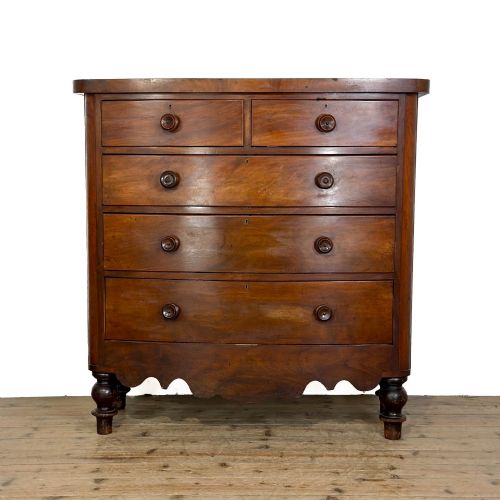
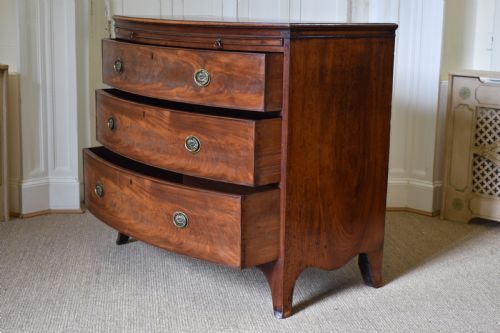
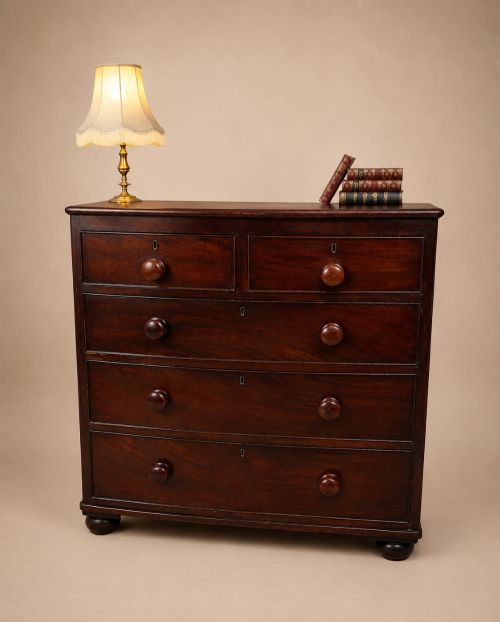
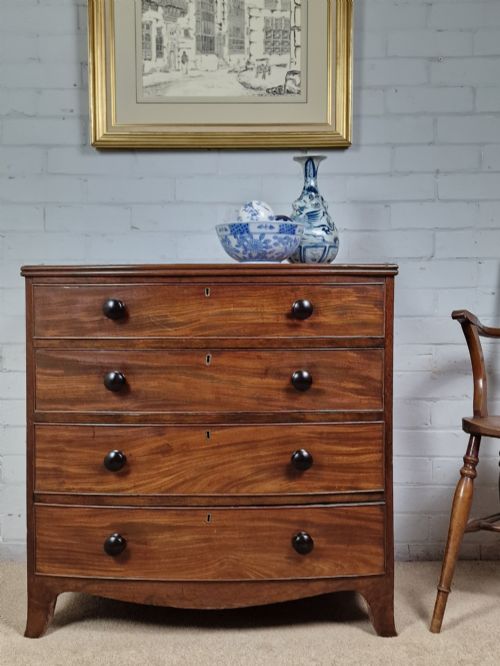
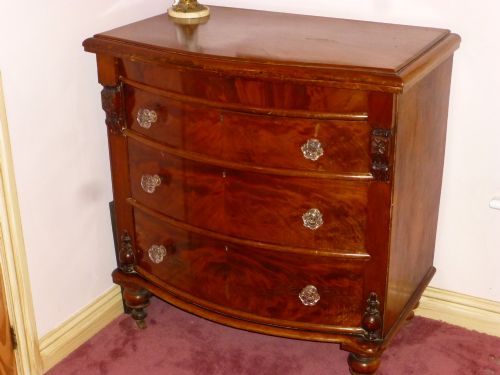
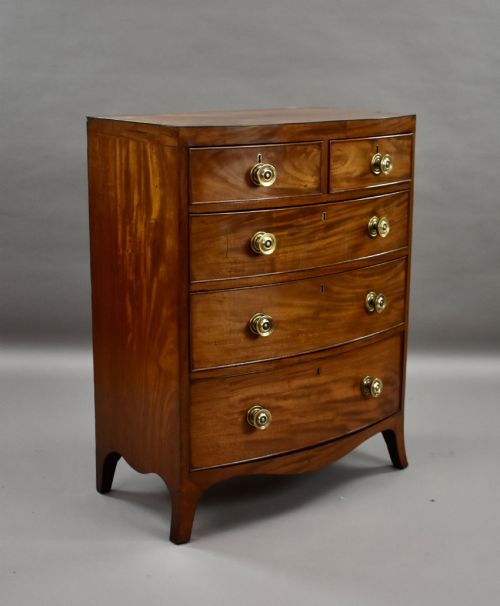

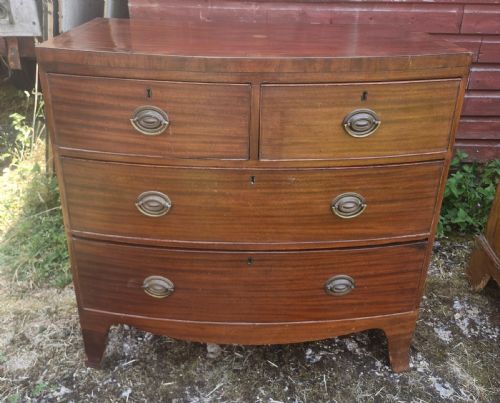
Curved Front Mahogany Dresser
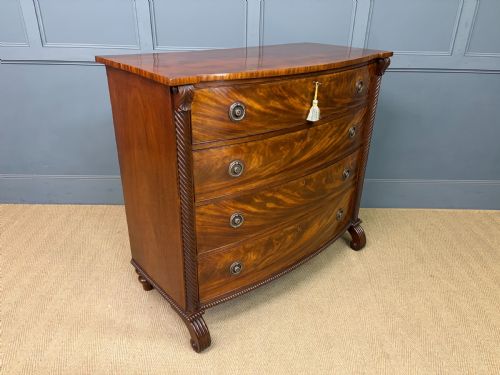
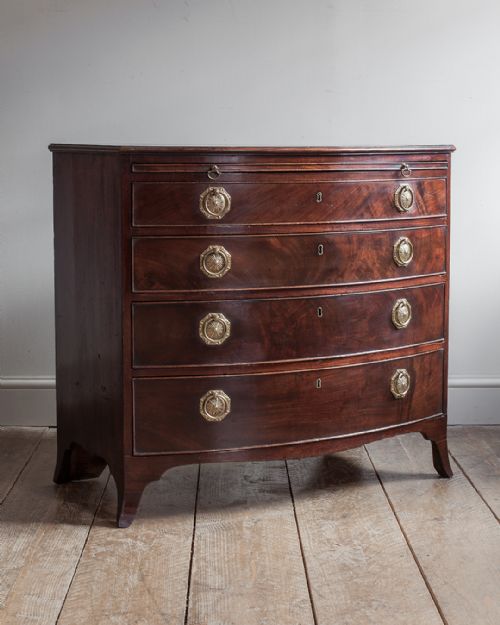
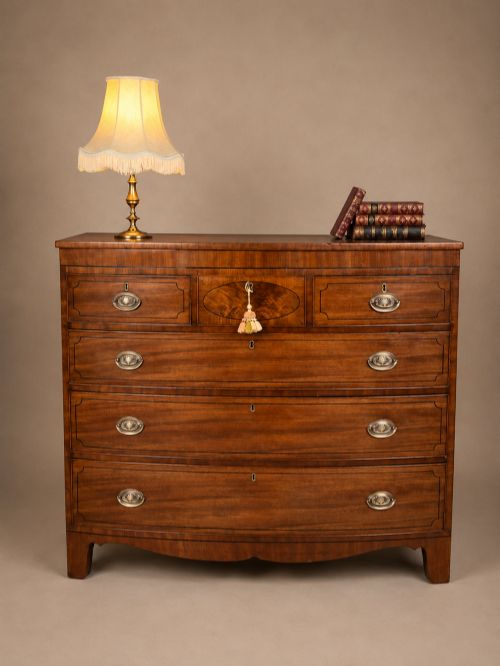
A curved front mahogany dresser brings warm timber and gentle, sweeping lines to any room.
Curved Front Mahogany Dresser
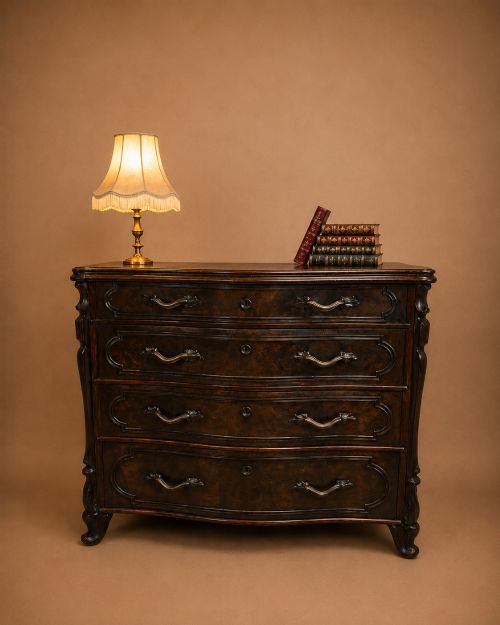
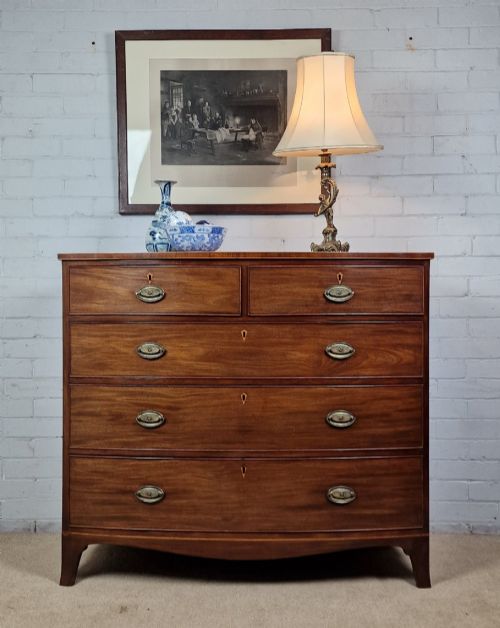
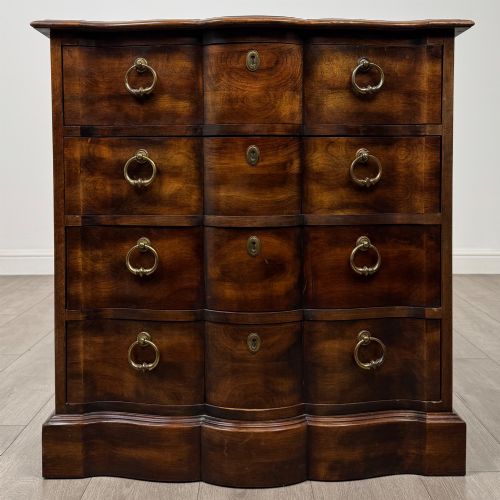
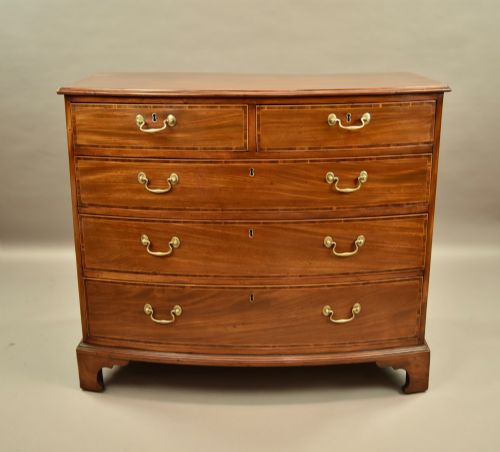
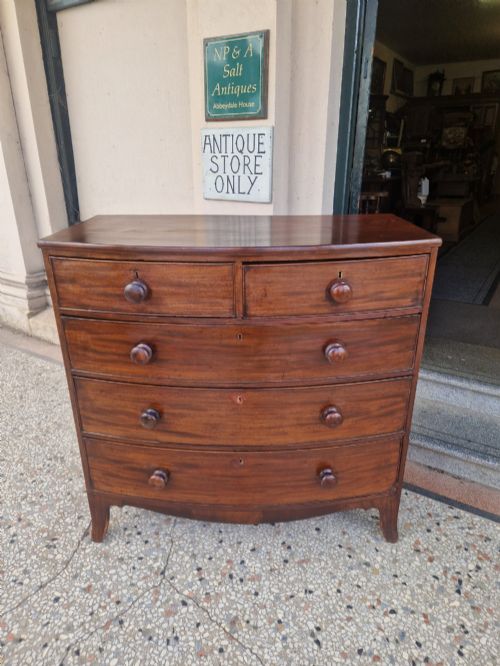
A curved front mahogany dresser typically takes the form of a bow front or serpentine chest of drawers, designed to offer generous storage while softening the rigid corners of a room. These pieces appear across Georgian, Regency, and Victorian periods, reflecting shifting tastes in domestic furniture over the centuries.
Buyers browsing this selection will most frequently encounter nineteenth-century examples and George III pieces, constructed with characteristic proportions and deep drawer capacities. Sideboards also emerge within this category, presenting a broader silhouette for dining spaces.
The combination of curved woodwork and rich timber grain defines the visual appeal of these items, linking eighteenth-century cabinet-making traditions with later revival styles.
Materials and construction methods
Cabinet-makers relied heavily on solid mahogany and flame mahogany veneer applied over secondary woods like pine and oak, achieving depth and movement in the surface grain. Brass handles and escutcheons provided functional contrast against the dark timber.
Inlaying techniques introduced delicate lines of boxwood and satinwood into the primary surfaces, showcasing the precision of period joinery. Carved details and shaped drawer fronts required advanced skill to bend and fit the timber precisely to the frame.
Factors influencing quality
The integrity of the timber veneer and the crispness of the curved drawer fronts dictate the overall standard of a piece. Finer examples display continuous grain matching across the drawers, demonstrating deliberate planning by the maker.
Subtleties in secondary woods, such as the use of oak for drawer linings rather than softer alternatives, point to higher-grade manufacturing. The fluidity of the bow or serpentine sweep reveals the confidence and expertise behind the construction.
The Curved Front Mahogany Dresser Glossary
- Bow front
- A convex curved front projecting outward from the frame. This shape softens the profile of a chest of drawers and reflects Regency design preferences.
- Serpentine
- A front profile featuring a convex centre flanked by concave curves, creating an undulating line. It demands exceptional skill from the cabinet-maker.
- Flame mahogany
- A veneer cut from the fork of the mahogany tree where the branch meets the trunk. It produces a distinctive flame-like pattern across the drawer fronts.
- Boxwood inlay
- Narrow strips of pale boxwood embedded into darker wood to create contrasting geometric borders. This decorative technique appears frequently on Georgian pieces.
- Secondary wood
- Timber used in hidden structural areas of a piece, such as drawer sides and carcass backs. Pine and oak commonly serve this purpose in mahogany furniture.
Curved Front Mahogany Dresser: Frequently Asked Questions
How do I date a mahogany chest?
Dating relies on examining the construction methods, handle styles, and timber characteristics. Earlier pieces from the George III era often feature fine dovetailing and subtle inlay work.
Victorian examples tend to have heavier proportions and darker finishes, while Regency pieces showcase clean lines and figured veneers.
Where should I place a curved dresser?
These dressers suit hallways, living rooms, and bedrooms where their sweeping lines can be appreciated without blocking narrow walkways. Their generous drawer depth provides practical storage for clothing or linens.
Positioning them away from direct sunlight protects the mahogany finish and preserves the rich colour of the timber.
What is serpentine furniture?
Serpentine furniture incorporates a wavy front with a convex centre and concave sides. This complex shape requires advanced woodworking skill to execute properly.
Such pieces represent the height of fashionable design in eighteenth and nineteenth-century cabinet-making.