
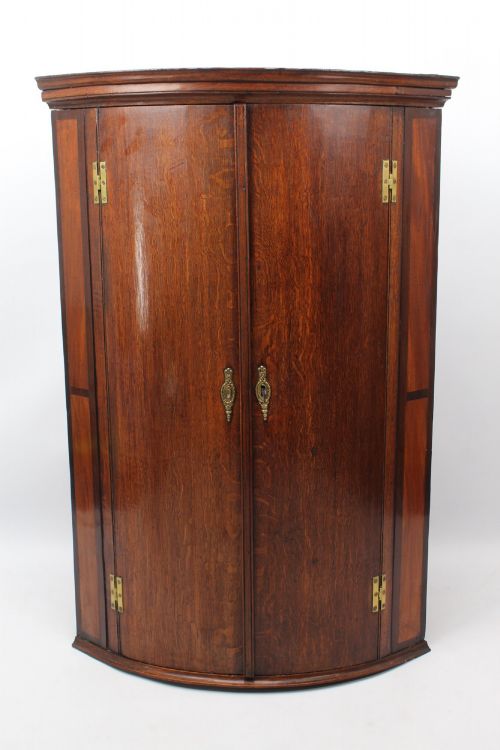


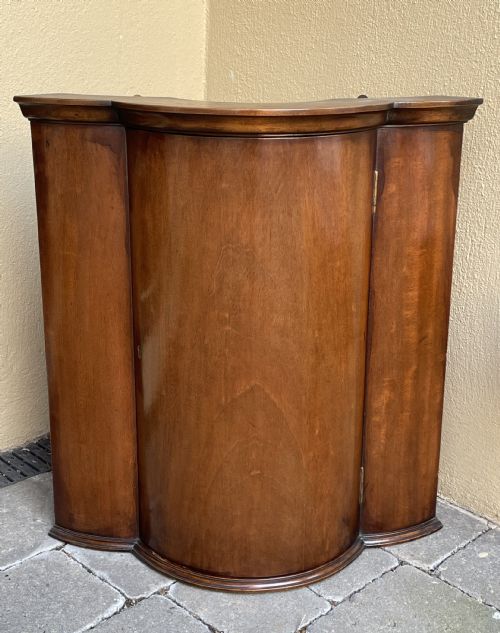


Curved Front Display Cabinet
A curved front display cabinet offers glass and polished wood to hold precious things, coming to you in Victorian, Edwardian, and nineteenth-century forms.
Curved Front Display Cabinet
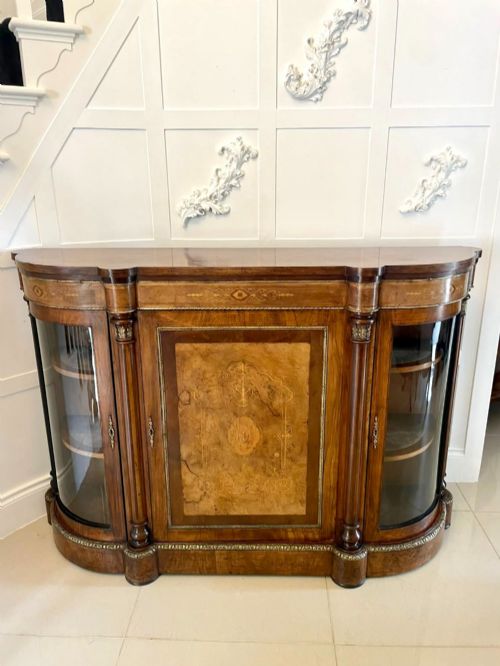
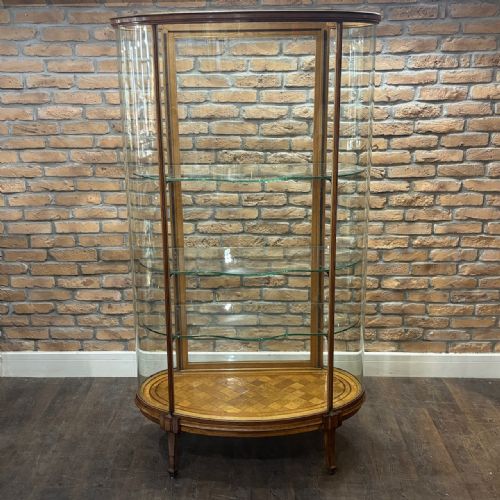
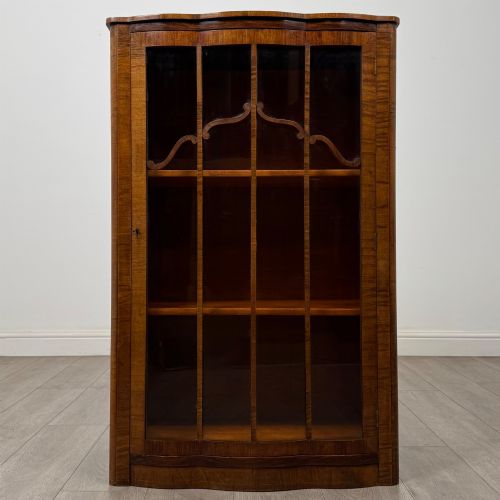
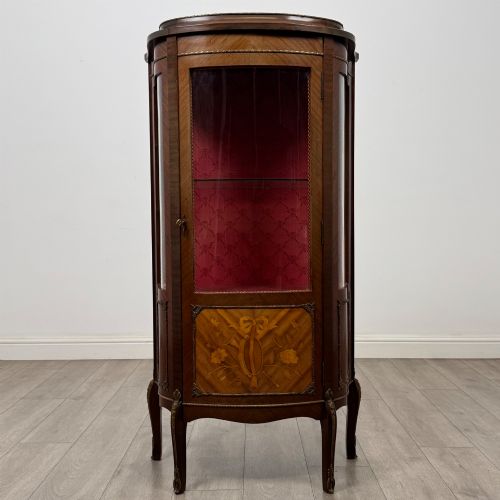
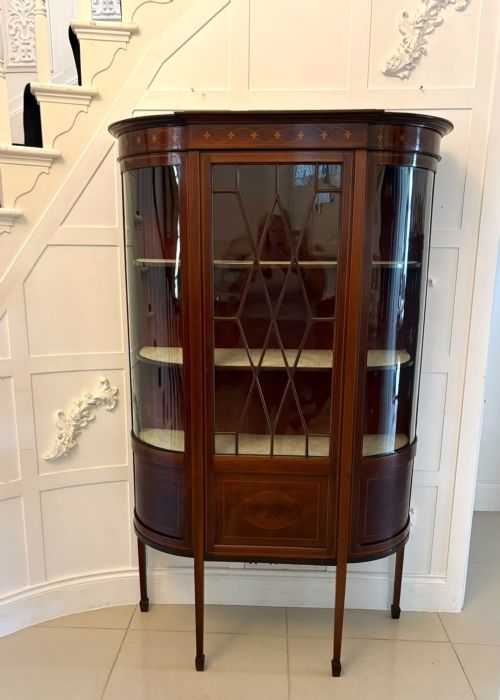
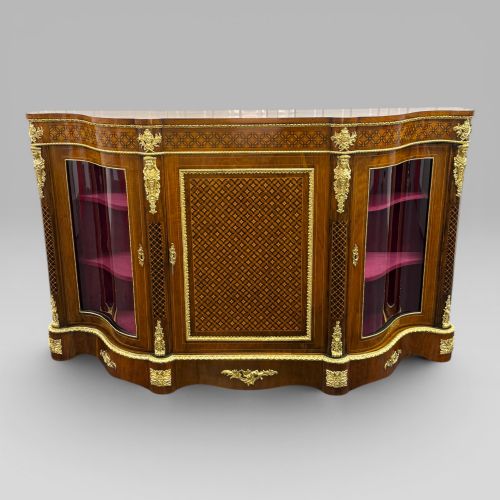
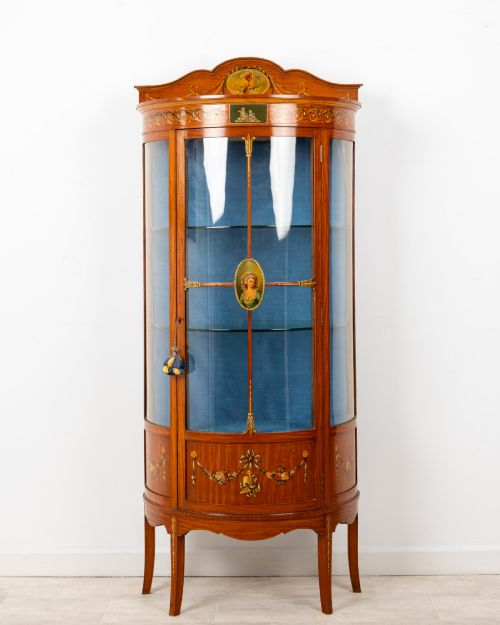
A curved front display cabinet collects light across glass panels and polished timber surfaces, holding china, books, or ornaments inside domestic rooms. The selection includes Victorian and Edwardian examples alongside nineteenth-century iterations, spanning bow-ended credenzas, corner cabinets, and freestanding vitrines.
Makers shaped these bodies with serpentine contours, bow fronts, and concave lines that soften rigid corners. Walnut, burr walnut, mahogany, and satinwood provide the primary timber foundations, paired with glazed doors to reveal shelved interiors.
Materials and construction
Cabinet makers built these frames using solid timbers and decorative veneers such as burr walnut, kingwood, and mahogany over supportive woods like oak. Timber selection defined the character of each piece before workers applied marquetry in fruitwood, floral patterns, or brass stringing.
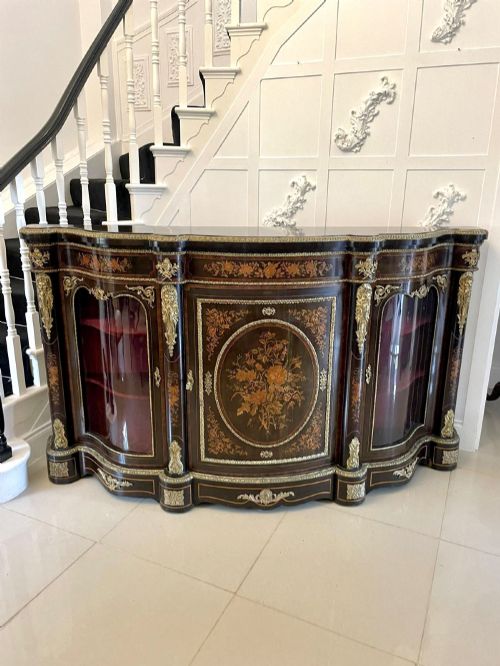
Glass required careful bending for bow and serpentine doors, held by timber glazing bars or framed in cast ormolu mounts. Ormolu mounts, brass handles, and fabric linings completed the construction.
Listings span Victorian, Edwardian, and eighteenth-century periods, utilising mahogany, burr walnut, satinwood, and ormolu.
Distinctions in quality
Quality rests upon the precision of the timber matching, particularly in figured burr walnut and symmetrical marquetry panels. The handling of serpentine and bow-fronted glass demands advanced joinery to ensure doors open smoothly against curved frames.
The integration of cast ormolu mounts and finely chased brass details separates standard production items from exhibition pieces. Finer workshops invested heavily in hand-painted surfaces, intricate fruitwood inlays, and durable internal shelving.
F. Sage & Co·Maison Gagneau·Edwards & Roberts
The Curved Front Display Cabinet Glossary
- Serpentine
- A shape featuring a convex centre flanked by concave curves, creating a fluid line across the front of a cabinet. This profile required skilled carpentry to achieve symmetry.
- Ormolu
- Gilded bronze mounts applied to furniture edges and corners for decorative contrast. It added a metallic sheen alongside polished mahogany or walnut.
- Marquetry
- Decorative veneer patterns formed from pieces of different coloured wood fitted together into a design. Floral motifs and scrolls frequently decorate Victorian and Edwardian doors.
- Vitrine
- A glass-fronted display cabinet designed specifically for showing porcelain and small objects. These pieces often incorporate mirrored backs to reflect light.
- Bow front
- A cabinet front that curves outward in an arc. It softens the silhouette and expands internal display room.
Curved Front Display Cabinet: Frequently Asked Questions
Where should I place a curved front display cabinet?
Position these cabinets in living rooms or dining spaces away from direct sunlight to protect fragile timber veneers and historical fabric linings.
Ensure adequate floor space for the projecting arc of bow or serpentine doors to swing open fully without obstruction.
How do I care for the wood and glass?
Clean the timber surfaces using a dry cloth and apply occasional high-grade wax to maintain the polish of walnut and mahogany without building up residue.
Clean glass panels with a mild solution, taking care to keep moisture away from brass fittings, ormolu mounts, and timber joins.
What is the difference between a credenza and a vitrine?
A credenza typically presents a lower, broader silhouette with central cupboards flanked by curved glass ends, often sitting beneath a mirror.
A vitrine stands taller with extensive glass on multiple sides to showcase collections from various angles.
How do I distinguish Edwardian pieces from Victorian ones?
Victorian examples frequently employ heavy burr walnut, rich marquetry, and substantial ormolu mounts, reflecting mid-nineteenth-century taste.
Edwardian cabinets tend to favour lighter satinwood, delicate painted decoration, and simpler mahogany frames with airier proportions.