



Curved French Marble Commode
A curved french marble commode brings sweeping serpentine lines and cool stone surfaces straight from continental salons into a room.
Curved French Marble Commode
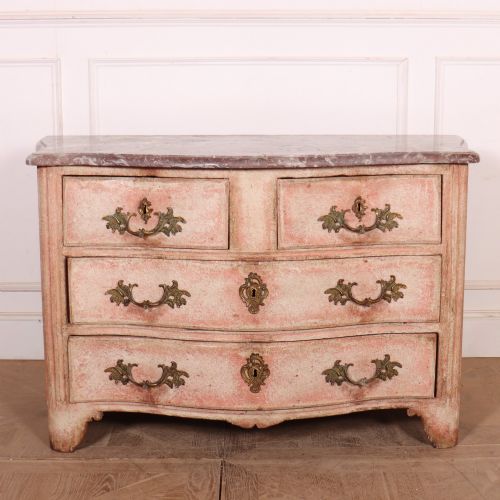
A curved french marble commode is a low storage chest designed with a rounded or undulating front, topped by a heavy slab of polished stone. These pieces emerge from periods ranging through the eighteenth, nineteenth and early twentieth centuries, spanning Louis styles and revival movements.
The most common examples on this page take the form of bombes or serpentine chests finished in rich veneers or paint, carrying heavy marble tops. They serve as striking sideboards or statement cabinets in domestic interiors, offering deep drawers or cupboard space behind graceful facades.
How they were made
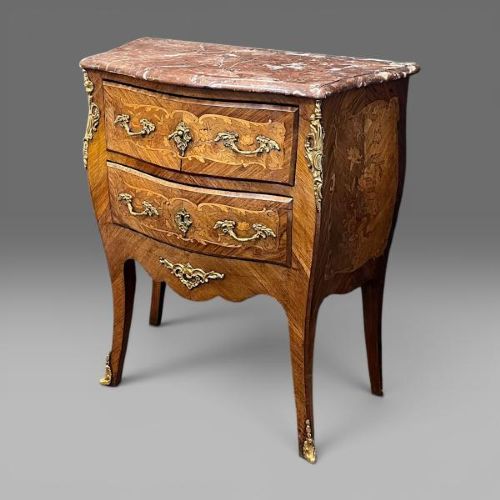
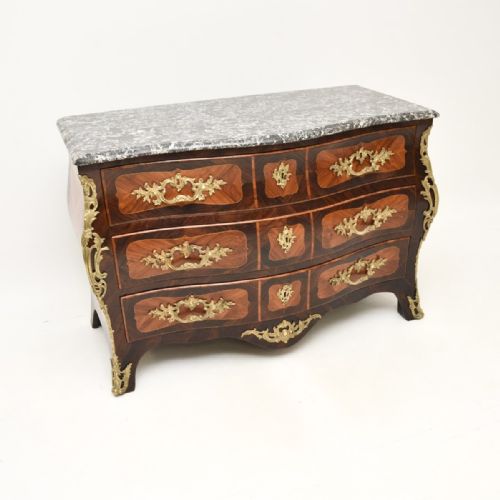
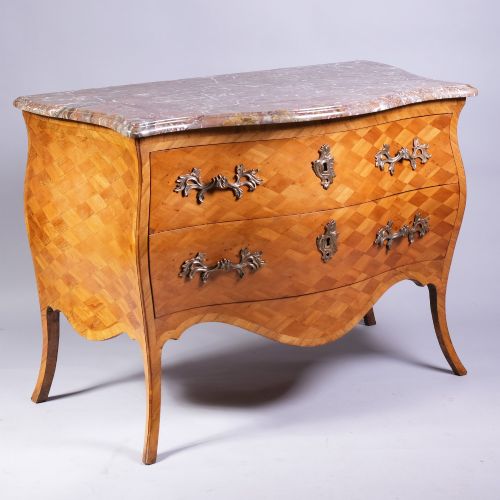
Cabinetmakers built these curved carcasses using sturdy timbers like walnut or oak as a base, then applied decorative veneers of kingwood, rosewood or walnut in intricate marquetry and parquetry patterns. Some surfaces received layers of paint or Chinoiserie decoration rather than wood veneers.
Heavy marble slabs were cut and shaped to follow the precise serpentine or bombe contours of the wooden chest beneath. Cast or chased ormolu and gilt bronze mounts were then fixed to the corners, handles and feet to accent the sweeping lines.
Curved French Marble Commode Retail Price Guide 2026
Typical asking prices for curved french marble commode among the pieces listed under this phrase on Sellingantiques today, from the lower quarter to the upper quarter. They describe what is for sale here now, not the wider market.
Listings feature pieces spanning from the eighteenth century through the 1930s, utilising marble, ormolu, kingwood, walnut, and paint.
What varies in quality
The refinement of the timber veneers and the intricacy of the marquetry set the baseline for a piece's sophistication. Skilled artisans arranged grain patterns and floral motifs with strict symmetry across challenging curved surfaces.
The weight and finish of the marble top, alongside the crispness of the cast ormolu mounts, distinguish standard production from exceptional cabinetmaking. Superior mounts are deeply chased and fitted flush to the timber contours.
Jacques Bircklé·Mercier Frères
The Curved French Marble Commode Glossary
- Bombe
- A swollen or bulging out shape that curves outward on the front and sides of a cabinet. This silhouette demands advanced woodworking skill to achieve balanced proportions.
- Ormolu
- Gilt bronze mounts applied to furniture corners, feet and drawer pulls for decorative contrast. The technique involves treating metal with a gold amalgam.
- Marquetry
- Inlaid wood veneers arranged to form decorative pictures or geometric patterns across a surface. Artisans cut different coloured woods to fit tightly together.
- Parquetry
- Geometric wood inlay patterns such as cubes or chequers arranged across a panel. It provides texture and visual depth without figurative designs.
- Demi-lune
- A half-moon shape with a flat back and a curved front edge. Side cabinets in this profile fit neatly against walls while projecting softly into the room.
Curved French Marble Commode: Frequently Asked Questions
How do I style a marble top commode?
The stone surface provides a durable display area for lamps, mirrors or decorative objects without risking wood damage. Keeping the surrounding decor balanced lets the curved wooden body and mounts stand out.
These cabinets anchor hallways, living rooms or dining spaces as focal points of traditional or eclectic interiors.
Are these commodes practical for daily storage?
Most pieces provide deep drawer space or cupboard interiors behind their decorative facades. The internal depth accommodates household linens, tableware or everyday items securely.
Buyers should check individual drawer runners and internal dimensions to match their specific storage requirements.
How do I distinguish revival pieces from older ones?
Nineteenth-century revival pieces often replicate earlier Louis styles using machinery alongside traditional hand-finishing techniques. Examining internal drawer construction and wood ageing helps clarify the date.
Both eighteenth-century originals and later interpretations share the same decorative vocabulary of mounts and veneers.