
Curved Burr Walnut Cabinet
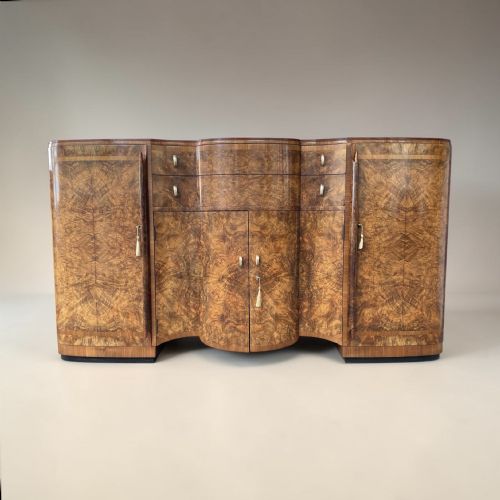
These curved burr walnut cabinet pieces combine rich figuring with sweeping lines, offering substantial presence and refined storage for the home.
Curved Burr Walnut Cabinet
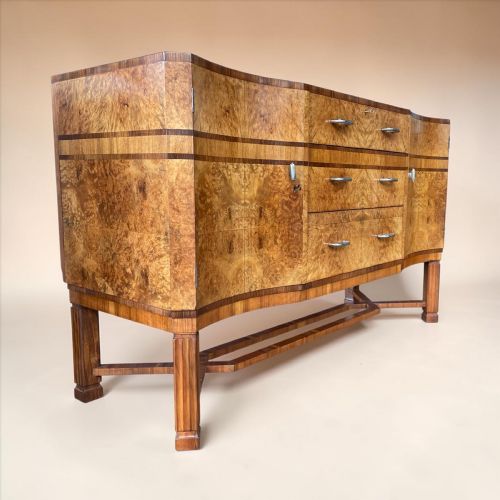
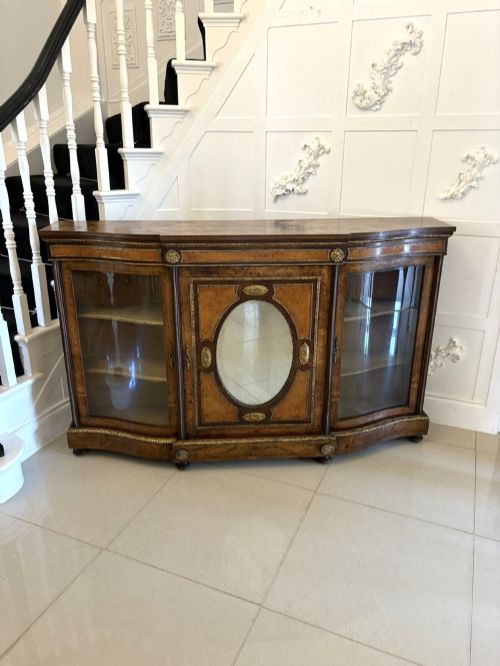
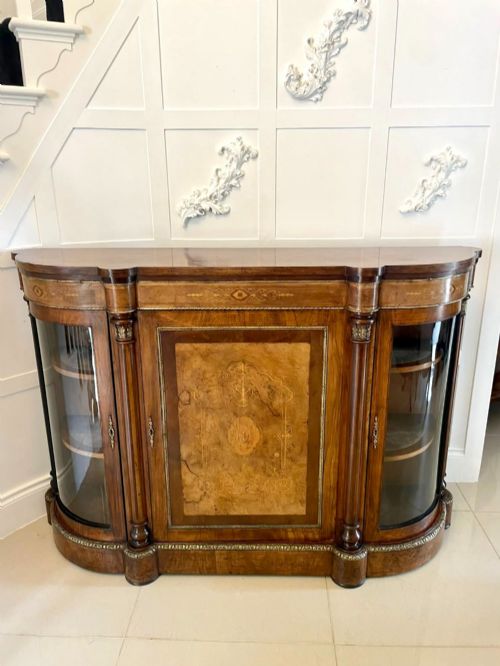
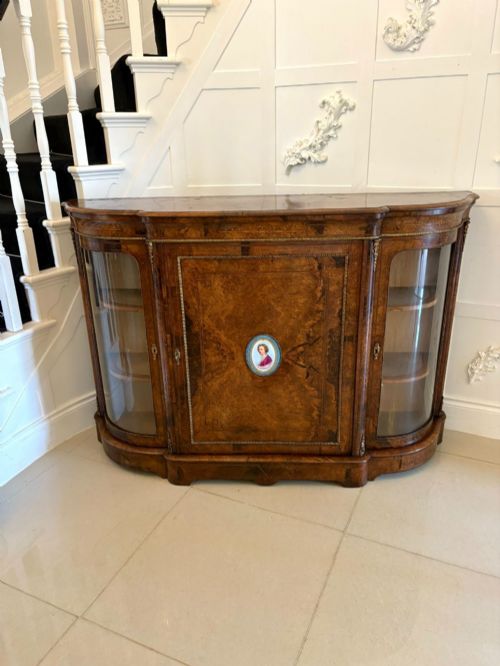
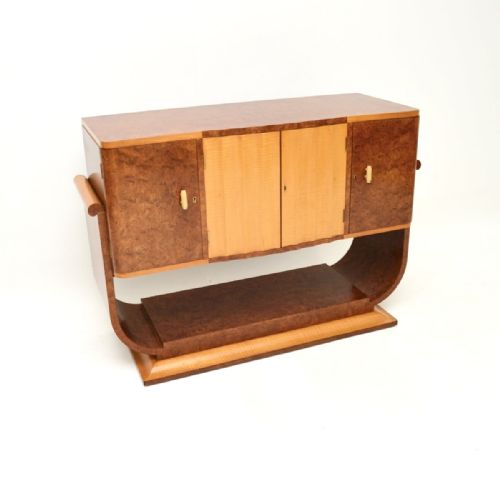
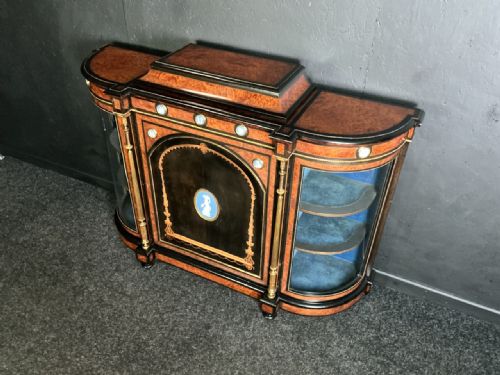
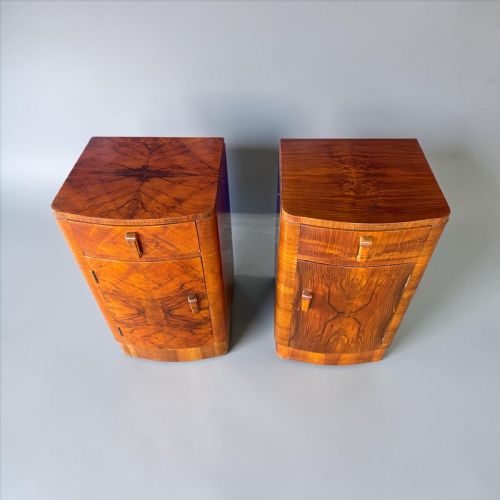
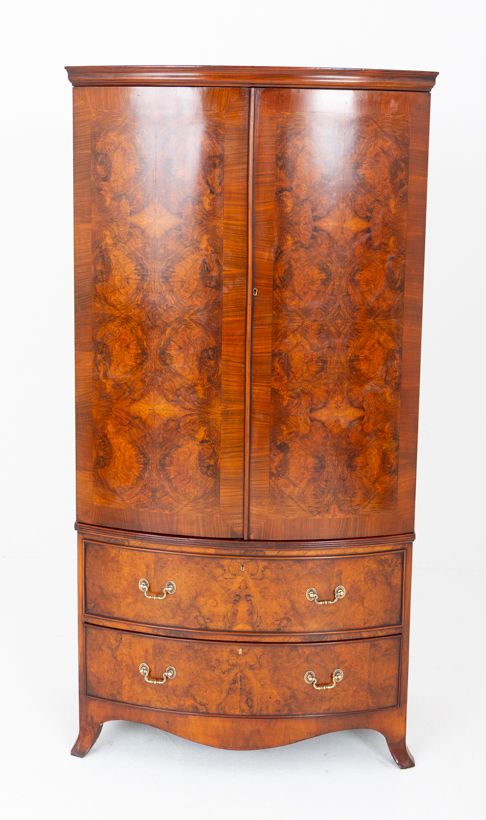
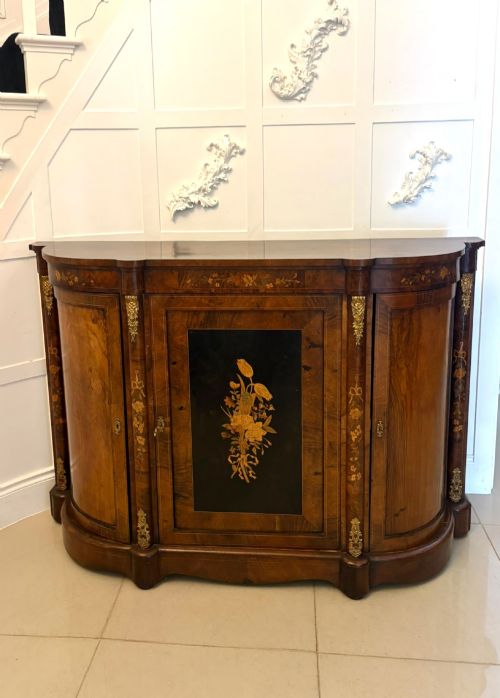
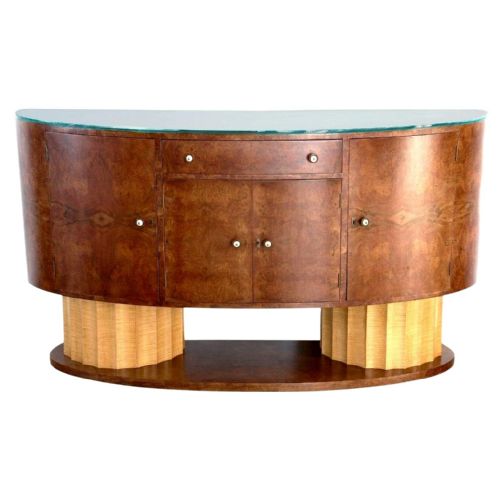
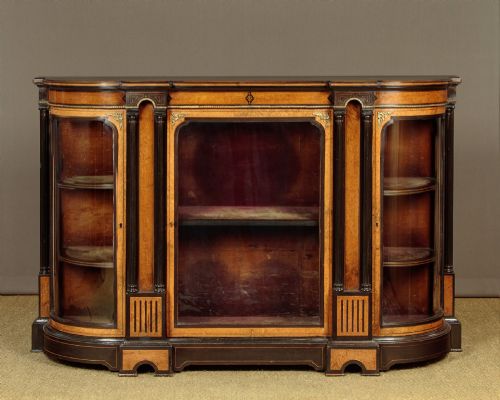
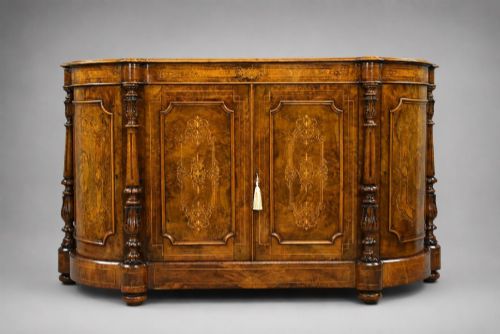
Buyers seeking a curved burr walnut cabinet examine a variety of forms including credenzas, sideboards, cocktail cabinets, and display pieces originating from the Victorian period through to the Art Deco era of nineteen thirty. The Victorian examples often present serpentine or bow fronts adorned with marquetry and ormolu mounts, while later twentieth-century iterations lean into streamlined geometric curves paired with contrasting woods like sycamore.
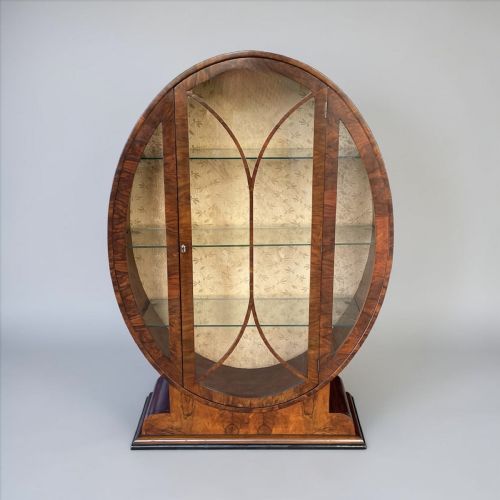
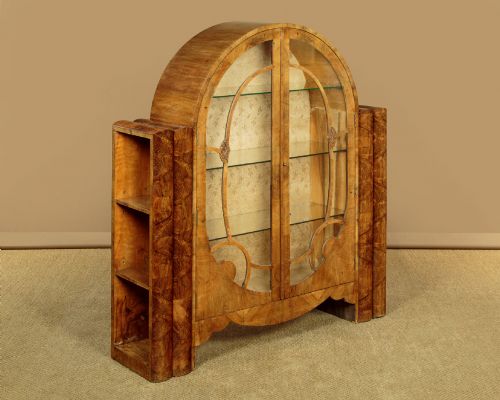
The credenza and side cabinet dominate the earlier nineteenth-century selections, bringing substantial timber forms and glazed side compartments into domestic reception rooms. Meanwhile, the nineteen thirty pieces introduce modern curved display cabinets and cocktail units that utilise the dramatic grain patterns of the walnut timber to striking effect without heavy carving.
Origins span English workshops and continental makers, with styles ranging from revivalist Louis XV and Aesthetic Movement pieces to functional Art Deco design. This variety ensures that whether a room calls for mid-Victorian formal elegance or early twentieth-century modernism, the underlying warmth of the walnut grain remains constant.
How they were made
Cabinet makers achieved curved profiles by applying fine burr walnut veneers over solid secondary timbers, carefully matching the swirling grain across doors and panels. This technique allowed workshops to maximise the visually complex patterns found in walnut burls, creating symmetrical patterns known as matched veneers.
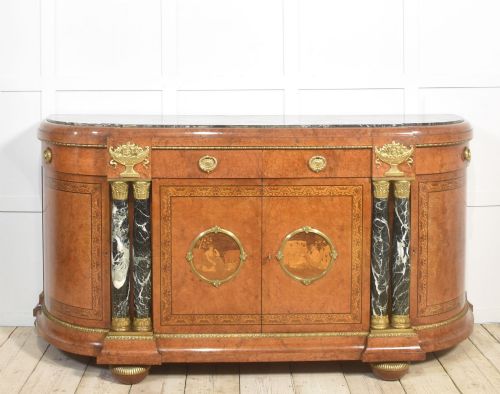
Mounts in cast ormolu, delicate boxwood inlay, and inset porcelain plaques were integrated into Victorian and revival pieces to accent the dark timber. In later Art Deco pieces, construction relied on clean lines and contrasting veneers like sycamore, allowing the natural figuring of the wood to serve as the primary ornament.
Some Art Deco cocktail cabinets hide their spirited contents behind sweeping curves of burr walnut, ready for the evening summons.
What varies in quality
The distinction between ordinary and exceptional pieces rests upon the density and symmetry of the burr walnut figuring across the curved surfaces. Top-tier examples exhibit seamless veneer matching that follows the contours of the cabinet without interruption or clumsy patching.
Finishing touches such as crisply chased ormolu mounts, intricate boxwood marquetry, and the integration of original porcelain plaques separate standard production furniture from exhibition-quality works. Furthermore, the structural integrity of the curved doors and the smoothness of their movement indicate the original standard of craftsmanship.
Maurice Adams·Harry and Lou Epstein·Hille·Hamptons of Pall Mall London
The Curved Burr Walnut Cabinet Glossary
- Burr walnut
- A wood harvested from the wart-like growths on walnut trees, prized for its swirling, highly figured grain patterns. It is sliced into thin veneers for application onto cabinet surfaces.
- Credenza
- A low-profile cabinet, typically featuring a central cupboard flanked by curved glazed side compartments. Popular in the Victorian era, it served both display and storage purposes.
- Ormolu
- Gilded bronze mounts cast in decorative motifs and applied to furniture corners and panels. This technique is frequently seen on nineteenth-century revival pieces.
- Marquetry
- The art of applying pieces of veneer to a structure to form decorative patterns and pictures. Boxwood is commonly utilised for this contrasting inlay work.
- Sycamore
- A light-coloured hardwood frequently paired with darker walnut in Art Deco pieces. It provides a sharp visual contrast in twentieth-century cabinet design.
Curved Burr Walnut Cabinet: Frequently Asked Questions
How do I date a curved burr walnut cabinet?
Dating relies on structural clues and decorative vocabulary. Victorian pieces incorporate heavy ormolu mounts, floral marquetry, and serpentine shapes, whereas nineteen thirty Art Deco examples feature minimalist curves and contrasting sycamore veneers.
Examining the interior timbers and construction methods also helps narrow down the decade. Earlier nineteenth-century carcasses often show traditional hand-cut joinery, while twentieth-century pieces reflect more standardised workshop practices.
Were these cabinets used in dining rooms?
Many sideboard and credenza forms were designed specifically for the dining room to store silver, linen, and glassware. Their long surfaces also served to display serving dishes during meals.
Other variations, such as cocktail cabinets and display pieces, were intended for drawing rooms and reception spaces. These formats focused on hospitality and the exhibition of decorative ceramics.
How do I care for burr walnut veneer?
Walnut benefits from stable room conditions away from direct sunlight and strong heat sources. Maintaining consistent humidity prevents the delicate burr veneers from drying out or lifting.
Polishing should be done sparingly using traditional wax suitable for antique furniture. Avoid modern silicone-based sprays, which can penetrate the finish and damage the timber over time.