



Curved Arm Wooden Chairs
Curved arm wooden chairs combine structural elegance and seating comfort, spanning Regency elegance to sturdy vernacular seating.
Curved Arm Wooden Chairs
Curved arm wooden chairs encompass a diverse selection of seating forms designed with rounded supports for the arms, appearing in styles from the Regency period through the Art Deco era. Buyers searching for curved arm wooden chairs will encounter regional variations including English Windsor designs, French bridge chairs, and Swedish Biedermeier armchairs. These pieces function primarily as desk chairs, armchairs, and rocking chairs suited to domestic studies and living spaces.
The selection on this page relies heavily on nineteenth-century craftsmanship alongside twentieth-century iterations such as Thonet bentwood pieces. Materials range from native elm, oak, and beech to exotic birchwood and mahogany, often featuring incorporated elements of leather, fabric, and brass. Whether seeking a solid oak desk chair from the late nineteenth century or a low armchair from the nineteen-thirties, buyers find distinct historical forms shaped by their respective eras.
How they were made
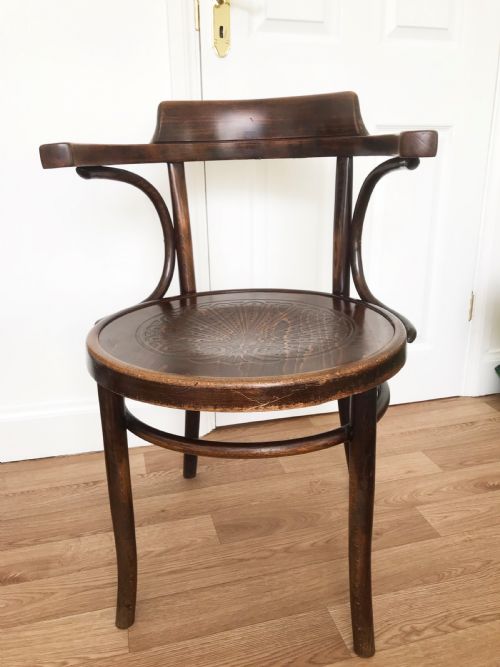
Makers utilised solid hardwoods such as mahogany, elm, beech, and oak, shaping timber through steam bending or traditional joinery to achieve rounded armrests. Steam bending allowed manufacturers like Thonet to curve beech into continuous loops for bentwood rocking chairs and desk chairs. Artisans also employed mortise and tenon joints to secure the structural framework of Windsor and elbow chairs.
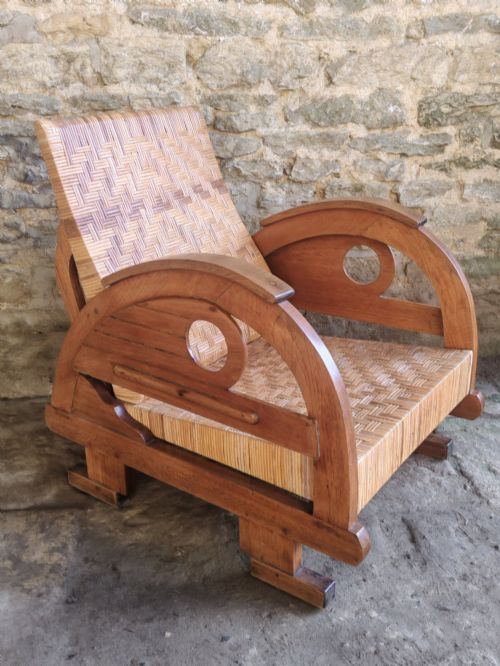
Surface ornamentation and detailing varied according to the style and origin of the chair, incorporating brass inlays, ebonised finishes, and lacquer work. Upholstered versions integrated fabric, leather, and cushions supported by rattan or webbing. These construction methods ensured both the rigidity of the wooden frame and the comfort of the seat.
Materials documented in current pieces include elm, yew, birchwood, mahogany, brass, and rattan.
What varies in quality
Quality in these chairs rests upon the selection of timber and the integrity of the curved construction, distinguishing robust architectural frames from weaker structures. Grain continuity in bentwood and steam-bent arms demonstrates superior craftsmanship compared to pieced-together timber. The precision of joinery, particularly where the curved arms meet the backrest and supports, determines long-term stability.
Decorative embellishments further separate standard utility seating from finer examples, such as intricate brass inlay, fine ebonising, or specialised lacquer work. The choice of primary woods, moving from standard beech to figured mahogany, birchwood, or yew, elevates the standing of the piece. Preservation of original surface finishes and structural components maintains the integrity of the design across different periods.
The Curved Arm Wooden Chairs Glossary
- Bentwood
- Wood that has been heated with steam to make it pliable and then bent into curved shapes. This technique defines the construction of nineteenth-century rocking chairs and bistro seats.
- Windsor chair
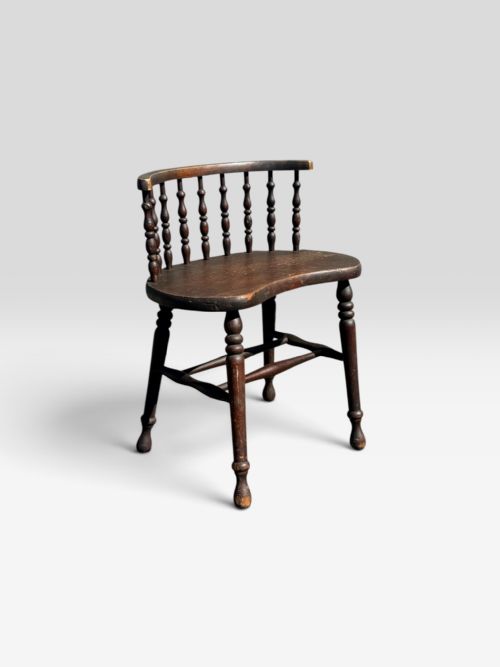
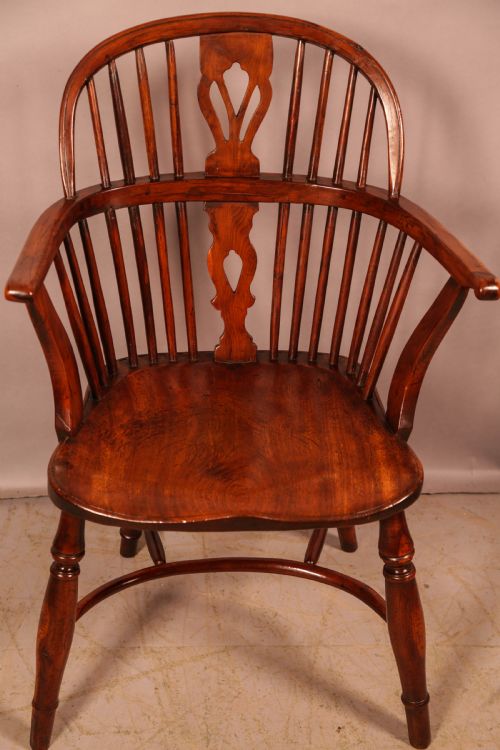
- A chair built with a solid wooden seat into which the legs and back spindles are direct-inserted. These vernacular pieces frequently feature low or high backs with integrated wooden arms.
- Biedermeier
- A Central European style from the nineteenth century characterised by utilitarian comfort and clean lines without excessive ornamentation. Birchwood and ebonised details frequently appear in this tradition.
- Bridge chair
- A compact armchair originating in France, typically designed with low curved arms for occasional seating. They often date to the early twentieth century.
- Sabre leg
- A concave sweeping leg shape that tapers toward the foot, commonly found on Regency mahogany desk chairs. This classical form echoes ancient Greek furniture designs.
Curved Arm Wooden Chairs: Frequently Asked Questions
How do I identify a Thonet chair?
Thonet pieces utilise steam-bent beechwood to create flowing, continuous curved frames that integrate the arms and backrest. Many examples from this maker take the form of light desk chairs or rocking chairs.
Examination of the structural joins reveals the characteristic smooth curves achievable only through advanced nineteenth-century steam-bending technology.
Where should I place a low armchair?
Low armchairs suit studies, bedrooms, and reading corners where a compact seating footprint is advantageous. Their reduced height allows them to sit comfortably beneath lower desks or beside occasional tables.
Pairs of these chairs function effectively opposite a fireplace or flanking a central piece of furniture.
What is the difference between an elbow chair and a desk chair?
Elbow chairs generally feature decorative arms designed for occasional seating or dining use, often echoing Sheraton or vernacular styles. Desk chairs prioritise functional mobility and support for working environments, frequently incorporating swivels or sturdy wooden frames.
Both forms utilise curved wooden arms to provide upper body support during extended periods of sitting.
How do I care for wooden armchairs with brass inlay?
Wooden frames require periodic dusting with a dry cloth and occasional treatment with suitable furniture wax to nourish the grain. Brass inlay elements should be cleaned gently without abrasive polishes to preserve the surrounding wood surface.
Keeping such chairs away from direct heat sources prevents the timber from drying and protects inlaid metals from loosening.