

Curved Credenza
A curved antique credenza brings sculptural presence and refined storage to a room, uniting architectural grace with period craftsmanship.
Curved Credenza
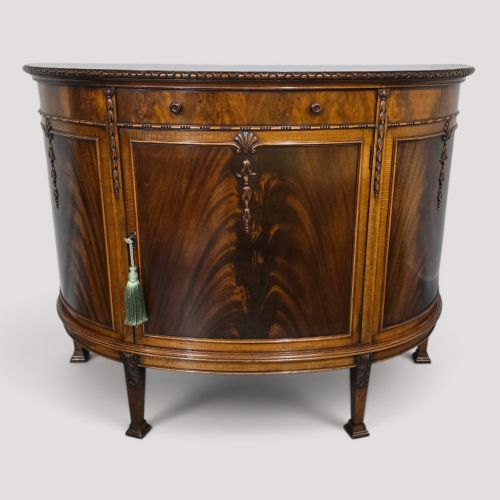
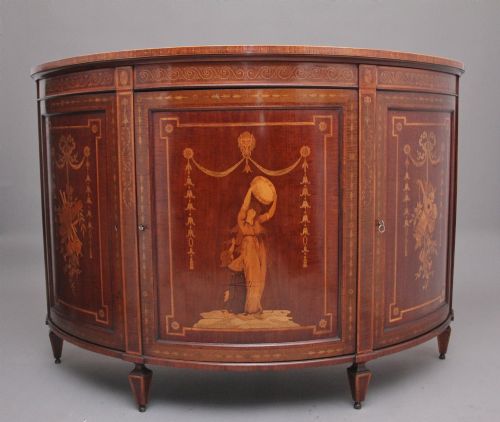
A curved antique credenza is a low, substantial cabinet designed primarily for display and storage, often featuring a serpentine, bowed, or demi-lune form. These pieces anchor dining rooms, drawing rooms, and hallways with their sweeping front profiles and architectural weight.
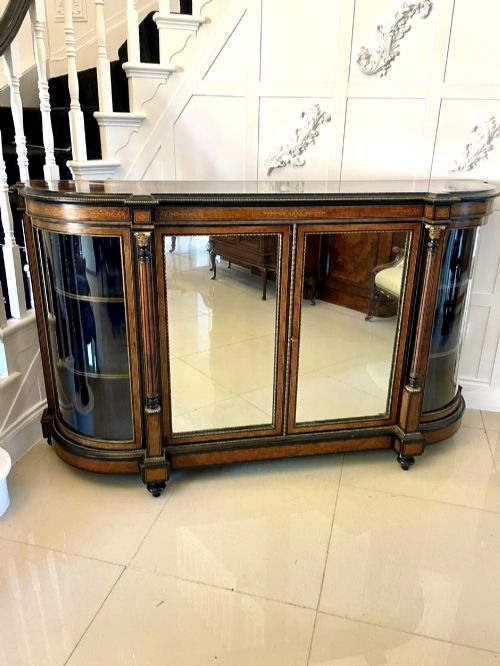
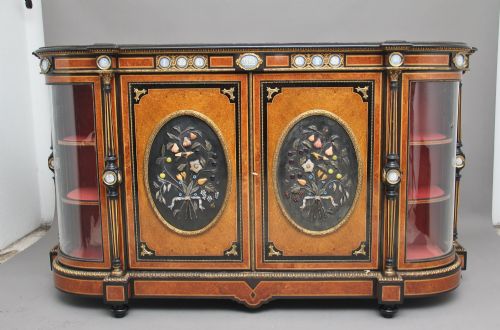
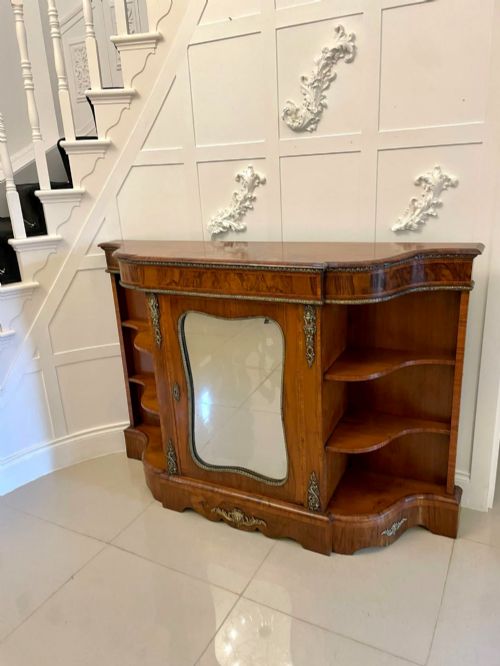
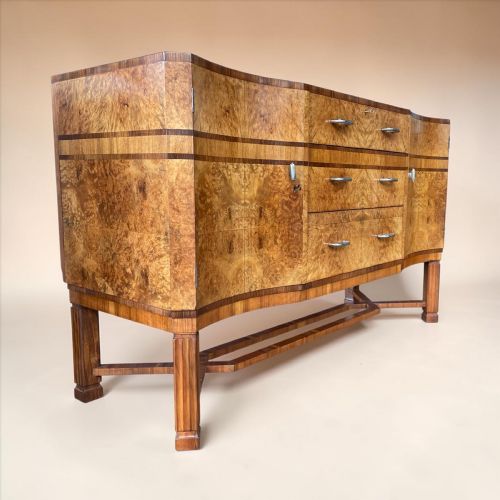
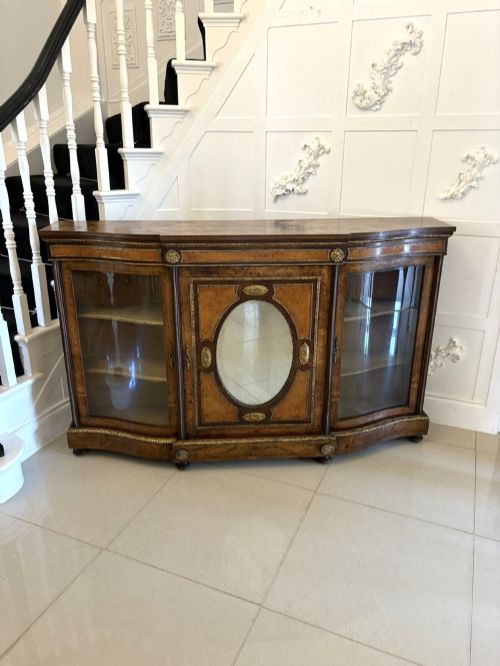
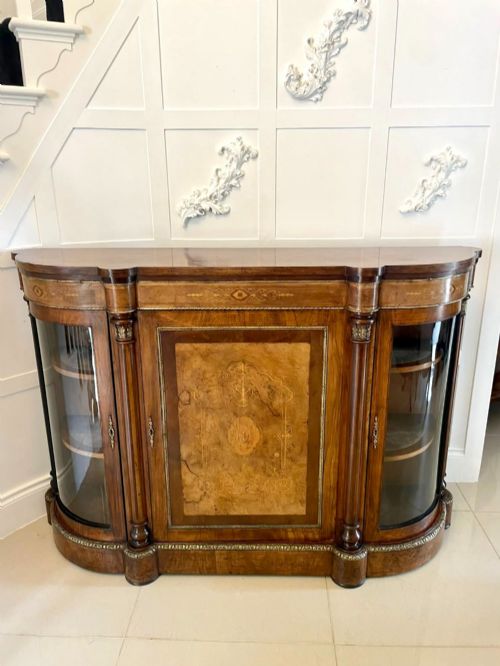
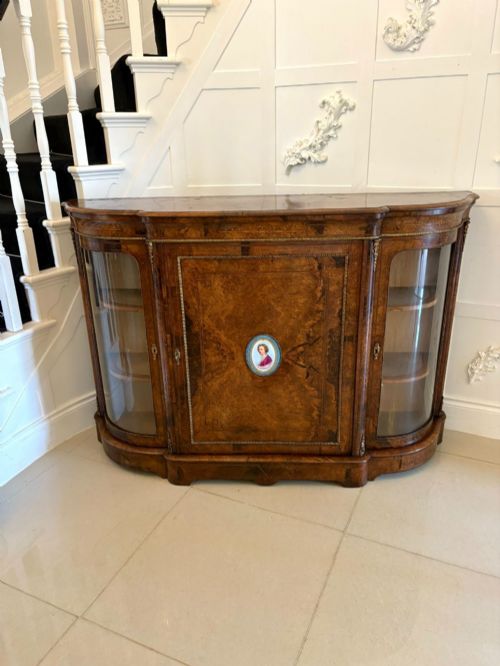
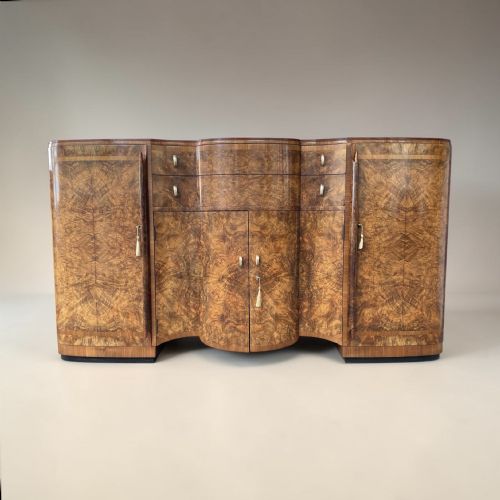
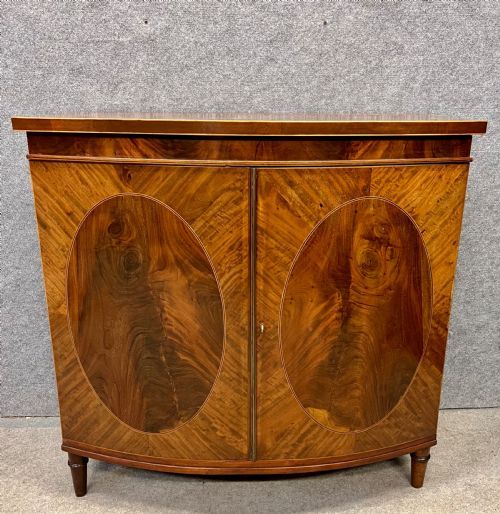
The version you are most likely to meet on this page is the Victorian burr walnut credenza, frequently embellished with floral marquetry and ormolu mounts. Alongside these sit later Art Deco iterations in burr walnut and sycamore, as well as Regency and Georgian mahogany sideboard forms.
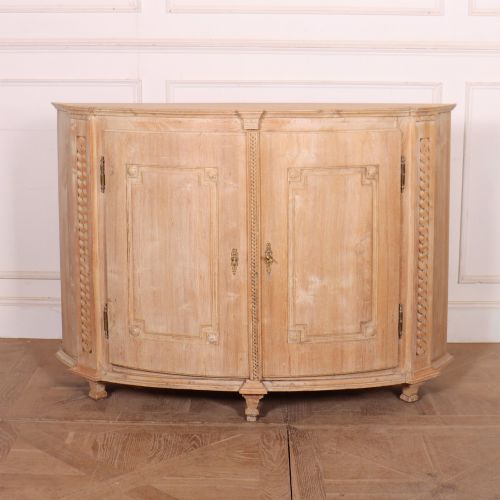
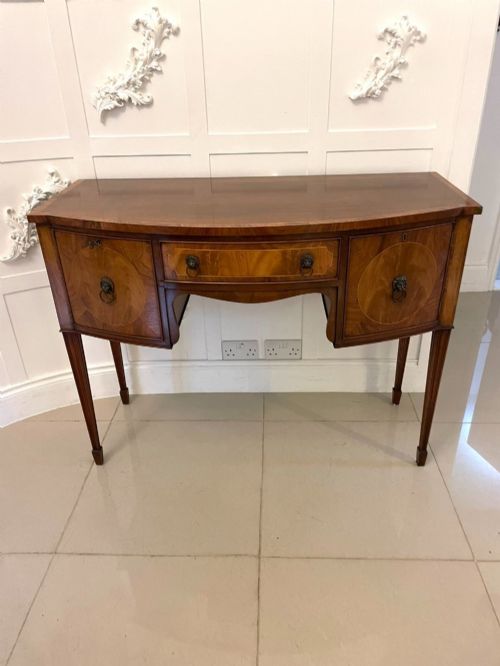
Makers and workshops across the nineteenth and early twentieth centuries utilised various curved silhouettes, ranging from serpentine shapes to bowed cupboards and marble-topped buffets. Each variation offers a specific proportion suited to formal entertaining or sophisticated daily storage.
Materials and construction methods
Cabinet makers built these pieces using solid and veneered timbers, selecting burr walnut, mahogany, amboyna, and kingwood for their rich grain patterns. Marquetry inlays of floral and geometric motifs adorn many surfaces, contrasting light woods against darker backdrops.
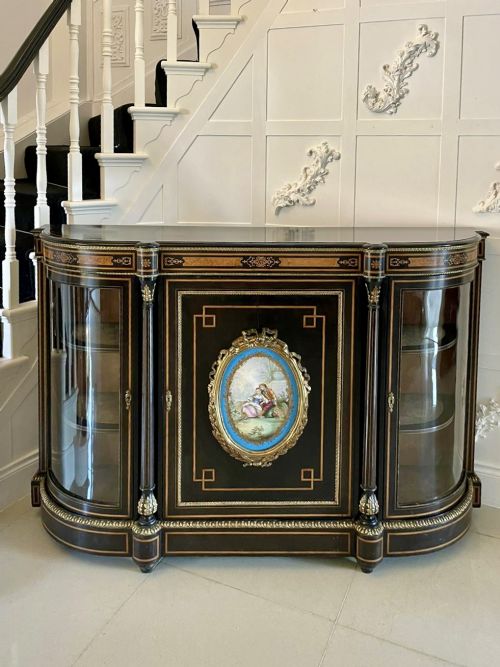
Mounts of gilt bronze or ormolu frame glass doors and corners, while marble tops feature on French and continental buffets. Ebonised wood and sycamore provide striking tonal contrasts, supported by meticulous joinery that accommodates curved cabinet fronts.
Some Victorian credenzas hide secret interior compartments behind intricate floral marquetry, rewarding close inspection.
Determinants of quality
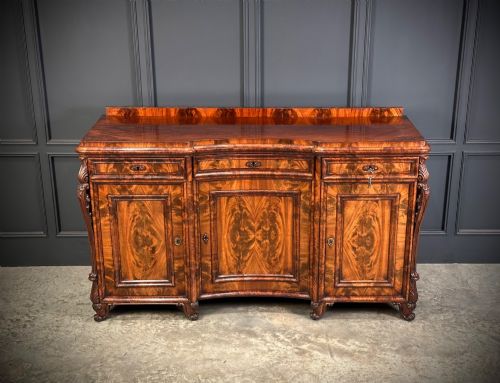
Quality rests in the selection of veneer timbers, such as highly figured burr walnut, and the precision of hand-cut marquetry. Finer examples display harmonious grain matching across curved doors and panels rather than random timber placement.
The sophistication of the cast ormolu mounts and the integration of curved glass panes distinguish superior work from simpler production. Structural integrity in the curved carcase and original hardware further separate exceptional pieces from standard workshop output.
Maurice Adams·Hille·Maison Gagneau·James Hicks
The Curved Credenza Glossary
- Ormolu
- Gilt-bronze mounts applied to furniture for decorative enrichment. These metallic accents highlight corners, pilasters, and panel borders on Victorian and French pieces.
- Marquetry
- Inlaid wood veneers arranged to form pictorial or decorative patterns. Craftsmen utilised various coloured timbers to create floral and geometric designs across cabinet doors.
- Serpentine
- A curved shape featuring a convex centre flanked by concave ends. This flowing contour adds dynamic movement to the front of a credenza or sideboard.
- Demi-lune
- Half-moon shape in furniture design, creating a flat back against the wall and a curved front. Cabinets and sideboards in this format fit neatly into alcoves and smaller wall spaces.
- Vitrine
- A glass-panelled cabinet designed for displaying porcelain and small objects. Many credenzas incorporate central or flanking vitrine sections behind curved glass.
Curved Credenza: Frequently Asked Questions
What is a curved antique credenza used for?
These cabinets served historically for displaying fine porcelain and storing dining silver or linens in formal rooms.
Today, they function as focal storage pieces in living areas or dining spaces, offering surface space for lamps and decorative objects.
How do I distinguish Victorian from Art Deco credenzas?
Victorian examples lean towards figured burr walnut, floral marquetry, ormolu mounts, and serpentine silhouettes.
Art Deco pieces favour clean lines, contrasting veneers like walnut and sycamore, and geometric simplicity without revival ornamentation.
Where should I place a curved cabinet in a room?
A serpentine or bowed cabinet suits flat wall spaces where its sculptural profile can be appreciated without obstruction.
Demi-lune variations fit well in narrower hallways or against smaller walls due to their flat backs.
What woods were commonly used?
Walnut and burr walnut dominate the nineteenth-century examples, often paired with amboyna, kingwood, and ebonised details.
Mahogany appears frequently in Georgian and Regency sideboard designs, alongside satinwood in later revival pieces.