

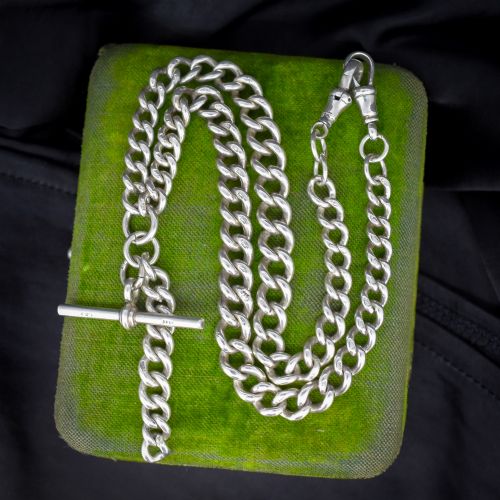
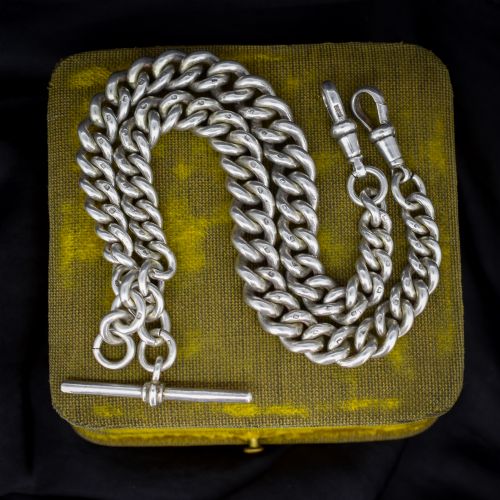
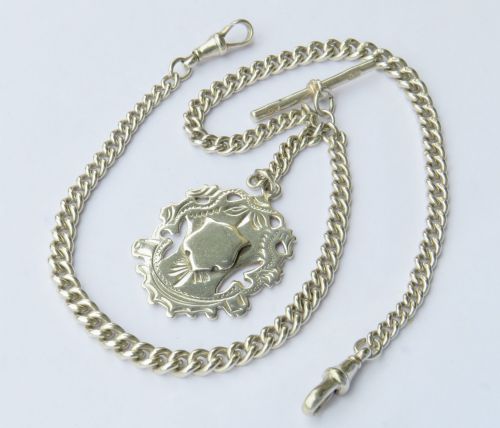
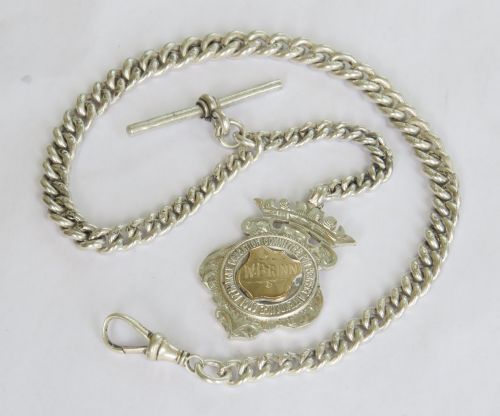
Curb Link Pocket Watch Chain
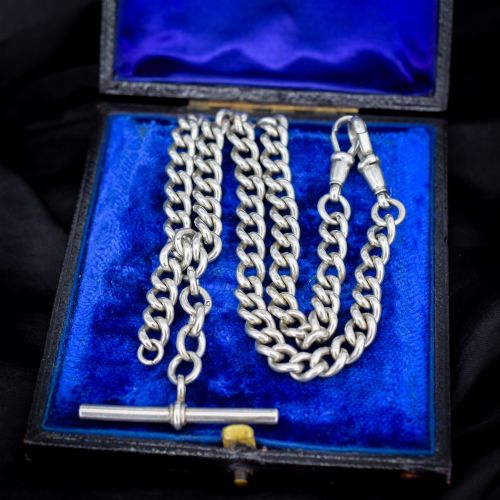
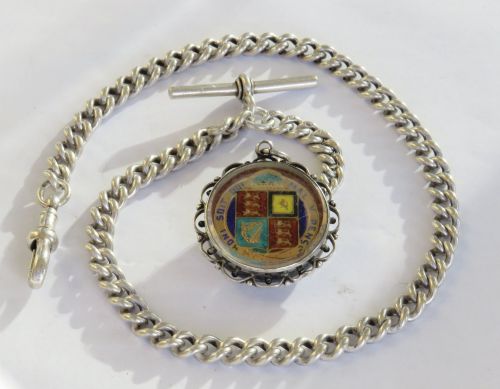
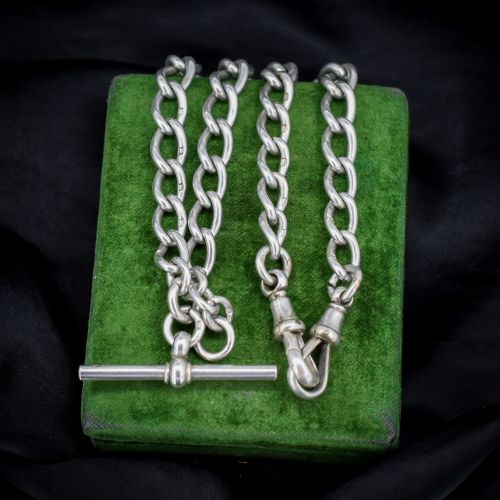
A curb link pocket watch chain is a heavy metal link strand designed to secure a timepiece while resting across a waistcoat.
Curb Link Pocket Watch Chain
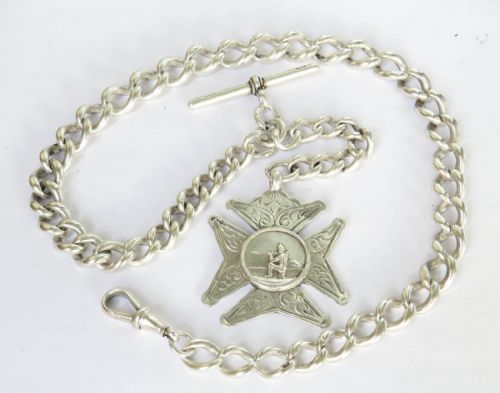
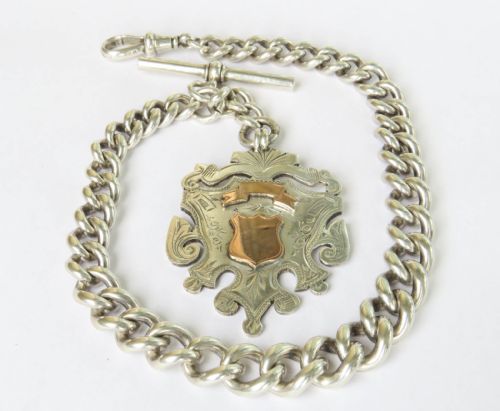
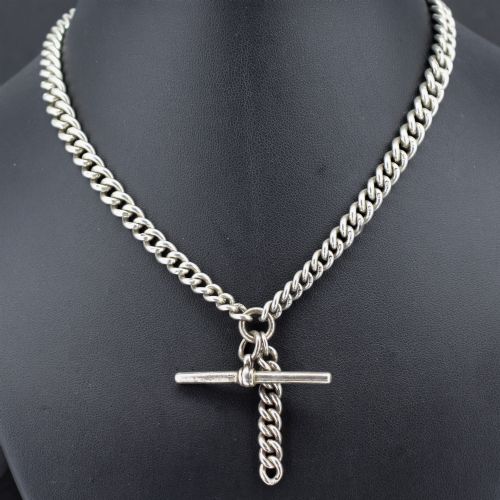
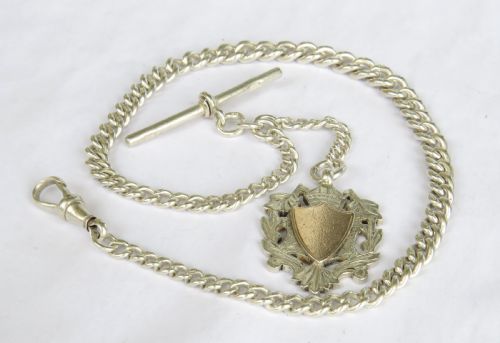
A curb link pocket watch chain forms a staple of historical gentlemanly attire, constructed from interlocking uniform links that lie flat against fabric. When searching for a curb link pocket watch chain, buyers encounter pieces originating primarily from the Victorian, Edwardian, and Art Deco eras.
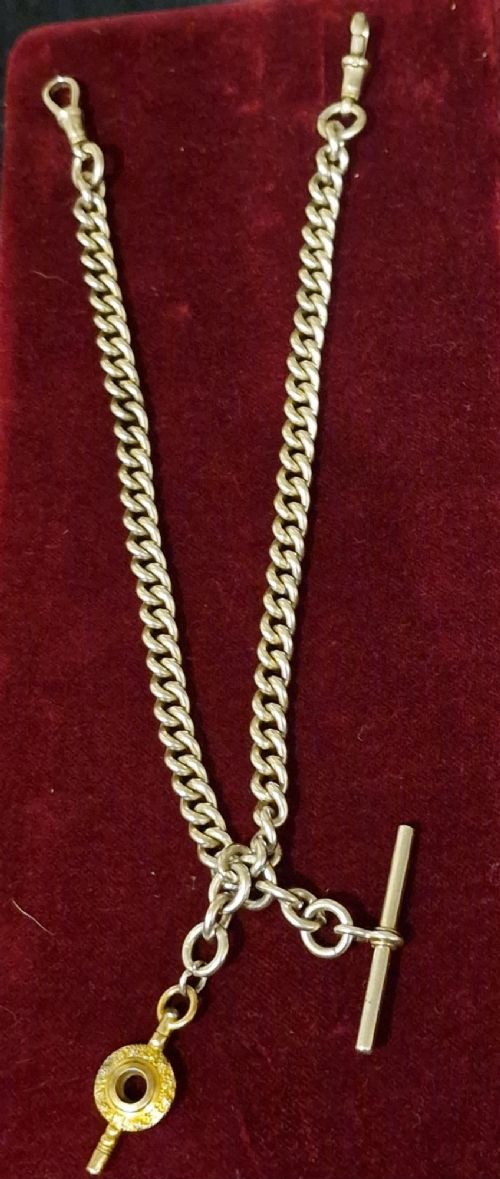
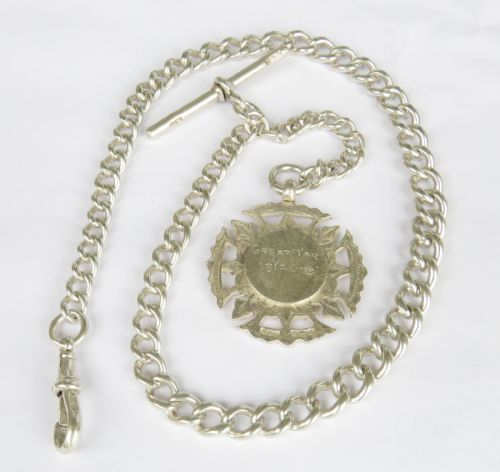
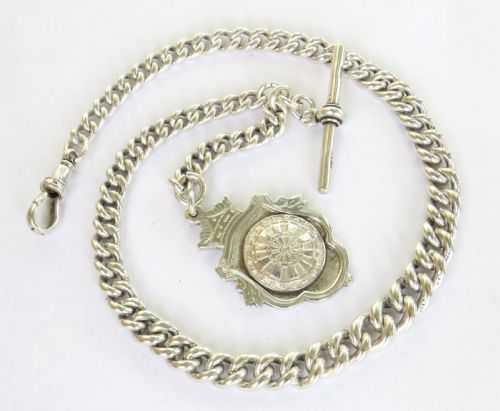
The specimens on this page span the late nineteenth century through to the nineteen-thirties, encompassing both single and double albert configurations. Sterling silver and various shades of gold dominate the available inventory, frequently accompanied by original sliding T-bars and spring-loaded dog clips.
How They Were Made
Metalsmiths forged these chains predominantly from sterling silver, alongside nine-carat, fifteen-carat, and eighteen-carat yellow and rose gold, complemented by rolled gold alternatives. Individual links were hand-formed, soldered, and polished to create flexible strands capable of withstanding daily wear.
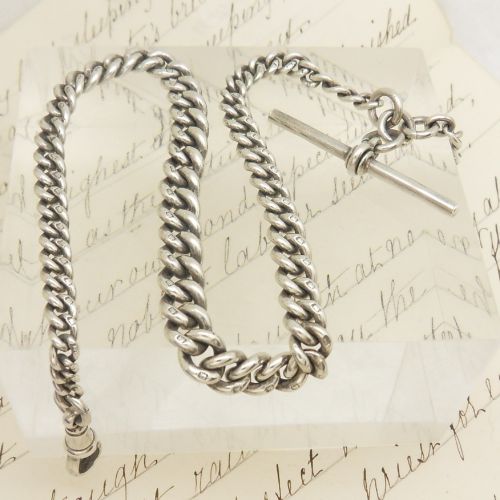
Hollow or solid links were secured with mechanical fastenings including swivel dog clips, bolt rings, and crossbars. Hallmarks stamped onto individual links or assay tags provide official verification of the metal purity and the specific British assay office.
Curb Link Pocket Watch Chain Retail Price Guide 2026
Typical asking prices for curb link pocket watch chain among the pieces listed under this phrase on Sellingantiques today, from the lower quarter to the upper quarter. They describe what is for sale here now, not the wider market.
Materials documented across the available pieces include sterling silver, nine-carat and eighteen-carat gold, enamel, glass, and rolled gold.
What Varies in Quality
The distinction between tiers rests upon the heft of the metal and the integrity of the individual links. Solid construction and substantial gram weights separate robust daily utility items from lighter decorative strands.
Graduation of the links along the length demands greater labour and signals finer manufacture. Inclusion of original hallmarked components, matching fobs, and fully functional dog clips elevates the overall standard.
Omega·Tavannes·Horos·Tellus
The Curb Link Pocket Watch Chain Glossary
- T-bar
- A short metal crossbar attached to the centre of a watch chain. This bar passed through a buttonhole on a waistcoat to anchor the chain securely.
- Dog clip
- A spring-loaded swivel clasp attached to the end of a watch chain. It allowed the wearer to easily fasten a pocket watch or decorative fob.
- Fob
- A small ornamental pendant attached to a watch chain. Common examples include engraved silver shields, bloodstone swivel seals, and commemorative medallions.
- Guard chain
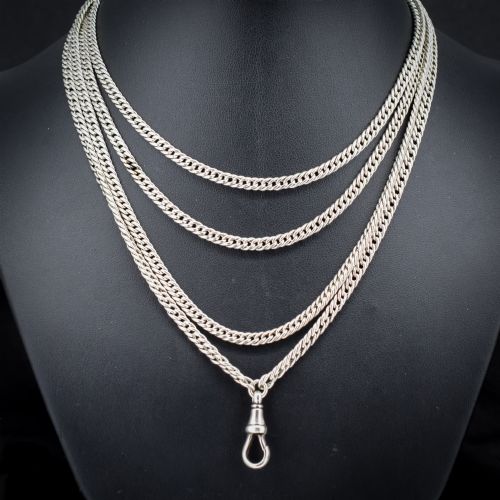
- An exceptionally long chain worn around the neck rather than across a waistcoat. These versatile lengths were often doubled over or utilised as necklaces.
Curb Link Pocket Watch Chain: Frequently Asked Questions
How do you wear a pocket watch chain?
The chain is secured by passing the T-bar through a central buttonhole of a waistcoat. The pocket watch is then slipped into one of the lower waistcoat pockets, allowing the strand to drape gracefully across the front.
Alternatively, longer guard chains can be doubled around the neck or worn directly as a necklace. Many contemporary collectors adapt these antique strands to serve as heavy chain necklaces.
What do the hallmarks on these chains mean?
British hallmarks stamped onto the links indicate the standard of metal purity, such as sterling silver or specific carats of gold. They often include a sponsor mark identifying the maker and an assay office letter.
Additional date letters allow collectors to pinpoint the exact year the piece was tested and certified. Finding clear, matching stamps across the links and dog clips confirms the authenticity of the item.
Are these chains made of solid or rolled gold?
The inventory includes both solid gold pieces and rolled gold alternatives. Solid gold variations are typically marked with specific carats like nine-carat or fifteen-carat, reflecting precious metal throughout.
Rolled gold items consist of a thin layer of gold mechanically bonded to a base metal core. These offered a durable, accessible luxury for everyday wear during the Edwardian and Art Deco periods.