

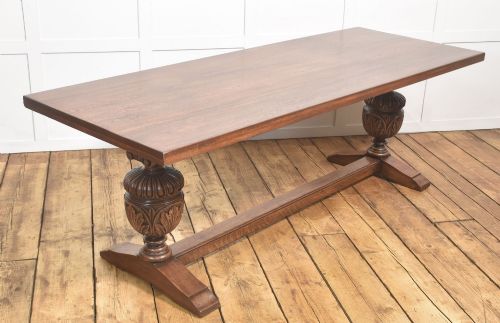
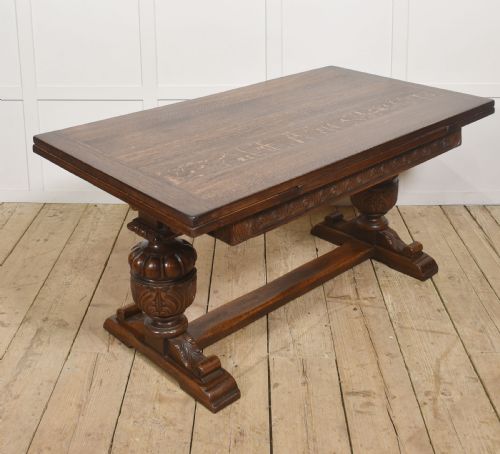

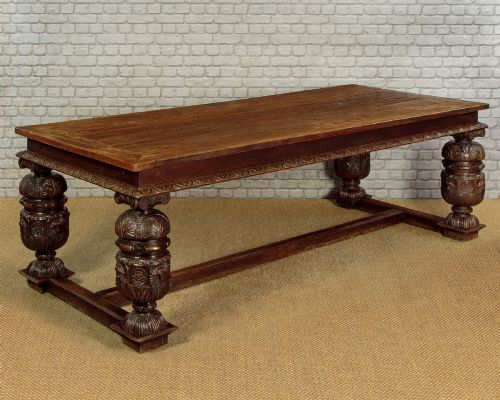


Cup and Cover Leg Table
A cup and cover leg table brings substantial oak presence to a dining room through robust proportions and historic revival forms.
Cup and Cover Leg Table
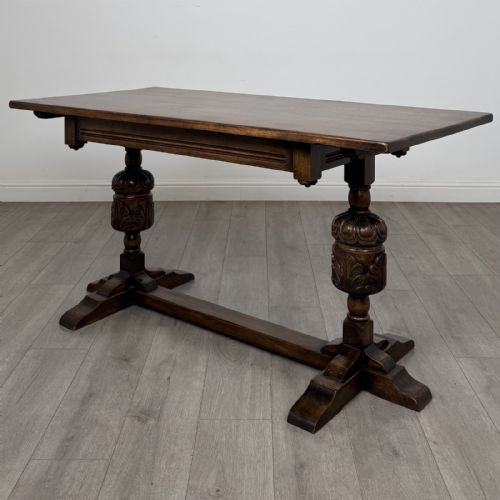
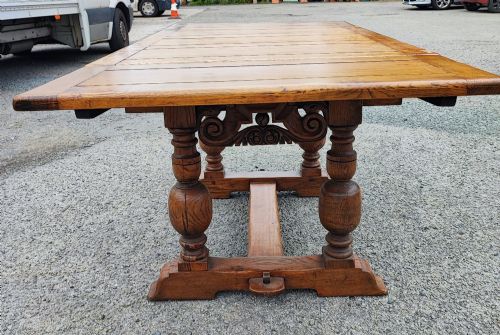
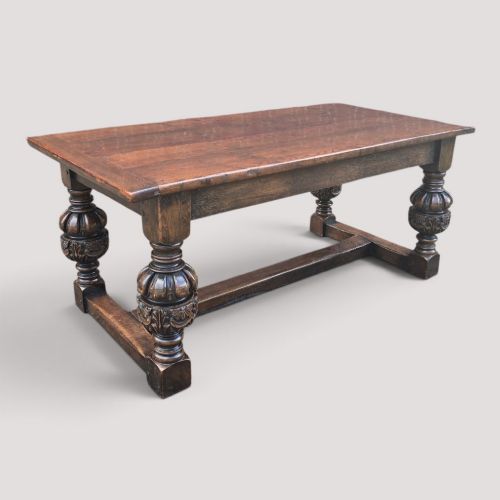
A cup and cover leg table is primarily represented here by refectory and farmhouse dining tables fashioned from solid oak. These pieces span periods from the eighteenth century through nineteenth-century revivals up to the 1930s, alongside examples dated around 1890, 1900, 1910, and 1920.
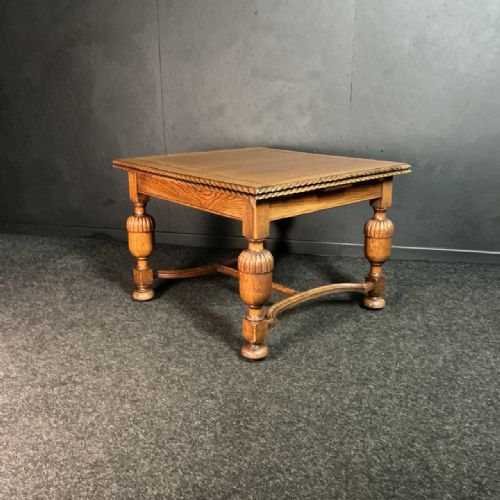
Buyers encounter substantial forms designed for communal dining, including extending draw leaf tables and refectory tables fitted with pull-out extensions. The aesthetic leans heavily into Elizabethan, Jacobean Revival, and seventeenth-century styles.
Proportions range from unusual small extending formats to large dining tables intended for spacious rooms. The core design vocabulary relies on sturdy timbers and traditional framing methods established across British furniture history.
Materials and construction
These tables are constructed entirely from oak, utilising the dense grain and durable nature of the timber to support large dining surfaces and heavy framing. Woodworkers selected seasoned planks capable of withstanding daily use in domestic and farmhouse settings.
Construction relies on traditional joinery techniques suited to refectory and draw leaf formats, allowing functional pull-out extensions to operate smoothly within the fixed underframe. Carved ornamentation adorns the structural woodwork, aligning with Elizabethan and Jacobean Revival design motifs.
Cup and Cover Leg Table Retail Price Guide 2026
Typical asking prices for cup and cover leg table among the pieces listed under this phrase on Sellingantiques today, from the lower quarter to the upper quarter. They describe what is for sale here now, not the wider market.
Listings span the eighteenth century to the 1930s, exclusively featuring oak dining and refectory tables in Elizabethan and Jacobean Revival styles.
Assessing quality in revival oak
The distinction between standard and superior examples rests upon the depth of the carving and the fidelity of the period revival style. Finer pieces display crisp hand-carved detailing on the structural timbers rather than simplified surface decoration.
Proportional harmony and the seamless integration of functional elements, such as draw leaf extensions, define the upper tier of these dining tables. Timber selection also plays a part, with better examples showing rich grain variation and well-matched oak boards across the top.
The Cup and Cover Leg Table Glossary
- Refectory table
- A long, narrow dining table originally built for monastic dining halls and later adapted for domestic interiors. This form provides substantial seating capacity along the length of the board.
- Draw leaf table
- An extending table featuring two leaves stored beneath the main top that pull out from either end to increase surface area. The mechanism allows the central surface to remain level while expanding.
- Jacobean Revival
- A nineteenth and early twentieth-century design movement recreating the architectural motifs and heavy oak furniture styles of the early seventeenth century. Pieces from this era emulate older turning and carving techniques.
- Elizabethan style
- An aesthetic drawing upon sixteenth-century English design characteristics, notable for robust proportions and prominent structural ornamentation. It frequently informs the heavy undercarriages seen in revival dining furniture.
- Oak
- A hard, durable timber native to Britain, prized for its strength and distinct medullary ray grain patterns. It serves as the primary material for traditional refectory and farmhouse tables.
Cup and Cover Leg Table: Frequently Asked Questions
How do I use a draw leaf table?
The extending leaves slide out smoothly from underneath the main top boards, raising slightly into place as they pull fully outward to create extra seating space.
When not in use, the leaves push back beneath the primary surface, concealing the mechanism and returning the table to its compact daytime footprint.
What is a refectory table?
A refectory table is a long, narrow dining table traditionally designed for communal meals in large halls, defined by sturdy legs connected by low stretchers.
Today, these substantial pieces function as primary dining tables in large kitchens and formal dining rooms, accommodating numerous chairs along their flanks.
How do I date an oak revival table?
Dating relies on examining the construction marks, timber seasoning, and hardware beneath the top, alongside stylistic cues that point to nineteenth or early twentieth-century revival workshops.
Many pieces carry specific period attributions, such as Jacobean Revival or Elizabethan styles, which indicate the historic era the maker sought to replicate.
How do I care for solid oak furniture?
Solid oak benefits from regular dusting with a dry cloth and occasional treatment with appropriate beeswax to nourish the timber and maintain its natural lustre.
Avoid placing these heavy dining tables in direct sunlight or near sudden heat sources to prevent the solid oak top boards from drying out or splitting.