




Crystal Sconce Lights
Crystal sconce lights bring refracted light and formal proportion to a room, turning bare walls into focal points through cut glass and metal arms.
Crystal Sconce Lights
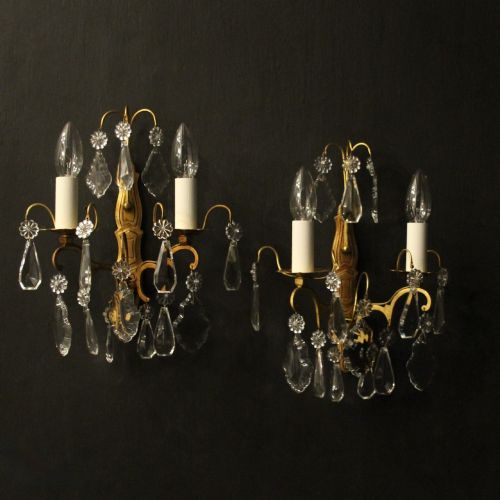
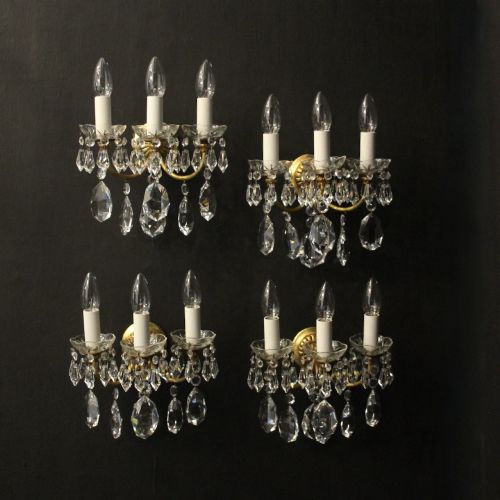
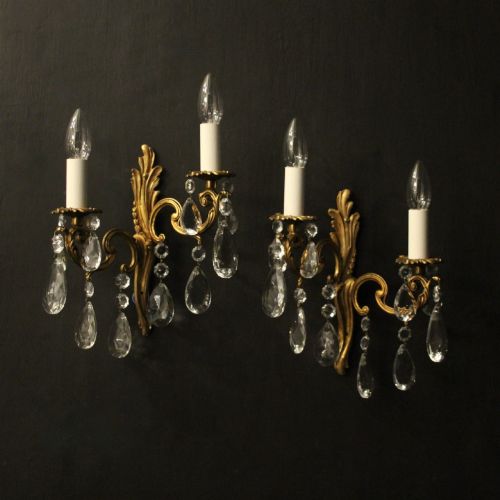
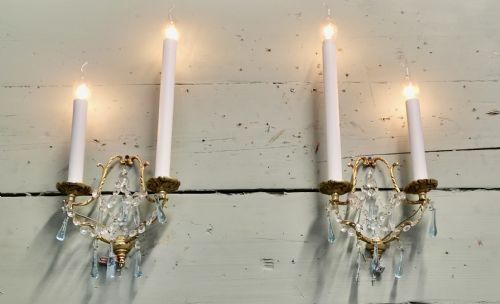
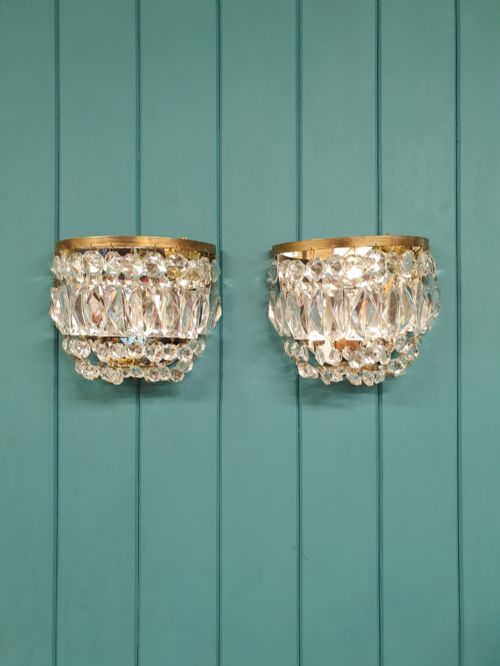
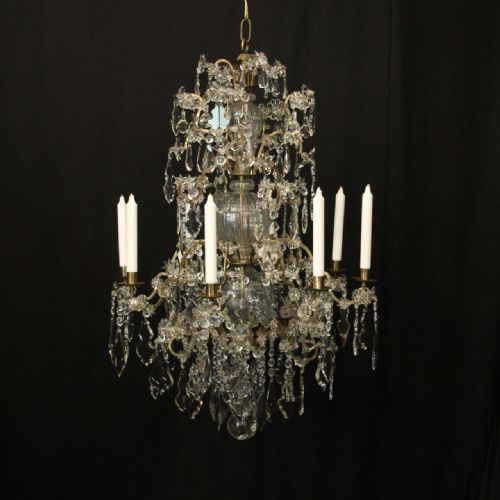
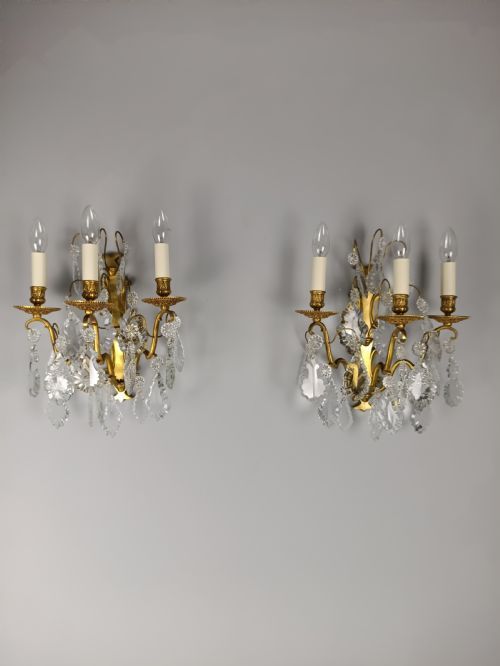
Crystal sconce lights encompass wall-mounted light fittings adorned with glass drops, lustres, and faceted pendants designed to illuminate interior spaces. When you search for crystal sconce lights, you encounter wall fixtures that span the nineteenth century, the Edwardian era, and the early twentieth century.
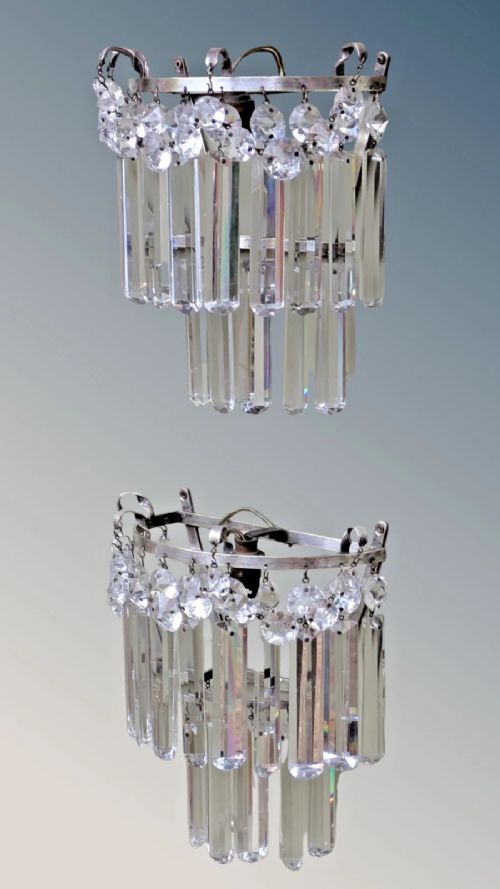
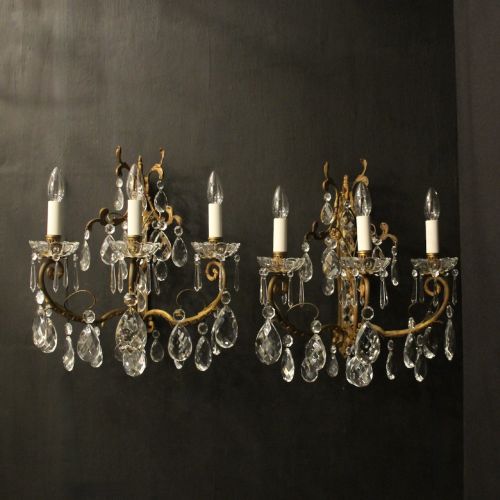
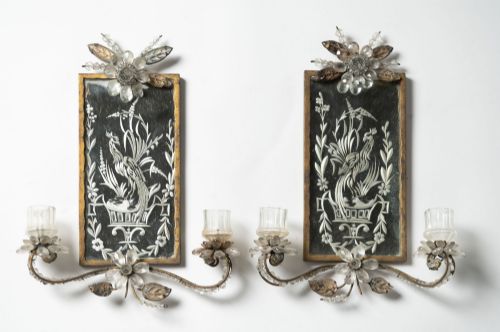
The selections on this page concentrate heavily on French and Italian origins, ranging from twin and triple-arm configurations to tall wall chandeliers and bag-style fixtures. Many examples incorporate mirrored backs, cherubs, or giltwood leaf carvings to multiply the ambient reflection.
Makers such as Maison Baguès and Baccarat appear among the listings, alongside works produced in the styles of F. & C. Osler and French Rococo traditions. Buyers will find brass, gilt bronze, and wrought iron forming the structural foundations for the crystal elements.
Materials and Construction
The structural frames rely on cast brass, gilt bronze, ormolu, and wrought iron, providing durable armatures to support heavy glass elements. Metal components frequently receive a gilded or giltwood finish to complement the reflective qualities of the upper sections.
Optical elements combine crystal glass, cut glass, and moulded drops suspended by wire pins. Lustres and tent configurations are arranged to catch and scatter illumination from candle-style or electric lamp holders.
Materials documented across the inventory include cut crystal, gilt brass, wrought iron, and Italian giltwood.
Distinctions in Quality
Quality rests on the depth of hand-cut facets in the glass and the crispness of casting detail in the bronze or ormolu mounts. Finer pieces demonstrate precise symmetry in their pendant drops and substantial metal gauge thickness in the arms.
Provenance and attribution elevate certain fixtures, particularly signed works or those attributed to recognised glass houses and metalworkers. The integration of original mirror backs and intact glass lustres preserves the integrity of the design.
Maison Baguès·Baccarat·F. & C. Osler
The Crystal Sconce Lights Glossary
- Lustre
- A glass pendant or hanging prism designed to refract light from a candle or lamp. These drops hang from the arms or crown of a wall light.
- Girandole
- An ornamental branched wall light or candelabrum featuring a mirrored back to multiply the illumination. The reflective plate sits behind the candle arms.
- Ormolu
- Gilded bronze produced by applying a mercury and gold amalgam to a bronze base. This technique creates a rich metallic surface finish seen on antique mounts.
- Toleware
- Painted or lacquered sheet metal items often shaped into floral or decorative components. It provides coloured contrast against gilt metal and crystal.
- Bag Light
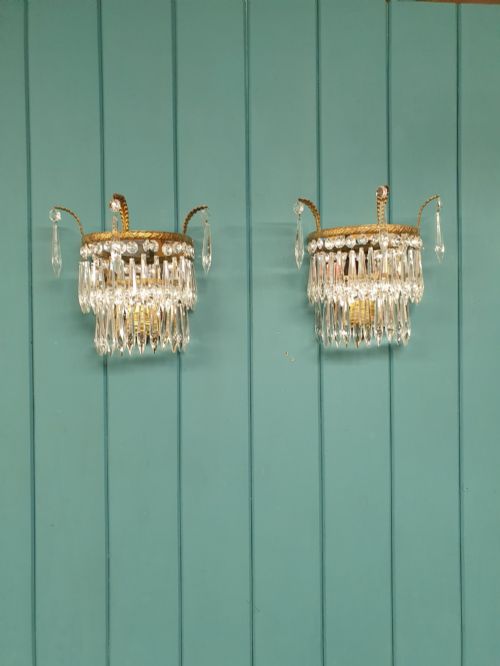
- A wall light featuring a dense mass of cascading crystal drops shaped into a bag silhouette. The faceted drops conceal the internal frame.
Crystal Sconce Lights: Frequently Asked Questions
How are antique wall lights wired?
Many period fixtures arrive rewired for modern electrical standards while retaining their original brass or bronze candle tubes. Electric lamp holders are integrated discretely among the arms to preserve the historical appearance.
Buyers should consult a qualified electrician to ensure compatibility with domestic wiring circuits and wall mounting requirements.
What rooms suit crystal sconces?
These fixtures suit hallways, drawing rooms, and dining spaces where reflective surfaces enhance natural and artificial illumination. Pairs function well flanking fireplaces, mirrors, or architectural doorways.
Their scale and metal finishes coordinate with period furniture and traditional interior palettes.
How do I identify Edwardian examples?
Edwardian wall lights often exhibit lighter proportions and specific revival motifs influenced by Regency and French design. Construction details and mounting plates reflect early twentieth-century manufacturing standards.
Comparing the metal casting and crystal cutting styles helps distinguish Edwardian pieces from mid-nineteenth-century items.
Do wall lights require special care?
Maintenance involves dusting the crystal drops regularly with a soft brush and cleaning metal components with appropriate non-abrasive cloths. Ensuring pendant pins remain secure prevents the loss of individual glass lustres.
Harsh chemical cleaners should be avoided to protect gilt and ormolu surface patinas.