



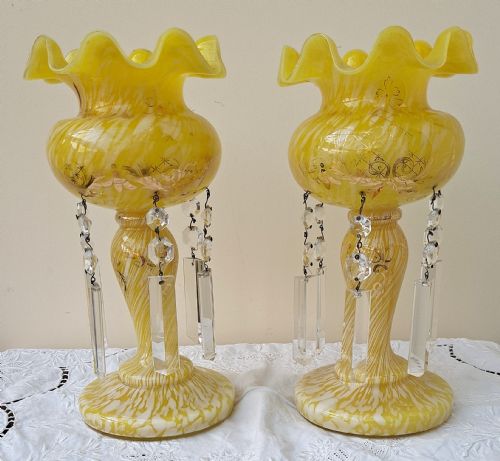


Crystal Mantel Lustres
Crystal mantel lustres catch the flickering room light and multiply it through hanging prisms, bringing an unmistakable Victorian presence to a fireplace.
Crystal Mantel Lustres
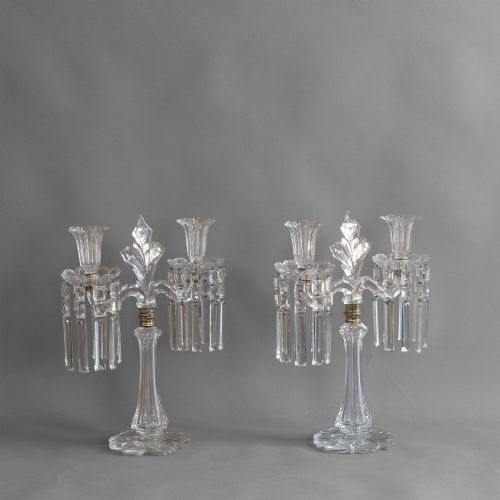
Crystal mantel lustres are decorative candelabras and vase-form ornaments designed to sit on a chimney piece, fitted with long glass pendants that hang from a central rim. These pieces bridge the gap between functional lighting and pure display, originating in periods when artificial light sources needed every possible amplification. The search phrase covers both single standing pieces and matched pairs, though pairs dominate the selection.
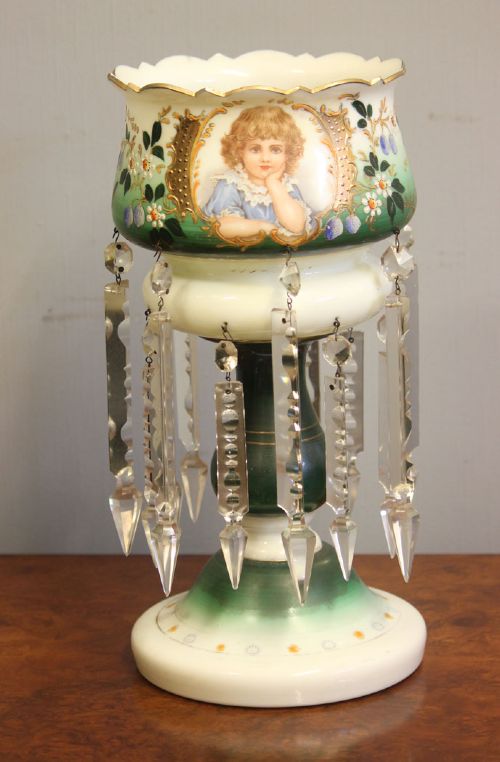
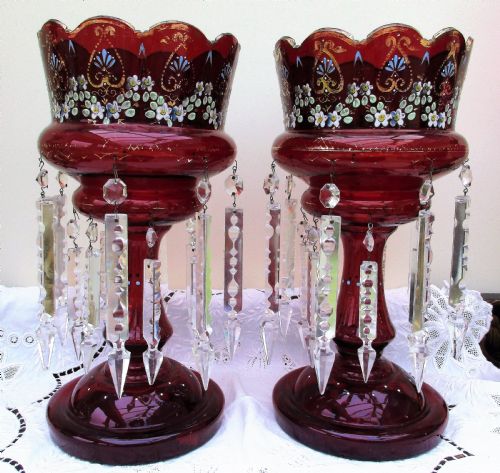
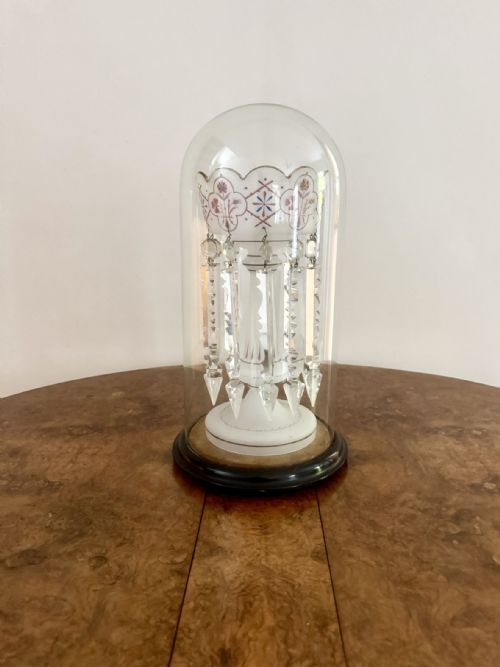
The most common examples encountered here are Victorian glass mantel lustres in saturated colours such as ruby, cranberry, green, yellow, and white opaline glass. Many pieces arrive as pairs intended to frame a clock or mirror, measuring anywhere from standard table height to larger proportions. Alongside traditional pillar forms, the evidence includes related candelabras and candlesticks dressed in identical hanging drops.
While Victorian production forms the backbone of the category, variations stretch from earlier Regency bronze and ormolu designs to late nineteenth-century Bohemian overlay glass. English and continental workshops both contributed to the surviving selection, often combining coloured glass bodies with hand-painted enamel floral details or gilding. Buyers select them primarily for their rich colour saturation and the kinetic sparkle of their suspended crystal prisms.
Materials and construction
Makers formed the bodies of these objects from blown and moulded glass, frequently utilising flash glass or layered overlay techniques where a coloured exterior layer was cut away to reveal clear glass beneath. This glass body was then combined with gilt metal, brass, bronze, or ormolu mounts to secure the central stem and socket. Gold leaf and enamel painting frequently decorated the glass surface, depicting floral motifs or geometric borders.
The defining feature rests in the cut crystal or glass drops, commonly referred to as prisms or spears, suspended from the rim by wire loops. These drops were hand-cut to create facets that refract light effectively before being hung from pierced brass or glass collars. Metal components were cast and chased, providing a sturdy foundation for heavier glass urns and candelabra arms.
Crystal Mantel Lustres Retail Price Guide 2026
Typical asking prices for crystal mantel lustres among the pieces listed under this phrase on Sellingantiques today, from the lower quarter to the upper quarter. They describe what is for sale here now, not the wider market.
French opaline and Bohemian overlay glass represent the continental alternatives to English Victorian mantel lustres.
Distinguishing quality factors
Quality in crystal mantel lustres depends heavily on the depth of the glass colour and the precision of the hand-cutting on both the body and the hanging prisms. Superior examples exhibit heavy, clear-ringing crystal drops with sharp facet edges, whereas lesser versions use machine-pressed glass with rounded, soft facets. The richness of the flash glass overlay and the crispness of any gilt or enamelled decoration separate standard production from finer cabinet pieces.
The completeness and originality of the hanging drops dictate much of the piece's integrity, as mismatched or replacement prisms alter the visual rhythm of the hanging fringe. Heavy metal mounts and substantial glass weight signal better workshop standards, distinguishing sturdy English and Bohemian output from lighter, simpler decorative objects.
The Crystal Mantel Lustres Glossary
- Lustre
- A decorative glass or porcelain vase or candlestick fitted with hanging glass prisms designed to catch and reflect light. They gained immense popularity during the Victorian era as mantelpiece ornaments.
- Prism
- A cut glass or crystal pendant suspended from the rim of a lustre to refract candlelight or daylight. These drops come in spear, spear-point, and button shapes.
- Overlay glass
- A glass-making technique involving two or more layers of different coloured glass, where parts of the outer layer are cut away to expose the contrasting colour underneath. This method appears frequently in Bohemian examples.
- Opaline glass
- An opaque, pale glass with a milky appearance, often tinted in soft pastels and used extensively for nineteenth-century mantel ornaments. It provides a smooth ground for gilt and enamel decoration.
- Ormolu
- Gilded bronze used for mounts, feet, and decorative fittings on nineteenth-century decorative arts. The technique involves applying a mercury and gold amalgam to a bronze base.
Crystal Mantel Lustres: Frequently Asked Questions
How do I clean crystal mantel lustres?
Cleaning requires removing each glass drop individually to wash them in lukewarm water with mild soap, drying them thoroughly with a lint-free cloth before reattachment. The main glass body should be wiped gently with a soft damp cloth, taking care to avoid rubbing delicate enamel work or gold leaf.
Harsh chemical cleaners and abrasive cloths must be avoided entirely, as they damage the gilding and surface polish of both the glass and the metal mounts.
Were these used for candles or electricity?
Original nineteenth-century lustres were designed exclusively to hold candles or simply to stand as ornamental objects reflecting ambient room light. Some later examples or adapted pieces incorporate lamp fittings, though traditional forms retain their solid candle pans.
When used with candles, the hanging prisms serve to multiply the flicker of the flame across the mantelpiece.
How do I identify Victorian glass lustres?
Victorian examples typically feature rich saturated colours like ruby, cranberry, and green, often decorated with hand-painted enamel flowers and gilt scrolls. The weight of the glass and the presence of hand-cut facets on the hanging drops point toward nineteenth-century manufacture.
Comparing the form and colour palette to documented English and Bohemian production helps narrow down the specific decade of origin.
Are replacement glass drops acceptable?
Replacement drops are common due to the fragile nature of hanging prisms over more than a century of use. Matching the cut pattern, length, and glass tint as closely as possible maintains the visual balance of the piece.
Buyers should examine whether the hanging drops match each other in colour density and facet style across the entire rim.