


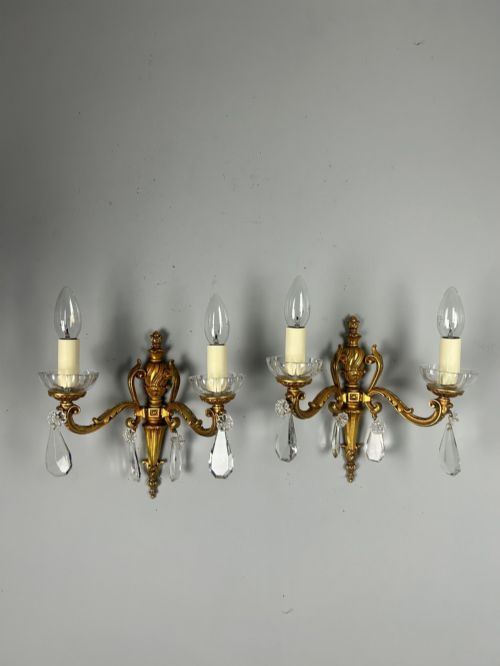


Crystal Drop Sconce
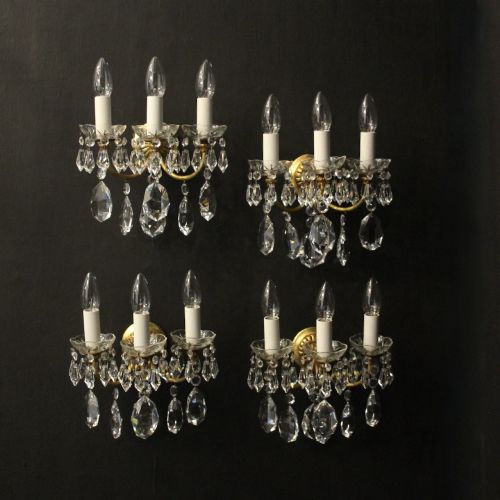
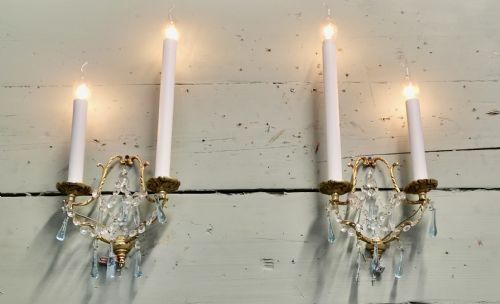
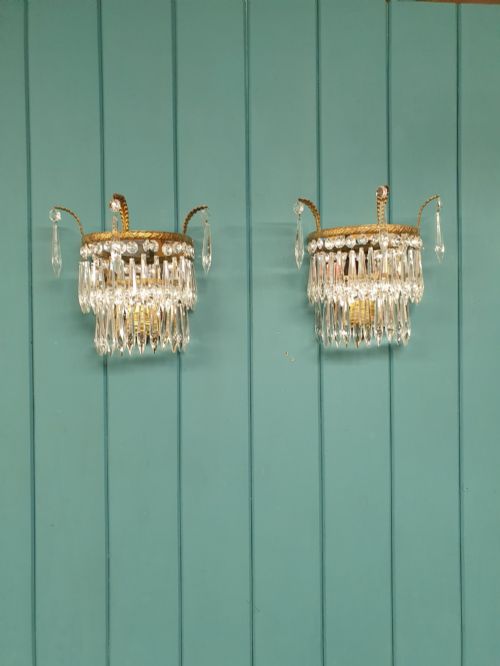
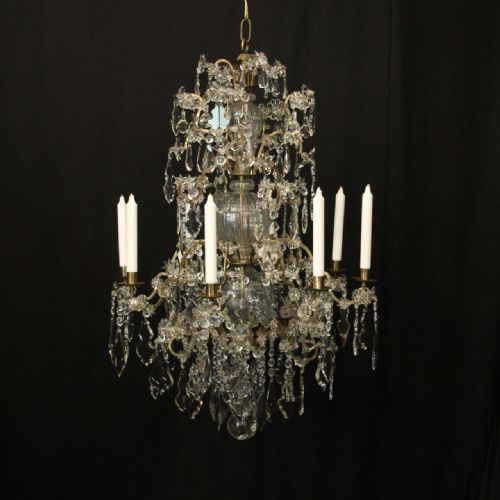
These crystal drop sconce pieces bring ambient wall illumination and sparkle, combining cut glass with gilt bronze and brass to transform a room.
Crystal Drop Sconce
A crystal drop sconce provides wall-mounted illumination utilising glass pendants that catch and refract the light from candles or early electric bulbs. These fixtures span the nineteenth century through the 1930s, encompassing Edwardian examples alongside French Rococo and Louis XV styles.
Most pieces encountered on this page originate from French workshops or Italian centres, often formed as pairs or sets of wall lights with twin or triple arms. The forms extend from simple brass mounts to gilt bronze and toleware frames hung with cut crystal drops.
Makers and designers produced these wall lights for reception rooms and boudoirs, adapting Grand Regency and Florentine aesthetics for domestic interiors. Buyers frequently find giltwood leaf carvings or mirrored backplates supporting the hanging prisms.
How they were made
Casting and chasing formed the structural metal components, using brass, gilt bronze, or ormolu to create decorative wall brackets and candle arms. Artisans then gilded or painted the metal surfaces, incorporating giltwood or toleware elements into the overall frame.
Glasscutters shaped the crystal drops and prisms by hand, faceting the surface to maximise the refraction of light from the candles. Wire or pin connections linked these glass pendants to the metal armature, allowing them to sway gently.
What varies in quality
The sophistication of the metalwork defines the upper tier of these wall fixtures, showing crisp chasing on gilt bronze and ormolu mounts rather than plain cast brass. Heavier gauge frames and intricate leaf or scroll work indicate superior craftsmanship.
The clarity and hand-cutting of the crystal drops distinguish finer examples from standard production, with deep facets producing sharper light refraction. Complete sets of matching pendants and original gilding contribute to the integrity of a piece.
The Crystal Drop Sconce Glossary
- Ormolu
- Gilded bronze produced through a mercury amalgamation process, creating a durable golden finish on decorative metalwork. This technique appears frequently on French wall lights from the nineteenth century.
- Girandole
- A branched wall-mounted candle sconce often featuring a mirrored backplate to multiply the ambient light in a room. These fixtures frequently incorporate hanging crystal prisms.
- Toleware
- Painted or lacquered sheet metal utensils and decorative objects popular in French interiors. The technique provides colourful floral or gilt decoration on wall light frames.
- Rococo
- An ornate design style characterised by asymmetrical scrollwork, C-scrolls, and naturalistic shell motifs. This aesthetic heavily influenced French wall sconces and chandeliers.
- Giltwood
- Timber coated with a thin layer of gold leaf, used for decorative carved wall light frames. Florentine pieces often utilise this material for leaf and scroll motifs.
Crystal Drop Sconce: Frequently Asked Questions
How do I clean a crystal drop sconce?
Remove the glass drops individually and wash them in lukewarm soapy water, drying them thoroughly with a soft cloth before rehanging.
Wipe the metal frame gently with a dry duster to preserve the gilt surface without introducing moisture to older wiring or joints.
Are these sconces wired for electricity?
Many surviving examples retain candle sockets or have been adapted for electricity during the twentieth century, depending on their original intended use.
Buyers should examine the wiring details in the listing and consult a qualified electrician to ensure compliance with current safety standards.
Can I hang these sconces in a bathroom?
Wall lights featuring gilt bronze, brass, and crystal require protection from excessive moisture to prevent corrosion of the metal and degradation of the gilding.
Dry interior rooms such as hallways, living spaces, and bedrooms suit these decorative fixtures best.