


Crystal Drop Ceiling Lamp
A crystal drop ceiling lamp catches every beam in the room, turning simple illumination into an architectural centrepiece.
Crystal Drop Ceiling Lamp
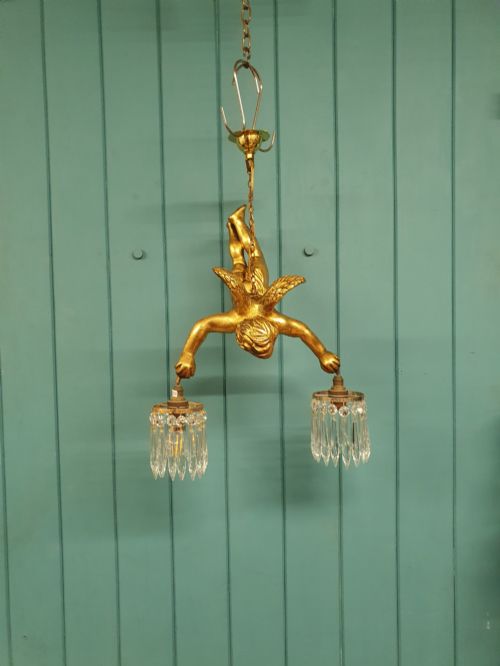
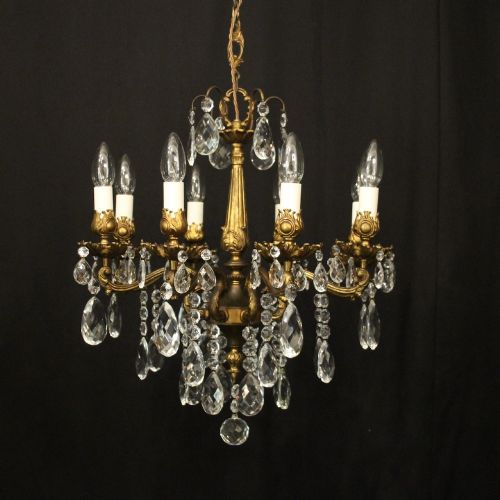
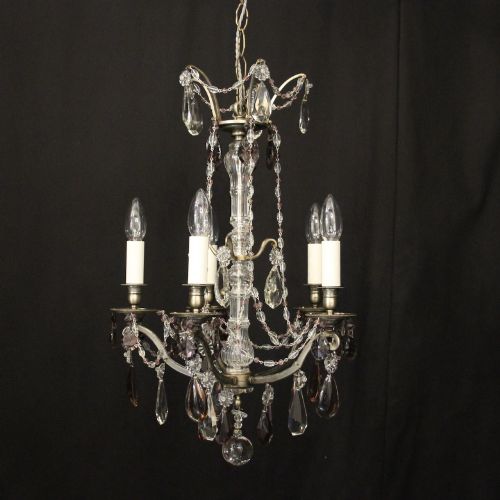
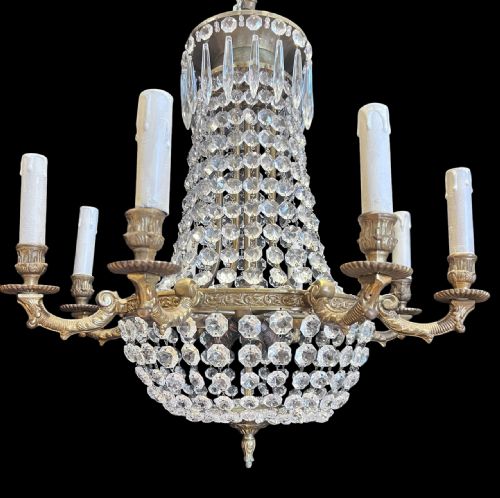
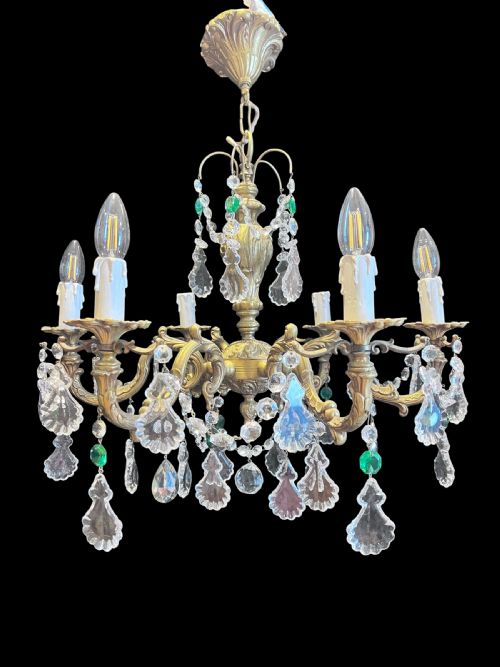
A crystal drop ceiling lamp encompasses various forms of hanging illumination, most commonly seen here as multi-light chandeliers and single pendant lights. These pieces originate from periods spanning the early nineteenth century through the nineteen-thirties, with a strong representation of nineteen-twenties French design. You will frequently encounter styles influenced by the French Empire, Edwardian elegance, and Art Deco geometry.
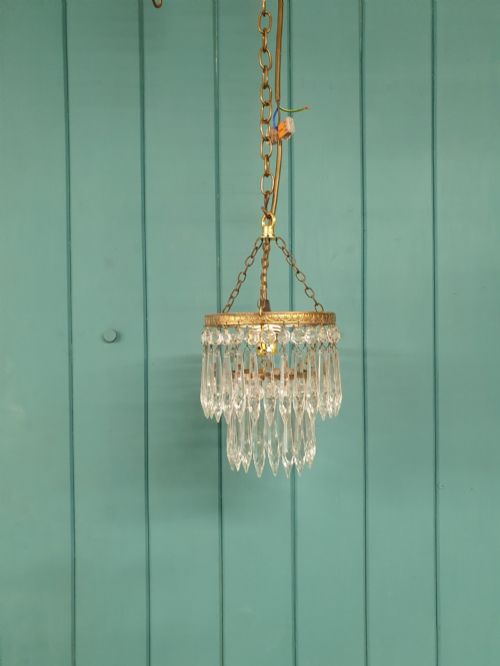
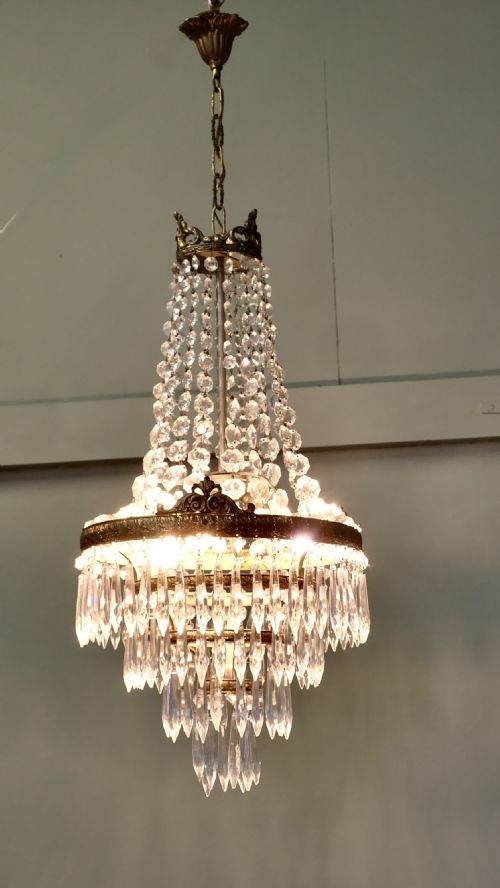
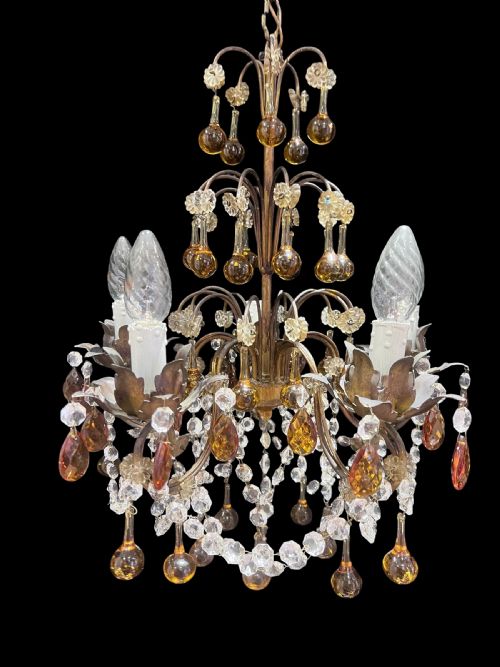
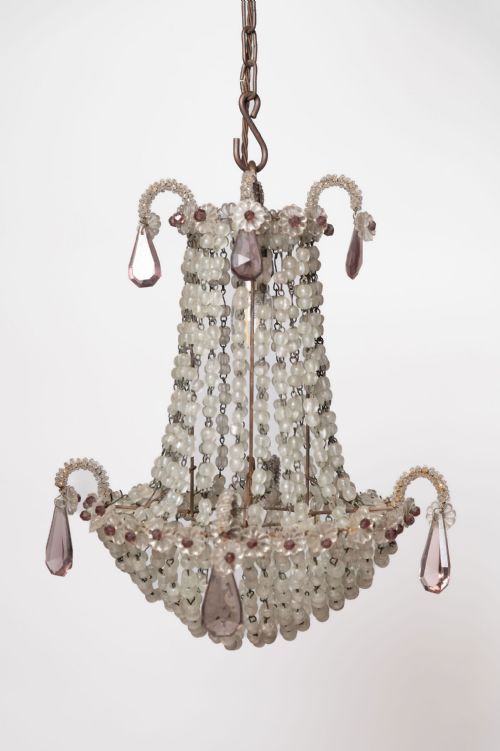
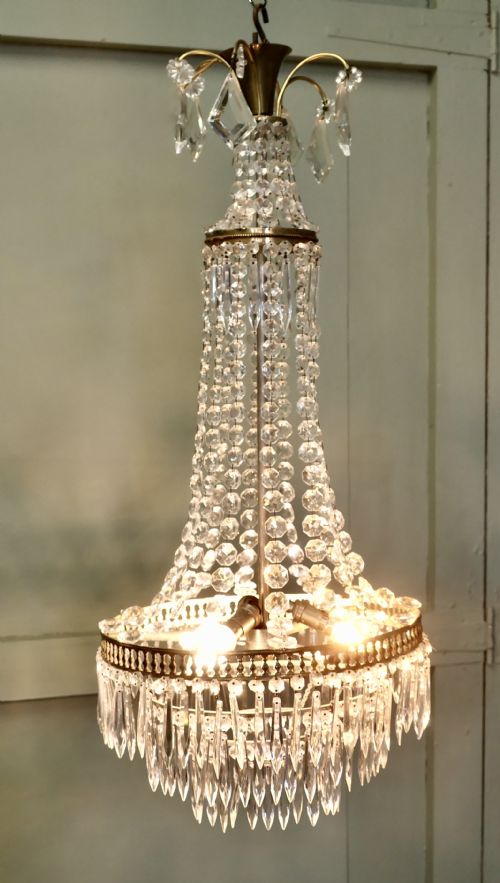
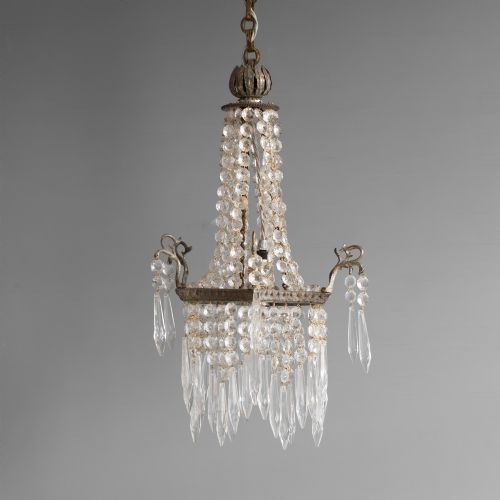
The selection ranges from grand multi-tiered fixtures with numerous lights down to small spike chandeliers and basket forms. Frames take the shape of tent and waterfall configurations, droplet-laden bag designs, and simple circular mountings. Materials extend from clear cut glass to coloured crystals and delicate glass flowers suspended on wire.
Materials and construction
Makers constructed the structural frames of these lamps using metals such as brass, gilt bronze, spelter, iron, and chrome. These metal armatures provided the sturdy skeletons necessary to support heavy clusters of glass components.
The glittering elements rely on cut glass, crystal, and crystal glass shaped into spikes, prisms, beads, and hanging drops. Metal mounts and gilt finishes secured these transparent adornments around the central light sources to maximise light refraction.
Tiny glass flowers bloom silently on delicate wire chandeliers, proving that even illumination needs a botanical touch.
Judging quality and execution
Quality rests in the depth of hand-cutting on the glass and the precision with which the metal mounts fit together. Finer examples display crisper facets on the crystal drops, producing sharper refraction and heavier metal frames cast with ornate detailing.
The integrity of the structural wiring and the symmetry of the arrangement separate standard production from superior work. Balanced proportions in tent and waterfall configurations indicate superior craftsmanship during assembly.
Baccarat
The Crystal Drop Ceiling Lamp Glossary
- Tent and waterfall
- A mounting style where strings of beads form an upper tent shape that flows down into a cascading waterfall of crystal drops.
- Spelter
- A zinc alloy frequently utilised as a base metal for gilded decorative figures and frames during the early twentieth century.
- Prism
- A cut glass pendant designed to refract light into spectral colours when illumination passes through its polished facets.
- Electrolier
- A large hanging light fitting originally designed or subsequently adapted for electricity rather than candles or gas.
- Gilt bronze
- Metal cast in bronze and subsequently coated with a fine layer of gold leaf or gilt wash for a lustrous finish.
Crystal Drop Ceiling Lamp: Frequently Asked Questions
How do I clean a crystal drop ceiling lamp?
Maintenance requires gentle cleaning of each glass drop using a mild solution while the fixture remains securely hung. Taking down every individual crystal is rarely necessary if you wipe them carefully in place.
Ensure the power is switched off completely before starting any cleaning work. Using a microfiber cloth helps prevent streaks on the cut glass surfaces.
Are these lamps difficult to wire for modern ceilings?
Most hanging light fittings adapt readily to standard domestic wiring systems found in modern homes. Professional installation ensures the ceiling can support the weight of heavier brass and crystal fixtures.
Rewired options appear frequently to meet current electrical standards. Consult a qualified electrician to check the ceiling rose and load capacity before hanging.
What rooms suit a tent and waterfall chandelier?
Grand tent and waterfall configurations require rooms with adequate ceiling height to let the cascading drops hang properly. Dining rooms and entrance halls provide traditional settings that showcase the downward spread of light.
Smaller spike chandeliers and single pendant lights fit lower ceilings or more intimate spaces. Matching the scale of the room to the diameter of the metal frame maintains visual balance.
How do I date a crystal ceiling lamp?
Dating relies on examining the metal composition, the cut of the glass, and stylistic markers such as Art Deco tiers or Edwardian swags. Fixtures from the nineteen-twenties often display different casting techniques compared to nineteenth-century examples.
Inspect the fixings and wiring channels for signs of manufacturing age. Patina on the brass or gilt metal also helps establish the period of origin.