


Cream Slipper Chair
A cream slipper chair is a low-slung, upholstered seat designed for comfort and ease, offering a charming touch of period elegance to any bedroom or boudoir.
Cream Slipper Chair
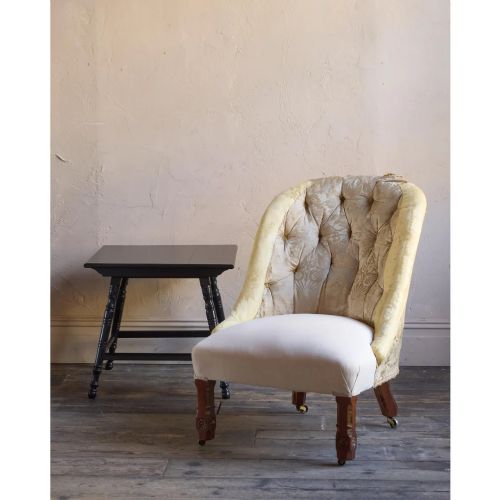
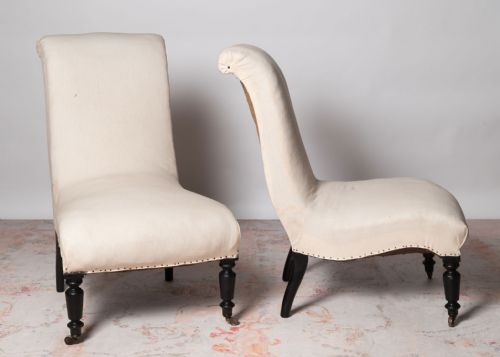
When you search for a cream slipper chair, you are looking at low-seated upholstered chairs designed originally for nineteenth-century dressing rooms and bedrooms. These pieces sit close to the floor, making them practical for tasks like putting on shoes or garments.
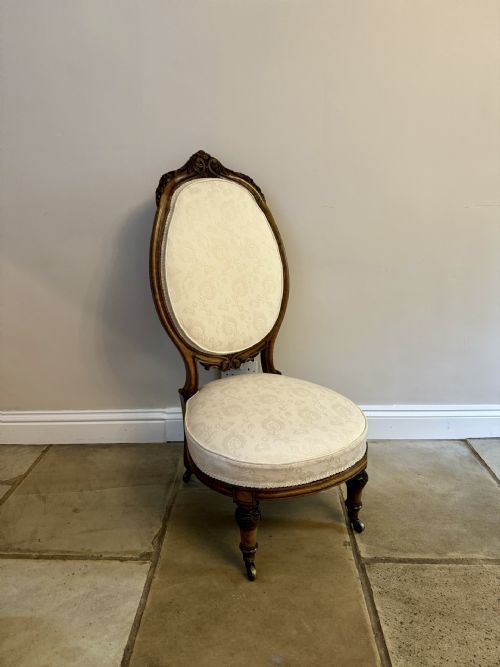
The versions you are most likely to meet on this page span the Victorian, Edwardian, and Regency periods, alongside nineteenth-century French designs. They appear in forms such as nursing chairs, boudoir chairs, and occasional chairs.
Makers often shaped these seats with low profiles and generous upholstery, drawing on styles ranging from Victorian Rococo Revival to French Chateau. They bridge the gap between functional bedroom seating and decorative salon furniture.
How cream slipper chairs were made
The frames of these chairs rely on hardwoods such as mahogany, walnut, and rosewood, carved into curved or cabriole legs. Wood serves as the structural skeleton, often polished to show natural grain or shaped into scroll backs and hoop backs.
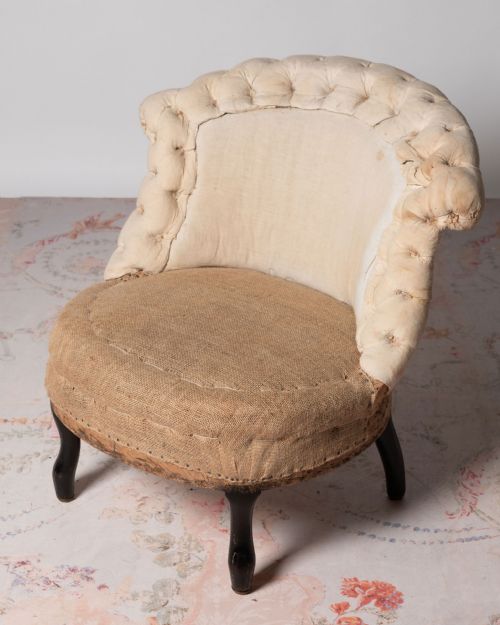
Textiles, fabric, and tapestry form the visible upholstery, supported by traditional stuffing and button tufting techniques. Metal components like brass castors occasionally appear on the feet to allow easy movement across floorboards.
Listings feature items from the 19th Century, Victorian, Edwardian, and Regency periods, constructed in mahogany, walnut, rosewood, and brass.
What varies in quality
The refinement of the woodwork dictates much of the value, distinguishing finely carved rosewood and walnut frames from simpler turned wood structures. Crisp carving on the cabriole legs and scroll backs shows the hand of a skilled cabinet maker.
The execution of the upholstery and the choice of fabric also set pieces apart. Traditional button trimming and tightly fitted textile work reflect a higher grade of craftsmanship than basic modern re-covering.
The Cream Slipper Chair Glossary
- Cabriole leg
- A furniture leg that curves outward and then tapers inward, mimicking an animal's leg. This shape is common on eighteenth and nineteenth-century seating.
- Prie Dieu
- A devotional chair featuring a low seat and an upper shelf or rail for kneeling during prayer. Victorian examples often share the low proportions of slipper chairs.
- Nursing chair
- A low-seated upholstered chair designed for comfort while nursing infants. They share the compact scale and low profile typical of bedroom seating.
- Button upholstery
- A technique where depressions are formed in padded upholstery by pulling twine or thread tight and securing it with buttons. This creates a diamond pattern across the backrest.
- Boudoir chair
- A small, decorative armchair intended for a private dressing room or bedroom. These pieces frequently adopt French stylistic influences.
Cream Slipper Chair: Frequently Asked Questions
What is a cream slipper chair used for?
These low seats were originally placed in bedrooms and dressing rooms for comfortable daily use, such as putting on footwear.
Today they function well as accent seating in living spaces or reading corners where a compact footprint is needed.
How do I date a Victorian chair?
Examine the timber frame for wood types like walnut or rosewood, which were favoured during the Victorian era.
Stylistic markers such as Rococo Revival carving or cabriole legs also point toward mid-nineteenth-century manufacture.
What is the difference between a nursing chair and a slipper chair?
Nursing chairs typically feature slightly higher backs and were built for seated comfort during domestic tasks.
Slipper chairs generally sit lower to the ground with a focus on a compact and accessible profile.
Can I use these chairs in a modern room?
Their neutral upholstery and compact proportions allow them to blend easily with contemporary interior schemes.
They bring historical texture and soft lines into minimalist or neutral modern spaces without overwhelming the room.