

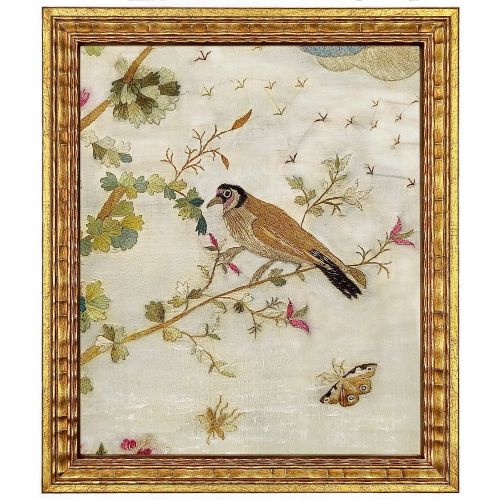
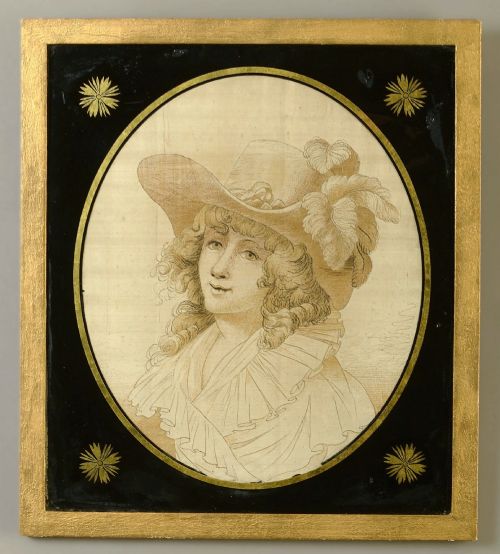
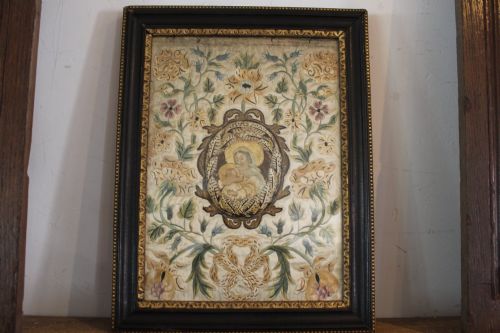
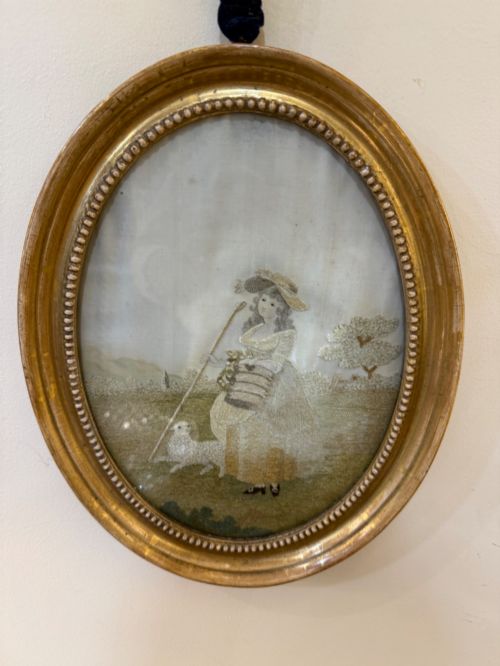


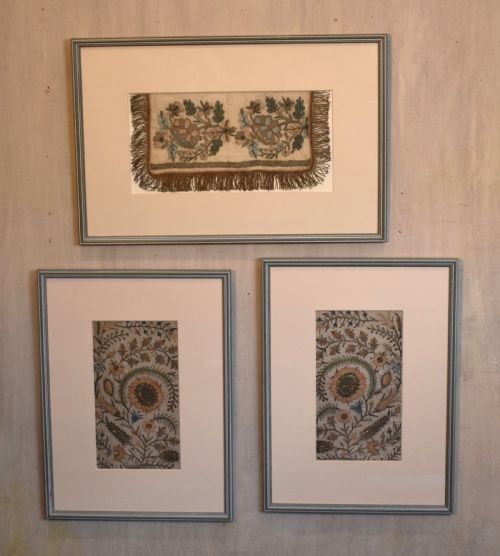

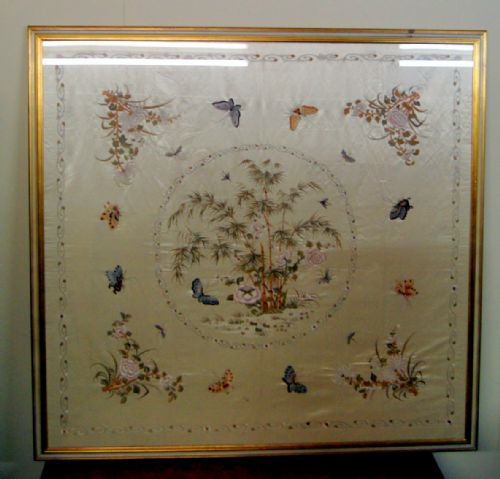
Cream Silk Needlework
Cream silk needlework brings together centuries of delicate threadwork, offering rich historical textile art for your walls.
Cream Silk Needlework
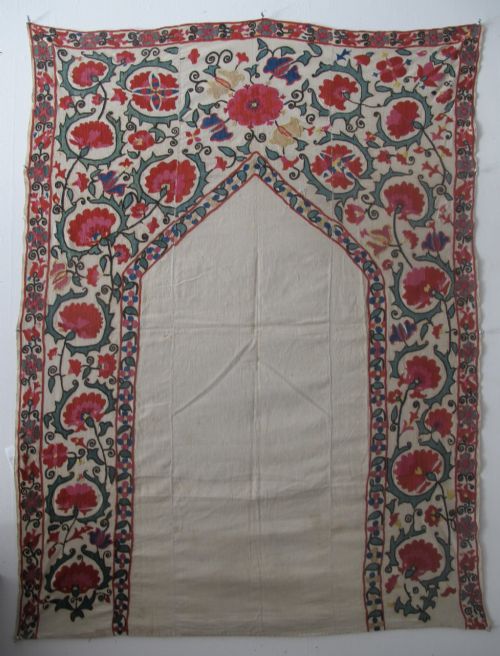
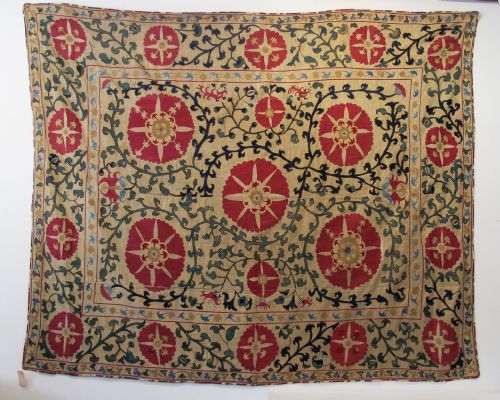
Cream silk needlework encompasses historic textile art, wall hangings, and framed pieces created across multiple centuries. When exploring cream silk needlework on this page, buyers encounter everything from detailed map samplers to large Central Asian suzanis.
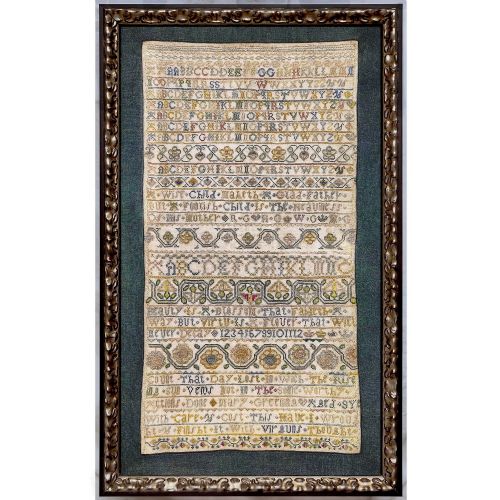
The selection ranges from English country house samplers dated to the eighteenth century through to nineteenth-century tribal embroideries. Most examples present traditional motifs stitched carefully onto fine grounds.
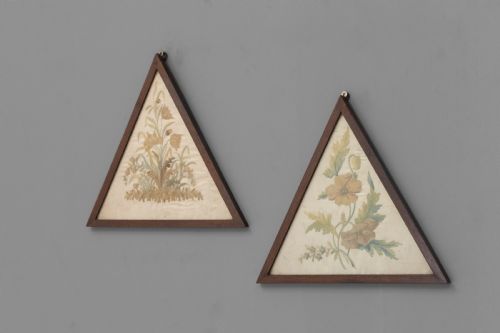
Works appear in various formats including wall art, textile artwork, and mounted embroidery panels. These pieces reflect diverse cultural traditions from English schoolrooms to workshops in Bokhara and Samarkand.
Materials and construction
These textiles rely on silk thread worked meticulously across silk, linen, or cotton foundations. Artisans utilised various stitches to build complex pictorial and geometric designs.
Many historical examples incorporate wooden or giltwood frames to protect the delicate fabric. Structural integrity depends upon the original ground fabric and the tightness of the historical stitching.
Cream Silk Needlework Retail Price Guide 2026
Typical asking prices for cream silk needlework among the pieces listed under this phrase on Sellingantiques today, from the lower quarter to the upper quarter. They describe what is for sale here now, not the wider market.
Several schoolgirls immortalised their geography lessons in silk, stitching entire countries with painstaking botanical precision.
Evaluating craftsmanship
The distinction between ordinary and exceptional pieces rests upon the precision of the needlework and the complexity of the design. Superior examples display dense, accomplished stitching executed with distinct colour shading.
Condition and survival of the original ground fabric heavily influence the desirability of each textile. Pieces retaining their structural strength and vibrant thread colours stand apart from heavily faded or compromised examples.
Iida Takashimaya Company
The Cream Silk Needlework Glossary
- Suzani
- A traditional embroidered tribal textile originating from Central Asia, typically featuring bold floral or geometric patterns on a pale ground.
- Sampler
- A piece of needlework produced to demonstrate proficiency in various stitches, frequently including alphabets, maps, or moral verses.
- Giltwood
- Wood that has been treated with gold leaf or a gold-coloured finish, commonly used for historical picture frames.
- Band sampler
- A long, narrow style of embroidery sampler displaying horizontal rows of distinct decorative patterns.
Cream Silk Needlework: Frequently Asked Questions
What is a suzani?
A suzani is a large embroidered textile created in regions such as Uzbekistan, traditionally featuring bold botanical designs.
These pieces were often worked in silk thread on cotton or silk foundations as part of a bride's dowry.
How are antique samplers dated?
Samplers frequently include stitched dates, maker names, or geographical details that anchor them to specific periods.
Stylistic elements of the lettering and border designs further help historians assign an approximate decade of creation.
How should textile art be displayed?
Delicate needlework requires professional framing behind protective glass to shield the fragile silk fibres from dust and physical handling.
Keep mounted textiles away from direct sunlight to prevent the natural silk threads from fading over time.
Where were map samplers made?
Map samplers were typically worked by young students in English schools as a practical exercise in geography and needlework.
Girls embroidered counties, towns, and borders using fine silk thread on linen or silk grounds.