

Antique Embroidered Wall Art
These pieces of antique embroidered wall art span centuries of needlework, bringing tactile history and colour into a room.
Antique Embroidered Wall Art
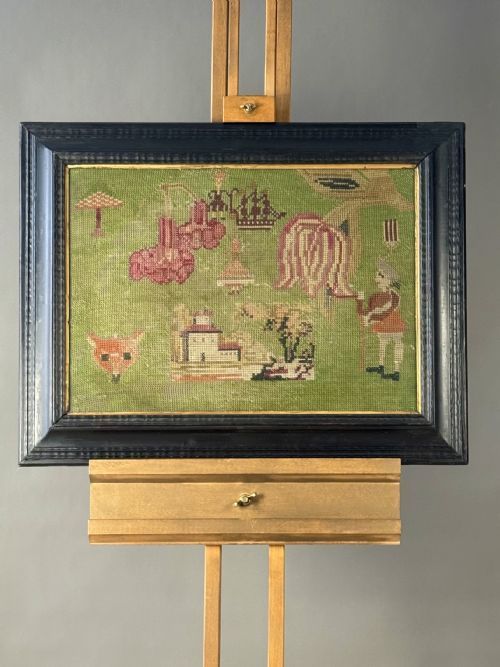
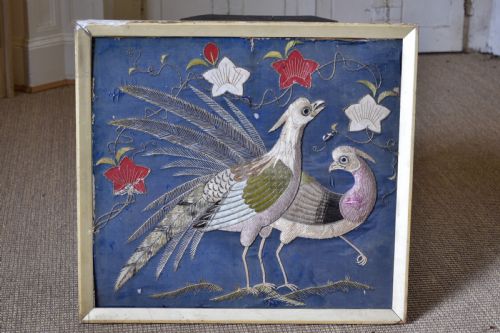
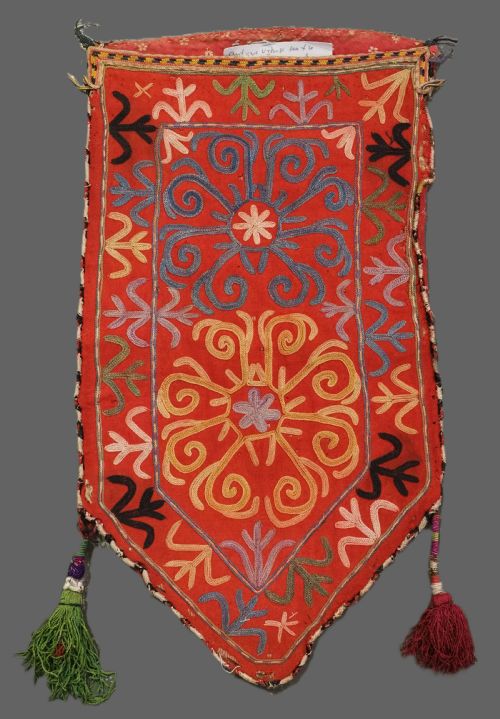
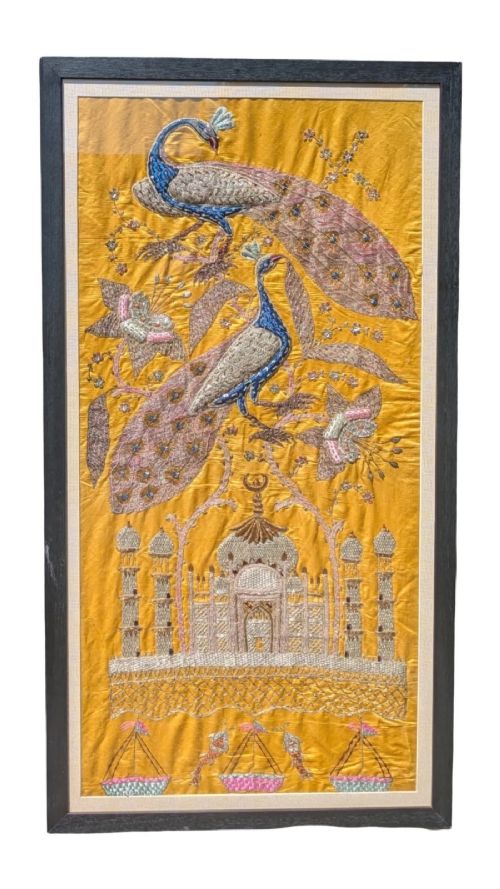
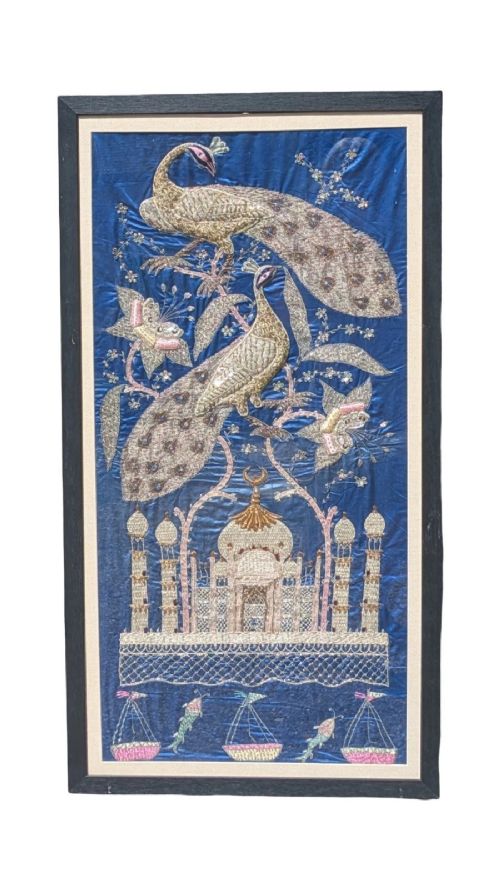
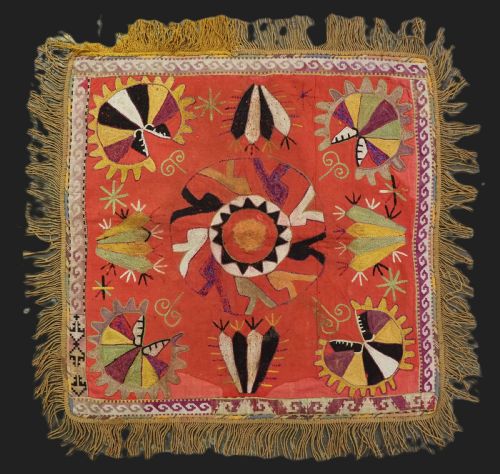
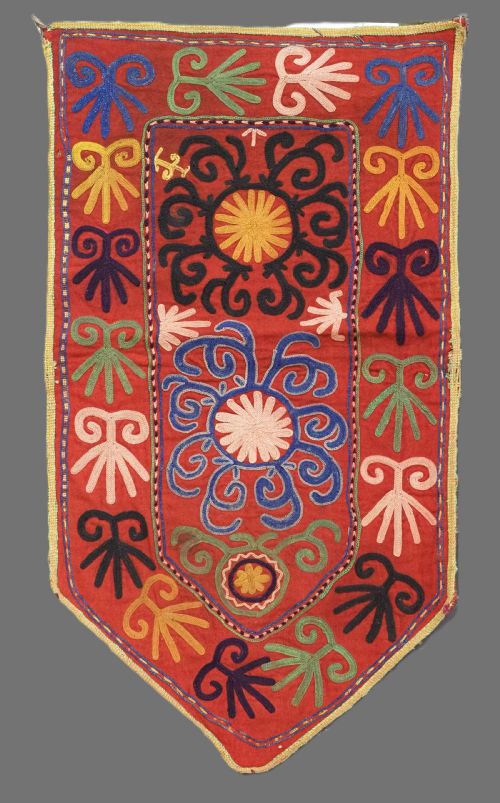
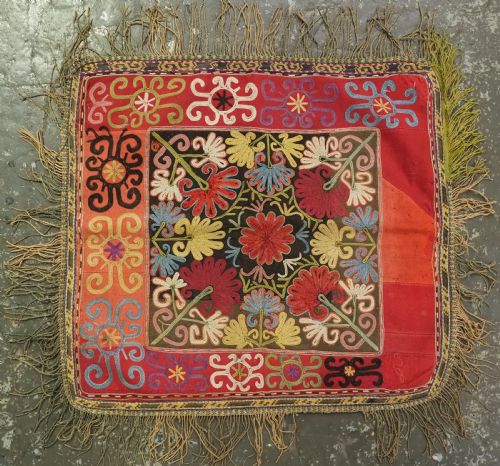
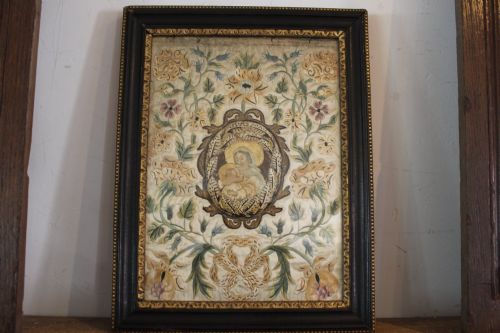
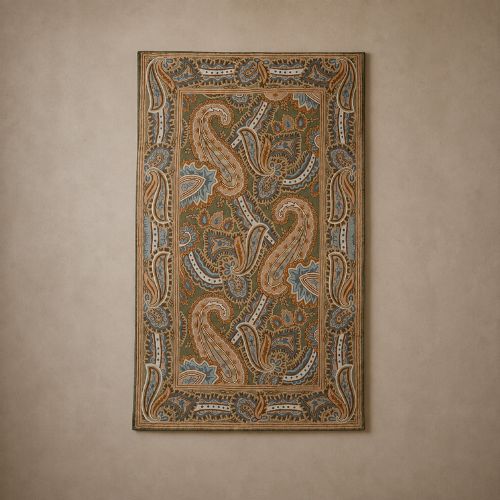
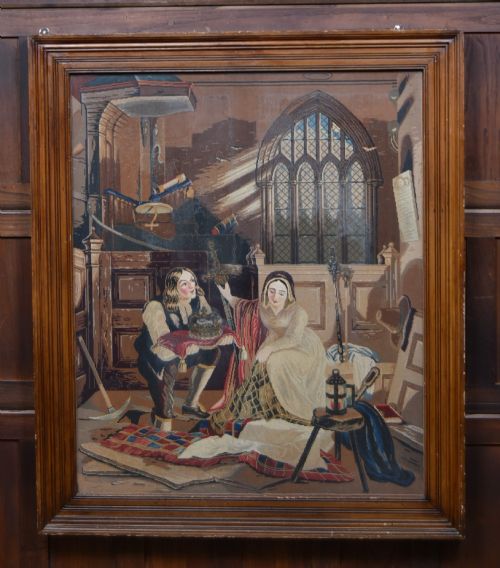
Antique embroidered wall art covers framed needlework pictures, textile panels, samplers, and fabric wall hangings created across various periods including the seventeenth, eighteenth, and nineteenth centuries. Collectors encounter English samplers, Stuart stumpwork, Central Asian Suzanis, and Chinese silk embroidered panels.
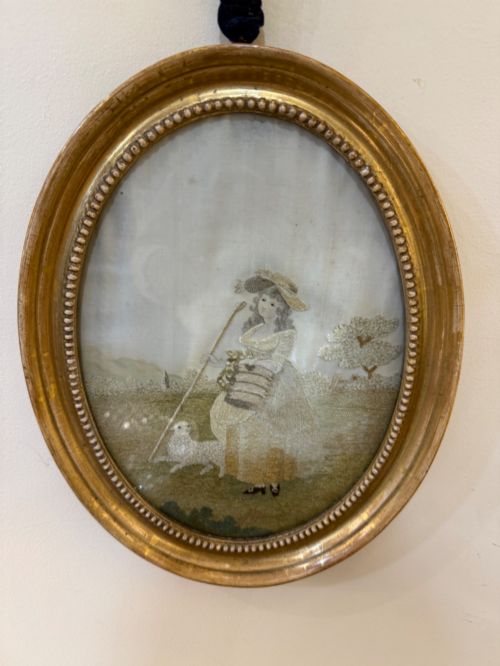
The selection ranges from geometric band samplers and pastoral wool work pictures to intricate dowry embroideries and framed silk panels under glass. These textiles serve as historical documents of domestic skill and regional trade, preserved behind glass or mounted on stretchers for display.
How they were made
Artisans worked with natural grounds such as linen, cotton, and silk, employing silk floss, wool, and metallic thread to build texture and colour. Techniques include crewelwork, stumpwork with raised padded figures, cross-stitch on samplers, and dense chain stitch used in Central Asian Suzanis.
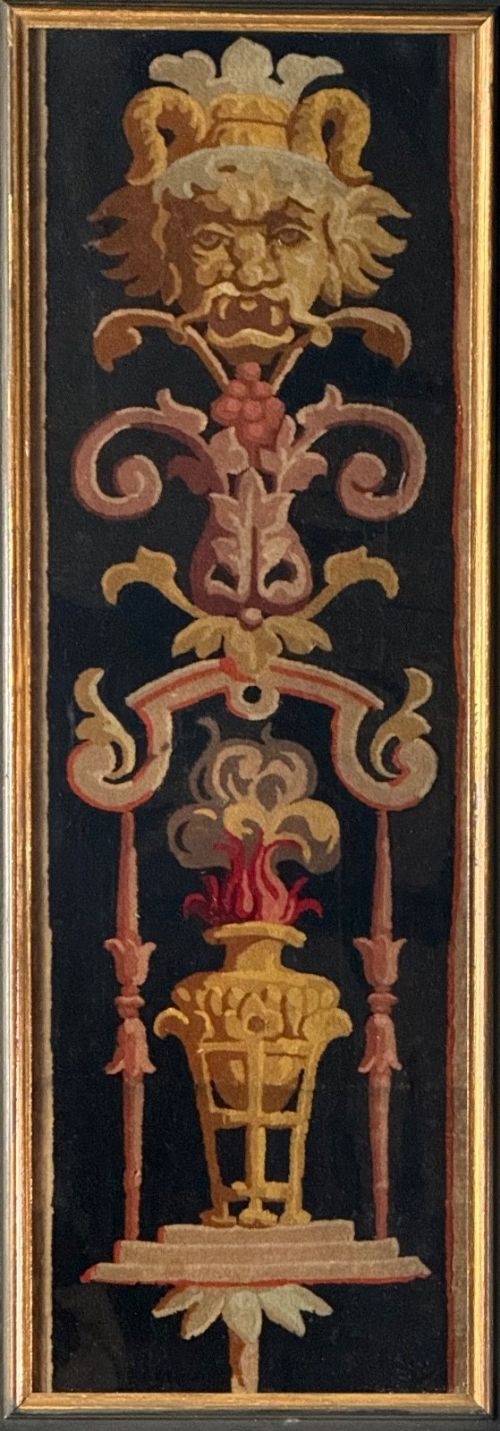
Many works incorporate hand-painted details on silk alongside needlework, mounted within period wooden or gilt frames, sometimes protected beneath glass. The backing materials often include wood and linen structures designed to keep the fragile textiles taut.
Materials recorded across these pieces include silk, wool, cotton, linen, glass, wood, metallic thread, and gold leaf.
What varies in quality
The quality rests upon the fineness of the stitch execution, the complexity of the design, and the survival of the original materials without extensive restoration. Dense, precise needlework and balanced colour palettes separate sophisticated workshop productions from simpler domestic exercises.
Condition plays a central role, distinguishing pieces with vibrant, unfaded silk or wool threads from those suffering from extensive fibre loss or staining. The integrity of the original framing, whether period gilt, faux tortoiseshell, or simple wood, also influences the overall character.
The Antique Embroidered Wall Art Glossary
- Sampler
- A piece of needlework produced as a demonstration or test of skill in various stitches and patterns, often featuring alphabets and dates.
- Stumpwork
- A raised or embossed style of embroidery popular in the seventeenth century, utilising padding and wire to create three-dimensional figures.
- Suzani
- A large, decorative embroidered tribal textile from Central Asia, traditionally made by brides as part of their dowry.
- Crest
- A formal heraldic device or design incorporated into embroidered panels and tapestries.
- Band sampler
- An early form of sampler featuring horizontal bands of different geometric or floral patterns stitched across a narrow strip of linen.
Antique Embroidered Wall Art: Frequently Asked Questions
How should I hang antique embroidered wall art?
Keep textile pieces away from direct sunlight to prevent the silk, wool, and cotton threads from fading over time. Ensure the room maintains stable humidity levels to protect the natural fibres and wooden frames.
Mount the pieces securely using professional framing methods that prevent the fabric from sagging under its own weight. Glass protection helps shield delicate embroidery from dust and airborne pollutants.
What is a Suzani wall hanging?
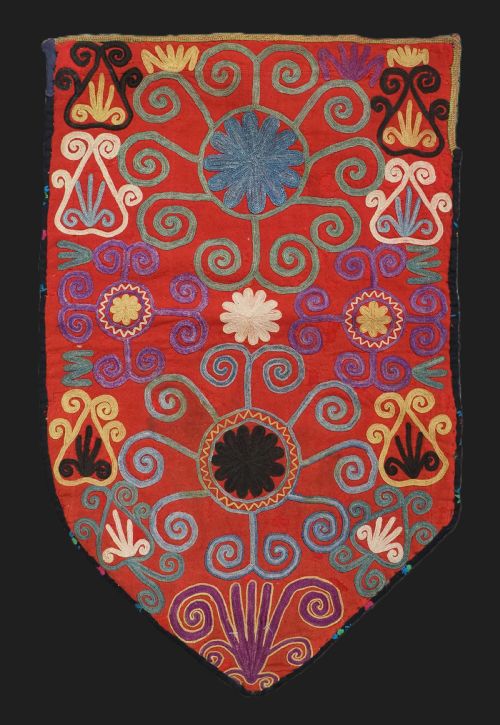
A Suzani is a type of embroidered tribal textile originating from Central Asia, traditionally created as part of a bride's dowry. These large panels feature bold floral motifs and intricate silk chain stitching.
They were intended for domestic use as wall hangings or covers, bringing vibrant colour and geometric patterns into living spaces.
What is the difference between a sampler and a needlework picture?
A sampler focuses on demonstrating a variety of stitches, alphabets, numbers, and motifs, often signed and dated by the maker. They served as reference pieces for needleworkers.
A needlework picture depicts a specific pictorial scene, such as a pastoral landscape, a portrait, or an architectural view, using decorative stitching as an independent artwork.